


When processing micron-sized ultrafine powders, electrostatic adsorption, material agglomeration due to moisture, and particles getting stuck in the mesh often cause large-scale clogging of ordinary screens within just ten minutes of operation. This phenomenon not only forces frequent production line shutdowns for screen cleaning but also leads to a precipitous drop in output. The Non-Blinding Vibro Sifter was designed to break this deadlock. It introduces continuous physical cleaning kinetic energy, forcing particles stuck in the mesh to bounce and separate, maintaining the screen's continuous light transmittance. The equipment is designed with hourly throughput ranging from 100 kg/h to 5000 kg/h, capable of handling fine powders with mesh sizes between 40 and 500 mesh (i.e., 425 microns to 25 microns), maintaining a stable material throughput even under continuous operation.
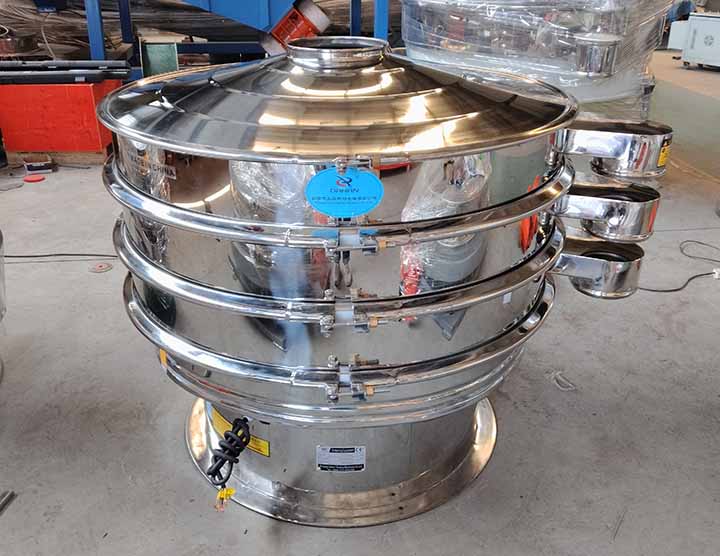
The Non-Blinding Vibro Sifter is deployed in solid material processing stages that require precise classification and are prone to clogging.
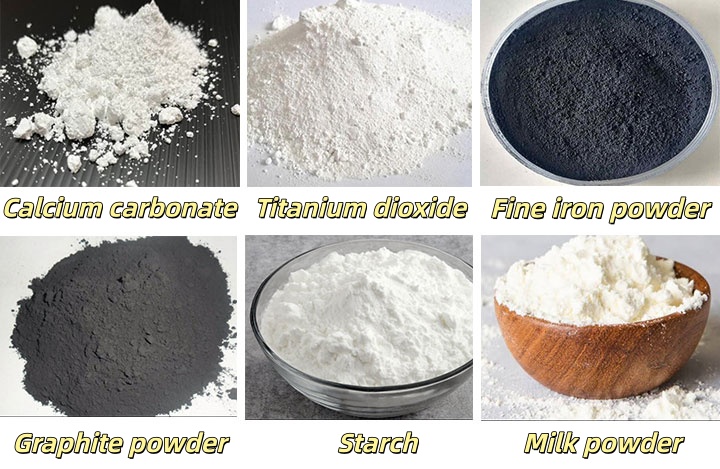
Mineral Deep Processing and Smelting: Used for grading finished products of different particle sizes after ultrafine grinding of heavy calcium carbonate, light calcium carbonate, kaolin, talc, and quartz sand.
New Materials and Battery Preparation: Lithium-ion battery positive and negative electrode materials (such as lithium iron phosphate and graphite powder) have extremely low flowability and are statically charged. This equipment is often used for impurity removal and grading before packaging.
Metallurgical Powder Manufacturing: Metal powders such as atomized aluminum powder and fine iron powder are prone to frictional heat and adhesion to the screen during sieving. This equipment is often connected in series below an air jet mill for particle size control.
Construction and Coatings Industry: Used for removing particulate impurities and dispersing lumps from barite powder, titanium dioxide, and putty powder before mixing.
The non-blinding vibrating screen solves the problem of mesh clogging not by manual cleaning, but by using two internal physical cleaning mechanisms to achieve continuous operation.
For ultrafine powders or highly electrostatic powders with a mesh size of 200 or larger, the equipment is equipped with an ultrasonic transducer. The transducer converts electrical energy into high-frequency mechanical vibration waves of 36,000 times per second and transmits them evenly across the entire screen surface. This high-frequency, low-amplitude micro-vibration can directly peel off micro-powders that are electrostatically adsorbed onto the mesh wires, breaking down the surface tension between particles and allowing the particles to pass through the mesh smoothly under the influence of gravity.
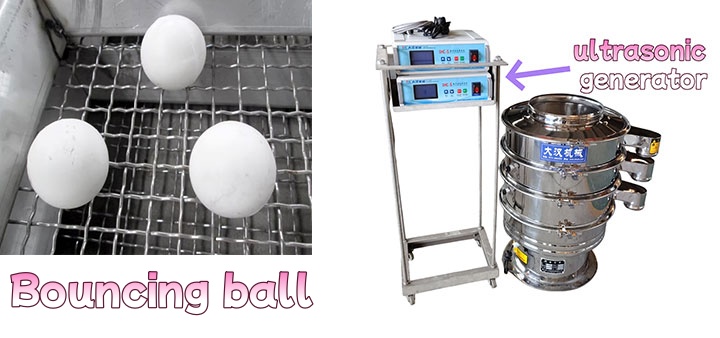
For coarse particles or agglomerated materials with a mesh size of less than 200 mesh, bouncing balls made of rubber or silicone are placed in the support plate below the screen. When the vibrating motor drives the machine body to perform a three-dimensional tilting motion, the bouncing balls are excited and repeatedly impact vertically at high frequency between the support plate and the screen. This direct impact force from below the mesh can bounce particles of equal diameter stuck in the mesh upwards, allowing them to return to the screen surface for classification.
| Model | Effective Screen Diameter (mm) | Applicable Mesh Number | Clearing System Configuration | Motor Power (kW) | Material in Contact with Materials |
| DH-600 | 550 | 40 - 325 | Bouncing Ball Screen Clearing | 0.55 | SUS304 Stainless Steel |
| DH-1000 | 970 | 40 - 400 | Bouncing Ball + Rotary Brush | 1.1 | SUS304 Stainless Steel |
| DH-1200 | 1150 | 100 - 500 | 36kHz Ultrasonic System | 1.5 | SUS316L on Contact Surface |
| DH-1500 | 1450 | 200 - 500 | Dual Ultrasonic System | 2.2 | SUS304 Stainless Steel |
A: The price of this equipment depends on the specific configuration list. For example, a standard stainless steel model with a diameter of 600mm, using only bouncing balls for screen cleaning, has lower manufacturing time and material costs; while a model with a diameter of 1500mm, requiring a complete set of ultrasonic transducers, a power control box, and SUS316L material for current-carrying components, will cost several times more. The selection of the screen cleaning system, the number of screen layers, and the frame material are three technical variables that determine the final budget. You can provide specific material characteristics and hourly output requirements, and our technicians will calculate the corresponding component configuration and provide a detailed quotation.
A: No. The ultrasonic system transmits micron-level, low-amplitude, high-frequency vibrations. It does not forcefully pull on the screen wires like external mechanical force. On the contrary, because it eliminates the need for manual brushing with a hard brush, it actually extends the lifespan of the fine screen during actual operation.
A: Sealing strips are embedded at the joints of each frame layer of the equipment, and they are rigidly locked in place by large-section clamps. As long as the flexible connecting pipes are properly connected at the feed and discharge ports, dust cannot escape from the machine body when it operates under negative or normal pressure.
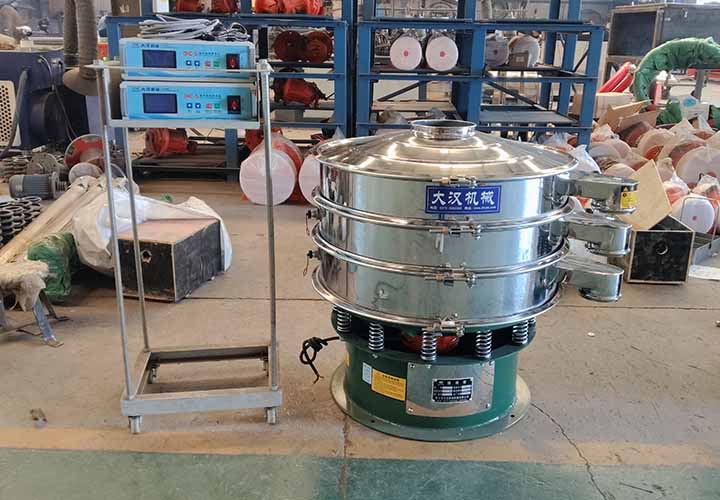
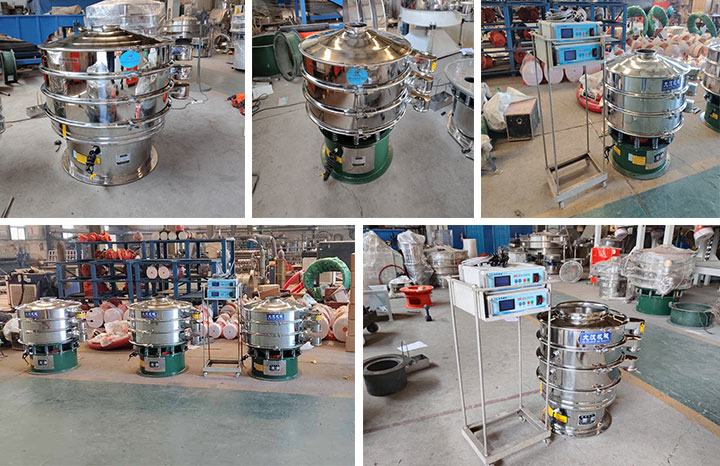
The Non-Blinding Vibro Sifter uses two independent screen-cleaning configurations—ultrasonic micro-high-frequency vibration and bouncing ball mechanical impact—to prevent production stoppages caused by screen jamming in ultrafine powder processing. Clear diameter parameters, quantifiable processing tonnage, and a well-defined mesh size range provide standard data references for mineral processing and metal powder production lines of different scales. A reasonable assessment of the material's physical properties and matching the corresponding screen-cleaning mechanism are fundamental to ensuring stable output capacity of the entire solid classification production line.


Address:China,Yanjin county forest park gate to the west 1000 meters north road.


 Online Chat
 Email