


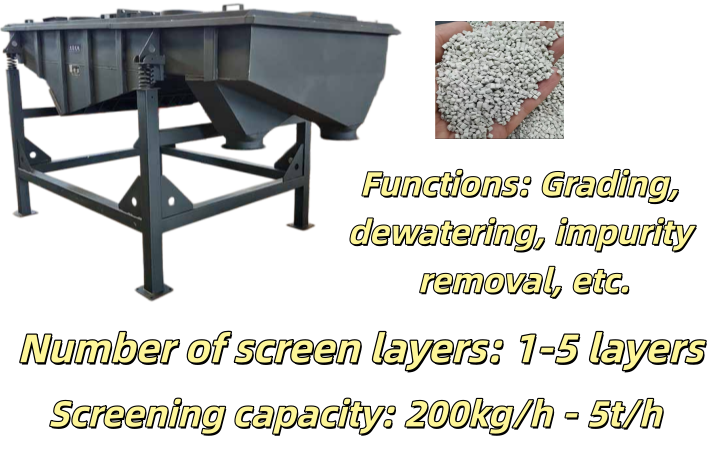
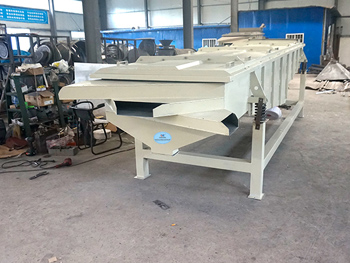
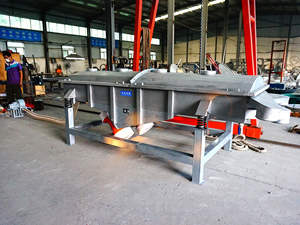
In plastic pelletizing and recycling lines, pellets fresh from the pelletizer often contain contiguous pellets, large pieces, and debris and dust generated during the pelletizing process. These irregular impurities, if directly fed into downstream injection molding or extrusion machines, can easily clog the screw and even damage the mold. A Plastic Pellets Vibrating Screen, installed at the rear of the pelletizer, is a mechanical grading device that uses the vibration force generated by a vibrating motor to separate plastic pellets of different sizes into multiple layers. This equipment typically features screen mesh sizes ranging from 1mm to 10mm, capable of screening plastic pellets from 2 to 16 mesh. A single machine can handle a screening capacity ranging from 200kg/h to 5t/h, meeting the needs from small-scale experimental production to continuous industrial production.
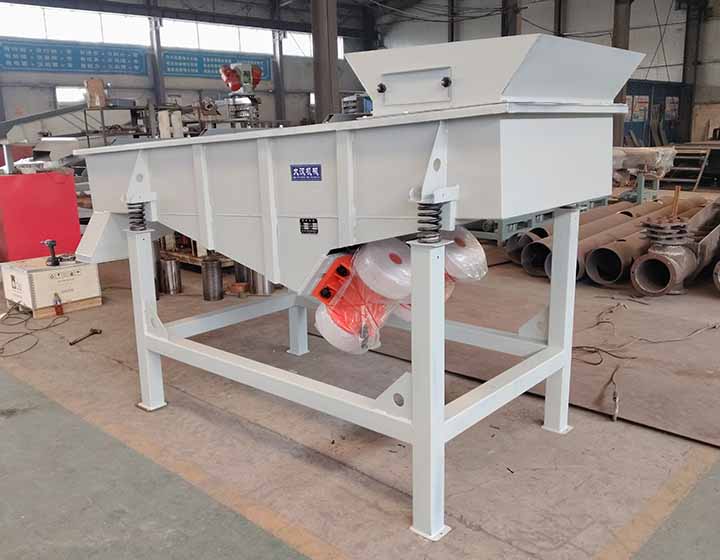
With this separation equipment, plastic plants can remove non-compliant contiguous pellets and fine dust, outputting products with regular geometric dimensions, thereby increasing the trading price of recycled or virgin materials. In continuous production, vibrating screens for plastic granules replace manual sieving, directly linking with the pelletizer's discharge port to reduce secondary contamination during material transfer within the workshop. The fully enclosed machine structure confines plastic dust inside the equipment, improving the workshop's operating environment. The vibrating screen's quick-change screen design allows workers to clean and replace the screen within five minutes when switching between different colors or materials of plastic, minimizing downtime costs.
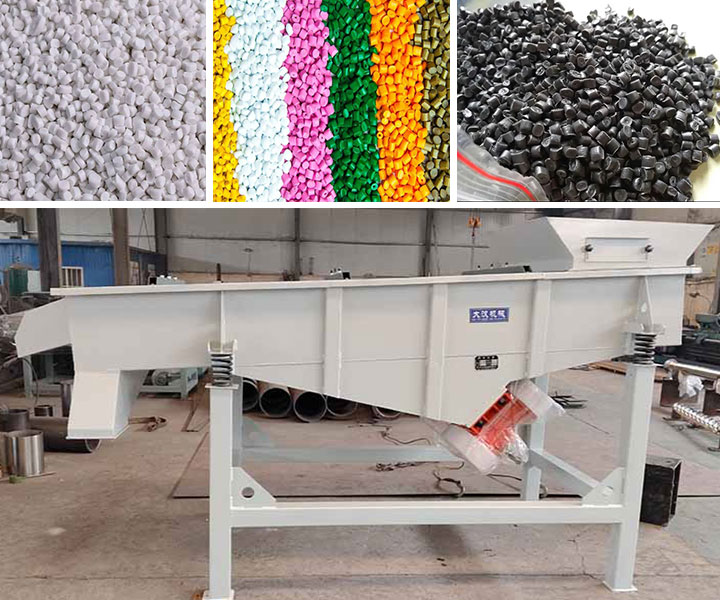
Vibrating screens are commonly used in the following three plastic processing scenarios: In the production of modified plastic masterbatches, wear on the pelletizing blades can lead to the inclusion of long strips of material. The equipment uses an upper screen to intercept these long strips, while a lower screen filters out dust, separating standard cylindrical granules. In PET bottle flake recycling and washing lines, after crushing, the material contains label scraps and a small amount of bottle cap residue. Multiple layers of mesh can separate the bottle flakes from the paper scraps. In PP/PE film recycling granulation, after water ring pelletizing, there is often a significant amount of residual moisture. A screen with slits can separate connected granules while allowing excess moisture to drain from the bottom.
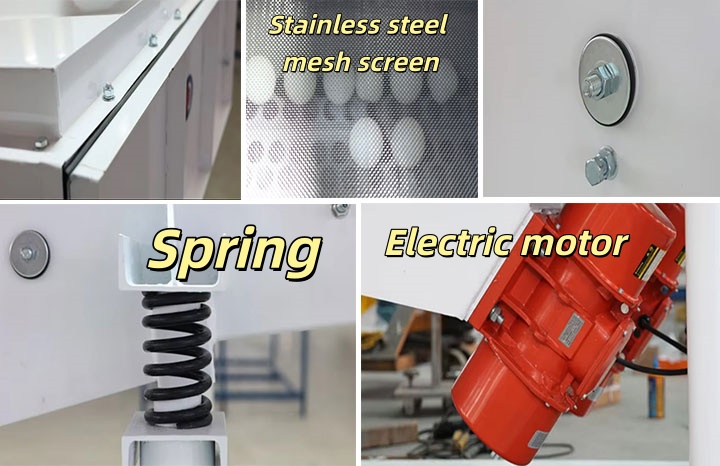
Driven by dual vibrating motors, the eccentric blocks generate excitation forces that are superimposed vertically during synchronous counter-rotation, driving the screen body to make longitudinal linear jumping motions. Plastic granules bounce forward under this force; granules smaller than the mesh size penetrate and fall into the lower discharge port, while larger pieces are discharged from above along the inclined surface for grading. To solve the problem of screen jamming caused by static electricity or irregular shapes, a food-grade silicone bouncing ball tray is installed under the screen, continuously impacting the screen from below during operation to eject jammed plastic granules. In addition, polyurethane (PU) screens and slotted wedge-shaped wire plates are optional to meet the requirements of granulation lines with zero metal contamination and high wear resistance.
Dahan Machinery offers various models. Below are selection recommendations based on pelletizer type and output.
| Equipment Model | Sieve Size (Length × Width mm) | Production Capacity (kg/h) | Applicable Pelletizer Type |
| DZSF-520 | 2000×500 | 200−500 | Laboratory Strand Pelletizer |
| DZSF-820 | 2000×800 | 500−1200 | Water Bath Strand Pelletizer |
| DZSF-1020 | 2000×1000 | 1200−2500 | Water Ring Hot Cutting Pelletizer |
| DZSF-1225 | 2500×1200 | 2500−4000 | Underwater Pelletizing System |
| DZSF-1530 | 3000×1500 | 4000−5000 | High Output Twin Screw Water Ring Pelletizer |
In a case study of recycled plastic modification, a plastic factory operated a twin-screw extruder production line producing high-filled PP masterbatch with an hourly output of 1.5 tons. Due to the use of an outdated pelletizer, the output contained large lumps and powder, leading to deductions from downstream buyers due to quality issues. The factory installed a DZSF-1020 double-layer separator screen below the pelletizer. The upper layer uses a 4.5mm aperture round mesh to intercept lumps, while the lower layer uses a 1.5mm woven mesh to filter dust. After the upgrade, the interception rate of large pieces reached 99%, and the dust removal rate reached 98%. 30 kg of waste material is collected daily for reprocessing, avoiding economic losses caused by finished product downgrading.
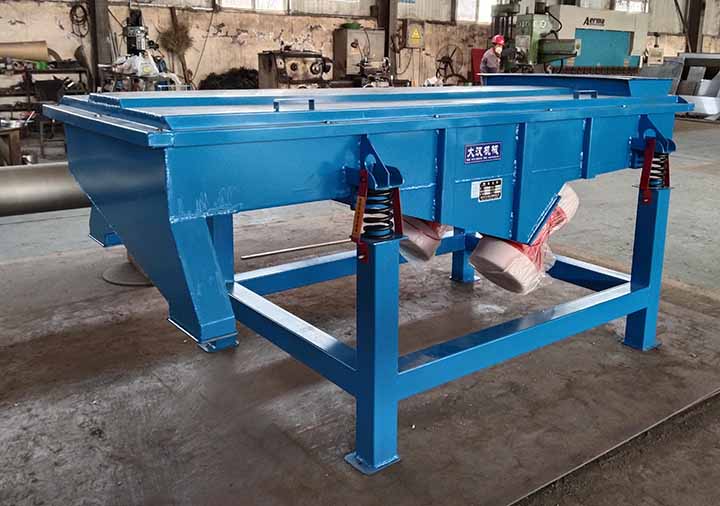
The market price for a standard model of this machine ranges from US$900 to US$3200. Factors affecting price fluctuations include materials, configuration, power source, and customization. Using 304 stainless steel for material contact parts will increase the cost by about 30% compared to ordinary carbon steel. Adding an ultrasonic cleaning system or bouncing ball cleaning device for plastics with static electricity or prone to screen jamming will increase the price. The selection of an explosion-proof motor will increase the unit price of accessories. Adjusting the height of individual machine feet according to the discharge port height, or modifying a special feed hopper, will all incur design and processing costs.
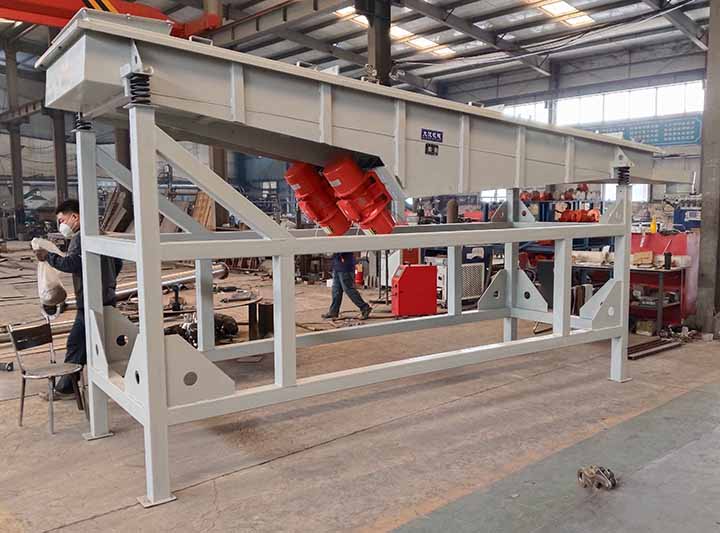
A: A bouncing ball support net can be installed below the mesh surface. Vibration will launch the bouncing balls to impact the mesh surface, shaking off the adsorbed material; alternatively, a perforated metal mesh with a polished surface can be used directly.
A: The main body of this equipment is made of stainless steel or carbon steel, and the seals are made of heat-resistant silicone. It can withstand plastic materials below 150 degrees Celsius without deformation.
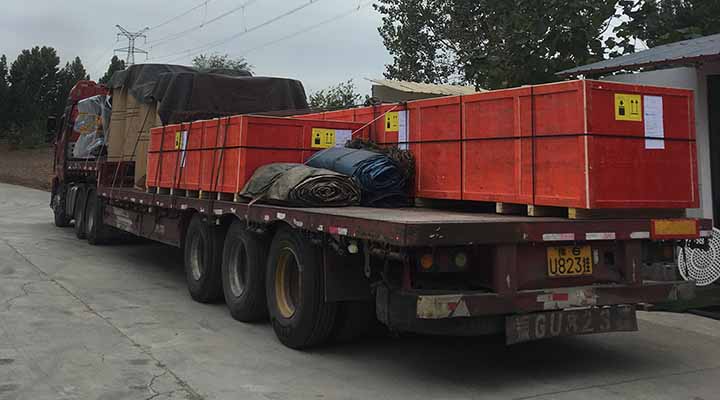
The Plastic Pellets Vibrating Screen solves the problem of impurities interfering with the finished product in plastic processing. Through linear vibration, it classifies materials into qualified products, large particles, and fine powder. When selecting a model, factories need to consider factors such as their pelletizer's hourly output, material particle size, and whether wear-resistant stainless steel is required to assess a reasonable procurement budget.


Address:China,Yanjin county forest park gate to the west 1000 meters north road.


 Online Chat
 Email