


Screw conveyorfor cement mixing plants is commonly used to transfer powdered materials to weighing hoppers or mixing systems. In concrete production lines, stable powder feeding is an important part of maintaining batching accuracy and production efficiency. Compared with open conveying methods, screw conveyors use a sealed structure, which can help reduce dust leakage during transportation and improve site cleanliness.
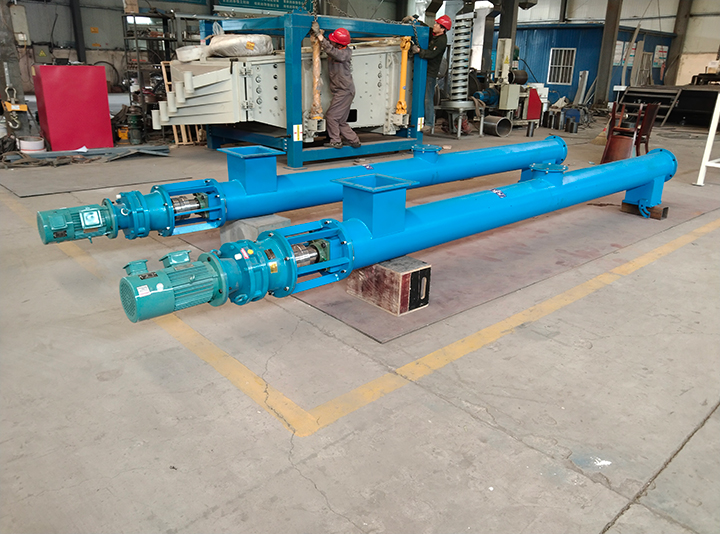
In many modern batching plants, screw conveyors are installed between the cement silo and the weighing hopper. After the control system sends a feeding signal, the motor drives the screw blade to rotate, pushing cement powder forward inside the tube until it reaches the target position.
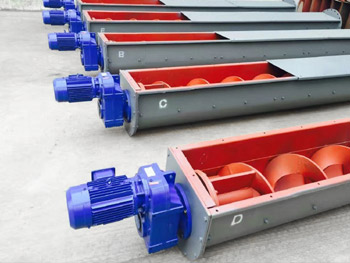
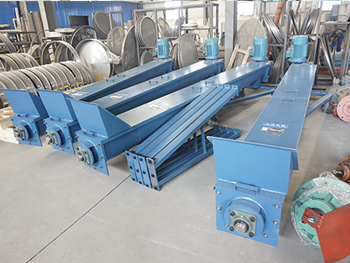
A screw conveyor for cement mixing plants is a mechanical conveying device designed for powder transfer. It usually consists of a motor, reducer, inlet hopper, screw shaft, spiral blade, conveyor tube, hanging bearings, outlet port, and support frame. During operation, the rotating screw blade moves the cement powder continuously inside the enclosed tube.
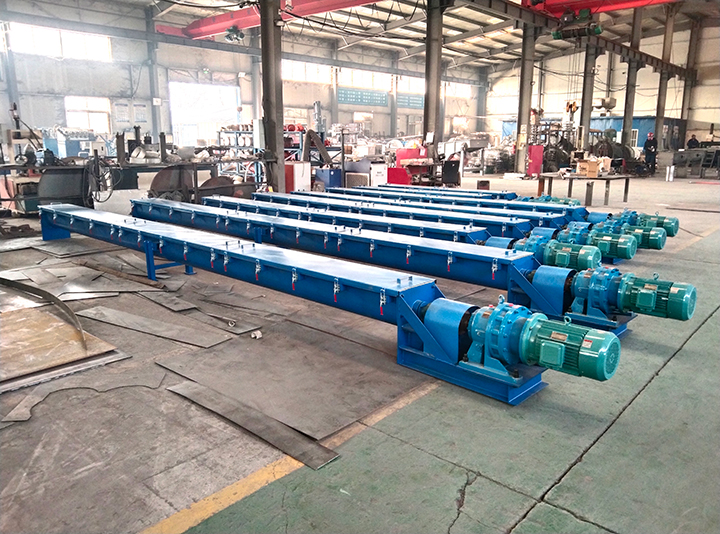
Better Dust Control. Cement powder is very fine and can easily spread into the air during handling. A screw conveyor uses a closed tube body, which can help reduce dust leakage compared with open transfer methods.
Stable Feeding Performance. Concrete batching plants require accurate material proportioning. Continuous and stable cement feeding helps maintain weighing precision during each production cycle.
Compact Structure. Compared with some larger conveying systems, screw conveyors require less floor space. They are often installed at an inclined angle directly under the silo outlet.
Easy Integration. Screw conveyors can be connected with cement silos, weighing hoppers, screw valves, and batching control systems, making them practical for automated plants.
Suitable for Different Plant Sizes. Small mobile plants and large commercial batching stations may both use screw conveyors, with different diameters and lengths selected according to capacity requirements.
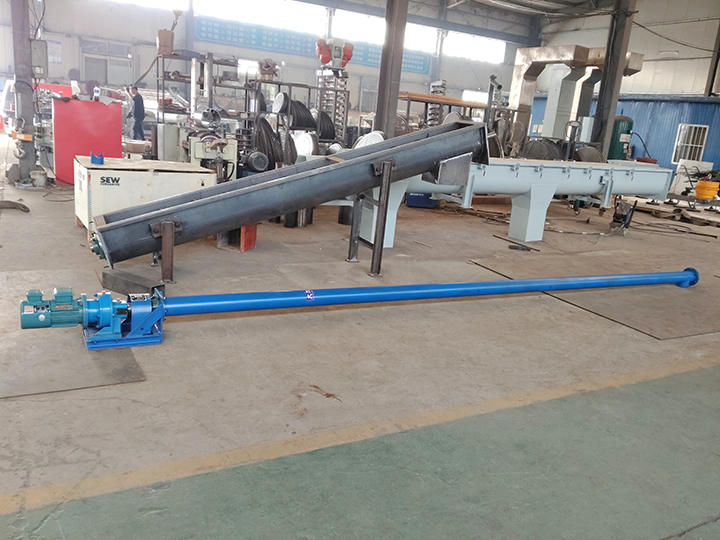
Besides mainstream cement, mixing plants can also handle various dry powder building materials required for concrete and dry mortar production. They offer strong adaptability and stable conveying. The following are commonly conveyed materials:
Cement Powder. Conventional commercial cements such as silicate cement and composite silicate cement can be conveyed via a closed screw conveyor to ensure accurate batching.
Fly Ash. As an important admixture for concrete, it optimizes workability and reduces heat of hydration due to its low bulk density and fine particles.
Lime Powder. Primarily used in the production of special building materials such as specialty mortars, crack-resistant concrete, and reinforcement and repair materials. Its good powder flowability allows for closed conveying via a screw conveyor of the same specifications, meeting the batching requirements of special building materials.
Dry Powder Additives. Generally conveyed separately using an independent small screw conveyor system, accurately added to the mixing host to ensure concrete performance meets standards.
The following sizes are commonly seen in batching plant applications. Actual capacity varies by material density, angle, and speed.
| Model | Diameter | Typical Capacity | Common Use |
|---|---|---|---|
| LSY165 | 165 mm | 15–25 t/h | Small batching plant |
| LSY219 | 219 mm | 35–45 t/h | Medium batching plant |
| LSY325 | 325 mm | 75–100 t/h | Large?scale concrete production line |
When selecting a screw conveyor, users should consider both the actual usage conditions and the available equipment.
These types of equipment primarily transport powdery materials such as cement, fly ash, and mineral powder. The bulk density of the material directly affects the conveying capacity. A larger installation inclination angle results in poorer conveying performance, necessitating the selection of a larger diameter pipe or a more powerful motor. The available space determines the pipe diameter, length, and installation method to prevent pipe interference and installation difficulties.
Additionally, factors such as motor power, material moisture content, sealing method, explosion-proof requirements, and ease of maintenance should be considered to avoid issues like material blockage, dust generation, excessive power consumption, and equipment damage, ensuring the entire feeding system operates normally.
The price of screw conveyors for cement mixing plants typically depends on the diameter, length, motor power, material thickness, and customization requirements, generally ranging from $800 to $12,000, with customized models exceeding $12,000. Specific prices depend on the configuration. Actual quotes may vary depending on the type of reducer, steel thickness, surface treatment, voltage standard, and delivery requirements.
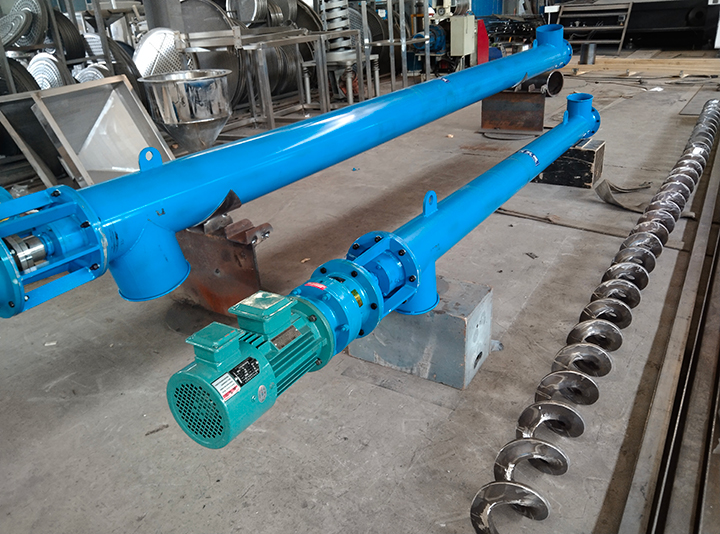
Material Blockage. Mostly caused by damp cement, material clumping, or excessively fast feeding. Ensure materials are dry regularly, clean the machine thoroughly after shutdown, and control the feeding speed.
Dust Leakage. Generally caused by worn seals or loose flange connections. Regularly replace seals, tighten bolts, and check all joints to prevent dust leakage.
Low Feeding Capacity. Primarily caused by reverse motor rotation, worn auger blades, or excessively large machine installation angle. Check motor rotation direction, inspect blade wear, and adjust the installation angle.
Bearing Overheating. Often caused by inadequate lubrication or misaligned shaft. Regularly lubricate bearings, check and adjust shaft position to reduce friction and heat generation.
Screw conveyor for cement mixing plants plays an important role in powder transfer between silos, weighing hoppers, and mixers. Its enclosed structure, compact layout, and stable feeding performance make it a common solution for cement handling systems.
Before selecting a screw conveyor for cement mixing plants, users usually compare output capacity, conveying distance, installation angle, and powder characteristics. Choosing the proper model can help improve feeding efficiency and reduce maintenance cost.
Q:What is the best angle for cement screw conveyor?
A:Many systems are installed below 45 degrees, though actual design depends on layout and required output.
Q:Can one conveyor transfer both cement and fly ash?
A:It may be possible if system design allows, but separate lines are often used for material control.
Q:How often should maintenance be done?
A:Routine inspection is commonly performed daily, weekly, and monthly depending on workload.


Address:China,Yanjin county forest park gate to the west 1000 meters north road.


 Online Chat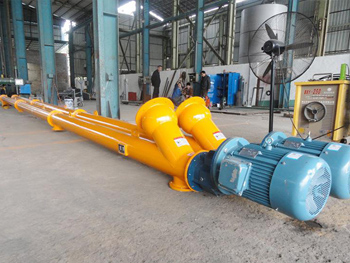
 Email
Email