


Discover the 2026 definitive guide to industrial vibrating screen equipment selection. This expert review analyzes key machinery types—including linear, circular, high-frequency, and tumbler screens—while outlining data-driven metrics like stroke amplitude and smart sensor integration to maximize plant throughput and energy efficiency.
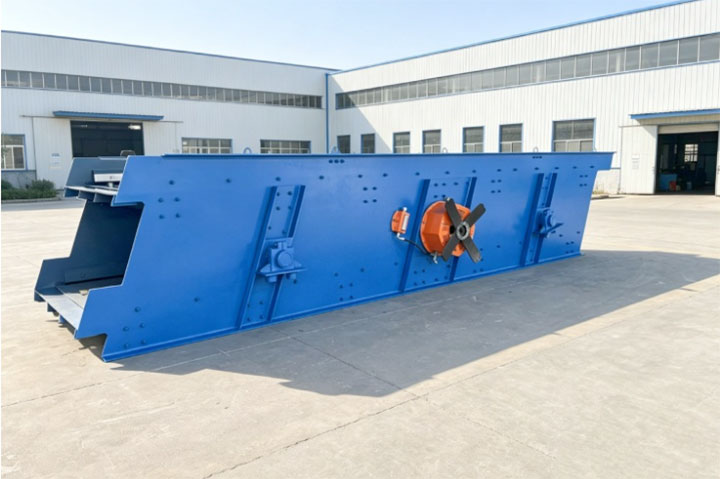
The mechanical motion and structural design of a vibrating screen determine how particles interact with the screen media. Industrial applications generally rely on four distinct configurations, each engineered for specific aggregate sizes, moisture levels, and smart monitoring compatibilities.
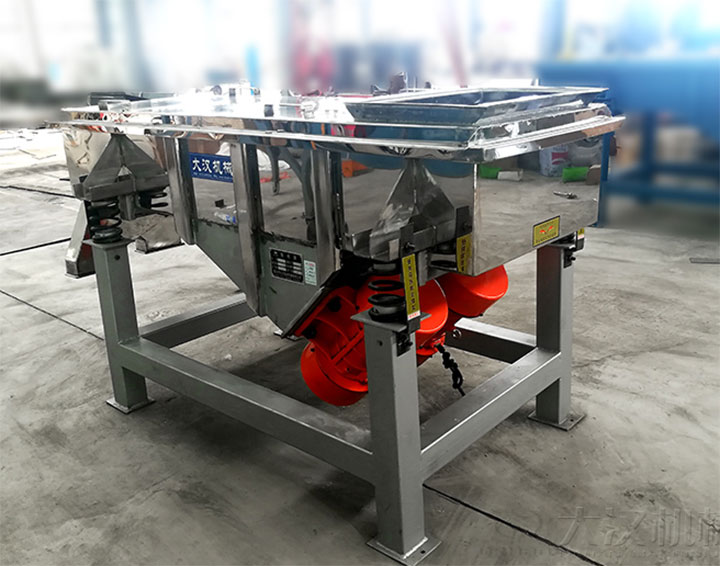
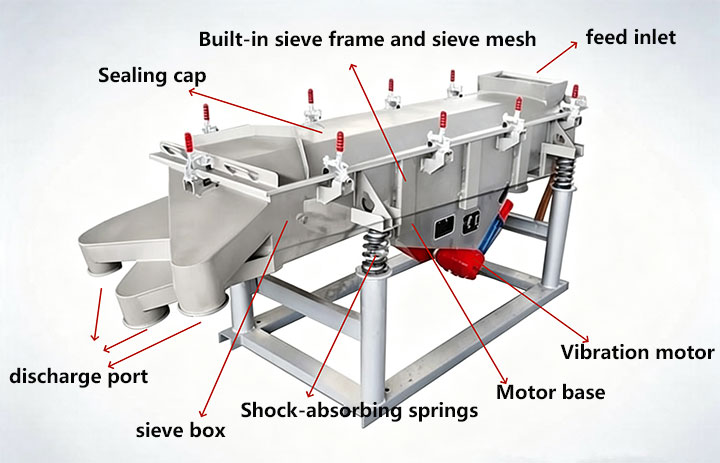
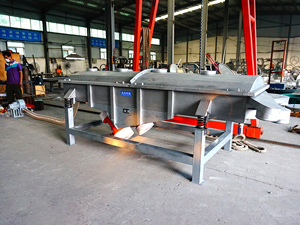
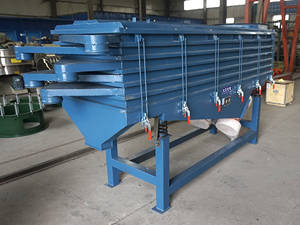
Driven by dual counter-rotating vibratory motors ($1,460 ext{ RPM}$ standard speed), linear screens deliver a synchronized linear motion that thrusts material forward and upward in a consistent directional path with a typical stroke amplitude of $3.0 - 5.0 ext{ mm}$. This motion provides high travel velocity across the deck.
Optimal Configurations: Most effective for low-to-medium density materials where precise particle sizing or rapid liquid separation is required.
Operational Consideration: Widely utilized in coal preparation plants, wet sand processing, and dry bulk chemical grading. By implementing smart Variable Frequency Drive (VFD) technology to regulate the dual counter-rotating motors during non-peak feed periods, plants can achieve a documented 15% reduction in drive-system energy consumption. For abrasive materials, replacing traditional wire mesh with poly-elastomer screen panels can reduce surface wear significantly.
Circular screens utilize an eccentric shaft or unbalanced weight blocks to generate a continuous circular or elliptical motion. The material undergoes a tumbling, high-throw action on an inclined deck (ranging from $15^circ$ to $20^circ$), which minimizes structural blinding (plugging).
Optimal Configurations: Engineered for high-tonnage, heavy-duty applications dealing with large-size materials and high Mohs hardness (such as crushed quarry ore and aggregates).
Operational Consideration: Standard choice for primary and secondary screening in quarries, mineral ore processing, and aggregate recycling plants. Multiple-deck setups allow for simultaneous grading of up to four product specifications.
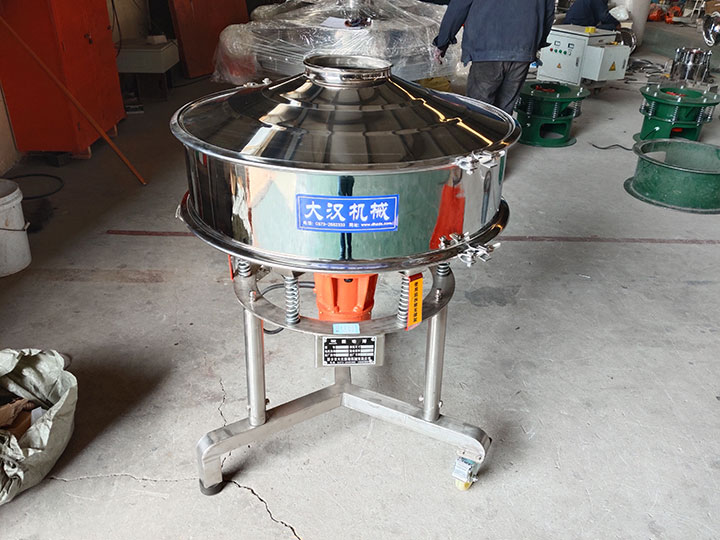
Operating at elevated frequencies (often exceeding $1,500 ext{ RPM}$) but small amplitudes, these screens apply high G-force directly to the screening surface rather than the entire shaker box. This localized energy disrupts the surface tension of viscous slurries.
Optimal Configurations: Specifically designed for fine-particle wet screening and fine slurry dewatering where traditional sifters fail due to liquid surface tension.
Operational Consideration: Critical for mineral dressing circuits (such as iron ore or copper concentrates) and tailing management systems to optimize solid-liquid separation.
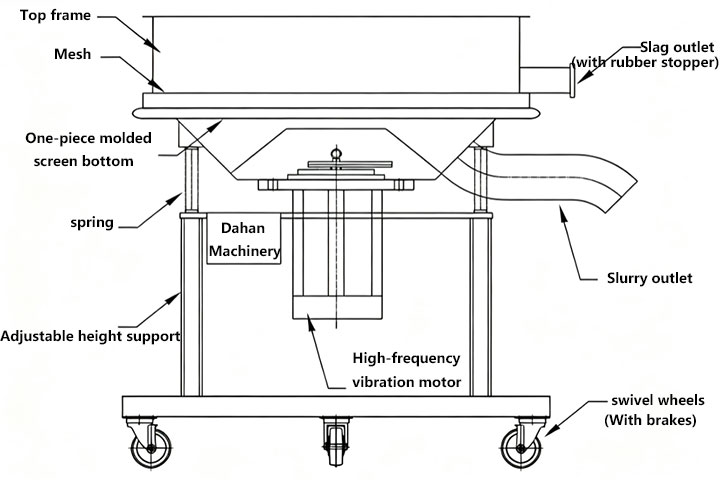
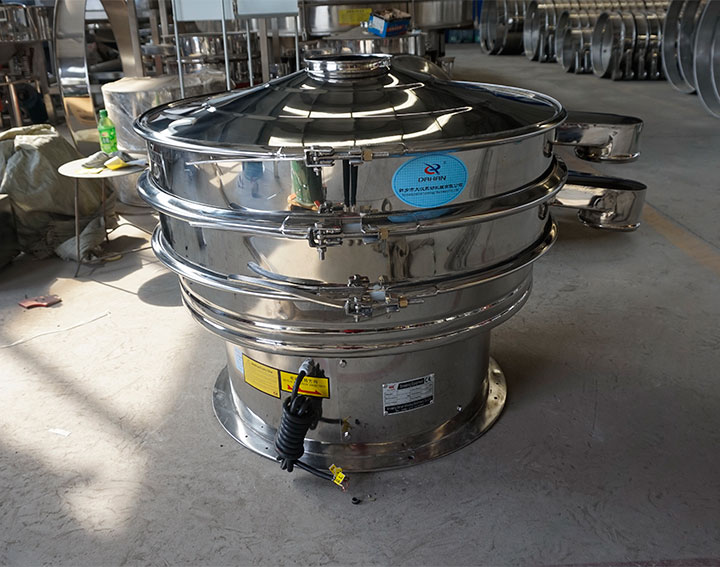
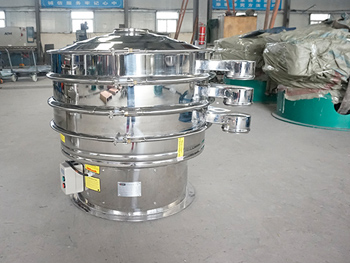
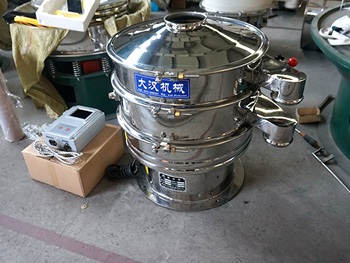
Tumbler screens replicate the mechanical action of manual hand-sieving, utilizing a three-dimensional elliptical movement (horizontal, vertical, and radial tilt). The acceleration forces are kept low to prevent structural damage to fragile products.
Optimal Configurations: Recommended for ultra-fine, low-density, or highly sensitive powders that are prone to static buildup or degradation.
Operational Consideration: Prominent in food processing (e.g., starch, flour, sugar), pharmaceutical manufacturing, and advanced lithium-battery material classification where strict compliance with clean-room and sanitary standards is mandatory.
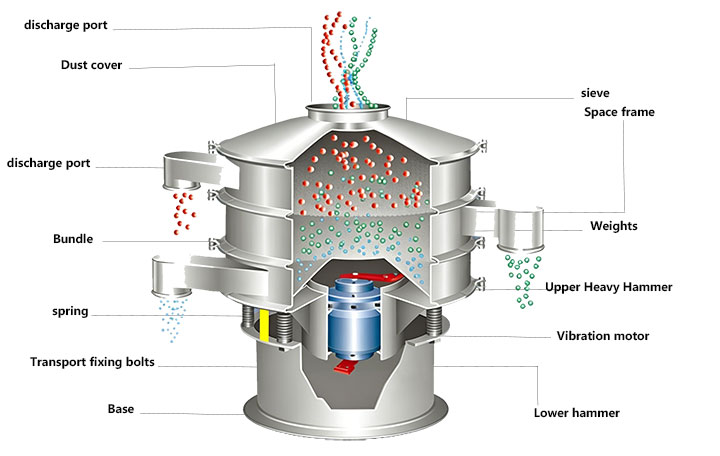
A successful equipment integration relies on matching the physical properties of the raw material with the correct mechanical performance metrics. Relying solely on historical throughput data can lead to premature mechanical fatigue or sub-optimal separation.
The selection process must begin with a comprehensive review of the feed material:
Moisture Content: Materials with surface moisture between 4% and 15% frequently cause sticky blinding. Wet screening via high-frequency agitation or linear dewatering configurations is generally preferred over dry separation in this range.
Particle Morphology: Angular, needle-like, or irregular particles tend to wedge into square wire meshes. Utilizing self-cleaning or specialized polyurethane apertures can alleviate this bottleneck.
The screen deck angle (ranging from horizontal to a 20-degree incline) alters the retention time of the material. A steeper incline boosts material velocity but lowers retention time, which may decrease overall screening efficiency. Conversely, horizontal decks extend retention time, optimizing separation accuracy for fine powders but requiring higher vibratory inputs to prevent bed accumulation.
To assist plant engineers and procurement specialists, the following reference matrix correlates industrial material profiles with recommended mechanical configurations and critical design considerations:
| Material Category | Target Particle Size Range | Primary Process Objective | Recommended System Type | Engineering Priority |
|---|---|---|---|---|
| Crushed Quarry Ore | Coarse (> 40 mm) | Heavy-duty Scalping | Circular Inclined Screen | Impact-resistant structural liners |
| Industrial Silica Sand | Medium (1 mm – 10 mm) | Classification & Dewatering | Linear Vibrating Screen | Polyurethane screen media selection |
| Mineral Concentrate | Fine (< 1 mm) | Wet Slurry Classification | High-Frequency Screen | Variable Frequency Drive (VFD) controls (15% energy reduction) |
| Pharmaceutical Powder | Ultra-fine (< 150 microns) | Contamination-free Sifting | Tumbler / Sanitary Rotary Screen | Ultrasonic anti-blinding integration |
Achieving stable, long-term efficiency requires adherence to appropriate operational protocols post-installation. In 2026, implementing digital vibration sensors on the shaker body allows operators to predict eccentric bearing wear before catastrophic failure occurs. Furthermore, uneven distribution of feed material across the screen width remains a leading cause of premature mechanical failure, as it creates unbalanced loads on the vibratory motors.
Regular inspection schedules focusing on structural weldments, spring suspension integrity, and drive belt tension are crucial for maintaining consistent stroke amplitude. Implementing these preventative measures helps processing plants maximize the lifespan of their vibrating screen equipment, maintain precise product quality, and achieve a stable return on their capital investment.
Choose a linear vibrating screen for precise sizing and dewatering of materials on horizontal or slightly inclined decks. Opt for a circular vibrating screen for heavy-duty scalping and high-tonnage applications where multi-deck grading of large-sized, hard materials is required.
High-frequency screens apply G-force directly to the screen surface (up to 1,500+ RPM) rather than the entire box. This action effectively disrupts the surface tension of viscous slurries, enabling fine particle separation that standard screens cannot achieve.
We recommend a weekly inspection focusing on structural weldments, spring suspension integrity, and drive belt tension. Additionally, utilizing digital vibration sensors allows for predictive maintenance, alerting you to bearing wear before it causes mechanical failure.
Yes. Dahan Machinery provides comprehensive material testing services. We analyze your specific material's moisture, density, and morphology to recommend the exact machine configuration, ensuring you achieve the desired purity and throughput before your investment.
Selecting the right vibrating screen depends heavily on your specific material density, moisture, and capacity requirements. Consult Dahan Machinery's engineering team to get a free professional selection proposal, 3D drawings, and material testing report tailored to your plant.


Address:China,Yanjin county forest park gate to the west 1000 meters north road.


 Online Chat
 Email
Email