


Laboratory powder testing and particle analysis require stable screening accuracy, repeatable results, and easy equipment cleaning. A vibrating powder sieving machine for laboratory use is designed to separate powders and granular materials according to particle size while maintaining precise control over sample quality. These machines are commonly used in research laboratories, pharmaceutical testing rooms, universities, food quality inspection departments, chemical laboratories, and metal powder analysis applications.
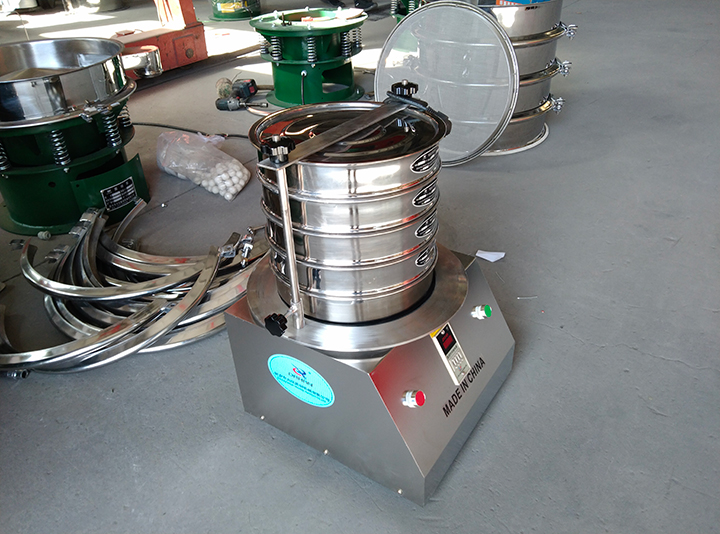
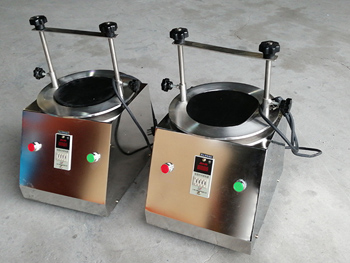
A laboratory vibrating powder sieving machine is a compact screening device used for particle size analysis, impurity removal, and powder grading in small-batch testing environments. Compared with large industrial vibrating sifters, laboratory units are smaller in diameter, lighter in weight, and designed for precision rather than high-capacity production.
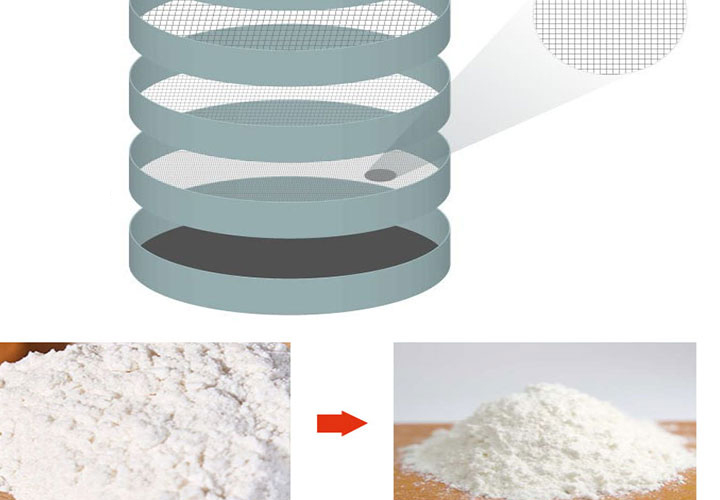
Most laboratory sieving equipment supports dry powder screening, wet screening, and liquid filtration. Depending on the material properties and mesh size, the machine can separate powders into multiple particle grades simultaneously. Common laboratory machines can handle mesh sizes from several mesh up to 500 mesh or finer. Some electromagnetic laboratory sieve shakers can screen powders down to approximately 5 microns under suitable conditions.
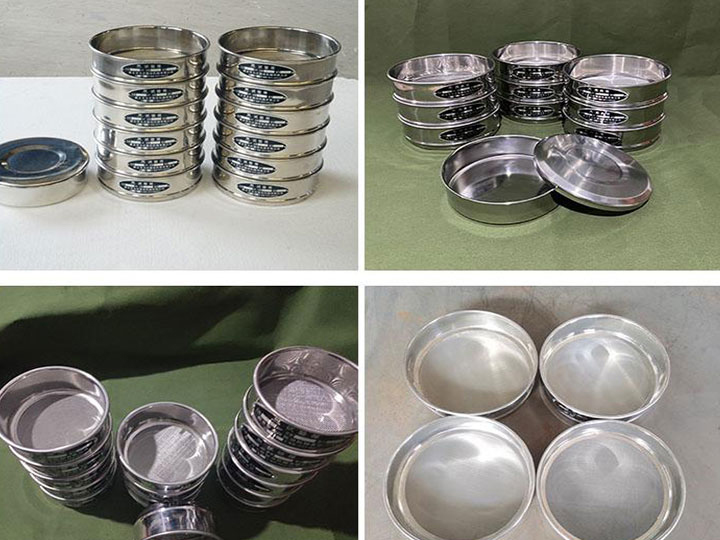
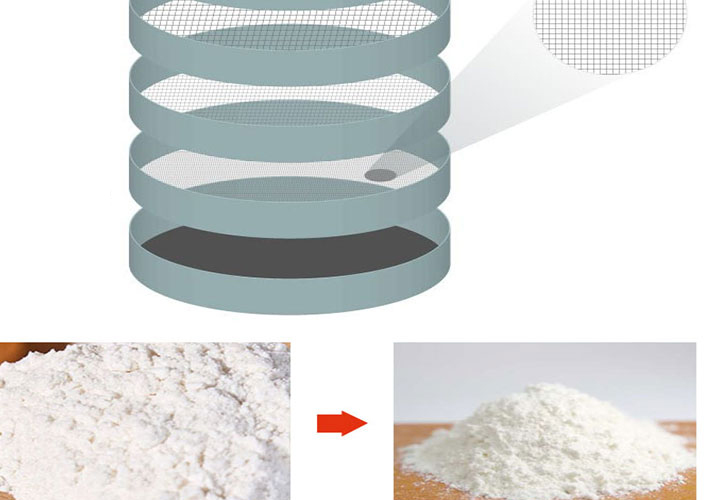
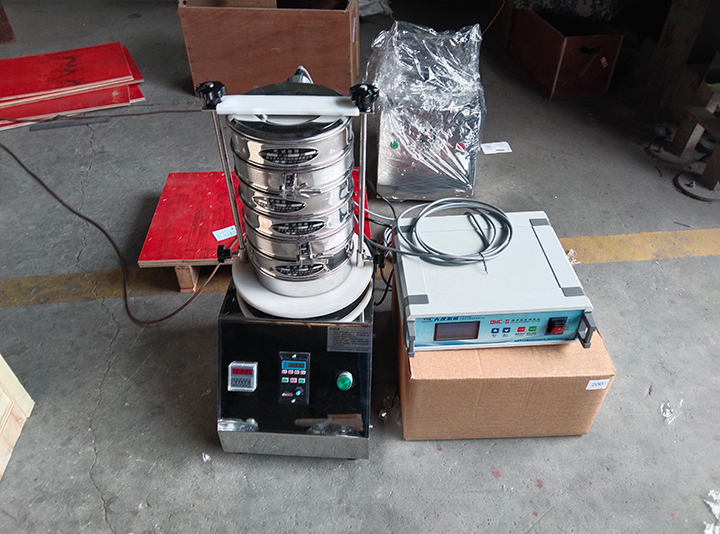
The machine works by generating vibration through either an electromagnetic excitation system or a vibration motor with eccentric weights. During operation, the vibration causes the powder to move continuously across the sieve surface. Smaller particles pass through the mesh openings while oversized particles remain above the screen.
In circular vibrating sifters, the vibration motion is typically three-dimensional, combining horizontal, vertical, and inclined movement. This movement improves powder distribution across the screen and helps prevent material accumulation. Some laboratory models include bouncing balls or ultrasonic cleaning devices below the screen to reduce mesh blockage when screening ultrafine powders.
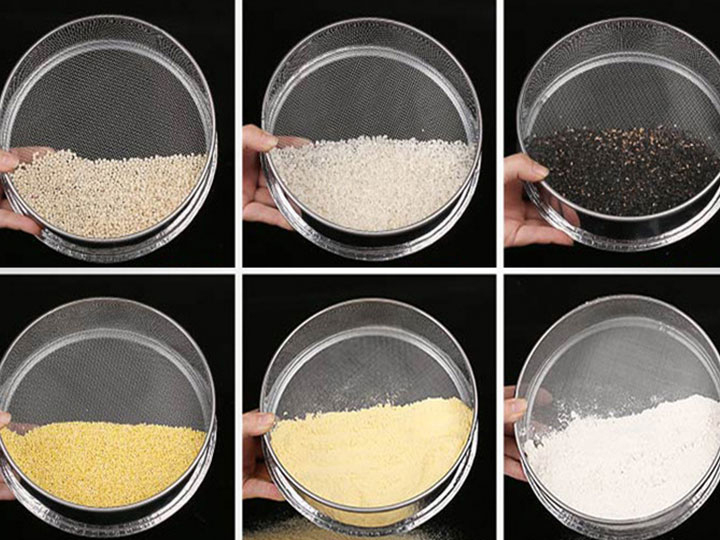
High Screening Accuracy Laboratory screening requires accurate and repeatable particle analysis. Fine vibration frequency and stable amplitude help improve separation precision for powders with narrow particle size distribution.
Compact Structure Laboratory equipment is usually designed with a small footprint for placement on laboratory benches or testing platforms. Compact construction also makes transportation and installation easier.
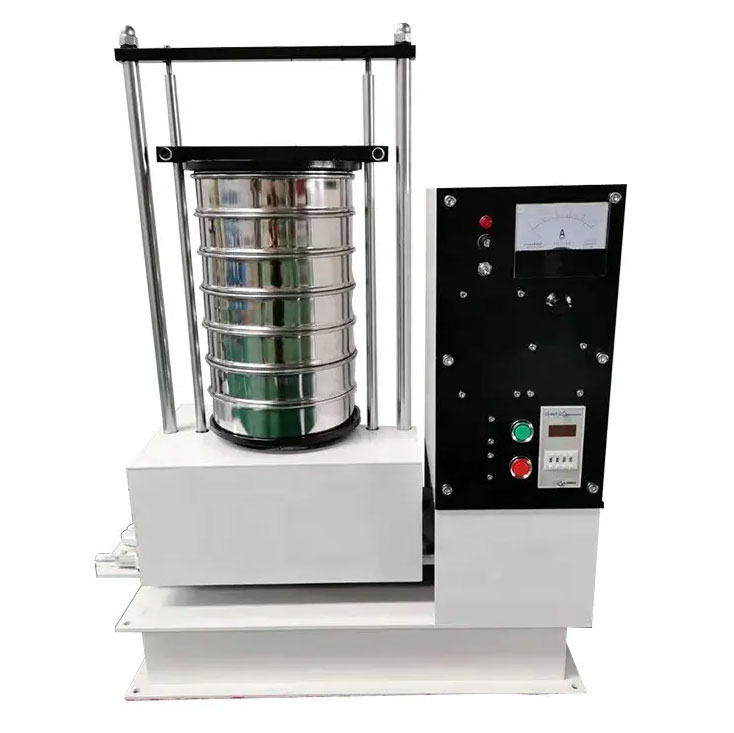
Multiple Sieve Layers Many laboratory vibrating sieve machines support 1 to 8 sieve layers, allowing users to obtain several particle size fractions during one screening cycle.
Stainless Steel Construction Contact parts are commonly made of SUS304 or SUS316 stainless steel to reduce contamination and improve corrosion resistance. Stainless steel construction is widely used in pharmaceutical, food, and chemical laboratories.
Adjustable Timer Function Laboratory sieve shakers often include digital or mechanical timers. Operators can set screening duration according to testing standards, helping improve consistency between repeated tests.
Easy Cleaning And Mesh Replacement Quick-clamp structures and modular screen frames simplify cleaning and mesh replacement. This is especially important when laboratories process different materials frequently.
Electromagnetic Sieve Shaker Electromagnetic laboratory sieve shakers use electromagnetic vibration to produce stable high-frequency movement. They are commonly used for ultrafine particle analysis and laboratory standard testing.
Rotary Vibrating Sifter Rotary vibrating sifters use vertical vibration motors and eccentric weights to create three-dimensional vibration. They are suitable for both laboratory testing and small-scale production.
Ultrasonic Vibrating Sieve Ultrasonic systems add high-frequency ultrasonic vibration to reduce mesh blockage. This design is often used for ultrafine powders that are difficult to screen using conventional vibration alone.
Powder Characteristics Material properties such as particle size, moisture content, bulk density, and static electricity influence machine selection.
Mesh Size Requirement Different applications require different screening precision. Fine pharmaceutical or metal powders may require very fine mesh sizes.
Sample Capacity Laboratory sample volume determines the required screen diameter and motor power.
Cleaning Requirement Industries with strict hygiene requirements may require quick-disassembly designs and polished stainless steel surfaces.
| Material Type | Common Mesh Size | Application Industry |
|---|---|---|
| Pharmaceutical Powder | 80?200 mesh | Pharmaceutical |
| Flour | 20?100 mesh | Food Processing |
| Milk Powder | 40?120 mesh | Dairy Industry |
| Spice Powder | 30?80 mesh | Food Industry |
| Metal Powder | 100?500 mesh | Powder Metallurgy |
| Graphite Powder | 100?400 mesh | Battery Materials |
| Ceramic Powder | 80?300 mesh | Ceramic Industry |
| Resin Powder | 60?200 mesh | Chemical Industry |
| Pigments | 100?325 mesh | Coating Industry |
| Mineral Powder | 40?200 mesh | Mining Industry |
Chemical Industry Chemical laboratories use sieving equipment to classify fine powders, pigments, catalysts, resins, and chemical additives according to particle size.
Metal Powder Industry Metal powders used in powder metallurgy and additive manufacturing require strict particle size control. Vibrating sieving machines help remove oversized particles and improve powder uniformity.
Research Institutes And Universities Universities and research centers use laboratory sieve shakers for material research, powder behavior studies, mineral analysis, and quality inspection experiments.
A vibrating powder sieving machine for laboratory use is an important testing device for particle size analysis, impurity removal, and powder classification. Its compact structure, stable vibration performance, and precise screening capability make it suitable for pharmaceutical, food, chemical, metal powder, and research laboratory applications.
With different vibration systems, mesh configurations, and cleaning designs available, laboratory vibrating sieve machines can be selected according to material characteristics, testing standards, and screening precision requirements. Proper equipment selection helps improve testing consistency, powder quality control, and laboratory working efficiency.


Address:China,Yanjin county forest park gate to the west 1000 meters north road.


 Online Chat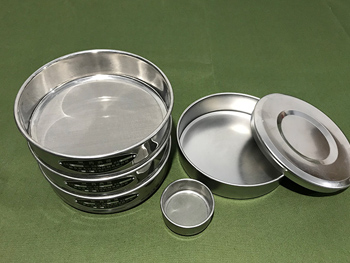
 Email
Email