


In the aggregate and mining industries, efficiency is everything. Whether you are producing concrete aggregates, road base materials, or managing a high-capacity quarry, the quality of your final product depends heavily on one piece of equipment: the gravel vibrating screen.But how exactly does a gravel vibrating screen work? What are the different types available, and how much should you expect to budget for one? This Comprehensive guide will break down everything you need to know to make an informed buying decision.
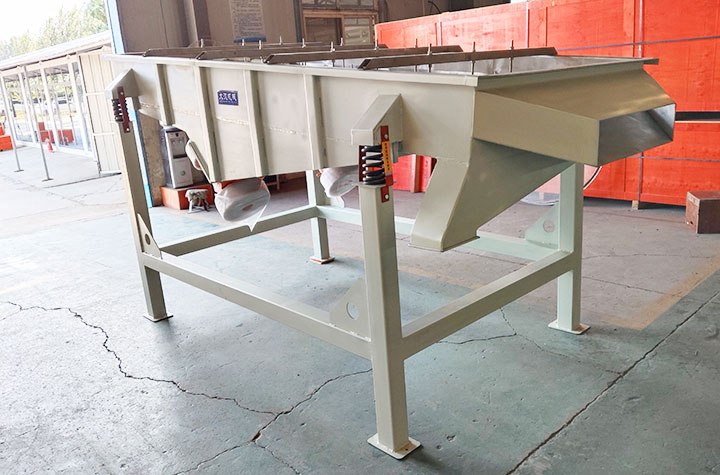
A gravel vibrating screen (also known as an aggregate vibrating screen) is a mechanical separator used to classify mixed stone materials into uniform, marketable sizes. It acts as the "gatekeeper" of your production line, ensuring that only correctly sized gravel proceeds to stockpiles or further crushing.
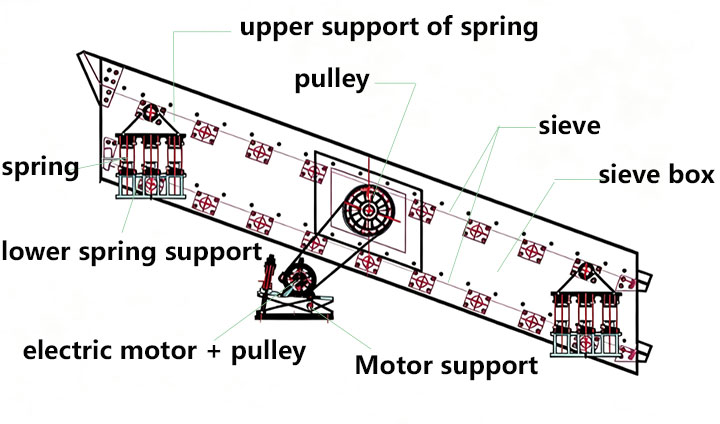
The Working Principle
The operation of a gravel vibrating screen relies on forced vibration and gravity.
Different gravel applications require different vibration patterns. The two most dominant types used in global quarry plants are:
Circular Vibrating Screen (YK / YA Series)
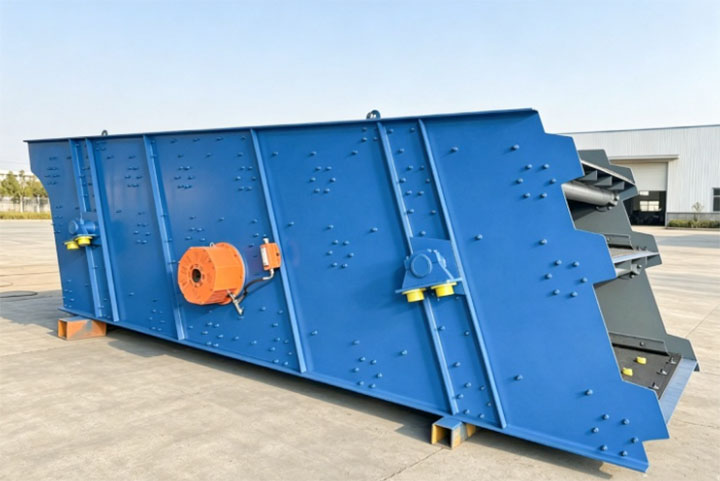
Movement Path: Circular or elliptical motion.
Best For: Heavy-duty, coarse, and medium-sized gravel screening.
Why Choose It: The circular motion creates a fast material transit speed and a high throwing angle. This prevents sticky or wet stones from clogging the screen holes (blinding). It is the standard choice for primary and secondary screening in sand and gravel plants. (Explore our full range of heavy-duty models on our Vibrating Screen product page).
Manufacturing & Engineering Strength: As an established manufacturing base in Dahan Machinery, our YK series circular vibrating screens are engineered with thick-plate laser cutting and stress-relieved welded box frames to withstand extreme impact forces in heavy-duty quarry environments.
Note: Standard deck sizes for the YK series typically range from 1200x3000mm to 3600x8000mm, catering to different aggregation scales.
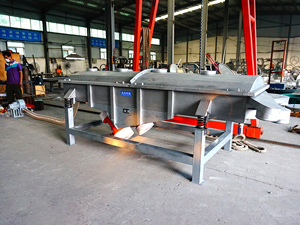
Movement Path: Straight, linear horizontal/inclined motion.
Best For: Fine gravel classification, dewatering, and desliming.
Why Choose It: Driven by twin motors rotating in opposite directions, it offers highly precise sizing and excellent material dewatering. It is ideal for finer material circuits or when screening dry, non-sticky aggregates. For detailed specifications, check out our Linear Vibrating Screen collection.
Note: The ZSG series usually features a smaller inclination angle of 0° to 15°, optimized for prolonged material retention and precision dewatering.
When analyzing a manufacturer's data sheet, pay close attention to these 3 critical components:
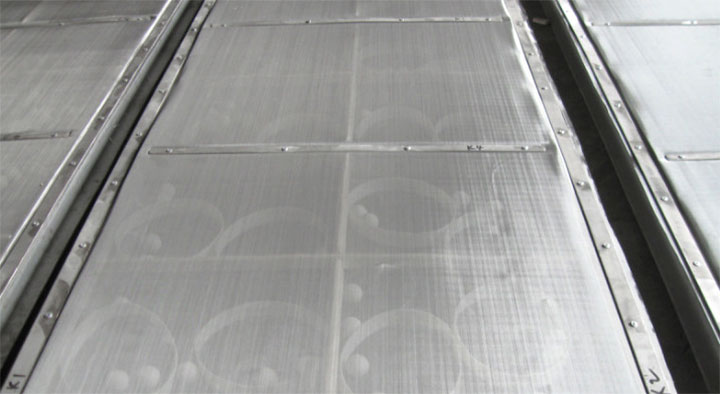
Screen Mesh Material: The mesh directly impacts your maintenance cost. High-manganese steel wire is standard, but polyurethane (PU) screen mesh is highly recommended for abrasive gravel due to its 3-5x longer lifespan and low noise level.
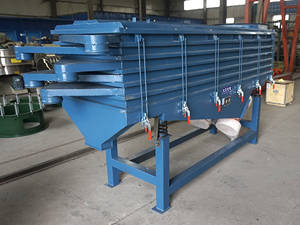
Deck Configurations: Available in Single-Deck, Double-Deck, Triple-Deck, and Quad-Deck. A 3-deck screen allows you to produce 4 distinct sizes of aggregate at once.
Capacity (TPH): Ranging from 30 TPH to over 600 TPH (Tons Per Hour). Ensure the screen width matches your crusher's output to prevent material bottlenecking.
How much does a gravel vibrating screen cost? The price varies drastically based on the machine's scale, the number of decks, and the manufacturing origin.
Direct Factory Advantage: Unlike third-party dealers, Dahan Machinery operates our own manufacturing facility, allowing us to supply custom-configured gravel vibrating screens at competitive factory-direct prices without middleman markups.
Here is a general market breakdown for standard industrial-grade vibrating screens:
| Machine Scale & Capacity | Typical Configuration | Estimated Price Range (FOB) |
|---|---|---|
| Small Scale (30 - 80 TPH) | 2-Deck, High-Manganese Mesh | $4,000 – $10,000 USD |
| Medium Scale (100 - 250 TPH) | 3-Deck, Heavy-Duty Frame | $12,000 – $28,000 USD |
| Large/Quarry Scale (300 - 500+ TPH) | 3/4-Deck, Polyurethane Mesh | $35,000 – $75,000+ USD |
Factors Affecting the Final Cost:
Customization: Adding spray-washing nozzles for wet screening or heavy-duty dust covers increases the price.
Component Brands: Upgrading to premium bearings (like SKF or FAG) and top-tier vibration motors adds to the upfront cost but saves thousands in downtime later.
Mobility: Wheeled or crawler-mobile screening plants cost significantly more than static machines, starting around $80,000+.
This usually happens when the gravel contains high moisture or clay. Try replacing woven wire mesh with self-cleaning anti-blinding mesh, or upgrade to flexible polyurethane screens. Alternatively, consider introducing a wet screening (washing) system.
Bearings are subjected to extreme G-forces. Under standard 8-hour daily operations with proper automatic lubrication, high-quality bearings should be inspected monthly and typically last 12 to 18 months before requiring a preventive swap.
As a leading gravel vibrating screen manufacturer, we design and build heavy-duty screening solutions tailored to your specific geological conditions and TPH requirements.
Tell our engineers your material type, capacity (TPH), and separation requirements to receive a free layout design and direct factory quote.


Address:China,Yanjin county forest park gate to the west 1000 meters north road.


 Online Chat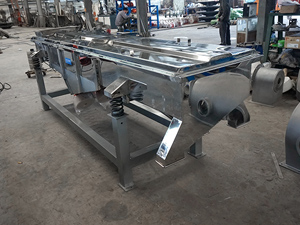
 Email
Email