Your location is: Home > News Center > Choosing and Using a Double Deck Vibrating Screen for Multi-Stage Separation
Choosing and Using a Double Deck Vibrating Screen for Multi-Stage Separation
Understanding Double Deck Vibrating Screens: Structure and Multi-Stage Separation
A double deck vibrating screen is a multi-stage industrial separation machine equipped with two distinct tiers of screening media, designed to process bulk materials with varying particle sizes. Unlike standard single-deck units that only split feed material into two fractions, a double-deck configuration features an upper and a lower deck working simultaneously.
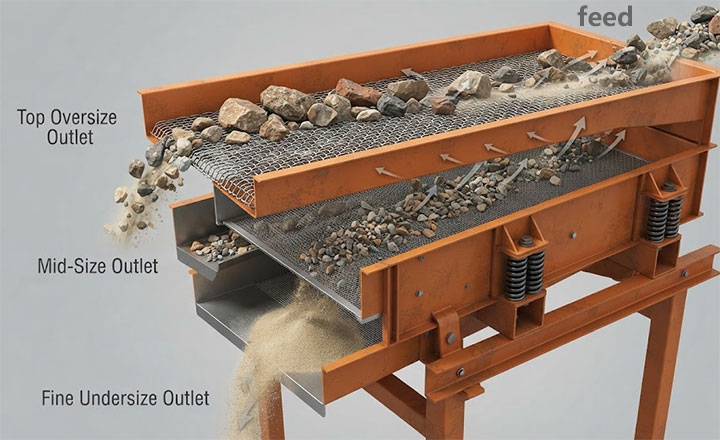
This mechanical layout allows the equipment to receive raw input, screen out oversized debris, and precisely separate the remaining particles into three distinct output fractions (oversize, mid-size, and undersize) in a single continuous pass. You can explore more details on our professional Double Deck Screen product page.
How Does a Double Deck Vibrating Screen Work?
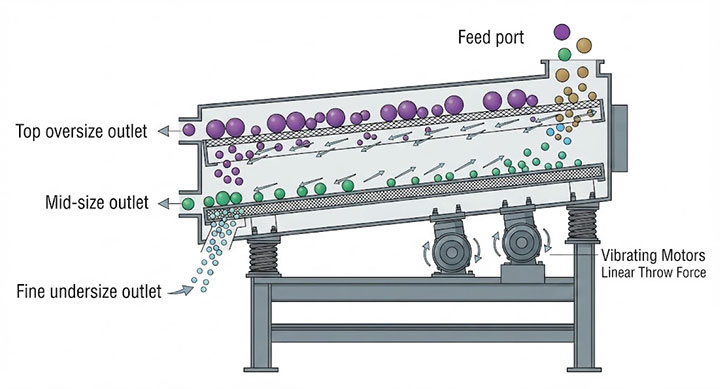
Powered by dual industrial vibrating motors that generate synchronized counter-rotating forces, a double deck linear vibrating screen moves bulk materials along a precise linear throw trajectory across tiered screening media. As the raw feed enters the machine, the entire screen box vibrates in a linear motion, forcing particles to leap forward and cascade downward through the layers for efficient multi-stage classification.
Watch How the Double Deck Linear Vibrating Screen Works
Step 1 (Upper Deck Initial Feeding): The raw material is evenly fed into the inlet of the upper deck. Upon contact with the top screening mesh, the linear throwing motion immediately disperses the material across the width of the screen, absorbing the initial impact and preventing localized accumulation.
Step 2 (Coarse Separation): As the material travels along the upper deck, oversized particles exceeding the mesh aperture are retained and discharged from the top oversize outlet. Meanwhile, smaller particles and fine materials pass cleanly through the upper mesh openings, falling directly onto the lower deck below.
Step 3 (Fine Grading): The material dropping to the lower deck undergoes finer secondary screening. The tighter aperture of the bottom mesh separates the remaining feed into mid-size particles (retained on the lower deck) and fine undersize particles (passing through to the bottom outlet), yielding three high-purity output fractions in a single continuous pass.
What Are the Core Components of a Dual-Deck Screening Machine?
A high-performance double deck linear vibrating screen relies on a robust mechanical assembly to maintain stable operation and precise separation efficiency. Understanding these key components is essential for evaluating equipment durability and long-term maintenance requirements:
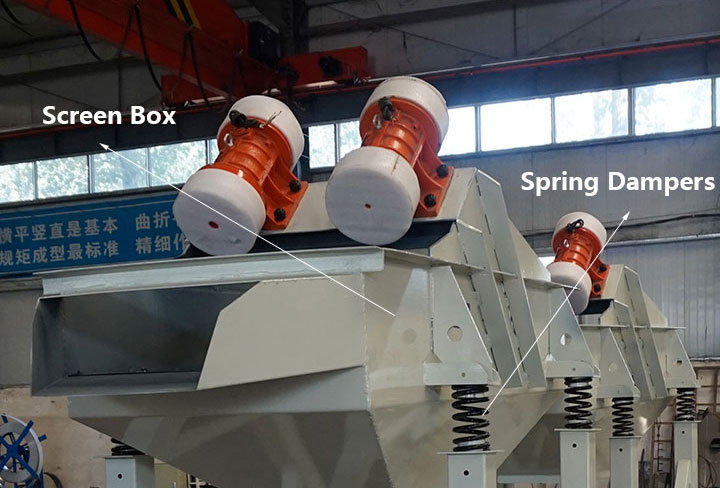
Vibrating Motors (Exciters): Typically installed at the bottom of the screen box , these dual synchronized motors generate the precise linear throwing force required to propel and stratify materials across both decks uniformly.
Screen Box Frame: A heavy-duty, rigid structural frame that houses the dual-tier mesh decks. It is specially engineered to withstand continuous high-frequency vibration stress and heavy bulk material loads without fatiguing.
Spring Dampers (Vibration Isolators): Heavy-duty steel coil springs or specialized rubber dampening elements positioned at the base of the machine. They effectively isolate dynamic vibrations, ensuring stability and protecting the supporting foundation structure from shock.
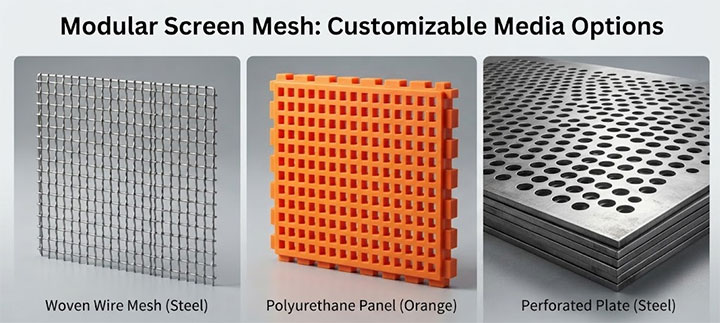
Modular Screen Media: The critical upper and lower decks are fitted with screening media available in various aperture sizes and materials—such as stainless steel woven wire mesh, wear-resistant polyurethane (PU) panels, or perforated steel plates. These are fully customizable to meet specific material grading and throughput requirements.
Which Industries Rely on Double Deck Vibrating Screens?
Because of their unique capability to perform efficient multi-stage classification in a single continuous pass, double deck linear vibrating screens are trusted across heavy industries with strict particle size distribution requirements:
Mining & Mineral Processing: Utilized for sizing and classifying raw metal ores, crushed rock, and mineral powders to prepare feed for downstream processing loops.
Aggregate & Construction: Essential in quarry crushing plants and sand-making lines for precise grading of construction aggregates.
Coal Preparation Plants: Deployed effectively for high-capacity coal sizing, desliming, and dewatering applications.
Chemical & Fertilizer Industries: Expertly handles chemical granules, synthetic powders, and fertilizers, preventing agglomeration and guaranteeing uniform product sizing.
How to Choose the Right Double Deck Vibrating Screen for Your Plant?
Selecting the appropriate industrial double-deck linear vibrating screen requires careful evaluation of your specific operational parameters to ensure maximum performance, throughput, and equipment longevity. Engineers and plant managers should consider these key technical factors:
Processing Capacity (TPH): Determine your required production throughput in tons per hour to correctly size the effective screening area and motor excitation power.
Material Characteristics: Analyze bulk density, moisture content, and particle size distribution (PSD), as wet, sticky, or abrasive materials require specialized anti-blinding mesh configurations.
Target Particle Cut-Points: Define exact separation thresholds for both upper and lower decks to guarantee that output fractions (oversize, mid-size, undersize) strictly match your product grade standards.
Screen Mesh Material & Type: Choose wear-resistant and corrosion-resistant mesh materials—such as stainless steel woven wire, polyurethane (PU) panels, or perforated plates—tailored to your working environment.
Quick Selection Reference Table for Dahan Double Deck Screens
Model Series
Screen Size (mm)
Deck Layers
Power (kW)
Capacity (t/h)
DH-1030
1000 × 3000
Double Deck
2 × 2.2
5 – 15
DH-1235
1200 × 3500
Double Deck
2 × 3.0
10 – 25
DH-1540
1500 × 4000
Double Deck
2 × 4.0
20 – 40
Frequently Asked Questions (FAQs)
How often should I replace the screen mesh on a double deck linear vibrating screen?
Mesh lifespan depends on material abrasiveness, throughput volume, and wire thickness. Typically, top deck meshes experience higher impact and wear, requiring inspection every 1 to 3 months, while bottom deck meshes last longer. Regular mesh tension checks can significantly prolong durability.
Can a double deck linear vibrating screen handle wet and sticky materials?
Yes, provided moisture is properly managed. For high-moisture or sticky feeds, polyurethane (PU) modular mesh or self-cleaning mesh designs (along with anti-blinding devices like bouncing balls or ultrasonic systems) are highly recommended to prevent mesh blinding and sustain separation efficiency.
What is the difference between circular and linear motion double deck screens?
Linear motion screens utilize dual synchronized motors to produce a straight-line throwing action, making them ideal for precise sizing, grading, and dewatering. Circular motion screens use an eccentric shaft to create an elliptical throw, which suits heavy-duty primary scalping and high-impact raw ore screening better.
Looking for a Custom Double-Deck Screening Solution?
Get expert technical drawings, capacity calculations, and a free factory quotation within 12 hours from our senior screening engineers.




 Online Chat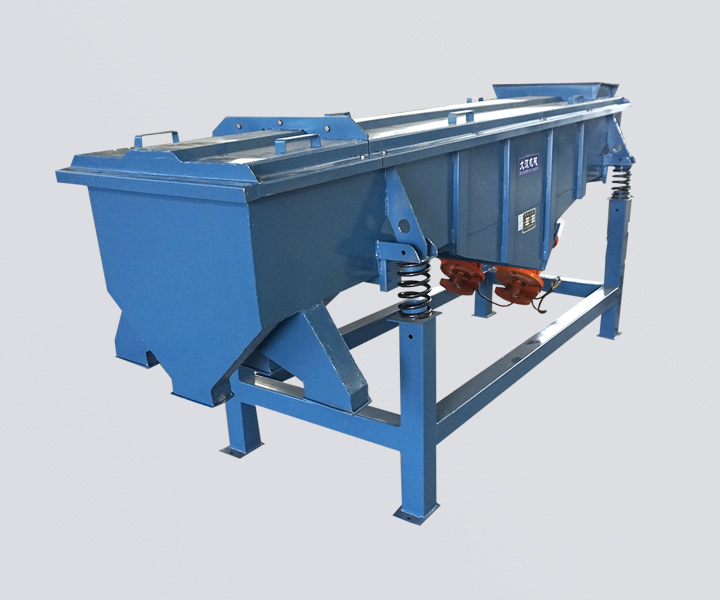
 Email
Email