


In heavy industrial processing, dual-vibration motors run under intense continuous stress. Unlike standard electric motors, they must withstand synchronized high-frequency impacts, abrasive dust, and heavy mechanical loads every single working day. Without a targeted upkeep routine, unexpected motor failure halts the entire screening line.
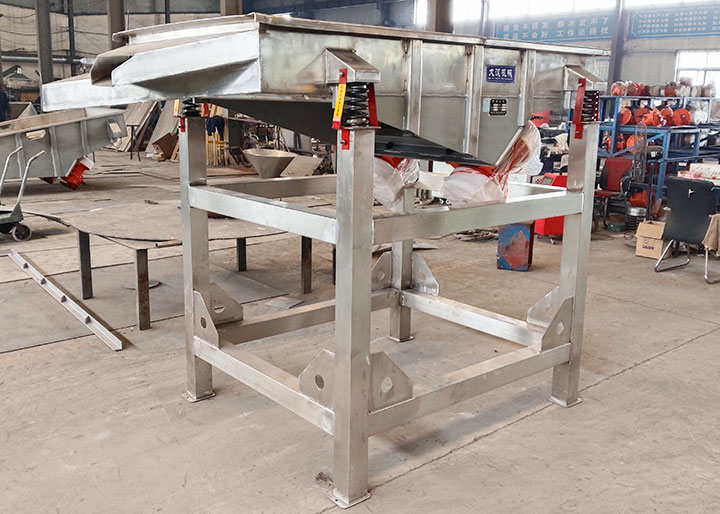
Every industrial motor failure leaves physical clues. In vibrating equipment and sifting equipment, accelerated wear typically originates from two compounding factors: thermal stress and micro-vibration fatigue.
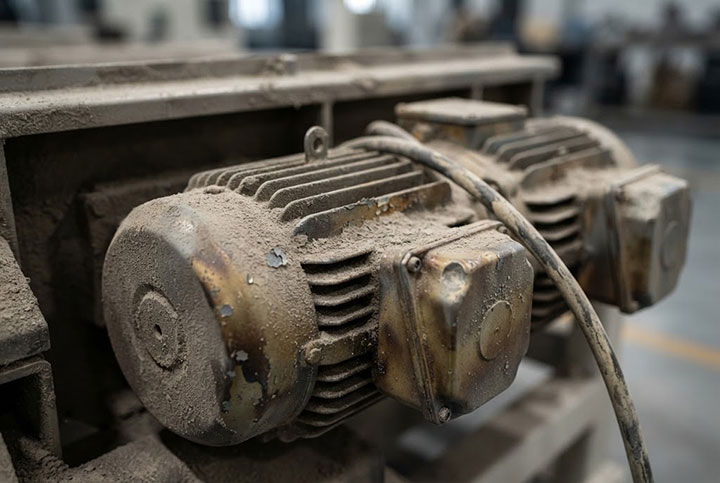
When fine particulate matter bypasses housing seals, it accumulates around the casing and blocks natural heat dissipation. As the motor runs hot, internal bearing tolerances tighten, accelerating friction. Meanwhile, continuous high-frequency G-forces gradually degrade grease properties and loosen structural anchor bolts. Recognizing these mechanical stress points is the foundation of preventing catastrophic downtime.5 Proven Maintenance Practices for Long-Term Reliability
Dust Control & Thermal Management
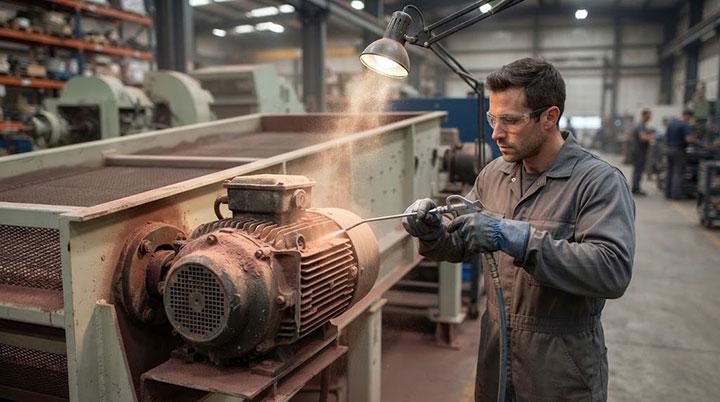
Industrial dust is the silent killer of vibration motors. Accumulated debris acts as an insulating blanket, trapping operational heat. Schedule routine compressed-air blowdowns for cooling fins and inspect terminal box seals weekly to ensure abrasive fines cannot migrate inside the housing.
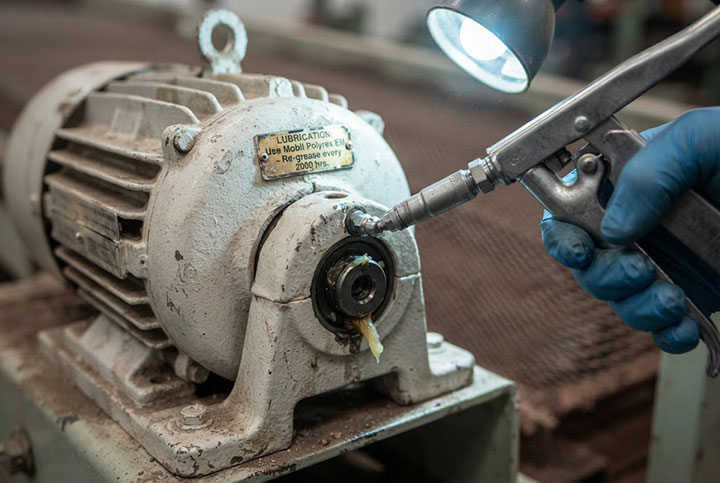
Precision Lubrication: Avoiding Over-Greasing Pitfalls
More grease does not mean better protection. Over-greasing creates excessive internal fluid friction, causing rapid temperature spikes that destroy bearing cages. Follow manufacturer specifications for grease volume and intervals, and never mix incompatible grease types.
Dynamic Balance & Mechanical Sound Diagnostics
Listen closely to your equipment. An abnormal metallic hum or rattling sound usually points to loose eccentric block bolts or bearing wear. Use a touch-probe or sound rod to monitor running acoustics regularly before minor imbalances escalate into shaft fractures.
Electrical Insulation Testing Under Continuous Load
High humidity and mechanical friction gradually compromise winding insulation. Perform periodic megohmmeter (megger) tests to track winding resistance to ground. Catching a drop in insulation value early prevents sudden short circuits and motor burnouts.
Dual-vibration setups rely on precise synchronization between paired motors. Check operating current draw across both units simultaneously. A sudden current imbalance indicates mechanical binding, eccentric weight slippage, or uneven material distribution on the screen deck.
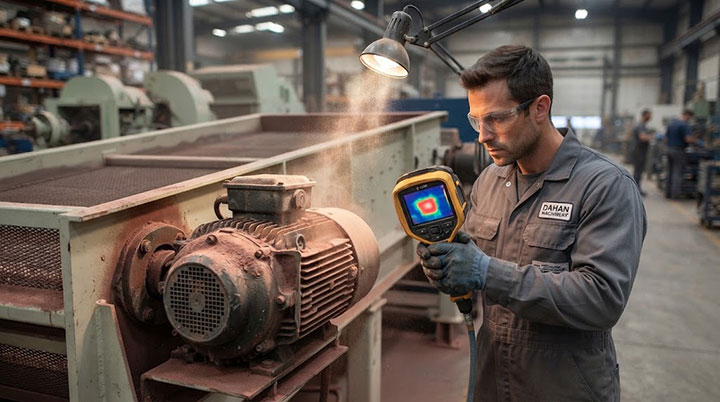
Most catastrophic motor breakdowns do not happen overnight. They give physical warning signs long before stopping production. Plant operators should monitor three key field indicators during routine walkthroughs:
Unusual Surface Temperature Spikes: If the motor casing feels significantly hotter than usual (or exceeds standard operating limits), it typically signals bearing friction, inadequate cooling clearance, or internal electrical resistance.
Abnormal Vibration Shifts: A sudden change in amplitude or a sharp rattling vibration usually means foundation anchor bolts have worked loose due to continuous high G-forces, or eccentric weights have shifted position.
Unbalanced Operating Noise: A grinding or high-pitched squeal points directly to lubricant breakdown and roller element wear inside the bearing assembly. Addressing these symptoms early prevents complete shaft seizure.
When a dual-vibration motor begins to underperform, plant managers face a critical decision: should they overhaul the existing unit or invest in a brand-new replacement? Making the right call depends on balancing immediate repair costs against long-term operational downtime risks.
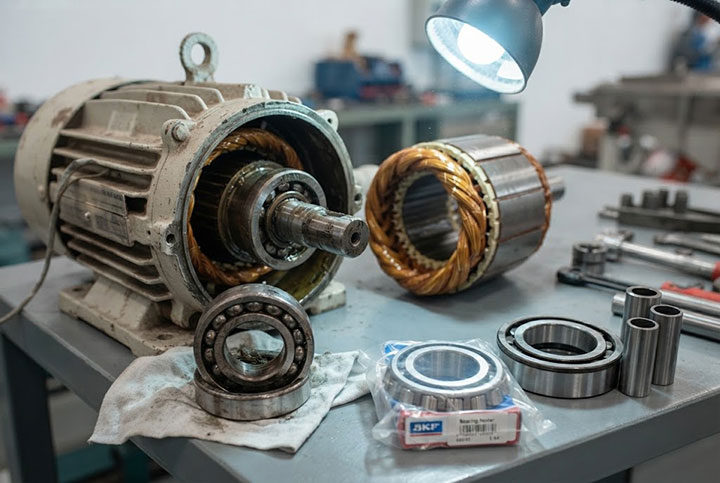
Minor Component Overhaul: If diagnostic checks reveal only worn-out bearings, damaged seals, or loose eccentric weights, replacing these specific components is cost-effective and restores full performance quickly.
Full Motor Replacement: If stator windings have suffered severe thermal burnout, or if the housing has experienced structural fatigue cracks, repairing the unit is often a temporary fix. In heavy-duty screening applications, investing in a new, high-durability motor prevents repeated breakdowns and protects overall production continuity.
Higher ambient temperatures accelerate grease oxidation and oil separation. In hot working environments, grease intervals must be shortened by 30% to 50% to prevent premature bearing failure.
A progressive drop in insulation resistance measured during periodic megger tests, accompanied by an unexplained increase in operating current draw, usually indicates thermal degradation of the winding insulation.
If a motor has experienced multiple bearing failures within a short period, it often points to housing wear or dynamic imbalance beyond field repair limits. Replacing the unit prevents recurring production downtime.
Proper maintenance protects your investment, but having reliable equipment from the start is key to long-term efficiency. If you are looking for durable dual-vibration motors or need technical advice on your specific industrial setup, our engineering team is ready to help.
Contact us today to discuss your specifications or request professional maintenance documentation.


Address:China,Yanjin county forest park gate to the west 1000 meters north road.


 Online Chat
 Email
Email