


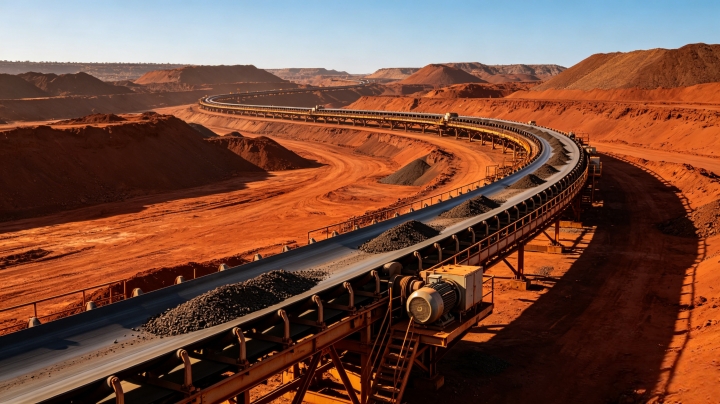
Selecting the right belt conveyor for an iron ore mining operation is a critical engineering decision that directly impacts throughput, operating costs, and long-term project viability. Unlike light-duty conveyors used in warehouses or assembly lines, an iron ore conveyor must withstand extreme conditions: highly abrasive material, heavy impact loads, long distances, and continuous operation in harsh environments. This guide walks through the key factors, specifications, and selection criteria to help you make an informed decision.
Iron ore is heavy and abrasive. A belt moving packaged goods along an assembly line and a belt transporting thousands of tonnes of iron ore across a mine site share the same basic principle—but the specifications, materials, and engineering behind each diverge significantly. Key challenges include:
Abrasive wear : Iron ore fines and lumps cause rapid wear on belt covers, pulleys, and skirtboards.
Impact damage: Large, angular lumps dropped from crushers or feeders can tear or puncture belts.
Heavy loads: High tonnage (often 800–4,000 TPH) demands high tensile strength and robust drive systems.
Environmental conditions: Outdoor operations face extreme temperatures, dust, and moisture.
If you specify a belt designed for lighter duty, you risk premature failure, unplanned downtime, and significantly higher whole-life costs.
| Belt Type | Best For | Key Strengths |
| Steel Cord Belts (ST Belts) | Long-distance, high-capacity overland conveyors | Tensile strength up to 10,000+ kN/m; low elongation; excellent impact resistance |
| Multi-Ply Fabric Belts (EP/NN) | Medium-distance, moderate-duty applications | Good flexibility; impact absorption; rating to 3000 kN/m |
| Chevron / Profiled Belts | Inclined transport (up to 30°–40°) | Cleats or V-patterns prevent material rollback |
| Heat-Resistant Belts | Transporting hot ore from sintering or pelletizing | Special rubber compounds (SBR, EPDM) withstand 150–200°C |
| Fire-Resistant / Anti-Static Belts | Underground mining or explosion-risk zones | FRAS compliance (e.g., AS4606 for coal); prevents static buildup |
Industry insight: Steel cord belts dominate the mining conveyor market, capturing over 51% of the market in 2025, driven by their suitability for deep mines and long hauls. Aramid/hybrid belts are the fastest-growing segment, offering weight savings and energy efficiency.
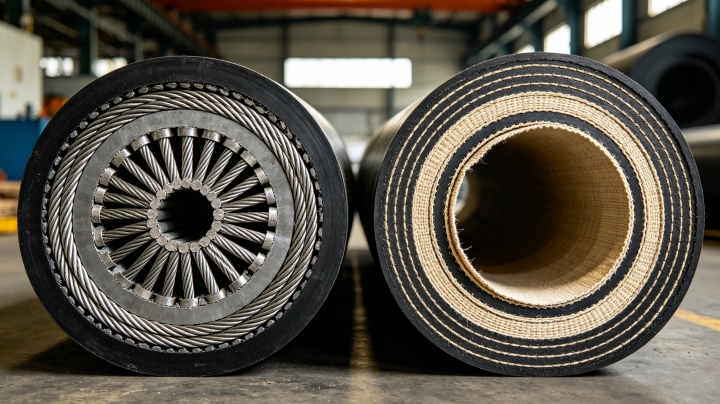
Tensile Strength (Breaking Force) Determines the maximum load the belt can carry without breaking or excessive stretching. For a typical 1200 mm belt, tensile strength ranges from 1,000 to 5,000 N/mm, depending on the belt type. For steel cord belts in large-scale operations, ratings exceed 10,000 kN/m.
Belt Width and Capacity Standard widths range up to 2.4 meters. A 1200 mm (1.2 m) belt is common for medium to large-scale operations, balancing throughput with design flexibility. Typical capacity: 800–4,000 tons per hour (TPH) Belt speed: 1–6 m/s (higher speeds increase throughput but accelerate wear) Cover Grade and Abrasion Resistance Iron ore is highly abrasive, so cover grade is critical. Look for:
Grade 1: High abrasion resistance for rough, hard materials.
Measured by DIN 22102 standards; low abrasion loss extends belt life
Temperature and Weath


Address:China,Yanjin county forest park gate to the west 1000 meters north road.


 Online Chat
 Email
Email