


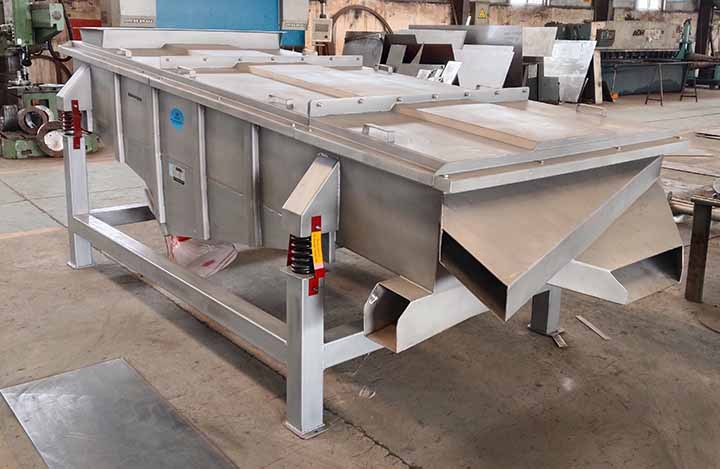
In the wood processing, biomass pellet manufacturing, and pulp refining industries, controlling the size of raw materials determines the grade of the final product. As a material separation machine, the Wood Chips Vibrating Screen sorts pulverized wood according to size and removes oversized pieces or fine bark dust. Depending on the screen size and motor configuration, the machine's hourly capacity ranges from 1 to 10 tons. Manufacturers use thick Q235 carbon steel coated with industrial abrasion-resistant paint to construct the machine frame, while the screens are made of high-tensile manganese steel or polyurethane to withstand the continuous abrasion from wood fibers.
| Problems Encountered by Buyers | Technical Remedial Measures |
| Wet wood chips block the screen mesh | Install high-elastic silicone bouncing balls under the screen surface to clean stuck fibers through mechanical impact during vibration. |
| Long fiber debris hooks on the screen mesh | Adopt linear motion track and adjust the screen inclination angle (15° - 20°) to throw long particles forward instead of falling vertically into the mesh holes. |
| Rapid friction wear and premature tearing of screen mesh | Replace standard woven wire mesh with hook manganese steel screen or modular polyurethane screen plates with reinforced edges. |
Wood chip vibrating screens can be used in biomass fuel, pulp mills, and mulch grading plants for grading or removing impurities from wood chips.
In biomass fuel production, the vibrating screen is installed after the pulverizer and before the hammer crusher to separate dust smaller than 3mm and oversized pieces larger than 12mm, preventing jamming during pellet mill pressing. In pulp mills, vibrating screens rigorously sieve sawdust within a 15mm to 25mm range to ensure uniform chemical absorption within the digester. In mulch grading plants, linear vibrating screens are equipped with two layers of mesh to sort sawdust into fine, medium, and coarse grades for distribution in landscaping substrates.
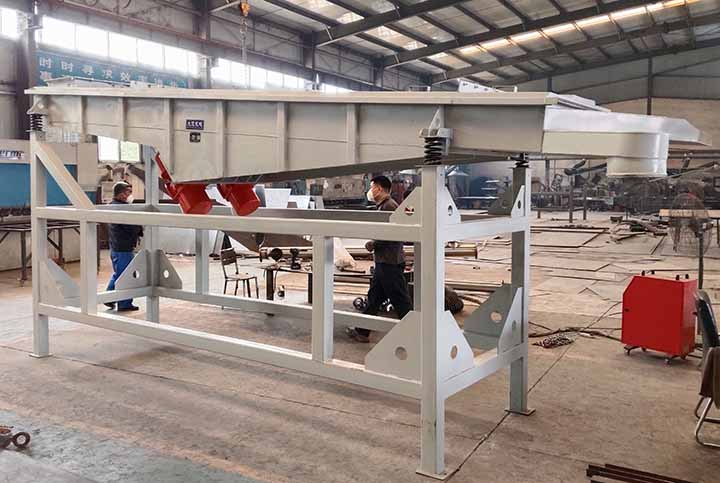
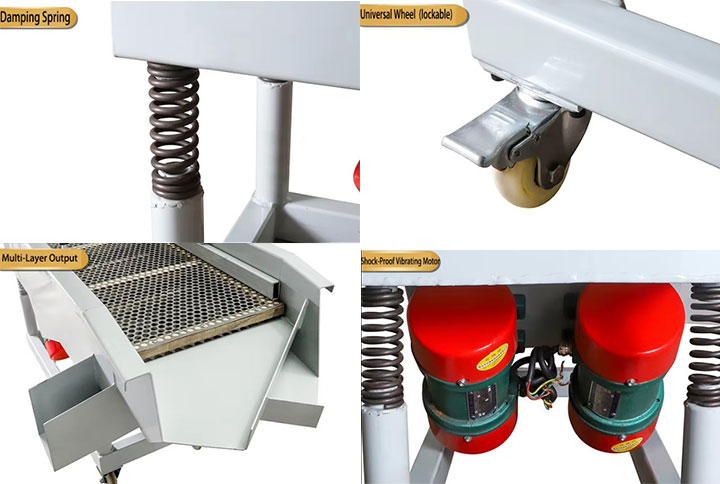
The sawdust vibrating screen employs a dual-motor design. Two counter-rotating vibrating motors operate synchronously to counteract horizontal forces, generating linear motion. The entire screen box is supported by heavy-duty steel damping springs, which isolate 95% of the kinetic energy from the plant floor. The top cover features continuous rubber sealing gaskets and is secured with quick-release wedge bolts to confine the sawdust within the machine cavity. For maintenance, a side tensioning system allows operators to loosen external tension bolts and slide out worn screen layers within fifteen minutes.
| Model | Layer |
Screening Area (mm) |
Mesh Size (mesh) |
Particle Size (mm) |
Capacity (t/h) |
Power (kw) |
Vibration Direction Angle (°) |
Screen Inclination (°) |
Dual Amplitude |
| DZSF-520 | 1-6 layers | 500*2000 | 2-400 | 0.074-10 | ≤3 | 0.37×2 | 45-60 | 0-7 | 3-4.5 |
| DZSF-525 | 500*2500 | ≤5 | 0.37×2 | ||||||
| DZSF-612 | 600*1200 | ≤8 | 0.37×2 | ||||||
| DZSF-1020 | 1000*2000 | ≤12 | 0.75×2 | ||||||
| DZSF-1025 | 1000*2500 | ≤16 | 0.75×2 | ||||||
| DZSF-1030 | 1000*3000 | ≤20 | 1.1×2 | ||||||
| DZSF-1224 | 1200*2400 | ≤23 | 1.5×2 | ||||||
| DZSF-1525 | 1500*2500 | ≤28 | 1.5×2 | ||||||
| DZSF-1530 | 1500*3000 | ≤32 | 2.2×2 |
We support custom design based on your footprint and capacity requirements.
The price of a standard wood chip vibrating screen ranges from $1,900 to $10,500. The difference in investment costs depends on the specific structural choices. For high-moisture, acidic wood, stainless steel contact areas are chosen, increasing the cost by 30% compared to standard carbon steel. Each additional screen layer increases the weight of the steel and requires a larger motor frame size. Using explosion-proof certification (ATEX/Ex) to reduce the risk of dust ignition increases the cost of electrical components.
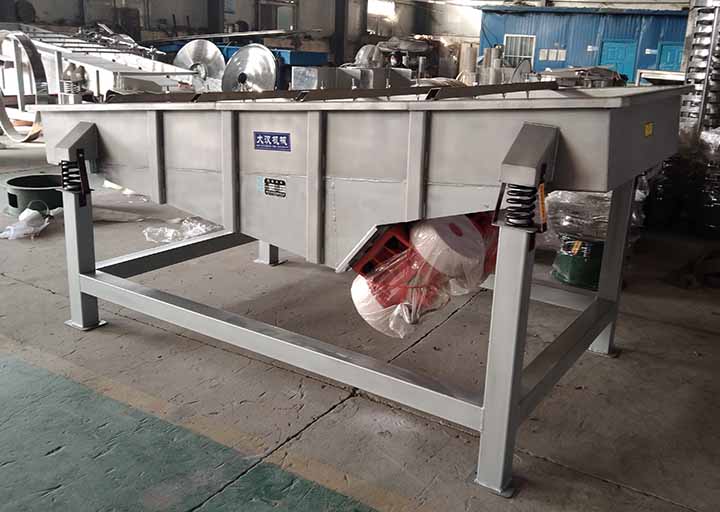
A timber processing plant in Vietnam added a double-layer DZSF-1530 machine to its rubberwood pellet production line. The plant processes logs with a moisture content of 45%, which clogs the original static screening device within two hours of operation. The screen surface with built-in bouncing balls kept the mesh clear during ten-hour shifts. Factory records show that its processing speed is consistently 18 tons per hour, screening out 8% of oversized pieces for re-crushing, and removing 12% of fine bark powder before the remaining material enters the drying stage.

A: The vibrating screen can not only separate freshly crushed coarse wood chips and sawdust into sizes suitable for papermaking or engineered wood products, but also process sawdust and wood flour from biomass pellet production, removing fine sand, bark, and large pieces of wood.
A: Screened sawdust refers to wood fragments that have passed through specific mesh openings to remove oversized pieces (such as wood planks and branches) and oversized particles (such as sawdust, soil, and bark dust). This process produces the uniform size characteristics required for industrial processing.
A: The machine casing is made of carbon steel or 304 stainless steel. The screening surface consists of woven manganese steel wire mesh, perforated steel plate, or polyurethane modules, selected based on the wear level and moisture content of the material.
A: Problems include mesh clogging caused by moist particles, uneven material feed due to spring fatigue, bearing overheating due to lack of lubrication, and sidewall cracking due to incorrect motor counterweight synchronization.
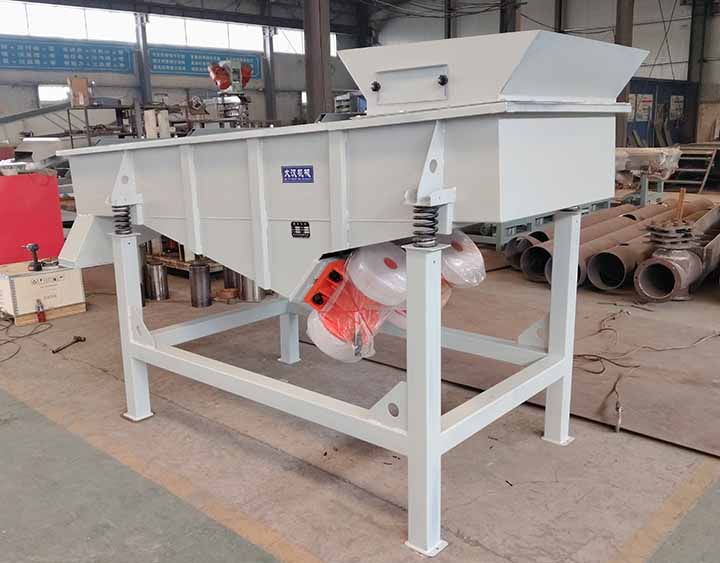
Selecting a wood chip vibrating screen requires balancing the target output with the physical properties of the feed wood fibers. Determining the correct screen medium, adjusting the screen area according to the tonnage per hour, and selecting appropriate anti-clogging devices can prevent material accumulation and maintain a stable process flow in biomass or paper production lines.


Address:China,Yanjin county forest park gate to the west 1000 meters north road.


 Online Chat
  Email
Email