


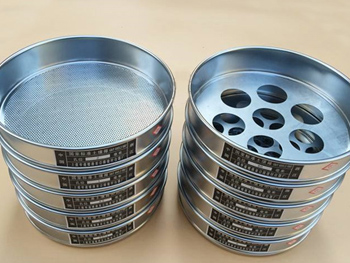
Test sieve pans and covers provide structural closure for multi-layer particle testing columns and reliable collection of fine fractions. Fabricated from industrial-grade stainless steel and brass, these sets are designed to maintain a consistent fit within standard laboratory shakers during routine gradation analysis.
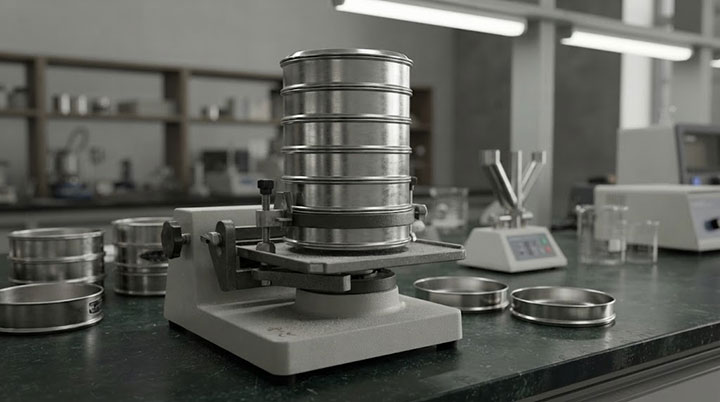
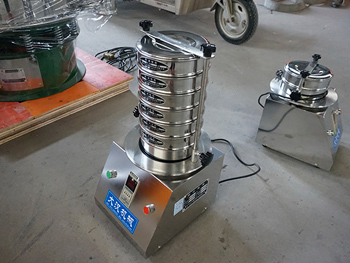
In a mechanical particle separation stack, the sieve pan and cover act as the structural anchors. Placed at the very bottom, the pan catches and holds the final fine particles that pass through the smallest mesh. Placed at the top, the matching cover secures the entire column of nested sieves, containing the sample material and preventing surface loss while the stack undergoes continuous mechanical agitation.
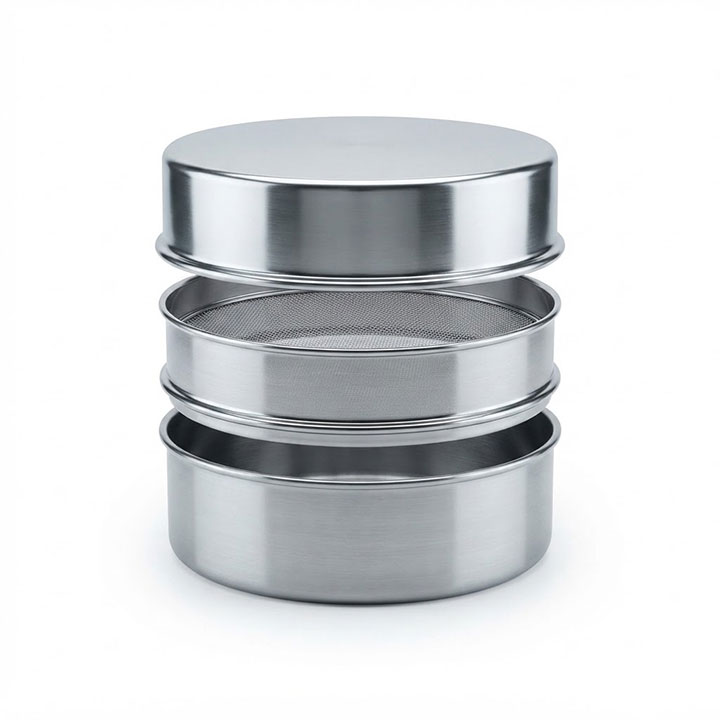
To match different testing standards and shaker capacities, our sieve pans and covers are available in standard frame dimensions and material options:
| Parameter | Specification Options |
|---|---|
| Diameters | 3", 8", 12", 200 mm, 300 mm |
| Height Configurations | Full-height and half-height pans available |
| Material Grades | Stainless Steel (SUS304 / SUS316) & Precision Brass |
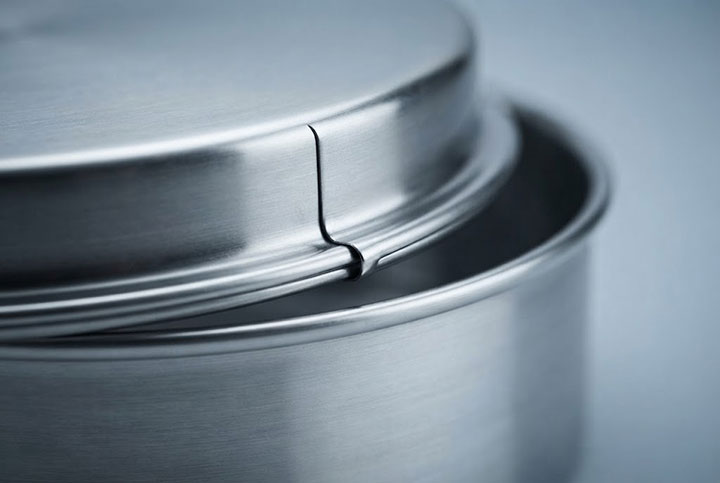
During prolonged mechanical vibration, fine-grained samples undergo continuous impact and friction. If the bottom pan and top cover lack precise dimensions, fine dust can easily escape through micro-gaps. We address this through two key design focuses:
Video: Overview of our stainless steel test sieve pans, covers, and stacking structure.
Laboratory testing conditions vary widely, from damp soil samples to chemical-laden mineral aggregates. Selecting the right material ensures long-term durability and prevents premature surface degradation:
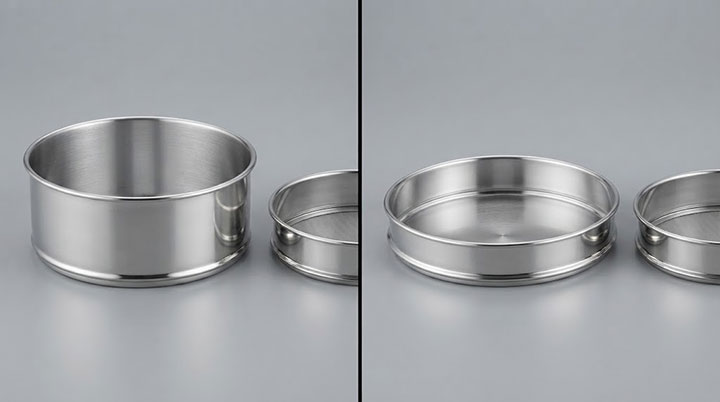
Choosing the correct depth configuration depends directly on your laboratory sample volume and the physical clearance limits of your mechanical shaker:
Proper care of your sieve pans and covers protects data accuracy and extends equipment lifespan. Keep these operational guidelines in mind:
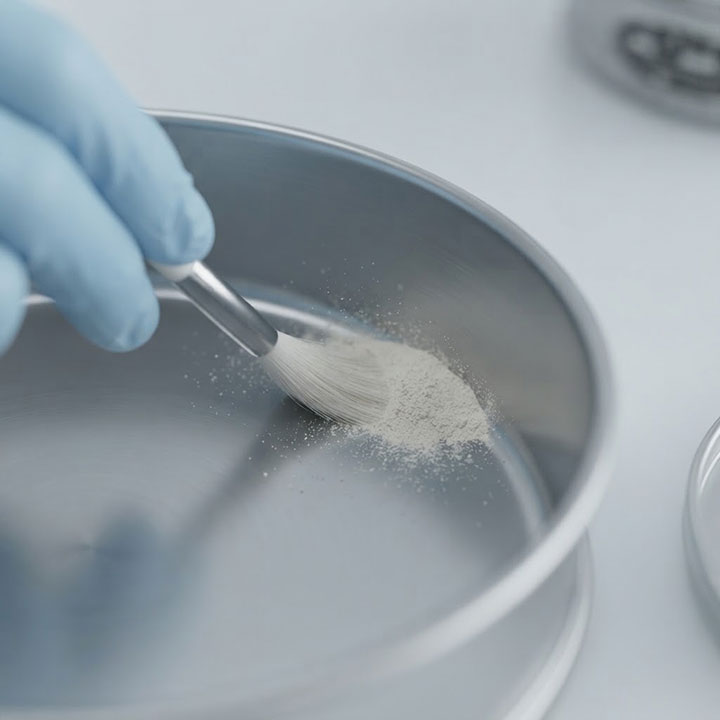
Use a soft-bristled brush or an ultrasonic bath to remove compacted fine particles trapped in the corners of the pan. Avoid using hard metal tools or abrasive pads that can scratch the metal surface and trap future samples.
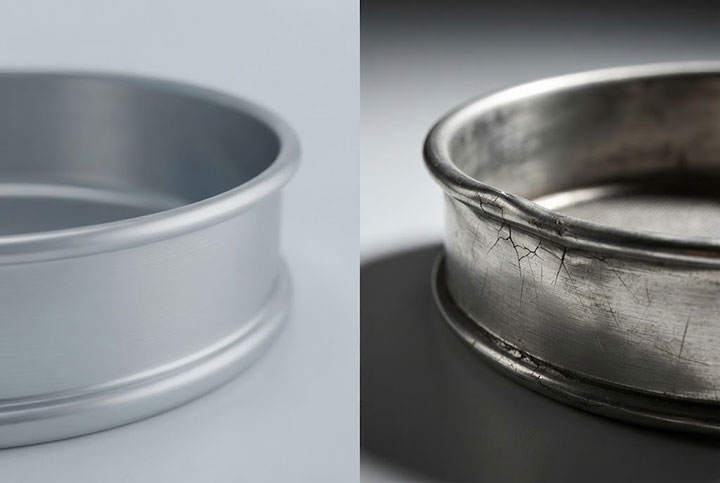
Regularly inspect the rim edges and bottom seams for micro-cracks, thinning from continuous friction, or out-of-round deformation. Replacing a worn pan or cover prevents loose fits and ensures consistent stack sealing during testing.
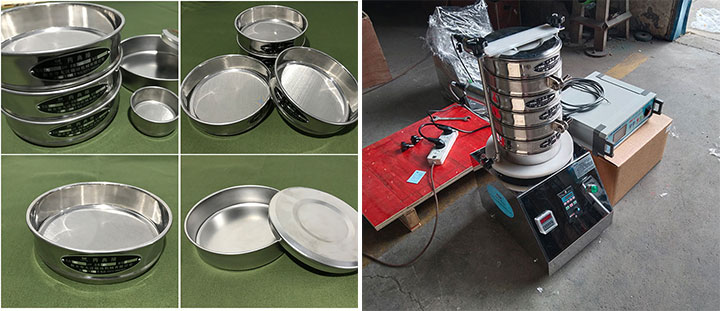
As a direct manufacturer, we support industrial laboratories and distributors with flexible production capabilities beyond standard configurations. If your testing setup requires specific dimensions, non-standard depths, or custom laser-etched branding for traceability, our engineering team can tailor the production to match your exact specifications and volume requirements.
A: Yes. They are engineered to match standard international framing tolerances, ensuring a secure, snug fit with most mainstream mechanical sieve shakers currently used in laboratories.
A: Full-height pans offer deeper volume capacity for heavy-load aggregate or soil samples, while half-height pans are tailored for compact sieve stacks where vertical clearance in the shaker is limited.
A: Yes. Our pans and covers are manufactured to complement standard test sieves that comply with major international specifications such as ASTM E11 and ISO 3310 requirements.
Whether you need standard replacement sets, specific frame dimensions, or bulk manufacturing solutions for your laboratory, our team is ready to provide prompt specifications and pricing.


Address:China,Yanjin county forest park gate to the west 1000 meters north road.


 Online Chat
 Email