


Choosing suitable materials for chemical powder conveying requires more than identifying the powder. Chemical compatibility, particle abrasiveness, moisture sensitivity, and operating conditions can all affect equipment performance and service life. This Chemical Powder Conveying Material Selection guide explains how to evaluate hose and internal conveying component materials for vertical powder handling applications.
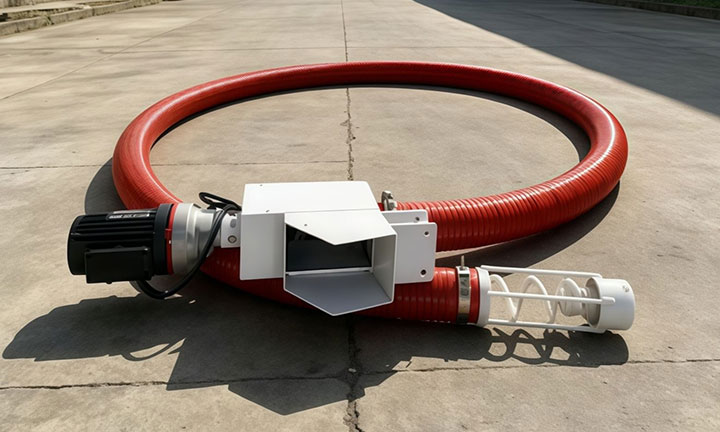
Before selecting a hose conveyor for chemical powder, evaluate four factors that influence material compatibility and conveying reliability:
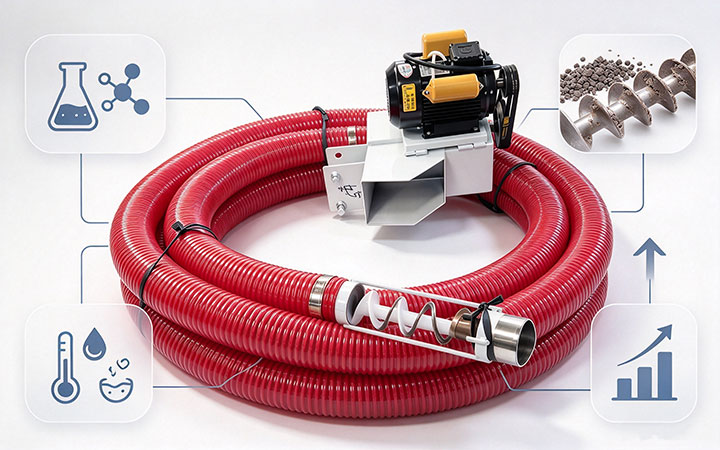
Before specifying the hose and screw components, check these four factors:
The hose and screw should be assessed separately because they perform different functions and experience different types of stress. A suitable combination must handle the powder without unacceptable wear, corrosion, contamination, or maintenance demands.
The hose must withstand repeated contact with the powder while remaining flexible enough for the conveyor's installation and operating conditions. The right choice depends on both the chemical properties of the material being conveyed and the hose construction.
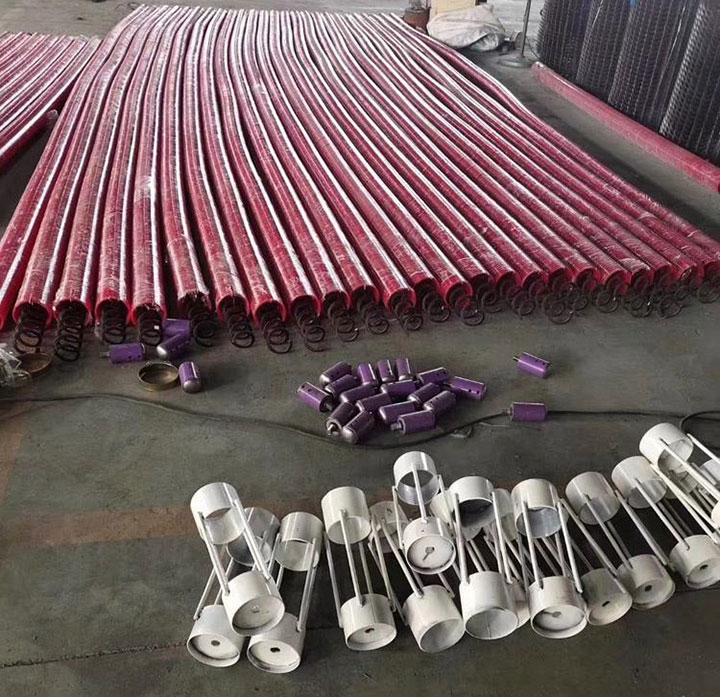
PU (polyurethane): Worth considering for abrasive powders when flexibility and wear resistance are important. Its suitability depends on the specific PU formulation, powder characteristics, and operating temperature.
Rubber: Can provide flexibility and impact resistance, depending on the rubber compound. Chemical compatibility must be checked against the actual powder and any moisture or cleaning agents encountered during operation.
PTFE: Offers broad chemical resistance in many applications. However, the complete hose assembly must also be evaluated for abrasion, repeated bending, temperature limits, and liner construction.
Material alone does not determine hose performance. Wall thickness, reinforcement, minimum bending radius, connection design, and the risk of electrostatic charge buildup also matter. For fine chemical powders, confirm whether a conductive or static-dissipative hose is required and how the complete system will be grounded.
Before finalizing the specification, provide the supplier with the chemical name, operating temperature, powder characteristics, and hose routing. This allows the hose construction to be evaluated for the actual application rather than selected by material name alone.
In a hose conveyor for chemical powder, material compatibility should be checked for every component that contacts the powder. The hose lining, internal conveying components, seals, and connections may face different chemical, mechanical, and operating conditions.
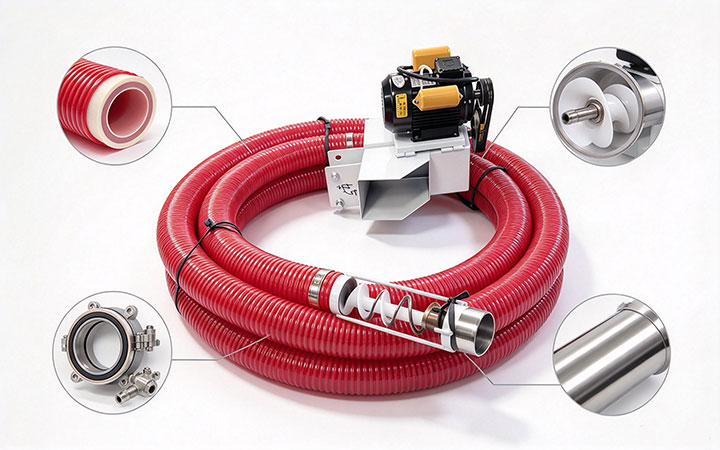
Hose lining: Check resistance to the specific chemical, operating temperature, and abrasive properties of the powder. Do not select a hose based on flexibility alone.
Internal conveying components: Evaluate wear resistance and chemical compatibility according to the actual conveying mechanism and the parts exposed to the material.
Seals and connections: Confirm that sealing materials and connection components are suitable for the powder, temperature, and cleaning conditions.
Product-contact surfaces: If contamination control is important, consider surface condition, cleaning access, and the compatibility of all materials exposed to the powder.
The appropriate material combination depends on the chemical composition, moisture sensitivity, particle characteristics, and operating conditions. Confirm the equipment's actual construction with the supplier before specifying a material grade.
Material problems often develop under actual operating conditions that are different from those assumed during initial selection. Corrosion, abrasive wear, and moisture can affect the hose and screw in different ways, so each risk should be assessed before the conveyor is specified.
Corrosion: Some chemical powders become more corrosive when exposed to moisture or condensation. Check the composition of the powder and any residues or cleaning agents that may contact the equipment. The selected metal grade and hose lining must be compatible with these conditions.
Abrasion: Hard particles can gradually wear the hose wall and reduce the thickness of screw flights. Particle hardness, conveying conditions, and contact surfaces should be considered together when evaluating wear resistance.
Moisture and buildup: Hygroscopic or cohesive powders may stick to internal surfaces, form deposits, or become difficult to discharge after absorbing moisture. Hose routing, surface condition, cleaning access, and the risk of condensation all affect the practical solution.
These risks can overlap. For example, moisture may change powder flow while increasing corrosion exposure, and an abrasive powder may wear a protective surface over time. Material selection should therefore account for the combined operating conditions rather than treating each factor in isolation.
Different chemical powders place different demands on a vertical hose conveyor. Evaluating particle characteristics and operating conditions helps determine a suitable hose, internal spiral assembly, and conveying configuration.
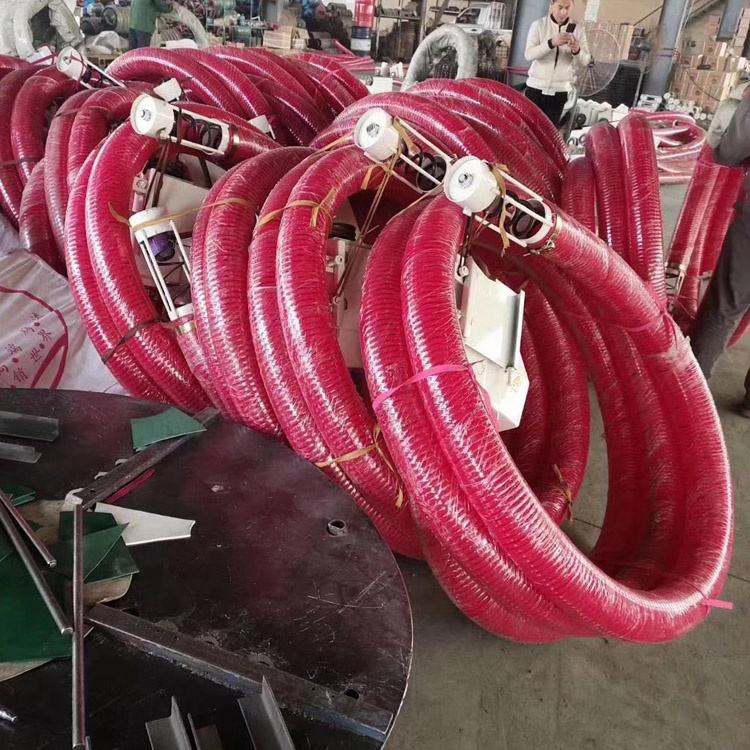
Abrasive powders: Powders containing hard or sharp particles may accelerate wear on the hose lining and internal conveying components. Consider wear resistance and inspectable or replaceable wear parts when evaluating the equipment.
Corrosive powders: Check the chemical compatibility of the hose, spiral assembly, seals, and other powder-contact parts. Material suitability should be confirmed for the specific chemical and operating temperature rather than assumed from a general material category.
Moisture-sensitive powders: Hygroscopic powders may absorb moisture and form lumps, affecting material flow. Evaluate the sealing arrangement, storage and feeding conditions, and cleaning requirements to help reduce moisture exposure and buildup.
Fine powders: Fine particles can escape through poorly sealed connections and may create dust during feeding or discharge. An enclosed conveying path and suitable sealing can help control dust release. For combustible powders, assess electrostatic and explosion-protection requirements before selecting the system.
When comparing configurations, also consider bulk density, particle size, flowability, required throughput, vertical conveying height, and available installation space. These factors influence whether a hose conveyor can meet the application's requirements and which configuration should be confirmed with the manufacturer.
For applications involving chemical powders, share the material name, required capacity, conveying height, and any special safety or cleaning requirements when requesting a Hose Conveyor for Vertical Chemical Powder.
After evaluating the hose and screw materials, the next step is to check whether the conveyor fits the required vertical lifting height, installation space, and powder handling conditions. Material compatibility alone does not guarantee reliable conveying; the equipment layout and operating requirements must also match the process.
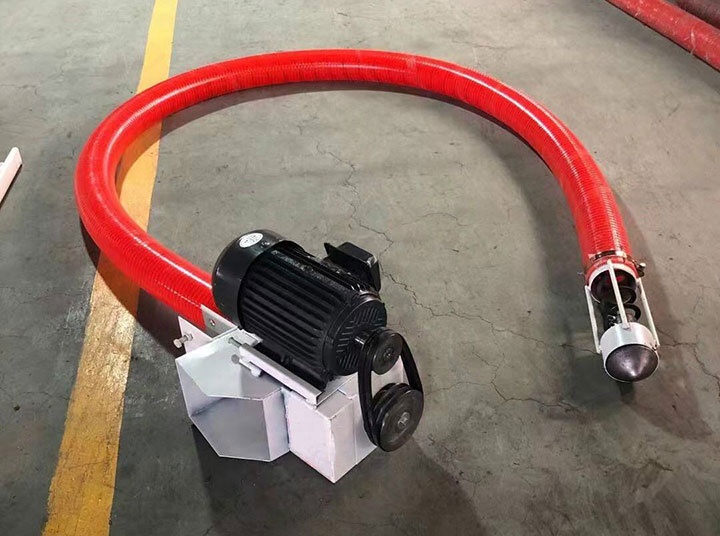
For a vertical chemical powder application, consider the following points:
If your process requires lifting chemical powder through a vertical route, explore our Hose Conveyor for Vertical Chemical Powder to review the equipment details and discuss the configuration for your application.
To evaluate a hose conveyor for vertical chemical powder conveying, the supplier needs more than the powder name. The following details help determine the suitable conveying arrangement and material configuration.
With these details, Dahan can assess the application and discuss suitable conveyor configurations and material options. If some parameters are not yet available, start with the material name, target capacity, and required conveying height.
Share your powder properties, target capacity, and conveying height with Dahan to discuss a suitable configuration for your Hose Conveyor for Vertical Chemical Powder application.


Address:China,Yanjin county forest park gate to the west 1000 meters north road.


 Online Chat


 Email