


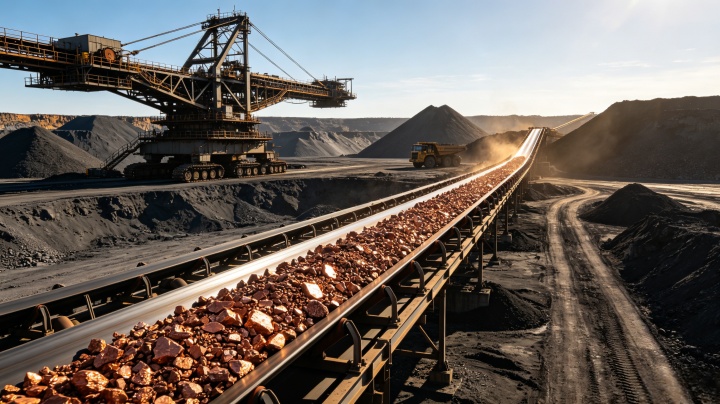
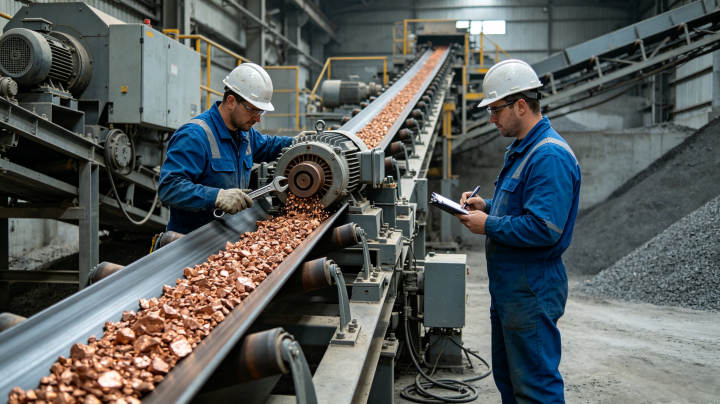
Selecting the right Copper Ore Belt Conveyor is a mission-critical decision that directly impacts your mine's production capacity and operating costs. A common mistake in mining CAPEX projects is specifying a belt conveyor for copper ore the same way you would for coal or limestone, leading to frequent breakdowns. This copper ore belt conveyor selection guide provides a practical framework to avoid these pitfalls, focusing on abrasion resistance and long-term reliability.
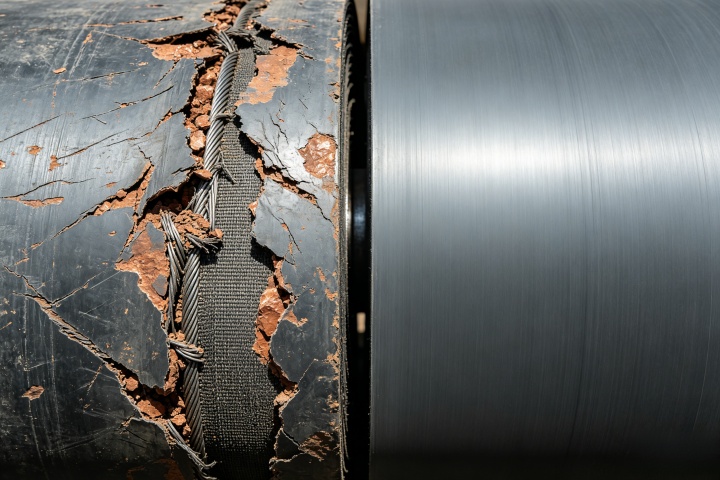
Copper ore is not "just bulk material." It is highly abrasive (C-grade per Rulmeca classification) , often damp and sticky in sulfide ore zones, and heavy—with bulk densities ranging from 2.0 to 2.4 t/m³ depending on oxidation. These three properties alone dictate a completely different design philosophy, yet most generic tenders miss this nuance.
I have worked on copper projects in Zambia's Copperbelt and Chile's Atacama regions where the difference between a correctly-specified conveyor and a "cheaper" alternative was $8 million in lost production over the first 3 years—not from belt failure, but from idler seize-ups and blocked transfer chutes that no one had accounted for.
The core takeaway: Copper ore demands abrasion-focused design, not capacity-focused design. Get this priority order wrong, and your TCO (Total Cost of Ownership) doubles.
Let us move beyond generic tables. Here are the specific numbers and thresholds that separate a robust copper ore conveyor from a problem child.
Most buyers specify grade "M" (general purpose) covers. For copper ore, this is insufficient. You need grade "A" (abrasion-resistant) covers with a DIN 53516 volume loss below 90 mm³ —and ideally below 80 mm³ for high-silica ores.
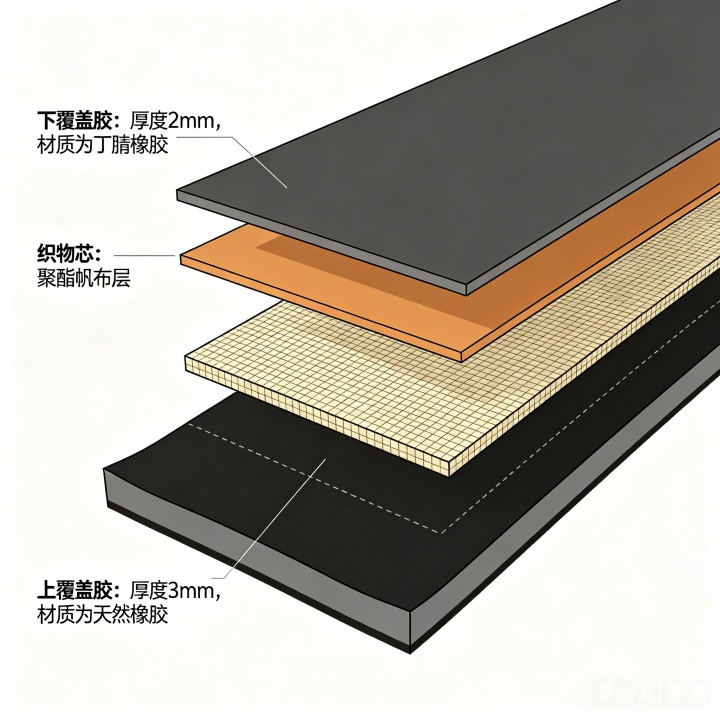
In one Zambian operation, switching from a standard 12 mm top cover to an abrasion-resistant compound extended belt life from 14 months to 39 months on the same duty cycle. The premium was 18% higher belt cost; the saving was 2.3x longer belt intervals and halved splice maintenance.
Here is a counterintuitive insight for copper ore: while coal conveyors push 5–7 m/s, copper ore conveyors should operate between 1.3 and 2.5 m/s in the primary run. Why? Impact and abrasion at transfer points increase exponentially with speed. I have seen chute wear plates at 4 m/s need replacement every 6 weeks; at 2 m/s, the same plates lasted 9 months.
Of course, if you are feeding fully-crushed, dry ore from a tertiary crusher, you can push higher speeds. But for ROM (Run-of-Mine) copper ore with lump sizes up to 400 mm, keep belt speed conservative.
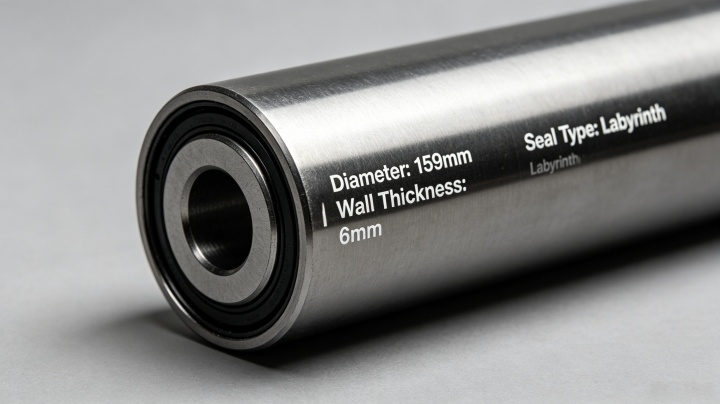
For copper ore, idler life is the #1 operational headache. Use these minimum standards:
| Component | Requirement |
| Idler diameter | 159 mm minimum (not 133 mm) |
| Idler wall thickness | ≥ 4 mm |
| Seal type | Labyrinth + contact seal combination (not simple labyrinth) |
| Roller shell | High-strength steel, not standard ST37 |
| CEMA rating | CEMA E or higher for heavy-duty applications |
A 159 mm idler with proper seals may cost 40% more upfront than a 133 mm unit. But in a copper ore application, it will outlast the smaller idler by 3–4×. Over a 20 km overland system, that difference is over $2 million in maintenance labor and downtime.
Capacity: 11,000 t/h Belt: St 10,000 steel-cord, top cover thickness 15 mm (abrasion-grade)
Belt speed: 7 m/s — but note this is after primary crushing, not ROM feed
Drive power: 8 × 5,000 kW Safety factor: 5.0 (reduced from standard 6.7 based on splice quality assurance)
Key lesson: The reduced safety factor only works if you have destructive splice testing every 6 months—which Chuquicamata performs religiously.
For smaller operations without this capability, stick to SF 6.7.
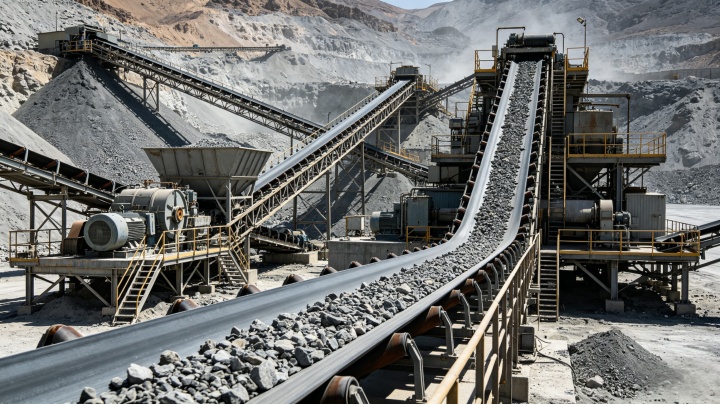
Capacity: 7,200 t/h Belt width: 1,800 mm Belt speed: 3.8 m/s Length: 2,704 m Power: 4 × 710 kW
Key lesson: This system uses intermediate drive (tandem drive at tail) to manage belt tension without over-speccing belt strength. This is an elegant solution for medium-length conveyors—lower CAPEX than a single massive drive, lower splice stress than a head-only design.
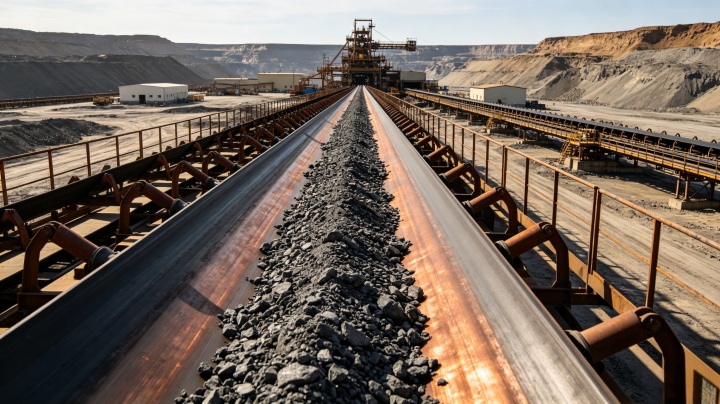
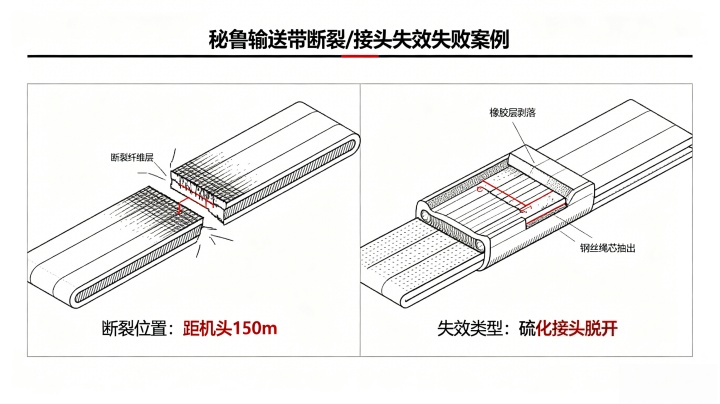
A mid-tier copper mine in Peru specified a fabric EP belt (1,600 kN/m) for a 1.8 km inclined conveyor handling damp sulfide ore. Within 8 months:
Belt elongation exceeded 3%, requiring re-tensioning every 2 weeks
Splice failure occurred at 14 months — 6 weeks of lost production
Replacement with steel-cord St 2,500 belt cost $2.1 million, plus $800,000 in lost revenue
The mistake: Under-specifying belt modulus for an inclined, wet ore application. Fabric belts stretch more than steel-cord, and damp ore adds dynamic load fluctuation. For any incline > 10° with copper ore, go steel-cord from day one.
This is a new driver that is reshaping copper ore conveyor tenders in 2025–2026.
Major copper miners (including Codelco, Freeport-McMoRan, and Anglo American) have committed to reducing Scope 1 & 2 emissions by 30–50% by 2030. Belt conveyors are seen as a direct replacement for diesel truck haulage—which can account for 40–60% of a mine's total diesel consumption.
The shift we are seeing:
Regenerative downhill conveyors: On decline conveyors, the electric drive motors run as generators, feeding power back into the mine grid. One 5 km downhill copper conveyor in Chile generates 2.2 MW of regenerative power—enough to power the mine's crusher station.
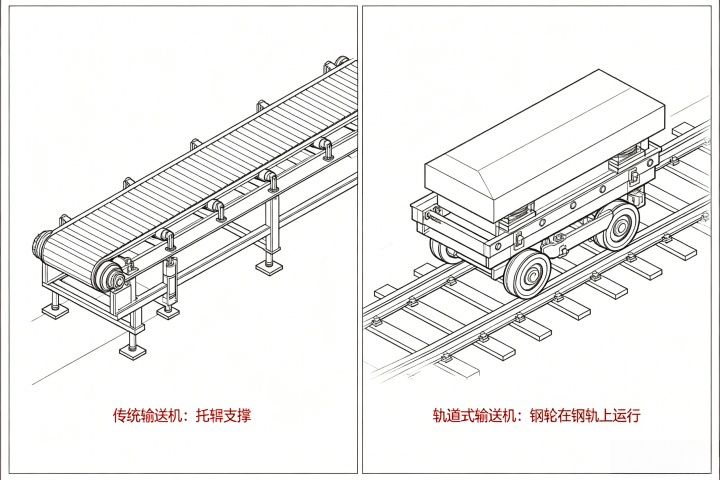
Rail-running conveyor technology: Steel wheels on steel rails replace idlers, slashing rolling resistance. A copper mine in Africa deploying this system reports 80% energy reduction versus traditional idler conveyors at the same throughput—5,000 t/h at 1.5 km, saving an estimated $1 million annually in electricity.
Predictive maintenance mandates: Major operators now require real-time belt condition monitoring (magnetic, ultrasonic, and vision systems) as standard spec items, not optional extras.
If your copper ore conveyor tender proposal does not address these ESG drivers, you are likely already behind two competitors who do.
Use this 5-step checklist when evaluating copper ore belt conveyor options:
Step 1 — Define the Ore Type
Oxide ore: Dry, dusty, less sticky — standard abrasion-grade belts work. Sulfide ore: Often damp, may have clay content — require top cover with anti-stick pattern and scraper systems at every transfer to prevent carryback buildup.
Step 2 — Calculate Dynamic Tension
Do not use static calculation alone. Copper ore's variable lump size creates dynamic load spikes. Always apply a start-up factor of 1.3× and a surge factor of 1.25× to your steady-state tension.
Step 3 — Choose Belt Type by Distance < 1 km with moderate incline → EP fabric belt acceptable if ≤ 400 m lift 1–3 km → Steel-cord, St 1,000 – St 2,500
> 3 km or > 300 m lift → Steel-cord, St 3,150 minimum, with multiple drive stationsStep 4 — Specify Transfer Point Design
Copper ore destroys transfer chutes. Insist on:
Rock-box design (ore-on-ore impact) at head chute
Wear liners: Ceramic or chromium-carbide, not AR400 steel Skirt rubber: Replaceable wear strips, changed monthly on a schedule
Step 5 — Plan for Splice Maintenance For steel-cord belts, splices are the weakest point.
Budget for: Ultrasonic splice testing every 6 months One scheduled splice repair per 12–18 months (depending on belt age) Emergency splice kit stored on site — to avoid 6-week lead times from Germany
Based on documented copper project references, here is a functional shortlist:
| Supplier | Strengths | Notable Copper Reference |
| TAKRAF | Mega-projects, complex overland curves | Chuquicamata (Chile) |
| FLSmidth | Integrated IPCC + conveyor packages | Various South American projects |
| Fenner Dunlop | Premium abrasion-grade belt covers | African Copperbelt operations |
| ContiTech / Phoenix | High-strength steel-cord belts (St 10,000+) | Oyu Tolgoi (Mongolia) |
| KGHM ZANAM | Standardized underground conveyor series | KGHM Polish copper mines (170+ km total) |
| Metso | Full processing + conveying solutions | Multiple global installations |
In conclusion, a copper ore belt conveyor is not a commodity purchase. Generic specifications deliver generic (and disappointing) results. By following the design parameters and real-world project data outlined in this copper ore belt conveyor design guide, you can avoid costly downtime and premature component failure. The right conveyor is an investment that ensures your operation remains productive and competitive for years to come.
Q: What belt speed should I use for copper ore? A: For ROM feed with lump sizes up to 400 mm, keep it at 1.3–2.5 m/s. For crushed feed (≤ 50 mm), 3.5–5 m/s is acceptable. Above 5 m/s only for dry, fines-dominated ore.
Q: Is a fabric belt ever acceptable for copper ore? A: Yes — for short transfer conveyors (< 500 m) with low lifts and low tonnage (< 1,000 t/h). For any main haulage conveyor, steel-cord is the industry standard.
Q: How often should I replace conveyor idlers in a copper mine? A: With proper 159 mm, CEMA E-spec idlers, expect 15,000–25,000 hours before first replacement. Under-specified idlers fail at 4,000–8,000 hours in the same duty.
Q: What is the single biggest design mistake for copper ore conveyors? A: Underestimating abrasion at transfer points. More downtime comes from chute blockages and wear than from belt failure.
Q: How do regenerative conveyors work for copper ore? A: When ore moves downhill, gravity pulls the belt, turning the motor into a generator. This can offset 30–60% of the uphill conveyor's energy consumption on the same system.
A copper ore belt conveyor is not a commodity purchase—it is a mission-critical asset that directly impacts your mine's production capacity and operating cost structure. Generic specifications will deliver generic (and disappointing) results. Instead, design for abrasion first, specify higher-grade components upfront, and factor in the growing ESG requirements that are now non-negotiable in global copper markets.
By following the parameters, project data, and lessons shared in this guide—based on real installations from Chile to Zambia—you can avoid the common pitfalls that cost mining operations millions in downtime and early component failure. The right conveyor won't be the cheapest quote on your desk. But it will be the one that is still running at capacity, with minimal maintenance, when your competitors are planning their second belt replacement in 5 years.

How to Choose the Right Building Material Machinery for Your Production Line — A Complete Buyer's G
Jul 02, 2026
This guide provides factory owners and project managers with a practical framework for selecting building material production equipment. Machinery choices impact business performance for 5–10 years, making informed procurement decisions essential.The article evaluates suppliers ...Data sheets


Address:China,Yanjin county forest park gate to the west 1000 meters north road.


 Online Chat
  Email
Email