


Desktop electromagnetic vibrating sieve shaker is commonly used for particle size analysis, powder grading, and sample inspection. Compared with traditional motor-driven sieve shakers, the electromagnetic drive system can provide more stable vibration frequency and more uniform screening movement, which helps improve repeatability during testing.
It is widely used in pharmaceutical powder testing, food ingredient inspection, metal powder classification, soil sample analysis, chemical raw material screening, and research laboratories. For users who need accurate particle size separation in a limited workspace, desktop electromagnetic vibrating sieve shaker is one of the commonly selected testing machines.
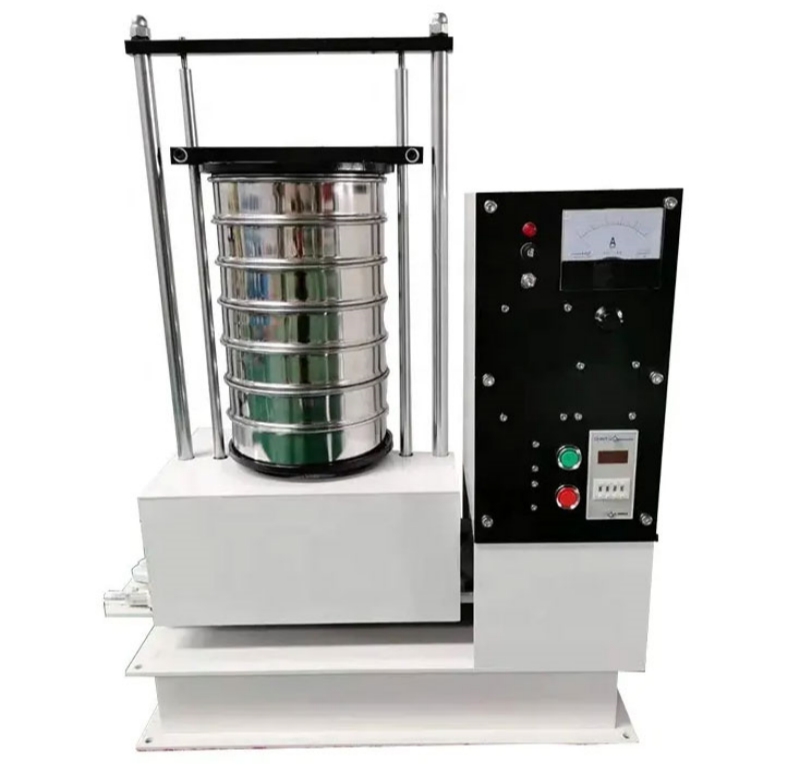
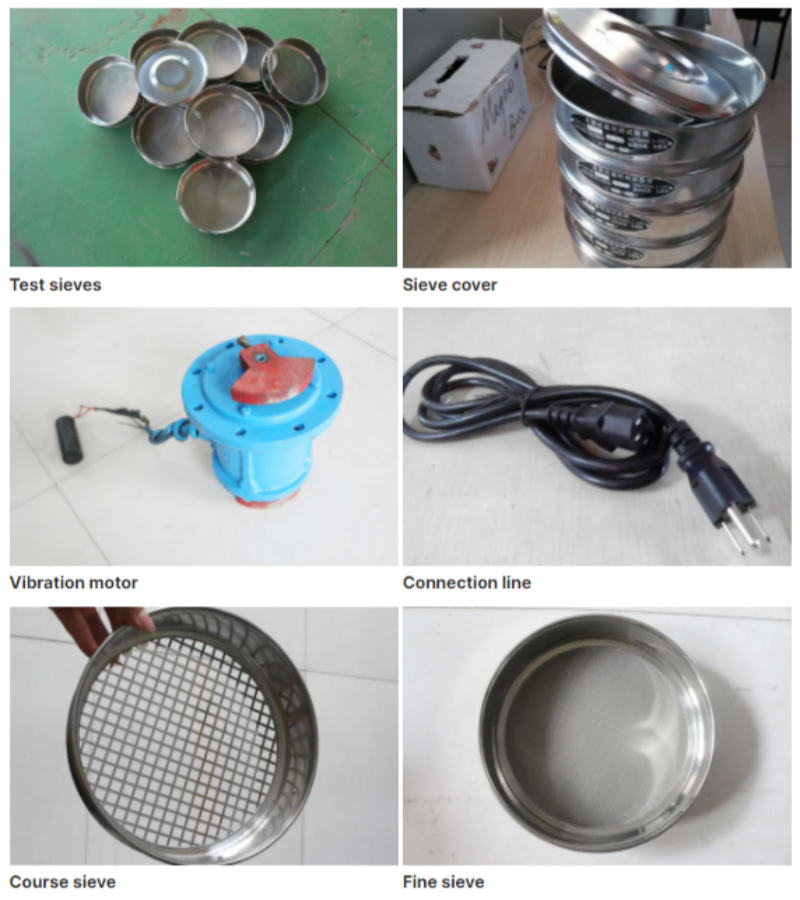
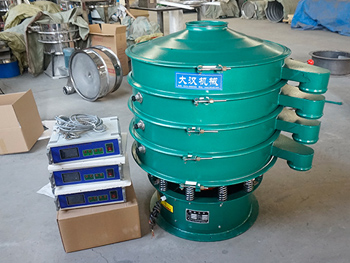
Desktop electromagnetic vibrating sieve shaker is a device that uses electromagnetic vibration force to screen and classify materials. It uses the vibration force generated by the electromagnetic vibrator to vibrate the material on the screen, thereby achieving separation and classification of the material. Desktop electromagnetic vibrating sieve shaker usually consists of screen box, electromagnetic vibrator, screen, vibration reduction device and feed port.
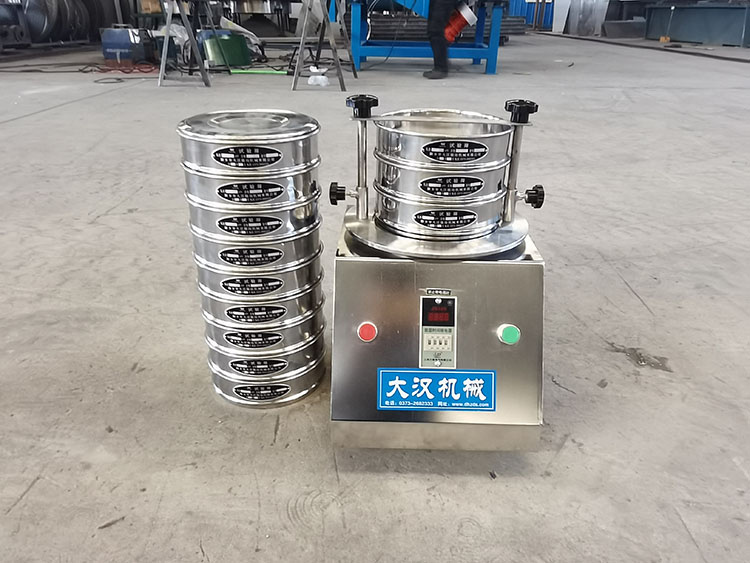
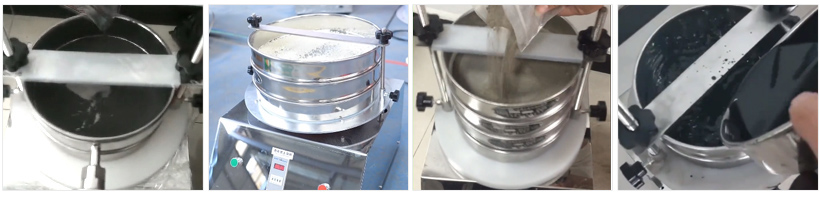
The working principle of desktop electromagnetic vibrating sieve shaker is based on the action of electromagnetic vibration force. The material enters the screen box through the feed port, and the electromagnetic vibrator in the screen box generates electromagnetic vibration force, causing the screen box to vibrate horizontally or tiltedly. Under the action of electromagnetic vibration, the material passes through the aperture of the screen. The larger particles will be screened out, while the smaller particles will pass through the screen to achieve the purpose of separation and classification.
Screen box: The screen box is usually made of welded steel plates. It has high strength and rigidity and can withstand large vibration forces and material impact.
Electromagnetic vibrator: The electromagnetic vibrator generates electromagnetic vibration force through current excitation coil, causing the screen box to vibrate horizontally or tiltedly, prompting the material to move on the screen surface.
Screen mesh: Screen mesh is usually made of wire mesh or polymer screen plate, with different apertures and mesh shapes to adapt to the screening requirements of different materials.
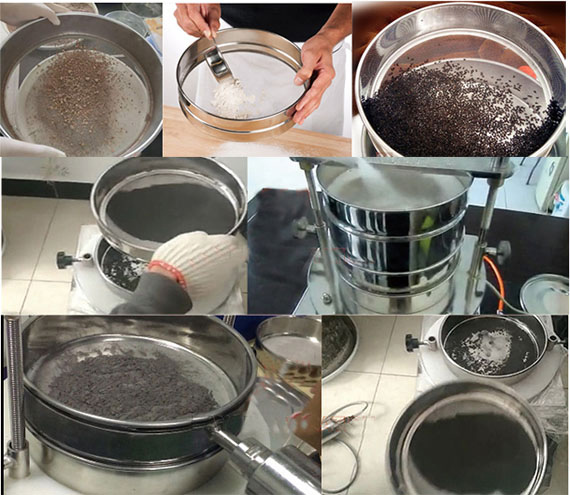
Vibration reduction device: Desktop electromagnetic vibrating sieve shaker is usually equipped with a vibration reduction device to reduce the transmission of vibration to the support structure and reduce the impact of noise and vibration on the environment and operators.
Feed port: The feed port is usually designed reasonably to ensure that materials can enter the screen box evenly and achieve effective screening results.
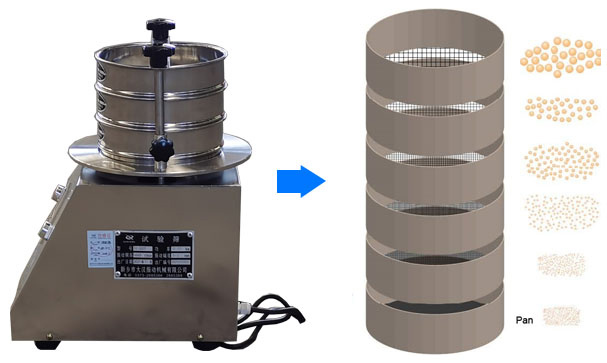
Chemical industry: used for screening and classifying chemical raw materials, such as granular chemical raw materials, resin, rubber, etc.
Food industry: used for screening and classifying food raw materials, such as powdered food additives, cereals, powdered sugar, etc.
Pharmaceutical industry: used for screening and grading pharmaceutical raw materials, such as pharmaceutical powders, pills, etc.
Efficient screening: Through the action of electromagnetic vibration force, materials can be screened quickly and effectively to improve screening efficiency.
Precise classification: Its screen aperture can be selected as needed to achieve precise classification effects and meet different particle size requirements.
Reliable and stable: The structure is solid, the electromagnetic vibration force is uniform, the operation is stable and reliable, and it can work continuously for a long time and reduce downtime.
Specifications vary by manufacturer and model, but common ranges include:
| Item | Typical Range |
|---|---|
| Sieve Diameter | 75mm / 100mm / 200mm |
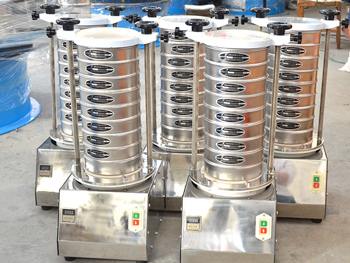
| Sieve Layers | 1-8 layers |
| Timer | 0-99 min |
| Power Supply | 220V / 50Hz |
| Sample Capacity | Depends on material density |
| Mesh Size | From coarse to fine mesh |
When selecting a desktop electromagnetic vibrating sieve shaker, users typically need to consider the following factors:
Sieve Frame Diameter. For standard laboratory particle testing, a 200mm sieve frame diameter is generally preferred to accommodate typical sample volumes. Smaller sieve frame diameters, such as 75mm and 100mm, are more suitable for precise testing of small batches and trace samples.
Number of Sieve Layers. Custom models supporting 1-8 layers are available. More sieve layers result in finer grading.
Material Type. For viscous powders, ultrafine powders, or lightweight materials, models with adjustable vibration frequencies should be selected to prevent material clumping and clogging, ensuring optimal sieving results.
Testing Frequency. For laboratories conducting multiple continuous tests daily, models with stable vibration, low failure rates, and the ability to operate continuously for extended periods should be prioritized to ensure testing efficiency.
Power Supply Standard. Confirm the local power grid voltage in advance, such as 110V/60Hz or 220V/50Hz. If special voltage requirements exist, models supporting customized power supplies can be selected.
Typically depend on the screen frame diameter, number of screen layers, control system type, whether it's made of stainless steel or ordinary steel, outlet voltage requirements, and dust cover.
The market price range for standard desktop models is approximately $300 to $1800; models with larger screen frame diameters, more screen layers, or customized configurations will have higher prices depending on the customization requirements.
Q:What materials can be tested by desktop electromagnetic vibrating sieve shaker?
A:It can be used for flour, starch, pharmaceutical powder, pigment, soil samples, metal powder, chemical additives, granules, and other dry bulk materials.
Q:What is the price of desktop electromagnetic vibrating sieve shaker?
A:Standard models usually range from USD 300 to USD 1800. Price depends on sieve diameter, number of layers, material, voltage, and optional accessories.
Q:What is the difference between electromagnetic and motor type sieve shaker?
A:Electromagnetic models usually provide more stable vibration, lower noise, and better repeatability, while motor type models are commonly used for general screening tasks.
Q:Can voltage be customized?
A:Yes. Many suppliers can provide 110V/60Hz, 220V/50Hz, or other customized voltage requirements for export markets.


Address:China,Yanjin county forest park gate to the west 1000 meters north road.


 Online Chat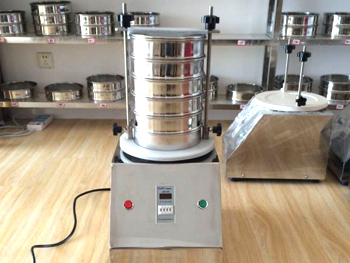
 Email
Email