


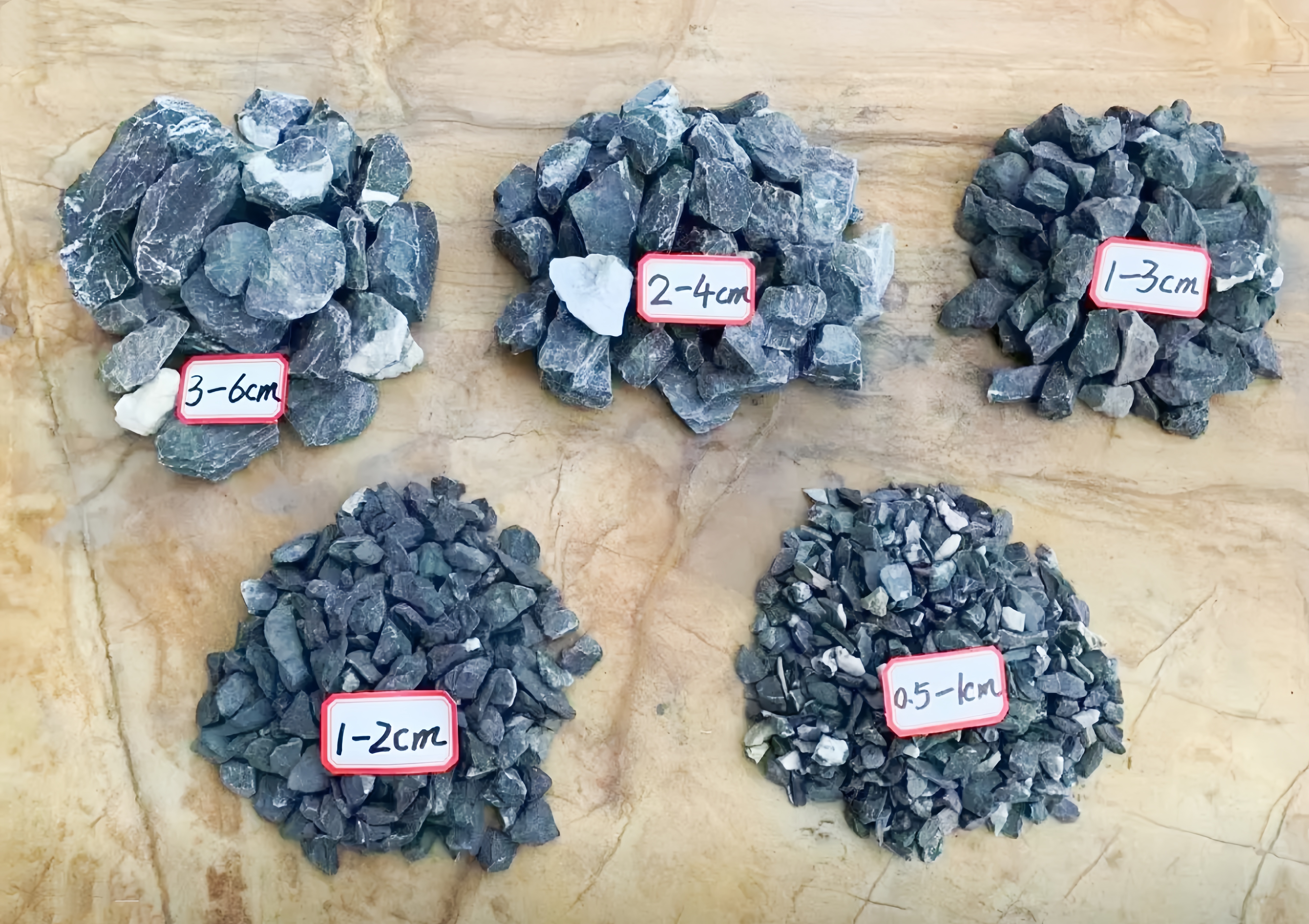
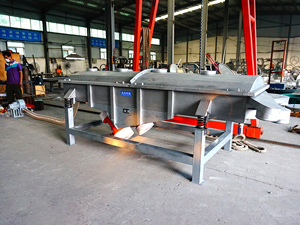
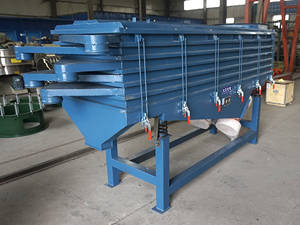
Gravel Separator Machine is used for separation, screening and grading of materials such as sand, gravel, etc. It is usually composed of a feeding device, a screening system, a transmission device, a discharge port and a bracket. According to the screening requirements, you can choose sieves with different mesh numbers or aperture sizes. Common specifications include 2 mesh (about 10mm), 4 mesh (about 5mm), 8 mesh (about 2.36mm), etc. There are also sieve holes in millimeters, such as 10mm, 20mm, and 30mm, which can meet the separation requirements of coarse, medium and fine particle sizes. The equipment can be equipped with one or more layers of sieves to achieve secondary or multi-stage screening. It is often used to efficiently grade gravel larger than 30mm, medium-sized crushed stone and small-particle stone powder. Some models also have a dust removal system or a water washing device to effectively remove dust and soil impurities, improve the overall environmental protection performance and the cleanliness of the finished product.
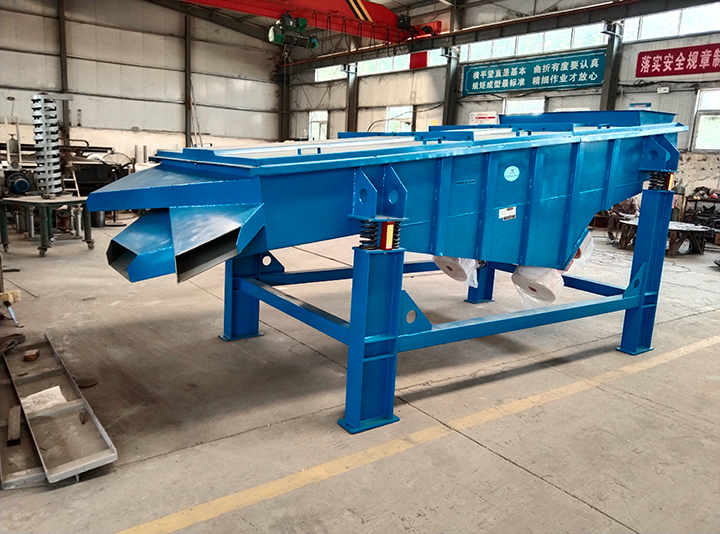
This comprehensive guide provides an in-depth look at how a gravel separator machine works, breaks down its key types and their ideal applications, and offers practical selection criteria to help you choose the right equipment for your specific material characteristics and production targets. Whether you are processing natural river sand, crushed stone, or recycled concrete, understanding these fundamentals will empower you to make a more informed investment decision.
A gravel separator machine operates on the principle of controlled vibratory motion to stratify and separate materials by particle size. The core mechanism involves two eccentric vibratory motors mounted symmetrically on opposite sides of the screen box.
These motors rotate in opposite directions simultaneously, generating a resultant linear vibration force that drives the screen box in a straight-line reciprocating motion.
Key Parameters and Their Impact:
Vibration Frequency: Measured in Hertz (Hz) or RPM. Higher frequencies typically accelerate material stratification and are more effective for fine screening (below 5mm), as they help small particles find openings quickly. However, excessively high frequencies can cause particles to bounce excessively, reducing the chance of passing through the screen.
Amplitude: The displacement distance of the screen box. Larger amplitudes (e.g., 6-10mm) create more energetic throws, helping to break down agglomerates and move coarse material efficiently. This is particularly important for heavy, large-particle feeds.
Smaller amplitudes (3-5mm) are suited for light, fine materials where precision is prioritized over throughput.
Screen Inclination Angle: The angle of the screen surface relative to horizontal. A steeper angle (up to 15°) increases the material's travel speed, which enhances throughput but reduces screening efficiency for near-size particles. A shallower angle (0-5°) allows material to stay on the screen longer, improving separation accuracy at the cost of slightly reduced capacity.
How These Parameters Work Together:
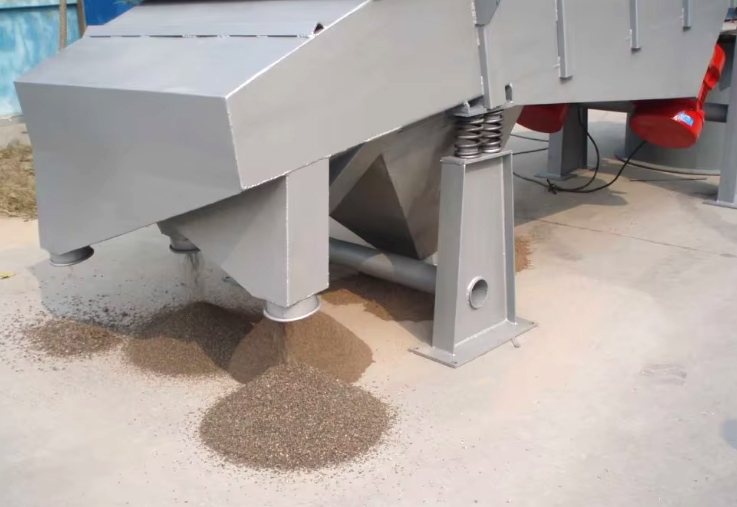
When the equipment starts, the combined force from the motors causes the screen box to vibrate. Material fed onto the deck is thrown upward and forward in a parabolic trajectory. During this motion:
Stratification: The vibration causes particles to stratify by size, with finer particles working their way down through the gaps between larger ones, forming a layer against the screen surface.
Separation: These lower-layer fine particles then contact the screen surface and pass through the apertures.
Discharge: Oversized particles, unable to pass through, continue their forward trajectory along the deck and are discharged at the end.
Adjusting for Different Material Conditions:
For dry, free-flowing materials (e.g., dry crushed limestone): Standard settings with moderate amplitude and frequency work effectively.
For wet or sticky materials (e.g., damp clay or moist alluvial gravel): Lower frequencies with higher amplitudes are often required. The higher amplitude generates a stronger "throwing" action to break the surface tension of moisture, preventing blinding (clogging) of screen apertures. Additionally, for such materials, adding a water spray system or choosing a dewatering screen variant can significantly enhance efficiency by washing fine particles through the screen.
While several technologies exist for separating gravel—such as trommel screens (rotating drums), grizzly bars (static grids), and air classifiers—linear vibratory screening offers distinct advantages for most medium-to-heavy-duty aggregate applications:
| Factor | Vibratory Screen (Our Technology) | Trommel Screen | Static Grizzly |
| Screening Efficiency | Very High. Stratification mechanism ensures thorough separation, even for near-size particles. | Moderate. Efficiency decreases when drum surface loads are high or for sticky materials. | Low. Only for scalping very coarse material (e.g., >50mm). |
| Handling Wet/Sticky Materials | Adaptable. Can be equipped with self-cleaning systems; linear motion actively breaks agglomeration. | Poor. Prone to blinding; requires frequent cleaning or external scraping devices. | Poor. Rapidly clogs with fine, wet material. |
| Space & Footprint | Compact. Low-profile design fits well into existing plant layouts. | Large. Requires significant horizontal space for the rotating drum and support structure. | Small (but limited capability). |
| Maintenance Complexity | Low. Main wear parts are screen panels, which can be replaced quickly (within minutes). Motor maintenance is minimal. | High. Many rotating parts (rollers, seals, gearboxes) are exposed to dust, requiring more frequent lubrication and replacement. | Low (but only useful as a primary scalper). |
| Energy Consumption | Moderate. Uses relatively low-power vibrating motors. | High. Requires higher torque to rotate the heavy drum, especially with a full load. | None (gravity-fed, but ineffective for screening). |
| Screening Accuracy | High. Adjustable amplitude, frequency, and angle allow precise cut points down to 0.074mm. | Medium. Cut point depends on drum rotation speed and material retention time, which is harder to control precisely. | Very Low. Not suitable for final grading. |
Key Takeaway: For multi-stage, high-efficiency grading where accuracy, throughput, and reliability are paramount—especially for particle sizes between 1mm and 50mm—the linear vibrating screen is the most versatile and cost-effective solution compared to rotating or static alternatives.
Gravel Separator Machine uses a vibration motor as an excitation source to make the screen box produce linear reciprocating vibration, driving the material to jump forward on the screen surface, thereby realizing the stratified screening of sand and gravel according to particle size. When the equipment is started, the dual vibration motors installed on both sides of the screen body rotate in the opposite direction at the same time, generating a combined force to make the screen box vibrate linearly. After the material enters the screen surface evenly from the feed port, it is thrown up and moves forward under the action of the vibration force. During the process, smaller particles pass through the screen holes and fall into the lower layer, while large particles move forward along the screen surface to the end and are discharged, realizing particle classification.
The screen usually adopts a multi-layer structure. For example, a three-layer screen can divide the material into four particle sizes (such as >30mm, 10–30mm, 5–10mm, <5mm), and can be configured with different "mesh numbers" or opening sizes (such as 4 mesh ≈ 5mm, 8 mesh ≈ 2.36mm) to flexibly meet the needs of different working conditions. The advantages of the linear vibration principle are clear screening trajectory, high screening accuracy, large processing capacity and simple structure, which are suitable for continuous and high-intensity work.
| Model | Layer |
Screening Area (mm) |
Mesh Size (mesh) |
Particle Size (mm) |
Capacity (t/h) |
Power (kw) |
Vibration Direction Angle (°) |
Screen Inclination (°) |
Dual Amplitude |
| DZSF-520 | 1-6 layers | 500*2000 | 2-400 | 0.074-10 | ≤3 | 0.37×2 | 45-60 | 0-7 | 3-4.5 |
| DZSF-525 | 500*2500 | ≤5 | 0.37×2 | ||||||
| DZSF-612 | 600*1200 | ≤8 | 0.37×2 | ||||||
| DZSF-1020 | 1000*2000 | ≤12 | 0.75×2 | ||||||
| DZSF-1025 | 1000*2500 | ≤16 | 0.75×2 | ||||||
| DZSF-1030 | 1000*3000 | ≤20 | 1.1×2 | ||||||
| DZSF-1224 | 1200*2400 | ≤23 | 1.5×2 | ||||||
| DZSF-1525 | 1500*2500 | ≤28 | 1.5×2 | ||||||
| DZSF-1530 | 1500*3000 | ≤32 | 2.2×2 |
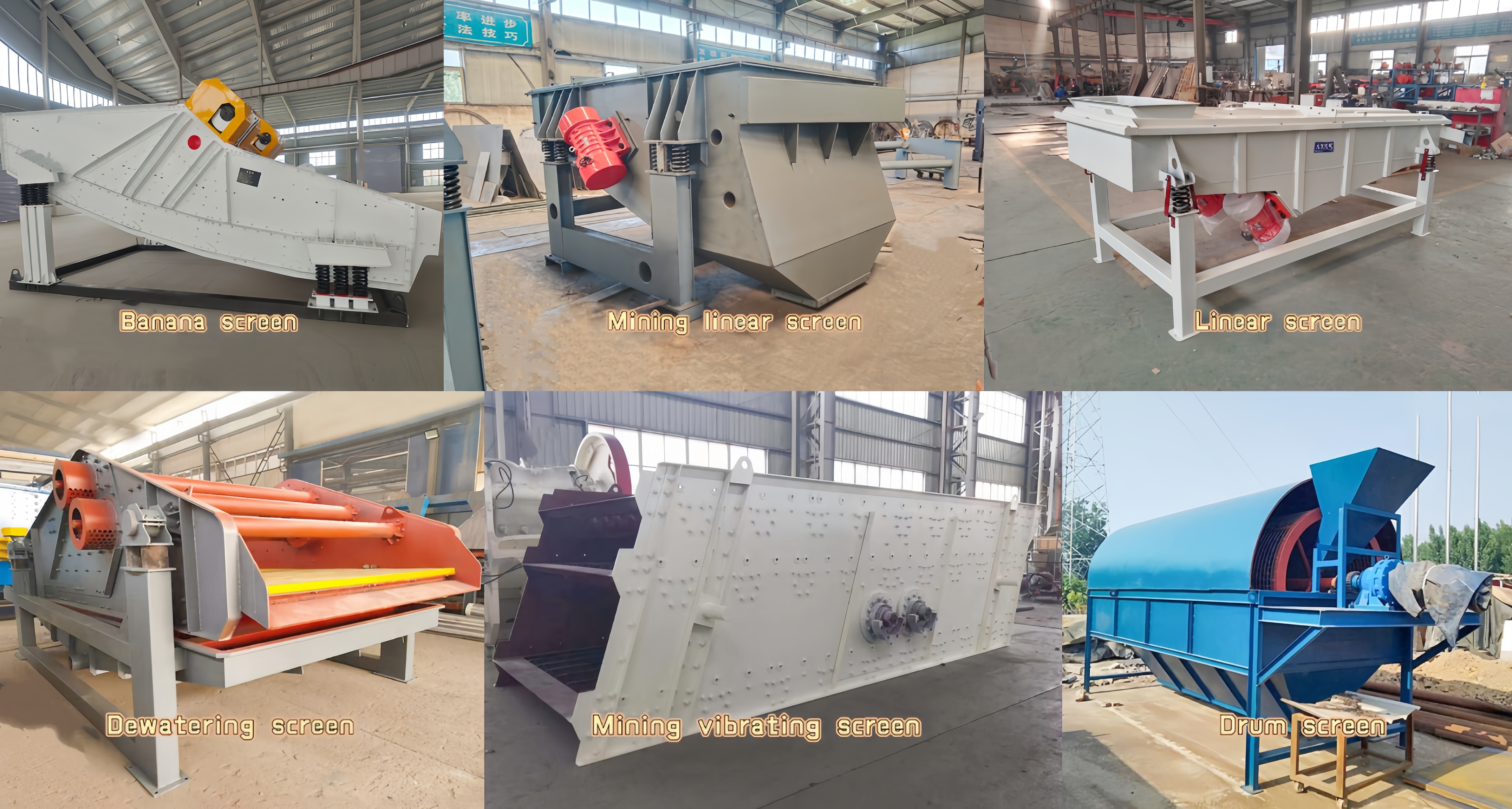
Gravel separator machines are mainly categorized into various types based on their structure and application. Our factory offers banana screens, mining linear screens, linear screens, dewatering screens, mining vibrating screens, and drum screens. Customers can select the appropriate model based on their production needs. Banana screens utilize a variable-angle arc screen surface, offering high screening efficiency and large throughput, suitable for grading large gravel. Mining linear screens and general-purpose linear screens rely on linear vibration to convey materials, providing stable screening and a wide range of applications. Dewatering screens combine screening and dewatering functions, effectively separating mud and water from gravel. Mining vibrating screens feature a robust and durable structure, adaptable to harsh mining conditions. Drum screens screen gravel through a rotating cylinder, reducing clogging and ensuring reliable operation. Various models can be flexibly selected based on gravel size, output, and operating conditions.
Both linear screens and trommel screens are common in aggregate processing, but they excel in very different applications. The choice depends on your material properties, throughput requirements, and desired product quality.
Choose a Linear Vibrating Screen (like our DZSF series) when:
You need high-precision grading: If you require distinct, well-defined cut points (e.g., producing both 5-10mm and 10-20mm aggregates simultaneously), the linear screen's stratifying action provides superior accuracy.
Your material contains a high proportion of fines: Linear screens handle fine particles (under 5mm) much more effectively without blinding, thanks to the high-frequency vibration.
Space is constrained: Its compact rectangular footprint is easier to integrate into a crushing plant or portable setup.
Energy efficiency is a priority: For the same throughput, linear screens generally consume less energy per ton of material processed.
You have variable feed conditions: The ability to adjust amplitude and inclination angle allows quick adaptation to changes in feed moisture or particle size distribution.
Choose a Trommel Screen when:
You are processing abrasive, coarse, or heavy materials: Trommels are robust and can handle large boulders (>200mm) and highly abrasive ores where the rotational, tumbling action reduces wear on a single area of the screen surface.
You are dealing with very sticky or cohesive clay: The tumbling action, combined with the drum's internal lifters, tends to break up clods more effectively than a linear screen's flat surface, which may become clogged.
Your primary goal is a "rough" split: If you only need to scalp off oversize (>30mm) material and are not concerned with precise classification of the undersize, a trommel is a simpler, durable choice.
You have a high proportion of large, heavy particles: The robust construction of a trommel can better absorb the impact of large stones dropping from a crusher.
Quick Decision Guide:
For sand & fine gravel (0-30mm) with high accuracy needs: ➔ Linear Vibrating Screen is preferred.
For heavy, abrasive run-of-mine (ROM) material or primary scalping (removing over 50mm): ➔ Trommel Screen may be more suitable.
For intermediate applications (e.g., general crushed stone 0-60mm with moderate fines): ➔ Linear Screen often provides better value due to lower energy and maintenance costs.
| Screening Particle Size | Common Mesh Size Range | Corresponding Aperture | Recommended Applicable Models |
| Coarse material separation | 2–10 mesh | 12.7mm–2.54mm | Mining linear screen, mining vibrating screen, drum screen, banana screen |
| Medium Material Separation | 10–40 mesh | 2.54mm–0.635mm | Linear screen, mining vibrating screen, banana screen |
| Fine material separation | 40–100 mesh | 0.635mm–0.254mm | Dewatering screen, linear vibrating screen |
Gravel Separator Machine is not only about improving separation efficiency, but also about reducing labor costs, improving work safety and material utilization. The equipment is simple to operate and easy to maintain, and can adapt to a variety of material environments, such as natural river sand, machine-made sand, crushed stone, pebbles, stone powder mixtures, etc.


Address:China,Yanjin county forest park gate to the west 1000 meters north road.


 Online Chat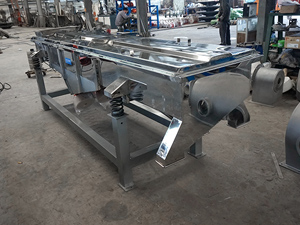
 Email
Email