


In industrial powder and granule blending, one metric separates average mixers from high‑performance ones: the coefficient of variation, or CV. When a manufacturer claims their single shaft paddle mixer achieves CV ≤ 5%, they are promising that any sample taken from a batch will contain almost exactly the same proportion of ingredients as any other sample. This is the standard required for premixed feed, pharmaceutical formulations, and high‑end chemical products.
But what engineering principles make this level of precision possible in a single‑shaft design? This article breaks down the core technologies that allow single shaft paddle mixers to consistently deliver CV ≤ 5% in just 60–120 seconds per batch.
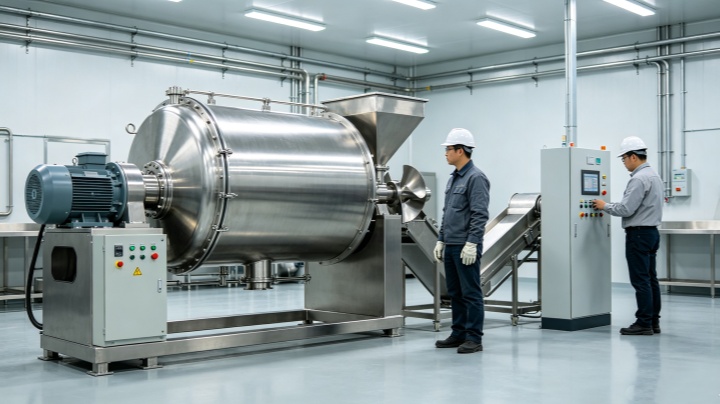
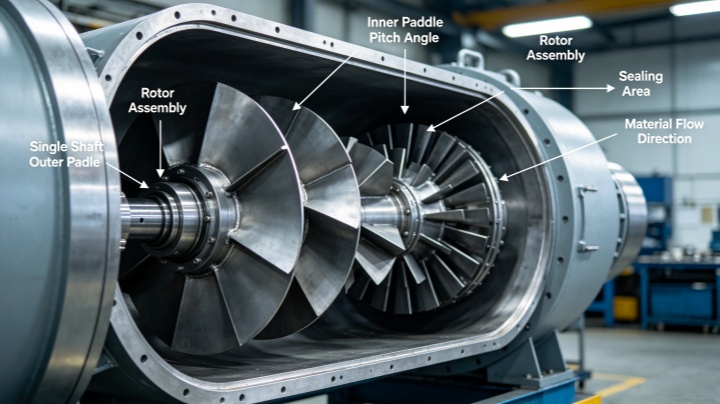
The most critical innovation behind the single shaft paddle mixer's high uniformity is the double‑layer paddle rotor design.
Unlike simple ribbon blenders that mainly push material horizontally, the single shaft paddle mixer features inner and outer paddles arranged with specific angles. The outer layer of large paddles is responsible for convective mixing—it lifts material from the bottom of the trough and creates a continuous tumbling circulation across the full width of the mixing chamber. Meanwhile, the inner layer of smaller paddles works in the central "slow flow zone" to ensure that even the material closest to the shaft is actively mixed.
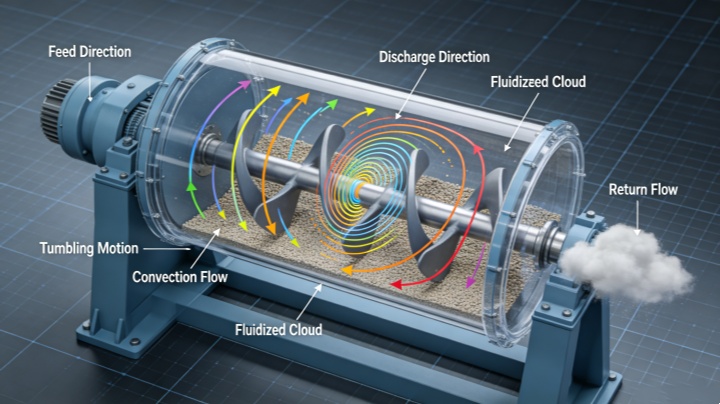
This dual‑layer design achieves what a single‑blade structure cannot: it forces all particles—regardless of their size, shape, or density—into a three‑dimensional fluidized motion. Light and heavy components both remain suspended and actively moving rather than allowing denser particles to settle at the bottom. This is why the mixer can handle materials with a mixing ratio as extreme as 1:100,000 while still maintaining homogeneity.
To understand CV ≤ 5%, you need to understand the mixing action itself. The single shaft paddle mixer operates on a convective mixing principle, which is fundamentally different from simple diffusion or shear mixing.
The paddles are angled to divide the mixing chamber into smaller zones, with each zone served by at least two paddles. As the shaft rotates, material is mechanically lifted and forced to flow from one zone to another in a dynamic exchange. Voids are constantly created and immediately filled by particles from neighboring zones. This rapid, random interchange ensures that even trace additives become evenly distributed throughout the entire batch.
This stands in contrast to ribbon mixers, where material primarily moves in a gentle horizontal convection pattern, typically achieving CV values in the 5–7% range. The paddle design's more aggressive fluidized motion reduces mixing time significantly—what takes a ribbon mixer 5–15 minutes, a paddle mixer can accomplish in 1–3 minutes.
One overlooked feature that contributes to consistent performance is the adjustability of the paddles themselves. The gap between the paddle tips and the trough wall can be precisely tuned. This is critical because the clearance directly affects both mixing intensity and residue levels.
A tighter gap creates more intense mixing action and reduces dead zones where material could remain unmixed. It also minimizes residue after discharge, which is essential for preventing cross‑contamination between different product batches and ensuring that each batch's CV value reflects the current mix, not leftover material from a previous run.
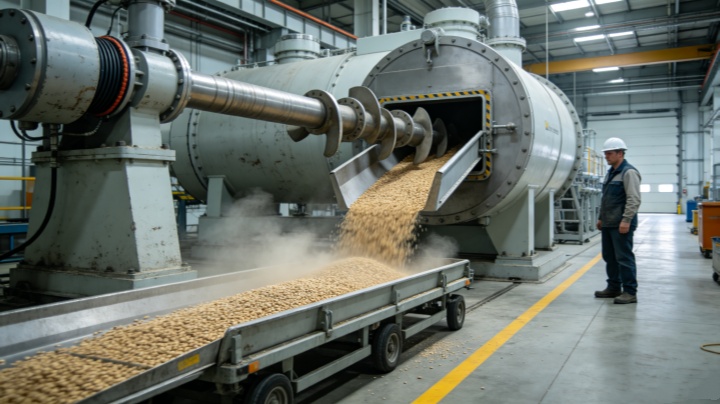
Achieving CV ≤ 5% inside the mixing chamber is only half the battle—you also need to discharge that perfectly uniform batch intact. The full‑length pneumatic discharge door, which runs the entire length of the trough, opens completely to empty the batch in just 10–20 seconds.
This rapid, complete discharge does two things:
It prevents segregation that could occur if material drained unevenly from different sections of the trough.
It minimizes residual material (often below 1%), which protects the CV of the next batch from contamination by leftover ingredients.
Many single shaft paddle mixers are equipped with atomization spray heads that allow liquid ingredients—oils, binders, water, or molasses—to be added during the mixing cycle. The key to maintaining CV ≤ 5% during liquid addition is the uniform dispersion of these sprays.
When liquid is introduced through a finely atomized system, it coats individual particles rather than forming wet lumps. The paddles' fluidizing action then ensures that these coated particles are distributed evenly throughout the batch. Some models support liquid addition up to 20% of batch weight without compromising mixing quality.
The CV ≤ 5% figure is not arbitrary—it aligns with the most stringent industry requirements. Feed industry standards, for example, specify a mixing uniformity coefficient of ≤5% for premixed feed, while compound feed can tolerate ≤10%. A single shaft paddle mixer achieving ≤5% therefore meets premix standards while easily exceeding compound feed requirements.
For premium configurations, some single shaft paddle mixers can even achieve CV as low as 3%, approaching the performance of twin‑shaft designs while maintaining the simplicity and cost‑effectiveness of a single‑shaft configuration.
The CV ≤ 5% mixing uniformity of the single shaft paddle mixer is not a coincidence—it is the direct result of four interconnected design elements: the double‑layer rotor creating true fluidized motion, adjustable paddles for process flexibility, full‑length discharge preserving batch integrity, and precision liquid addition systems.
When evaluating industrial mixing equipment for feed, food, chemical, or pharmaceutical applications, understanding these engineering principles helps you look beyond the marketing claims. The single shaft paddle mixer's ability to deliver consistent, high‑precision blends batch after batch, in under 3 minutes, makes it a compelling choice for manufacturers who require both quality and efficiency.


Address:China,Yanjin county forest park gate to the west 1000 meters north road.


 Online Chat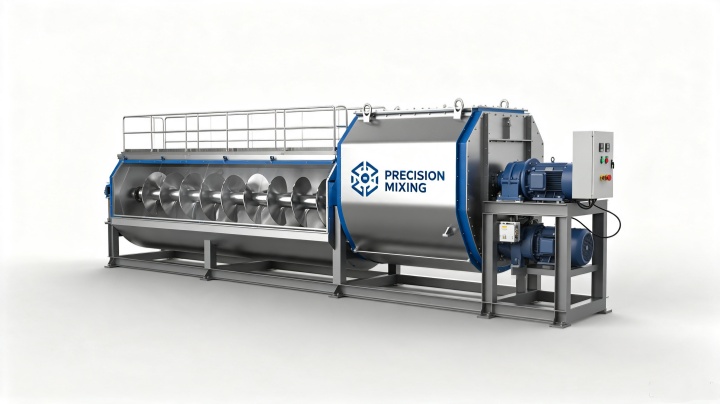
 Email
Email