


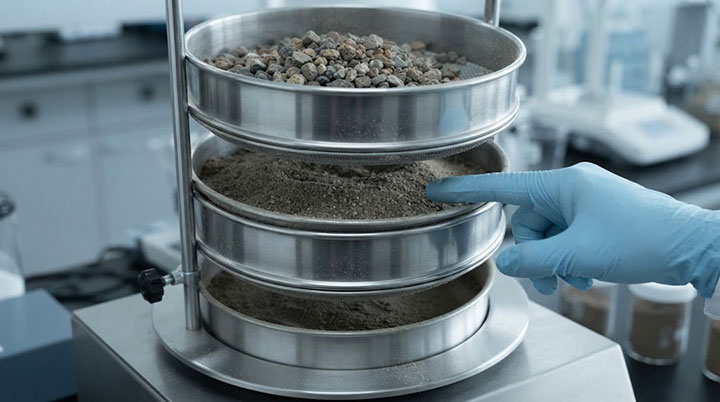
Soil particle size distribution (PSD) analysis directly determines soil strength, permeability, and load-bearing capacity for geotechnical engineering. Accurate testing prevents flawed structural calculations, avoiding settlement risks and foundation failures in infrastructure development. Furthermore, utilizing certified test sieves compliant with ASTM E11, ISO 3310, and AASHTO M92 ensures audit-ready laboratory data that meets rigorous international compliance standards without contractual disputes.
Selecting the correct sieve specifications ensures repeatable particle separation and long-term durability across daily laboratory testing cycles.
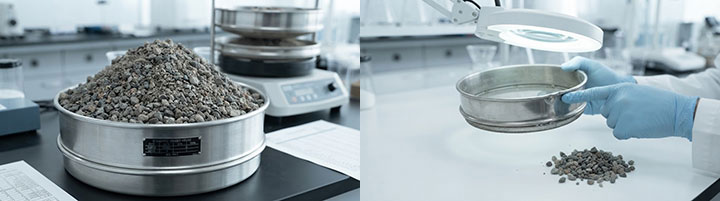
Demonstration of Dahan Machinery's 304 stainless steel soil test sieve stack and shaker assembly.
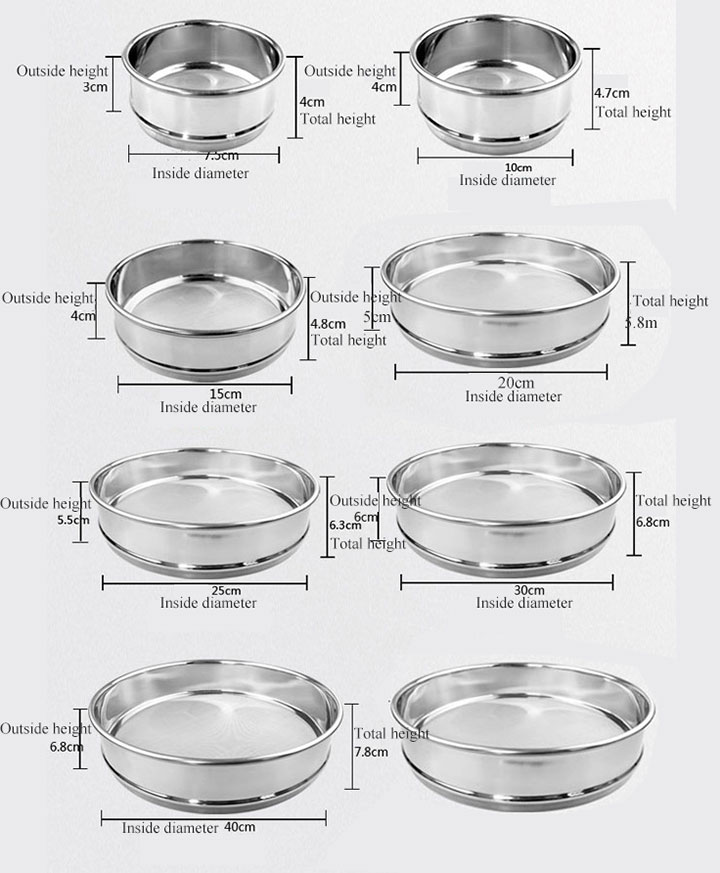
Full stainless steel frames resist corrosion and heavy mechanical wear far better than brass. They maintain wire mesh tension and structural shape through daily laboratory use, washing, and thermal drying cycles.
Selecting the correct agitation action prevents particle blinding and incomplete separation. Different soil textures and aggregate weights require specific mechanical motions to pass test materials through stacked screens accurately.
Watch Dahan Machinery's laboratory soil test sieve and shaker operating in real-time testing conditions.
| Shaker Type | Best Suited For | Agitation Action | Key Advantage |
|---|---|---|---|
| Mechanical Tapping | Coarse aggregates, gravel, heavy soils | Circular rotation + vertical mechanical tap | Powerful particle breakdown and high stack capacity |
| Electromagnetic Vibratory | Fine powders, dry sand, light granules | 3D vertical throwing motion (no tapping) | Adjustable intensity, quiet operation, zero mechanical wear |
Matching equipment specifications to your daily testing environment ensures long-term operational efficiency and prevents premature hardware upgrades.

Highway and civil engineering labs process heavy, coarse-grained soil and crushed stone daily. These applications demand high-torque mechanical shakers and rugged, wear-resistant stainless steel sieves capable of handling rigorous compliance testing.
Evaluate your average batch size before choosing shaker capacities and sieve stack heights. If your lab frequently tests fine soils containing silts and clays, select a setup that easily integrates wet-washing accessories to prevent blinding.
Benchtop space and ambient noise regulations dictate your hardware choice. Electromagnetic shakers offer quieter operation in enclosed analytical labs, whereas heavy mechanical units benefit from dedicated, sound-damped testing rooms.
Proper upkeep protects your equipment investment and guarantees that daily soil testing results remain reliable and verifiable.
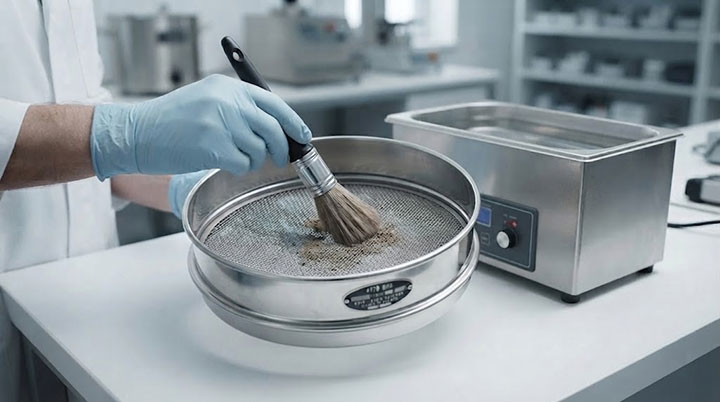
Remove trapped particles gently using a soft-bristled brush matching the mesh material. Avoid sharp metal tools that distort aperture wires, and utilize ultrasonic cleaning baths for fine sieves suffering from stubborn particle blinding.
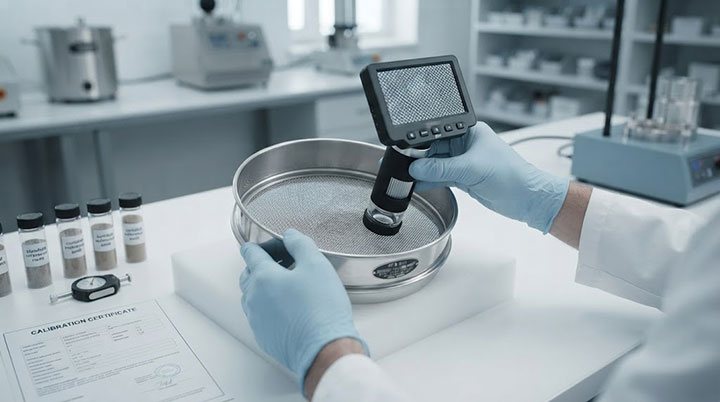
Inspect frames and mesh integrity regularly for signs of wear, stretching, or frame distortion. Schedule periodic calibration checks against certified reference materials to maintain strict compliance with testing standards.
Overlooking operational best practices can compromise test data accuracy and drastically shorten the lifespan of your testing equipment.
Most standard electromagnetic and mechanical shakers accommodate dry sieving. However, wet sieving requires specialized corrosion-resistant frames, waterproof sealing components, and drainage attachments to wash fine silts without damaging the shaker mechanism.
A standard stack typically ranges from 6 to 8 sieves plus a pan and cover, depending on your local testing standards (such as ASTM or AASHTO). Exceeding this height dampens vibrational energy at the bottom levels and causes particle overloading.
If your testing volume shifts from small batch soil samples to high-throughput bulk processing or on-site quarry aggregate grading, desktop laboratory shakers become a bottleneck. At this stage, transitioning to industrial screening equipment—such as Dahan Machinery's high-frequency vibrating screens or industrial rotary sifters—ensures continuous, heavy-duty production capacity.
Selecting the right soil sieves and lab shakers depends heavily on your specific aggregate types, testing standards, and sample throughput. If you need customized laboratory configurations, detailed equipment specifications, or direct quotations, our engineering team is ready to assist. Contact Dahan Machinery today to discuss your lab setup requirements and secure reliable testing solutions.


Address:China,Yanjin county forest park gate to the west 1000 meters north road.


 Online Chat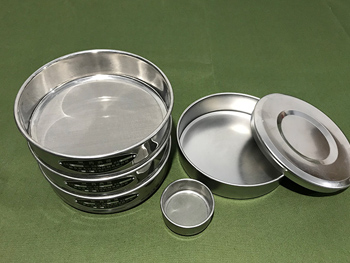
 Email
Email