


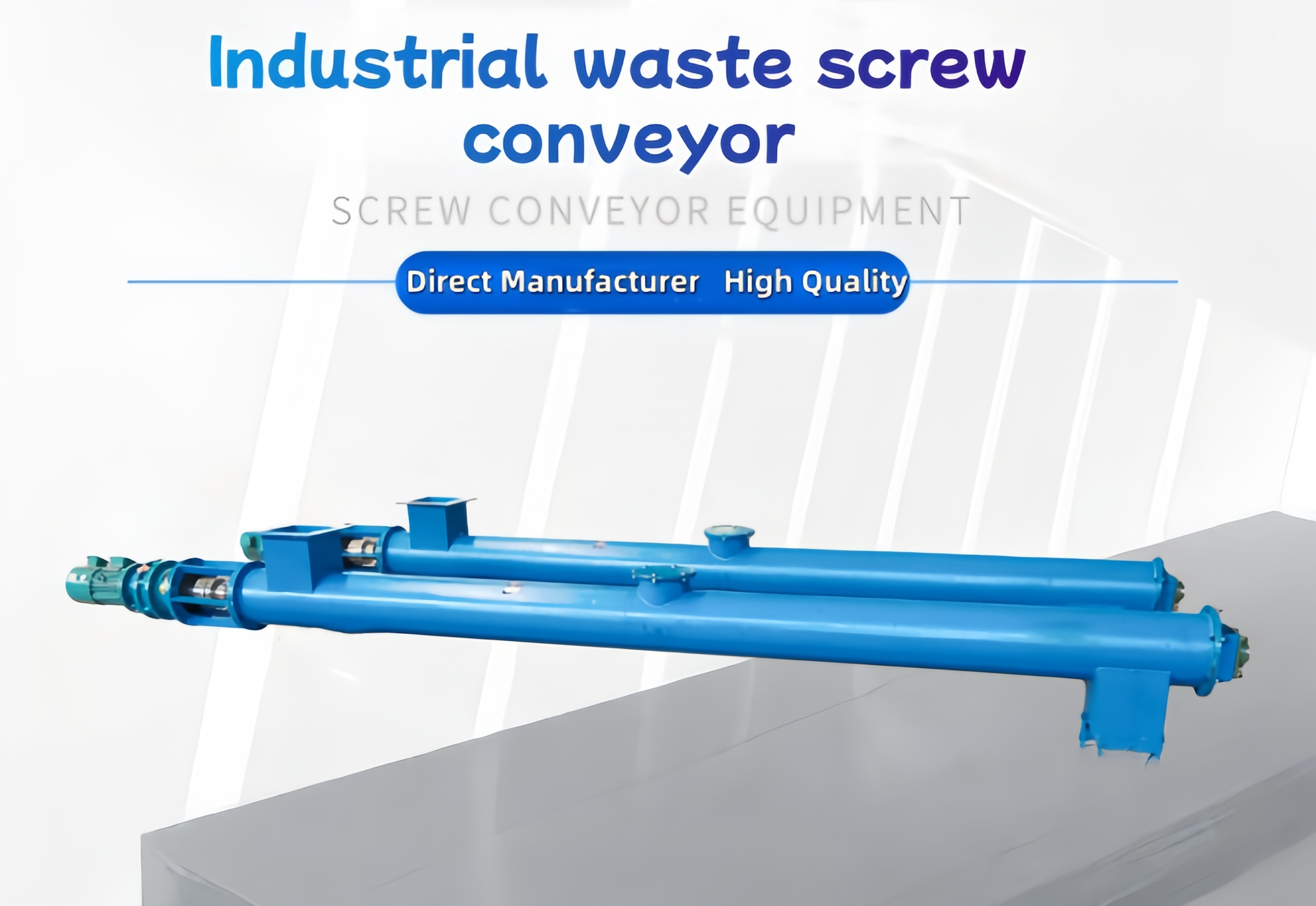
Industrial waste screw conveyor is a conveying system designed to transport waste materials generated during industrial production and recycling processes. It is suitable for handling sludge, fly ash, powder residue, plastic scrap, metal chips, dust, chemical by-products, and other loose or semi-solid waste materials. Through the rotation of the screw flight inside a trough or tube, materials are continuously moved from the inlet to the discharge point.
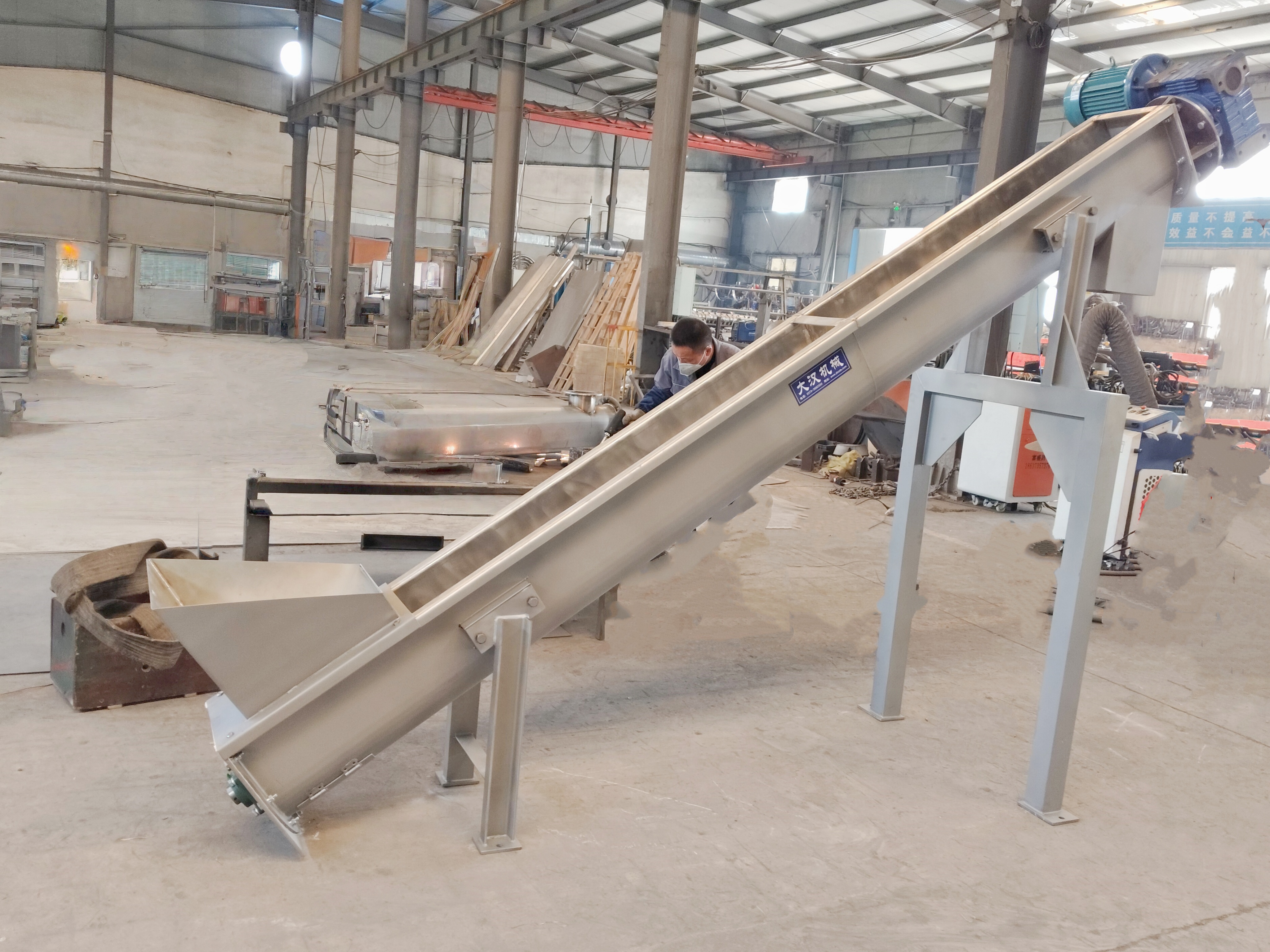
Compared with manual handling or open belt transfer, the industrial waste screw conveyor provides enclosed conveying, stable feeding, lower dust emission, and reduced labor demand. It is widely used in waste treatment plants, recycling centers, chemical factories, cement plants, mining facilities, foundries, and general manufacturing workshops.
The industrial waste screw conveyor can transport 2-50 tons of material per hour, with conveying distances from 1 to 40 meters and conveying angles from 0° to 90°. The equipment supports continuous feeding and discharge in recycling and waste handling systems.
An industrial waste screw conveyor uses rotating helical blades to transport waste along a fixed trough or tubular shell. It can be installed horizontally or at an incline, and can be used in combination with hoppers, crushers, filters, and storage bins.
Because many industrial wastes contain dust, moisture, irregular particles, or sticky residues, screw conveyors are often chosen due to their compact structure and enclosed design. Common configurations include U-groove screw conveyors, tubular screw conveyors, shaftless screw conveyors, inclined screw conveyors, heavy-duty screw conveyors, and stainless steel screw conveyors.
The industrial waste screw conveyor is compatible with a wide range of materials, capable of reliably conveying powders, granules, and small-lump waste residues. Furthermore, it can effectively handle fibrous and soft, tangle-prone materials, ensuring smooth transport and resistance to clogging across various forms of industrial waste.
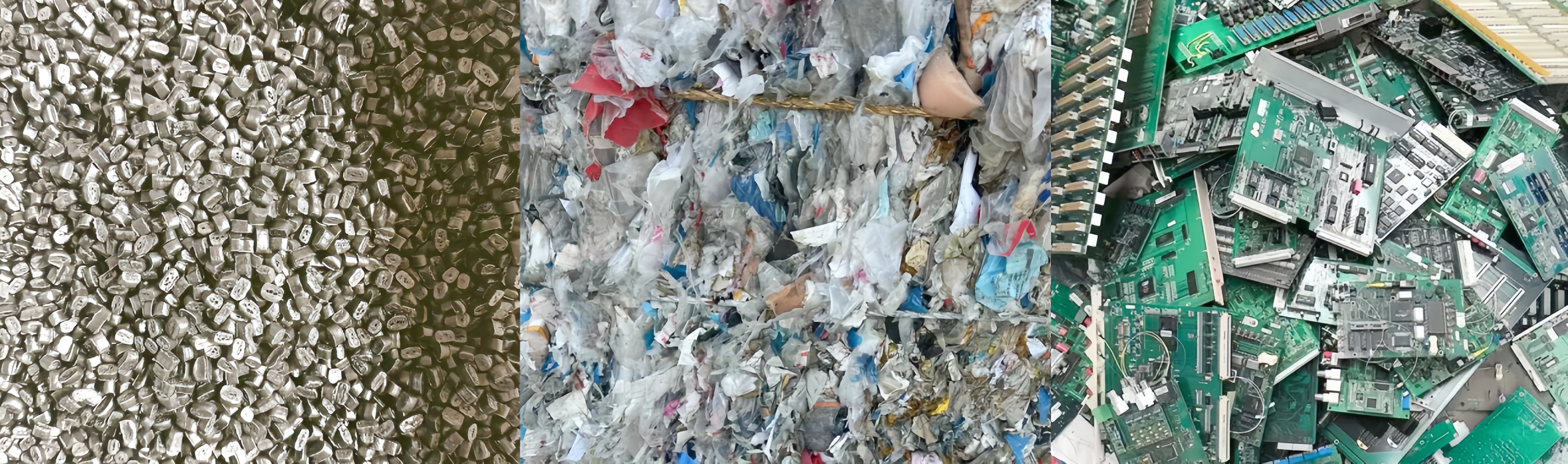
Fine powder materials: For fine powder waste, such as cement dust, coal powder, etc., choose a tubular or U-shaped screw conveyor with good sealing to reduce dust flying.
Granular materials: For granular waste, such as plastic particles, metal chips, etc., choose a shaft or shaftless screw conveyor, and choose the appropriate spiral blade and conveying trough size according to the size and shape of the particles
Block or entangled materials: For block or entangled waste, such as construction waste, sludge, etc., choose a shaftless screw conveyor. The shaftless design can effectively prevent material entanglement and blockage.
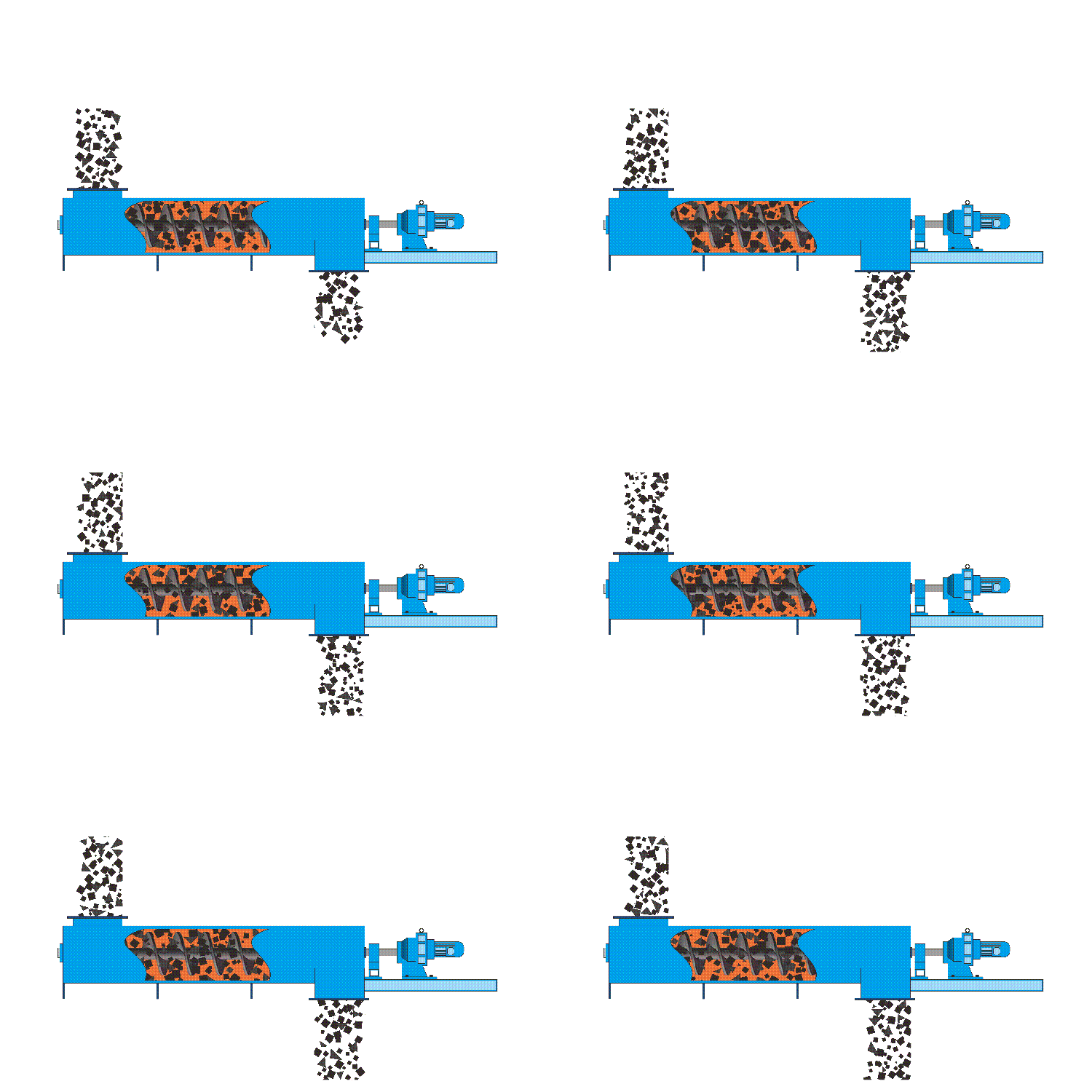
When the drive device drives the screw shaft to rotate, the industrial waste loaded into the trough cannot rotate with the screw due to its mass and the internal friction between the particles and the external friction between the trough wall, but can only move forward along the machine trough under the axial driving force of the screw, and the industrial waste is discharged when it reaches the discharge port.
The industrial waste screw conveyor operates as a fully enclosed unit, effectively preventing dust spillage and material leakage to ensure excellent dust control. Capable of handling various conveying conditions including horizontal and inclined configurations it offers stable, low-noise operation, is resistant to clogging, requires minimal maintenance, and consumes less energy.
Solve the problem of complex characteristics of industrial waste: There are many types of industrial waste. Industrial waste screw conveyors can adjust the screw diameter, pitch and speed according to the material characteristics to meet the transportation needs of different wastes.
Handle different forms of waste: Industrial waste screw conveyors can adapt to various forms of waste, whether it is powder, granules or other forms of waste, they can be effectively transported, making waste treatment more convenient.
Reduce the blockage and jam of industrial waste: Through the design of the spiral structure, the industrial waste screw conveyor can effectively avoid the accumulation and blockage of waste during the transportation process and keep the transportation smooth.
Reduce the adhesion and residue of industrial waste: Viscous waste is easy to adhere to the spiral or tank body, and even cause secondary pollution. The industrial waste screw conveyor removes the central axis, reduces the adhesion points, and is suitable for high-viscosity waste.
| Material type | Particle size range (mm) | Recommended screw diameter (mm) | Recommended pitch (mm) | Recommended speed (rpm) | Application scenario |
| Metal chips | 0.1-5 | 200-400 | 150-300 | 30-60 | Metal processing plants, waste recycling |
| Wood chips/sawdust | 0.5-10 | 200-400 | 150-300 | 30-60 | Wood processing plants, biomass fuel production |
| Plastic chips | 2-20 | 300-500 | 200-400 | 20-50 | Plastic recycling plants, recycled plastic production |
| Construction waste | 10-100 | 400-600 | 300-500 | 15-40 | Construction sites, waste cleaning |
| Ore Waste | 5-50 | 400-600 | 300-500 | 15-40 | Mines, tailings treatment |
| Chemical waste | 0.1-2 | 200-400 | 150-300 | 30-60 | Chemical plants, waste treatment |
| Dust waste | 0.01-0.5 | 150-300 | 100-200 | 40-80 | Chemical plants, dust recovery |
| Large waste | 50-200 | 600-800 | 500-700 | 10-30 | Construction sites, mines |
Industrial waste screw conveyors are widely utilized across industries such as chemicals, building materials, metallurgy, light industry, and waste management. Capable of handling various types of solid waste generated during production, these systems facilitate enclosed conveyance, centralized collection, and transfer operations, and are adaptable to a wide range of operating environments.
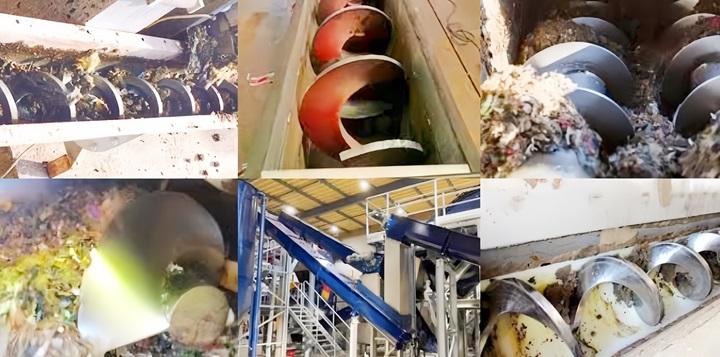
Industrial production workshop: In the industrial production process of chemical, metallurgical, building materials, etc., it is used to transport the waste generated in the production process, such as waste slag, waste powder, etc., from various production links to the waste collection point or treatment equipment.
Waste treatment plant: It can be used to transport various industrial wastes in the process of urban waste treatment, such as sorted waste plastics, metal fragments, construction waste, etc. The shaftless screw conveyor can also be used to transport sludge generated in the process of waste treatment to avoid sludge entanglement and clogging of equipment.
Resource recycling site: In the waste recycling plant, the recycled industrial waste, such as waste paper, plastic bottles, metals, etc., are transported to the corresponding processing equipment or storage area for classified recycling and reprocessing.
| Problem | Cause analysis | Solution |
| Low conveying efficiency | Spiral blade wear or too low speed | Replace spiral blades or adjust speed. |
| Material blockage | Material humidity is too high or viscosity is too high | Clean up the blocked material, adjust material characteristics or equipment parameters. |
| Excessive equipment vibration | Unstable support frame or unbalanced drive device | Check and adjust the support frame and drive device. |
| Dust leakage | Damage or unreasonable design of sealing device | Replace sealing device or improve design. |
Industrial waste screw conveyor play an important role in waste treatment and material transportation, improving production efficiency, reducing labor costs, and meeting environmental protection requirements. Through reasonable selection and regular maintenance, the equipment can be ensured to operate stably for a long time, meet the needs of industrial waste treatment, and reduce operating costs and improve production efficiency.
Industrial waste materials vary greatly in size, density, moisture, and flowability. Different conveyor structures can be selected according to actual conditions.
Common Conveyed Materials
| Material Type | Typical Example | Recommended Type |
|---|---|---|
| Fine powder waste | Cement dust, fly ash, carbon powder | Tubular sealed type |
| Granular waste | Plastic pellets, crushed resin | U trough type |
| Metal waste | Metal chips, grinding particles | Heavy-duty shafted type |
| Sticky waste | Sludge cake, wet residue | Shaftless type |
| Fibrous waste | Paper scraps, textile fiber | Shaftless type |
| Chemical residue | Filter powder, reaction residue | Stainless steel type |
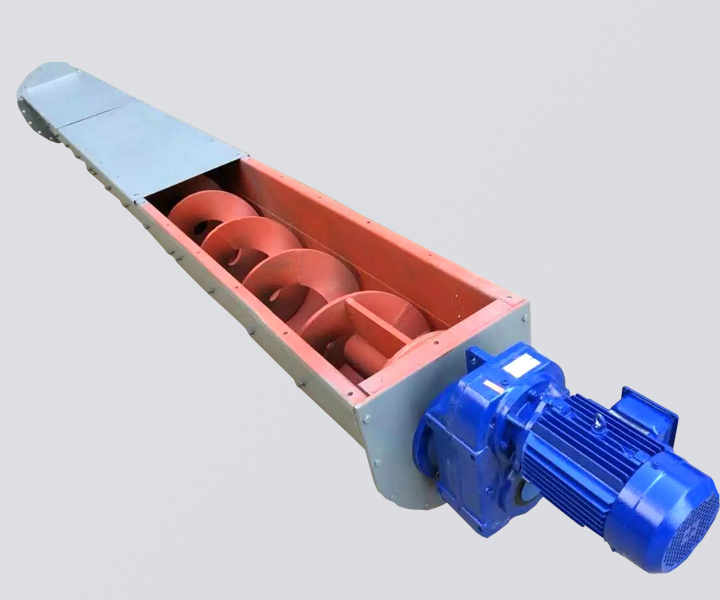
A drive motor rotates the screw shaft or blades via a gearbox. As the screw rotates, the waste placed at the inlet is propelled forward and conveyed along the trough. Subsequently, the waste reaches the outlet and is transported to the next process or storage point. This conveying method is suitable for continuous feeding and controlled discharge and can be integrated into automated production lines.
Key Advantages of Screw Conveyors for Industrial Waste
1. Fully Enclosed Conveying:The enclosed structure helps reduce dust leakage, odor diffusion, and material loss during conveying.
2. Continuous Operation:Materials can be conveyed continuously, offering higher efficiency compared to manual collection.
3. Flexible Installation:The conveyor can be installed horizontally or at an angle to suit the factory layout.
4. Suitable for Various Difficult-to-Handle Materials:Through proper design, it can handle sticky sludge, dust, irregular fragments, and mixed waste.
5. Low Maintenance Requirements:Due to its simple mechanical structure and few moving parts, daily maintenance is relatively easy.
6. Stable Conveying to Other Equipment:The conveyor can transport materials at a controllable rate to compactors, crushers, pulverizers, dryers, silos, or storage bins.
Shafted Screw Conveyor:Employs a central main shaft and welded spiral blades, resulting in a robust structure and high conveying capacity. Suitable for dry powder, granular, and free-flowing industrial waste.
Shaftless Screw Conveyor: Features a shaftless design, relying on integral spiral blades to push materials, reducing the risk of tangling and clogging. Suitable for sticky sludge, fibrous waste, and easily entangled debris.
Tubular Screw Conveyor: Utilizes a fully enclosed circular pipe structure, ensuring a dustproof, leak-proof, and odor-free experience. Primarily used for industrial waste with high dust levels, odors, and requiring closed-loop conveying.
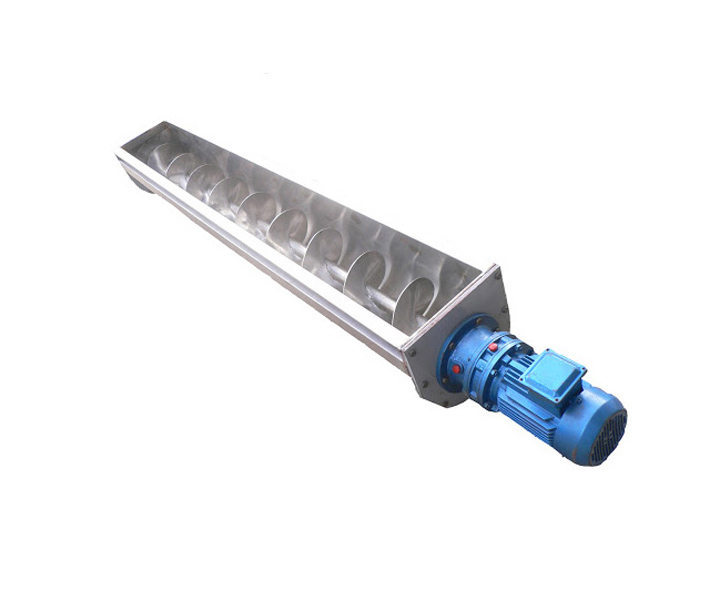
U-Trough Screw Conveyor:V-Features a U-shaped trough structure with an open top for easy inspection, cleaning, and maintenance. Highly versatile and suitable for conveying conventional granular and powder materials.
Inclined Screw Conveyor:Can be installed at an inclination angle to lift and convey materials from a lower to a higher position, meeting the needs of unloading materials with varying heights.
Industrial waste screw conveyor model reference
| Screw Diameter (mm) | Capacity (m3/h) | Typical Length (m) | Application |
|---|---|---|---|
| 165 | 6–12 | 2–10 | Fine powder, dust |
| 219 | 12–25 | 3–15 | Plastic scrap, chips |
| 273 | 25–40 | 5–20 | Mixed industrial waste |
| 325 | 40–65 | 5–25 | Sludge, bulk residue |
| 426 | 60–90 | 5–30 | Heavy-duty waste transfer |
Choosing the right model should be based on the actual characteristics of the waste, not just the size of the conveyor. Key factors include:
Material Type: Powder, sludge, flakes, scrap, or fibrous waste requires different screw designs.
Moisture Content:Wet and viscous materials are generally better suited to shaftless screw conveyors.
Required Conveying Capacity:Determine the conveying capacity per hour, in tons or cubic meters.
Conveyor Length:Longer conveyors may require a more robust drive system or intermediate supports.
Installation Angle:Inclined conveyors reduce conveying capacity compared to horizontal conveying.
Structural Materials:Carbon steel is used for general waste, while stainless steel is used for corrosive or wet waste.
Applications of Industrial Waste Screw Conveyors
Chemical Industry:Used for conveying powder residues, filter cakes, reaction byproducts, and dust emissions.
Cement and Building Materials Industry:Suitable for fly ash, cement dust, lime powder, and kiln slag.
Metal Processing Plants:Used for collecting metal shavings, grinding dust, and cutting waste. Recycling industry: conveying plastic fragments, crushed materials, waste particles, and sorted recyclables.
Common Problems and Solutions
| Problem | Possible Cause | Solution |
|---|---|---|
| Low conveying efficiency | Worn flights or low speed | Replace flights or adjust speed |
| Material blockage | Excess moisture or oversize lumps | Clean blockage and optimize feeding |
| Excessive vibration | Loose frame or misalignment | Tighten frame and realign drive |
| Dust leakage | Worn seals or open cover gaps | Replace seals and inspect covers |
| Fast wear | Abrasive materials | Use wear-resistant liners |
To ensure stable operation of the conveyor, it is necessary to regularly check the lubrication of bearings and gearboxes, inspect the wear of the auger blades, remove accumulated residue from the trough, tighten bolts and support frames, check seals and covers, and avoid overloading. Regular maintenance can reduce downtime and extend service life.
Industrial waste screw conveyors play a vital role in modern waste treatment and recycling systems. They enable continuous, closed-loop transport of various forms of industrial waste. By selecting the appropriate model, proper installation, and regular maintenance, this equipment can ensure stable operation, create a cleaner production environment, and improve waste management efficiency.
| Item | Specification |
| Material | Metal Chips |
| Capacity | 15 t/h |
| Conveying Distance | 12m |
| Conveying Angle | 20° |
| Motor Power | 5.5kw |
| Application | Metal Recycling Plant |
A recycling plant installed a screw conveyor system to transport 15 tons of industrial waste per hour. The conveyed materials included metal chips, plastic flakes, and rubber particles. The conveyor length was 12 meters with a 20° conveying angle, providing continuous material transfer to the recycling process.
Q: Can it handle wet sludge?
A: Yes. Shaftless screw conveyors are commonly used for conveying wet sludge and sticky waste.
Q: Can the conveyor be sealed?
A: Yes. Tubular and enclosed trough designs help reduce dust and odor leakage.
Q: Can it be installed at an angle?
A: Yes. Inclined designs are available, with common angles from 0° to 30°.
Q: Can custom designs be made?
A: Yes. Diameter, length, inlet location, outlet location, motor brand, and material can all be customized to site requirements.
Q: Which material is better, carbon steel or stainless steel?
A: Carbon steel is typically used for general dry waste. Stainless steel is more suitable for corrosive, humid, or high-hygiene environments.


Address:China,Yanjin county forest park gate to the west 1000 meters north road.


 Online Chat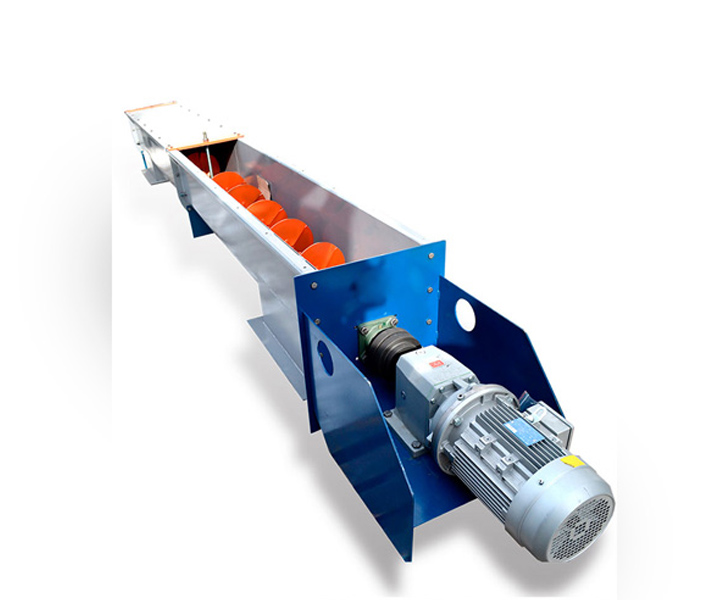
 Email
Email