


Oil sludge is a high-viscosity waste material generated during crude oil storage, refinery cleaning, drilling operations, and oily wastewater treatment. Due to its sticky and semi-solid characteristics, conventional conveying equipment often faces blockage and leakage problems.
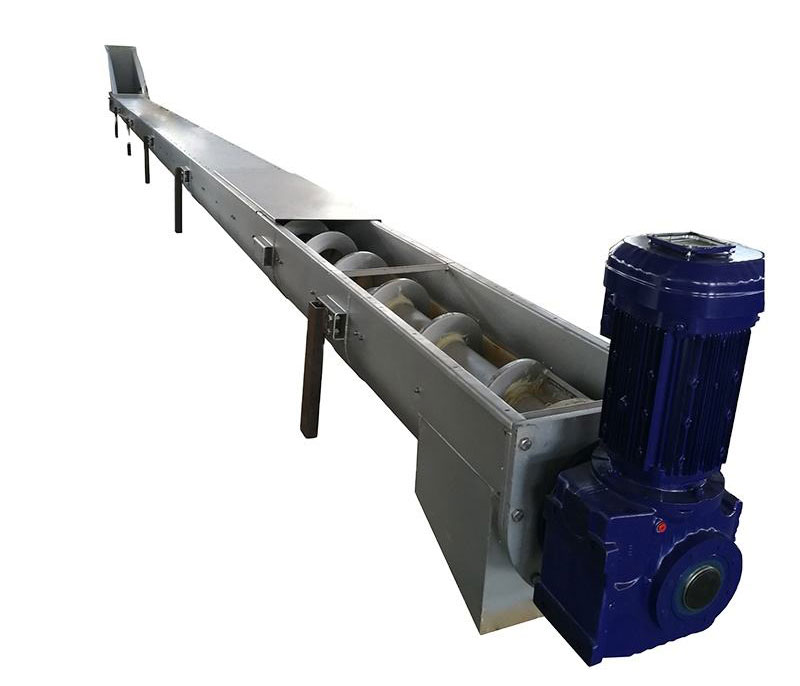
Screw conveyor systems are commonly used for enclosed transfer of oil sludge because they can handle viscous, semi-fluid, and abrasive materials under continuous operating conditions.
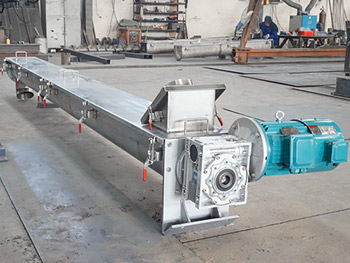
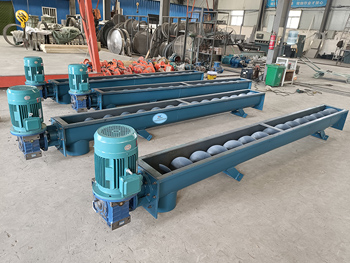
Screw Conveyor for Oil Sludge Transfer is a robust and efficient solution designed to handle the challenging task of transporting oil sludge, a viscous and abrasive byproduct of oil refining and drilling processes. This conveyor uses a rotating helical screw blade to move sludge through a enclosed trough, ensuring minimal spillage and contamination. Constructed from durable, corrosion-resistant materials like stainless steel, it withstands harsh environments and corrosive substances. The screw conveyor is customizable in length, diameter, and pitch to suit specific sludge characteristics and transfer requirements.
| Property | Typical Range |
|---|---|
| Moisture content | 30%–80% |
| Oil content | 10%–60% |
| Material condition | Sticky / Semi-solid |
| Conveying temperature | 0°C–80°C |
| Density | 0.8–1.4 t/m3 |
First of all, the screw conveyor has high conveying efficiency. Compared with traditional conveying equipment, the screw conveyor can quickly transport the sludge to the destination by using the propulsion generated by the screw blades from turning and kneading. It excels in terms of both efficiency and quality of sludge treatment due to its specific transfer function.
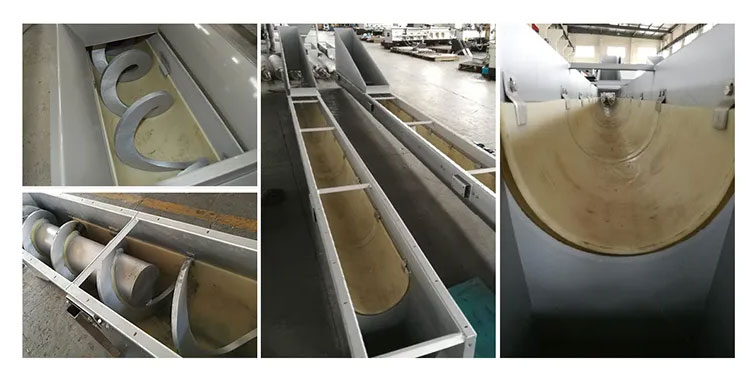
Material Adhesion:Oil sludge easily sticks to the trough surface and screw blades, especially when the oil content is high. Material buildup may reduce conveying efficiency over time.
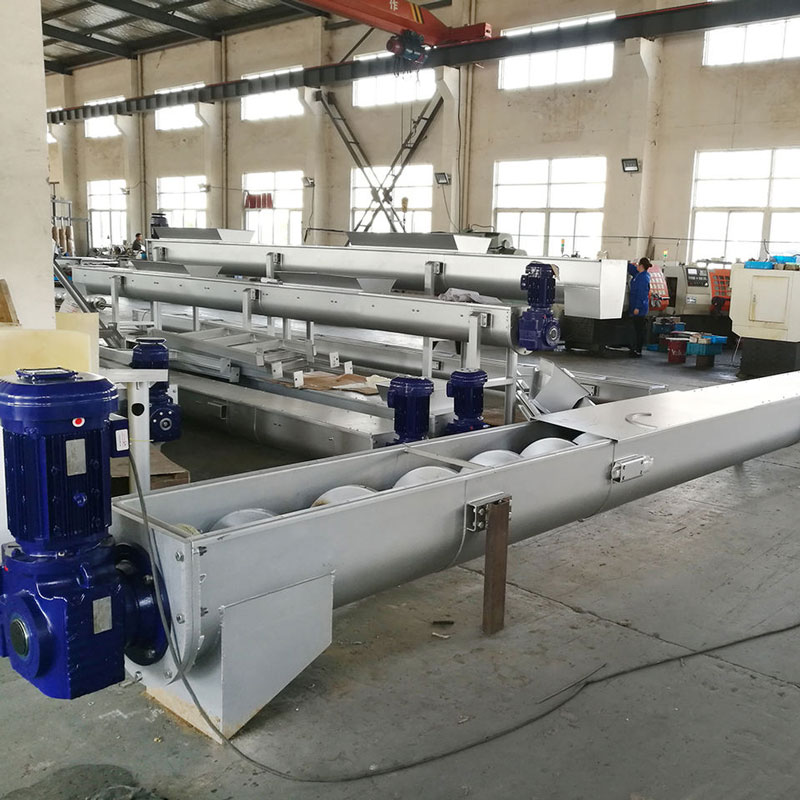
Blockage:Fibrous impurities, sludge cakes, and semi-solid particles may wrap around the shaft of ordinary screw conveyors and cause blockage.
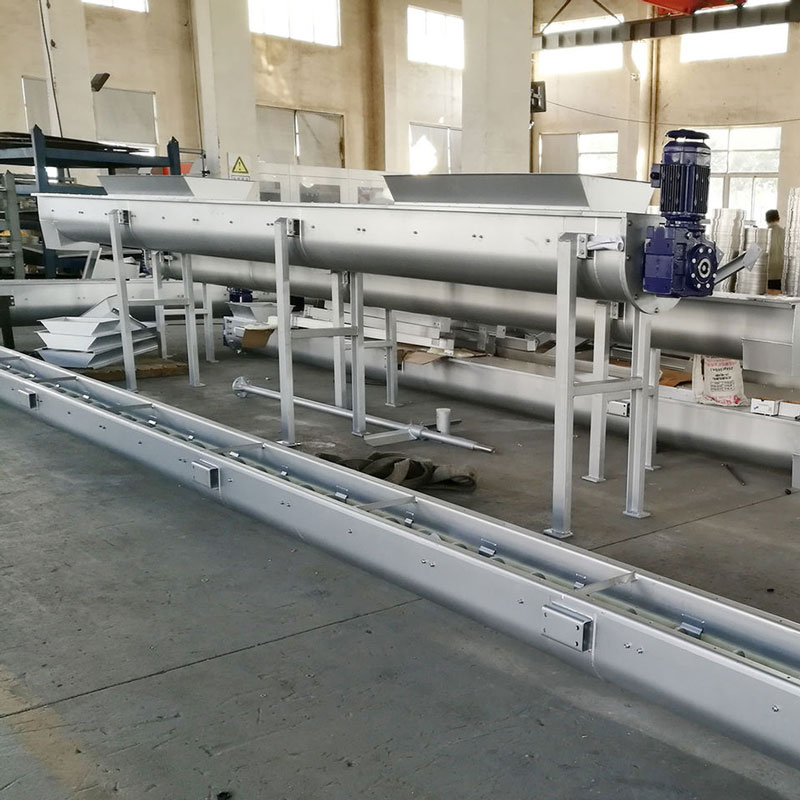
Leakage and Odor:Oil sludge often contains wastewater and volatile substances. Open conveying systems may produce leakage and odor pollution.
Equipment Corrosion:Some sludge materials contain acidic or corrosive components, which may accelerate equipment wear and corrosion.
High Maintenance Frequency:Traditional shafted conveyors handling sticky sludge may require frequent cleaning and maintenance due to material accumulation.
For high-viscosity sludge materials, shaftless screw conveyors are commonly selected because there is no central shaft inside the conveying area.Compared with ordinary shafted screw conveyors, shaftless structures provide:
| Structure Feature | Benefit |
|---|---|
| No central shaft | Avoid material winding and clogging |
| Larger internal conveying space | Suitable for high-viscosity sticky sludge |
| Low blockage probability | Ensure stable and continuous operation |
| Fully enclosed structure | Prevent odor overflow and dust leakage |
| Wear-resistant lining plate | Extend overall equipment service life |
| Low-speed running design | Reduce sludge disturbance and maintain material properties |
Refinery Tank Bottom Sludge: During crude oil storage and refinery tank cleaning processes, sludge accumulates at the bottom of tanks. Screw conveyors are used to transport the sludge to treatment or dewatering systems.
Drilling Waste Treatment: Oil drilling operations generate oily sludge mixed with rock cuttings and wastewater. Screw conveyors are used for closed-loop transport between separation equipment.
Oily Wastewater Treatment Plants: In wastewater treatment systems, sludge generated after sedimentation or flotation treatment can be transported to sludge dewatering equipment.
Petrochemical Industry: Petrochemical plants use screw conveyors to transport sludge generated during chemical production and cleaning processes.
Industrial Waste Treatment: Industrial oily waste typically requires sealed transport systems to minimize environmental pollution during treatment.
| Model |
ScreDiameter Inch/mm |
Screw Length Ft/m |
Capacity (Tons/Hour) |
Motor Power (Kw) |
Screw Speed (Rpm) |
| DH10B-24 | 10/250 | 24/7.3 | 15 | 4(5.4HP) | 50-70 |
| DH10B-36 | 10/250 | 36/11 | 5.5(7.5HP) | ||
| DH10B-48 | 10/250 | 48/14.6 | 15 | 7.5(10HP) | |
| DH12B-24 | 12/315 | 24/7.3 | 20 | 5.5(7.5HP) | |
| DH12B-36 | 12/315 | 36/11 | 20 | 7.5(10HP) | |
| DH12B-48 | 12/315 | 48/14.6 | 20 | 11(15HP) | |
| DH14B-24 | 14/350 | 24/7.3 | 30 | 7.5(10HP) | |
| DH14B-36 | 14/350 | 36/11 | 30 | 11(15HP) | |
| DH14B-48 | 14/350 | 48/14.6 | 30 | 15(20HP) | |
| DH16B-24 | 16/400 | 24/7.3 | 45 | 11(15HP) | |
| DH16B-36 | 16/400 | 36/11 | 45 | 15(20HP) | |
| DH16B-48 | 16/400 | 48/14.6 | 45 | 18.5(25HP) | |
| DH18B-24 | 18/450 | 24/7.3 | 55 | 15(20HP) | |
| DH18B-36 | 18/450 | 36/11 | 55 | 18.5(25HP) | |
| DH18B-48 | 18/450 | 48/14.6 | 55 | 22(30HP) | |
| Note: DAHAN Machinery can provide customized equipment according to customer requirements. | |||||
| The above specifications and parameters are for reference only. | |||||
Depending on sludge characteristics and operating conditions, the following configurations are commonly used:
| Component | Recommended Configuration |
|---|---|
| Conveyor Type | Shaftless screw conveyor |
| Trough Type | U-type or tubular |
| Material | Carbon steel / SS304 / SS316 |
| Liner Material | UHMWPE wear-resistant liner |
| Cover Design | Fully enclosed bolted cover |
| Drive Type | Gear reducer motor |
| Sealing Method | Dustproof and leakproof sealing |
| Inclination Angle | 0°–30° |
| Motor Option | Explosion-proof motor optional |
Screw conveyor for Oil sludge transfer is composed of a power source, a trough in stainless steel 304 or 316 (Trough in rolled sheet metal without possibility of clogging unlike a trough made in folded sheet metal) with removable bolted lids, and a shaftless spiral. Several conveyors in a series make it possible to carry out more complex paths (transfer, elevation, chute, etc.) to convey both limed and non-limed sludge.
Q: What material is recommended for sludge conveyors?
A: Carbon steel is suitable for general industrial sludge conveying. For conveying corrosive sludge containing acids, alkalis, corrosive media, or salt, or in high-moisture, easily corroded conditions, SS304 or SS316 stainless steel is recommended to improve corrosion resistance and service life.
Q: Can the conveyor be installed at an angle?
A: Yes. Most sludge screw conveyors can operate horizontally and at an angle, with a maximum tilt angle of 30°. The actual tilt angle needs to be determined based on the viscosity and moisture content of the sludge. A larger tilt angle will reduce the conveying capacity.
Q: Is a fully enclosed structure mandatory?
A: In mainstream sludge treatment scenarios such as oil refineries and wastewater treatment plants, a fully enclosed shell structure is recommended. This structure effectively reduces odor leakage and material spillage, while preventing dust diffusion and wastewater leakage, avoiding environmental pollution and meeting environmental protection and safety production requirements.
Q: Can explosion-proof motors be used?
A: Yes. In oil sludge transportation scenarios such as petrochemical plants and oil refineries, the oil sludge may contain volatile flammable media, which can easily create a flammable and explosive environment. Selecting explosion-proof motors can effectively avoid safety hazards and ensure the safe and stable operation of equipment.


Address:China,Yanjin county forest park gate to the west 1000 meters north road.


 Online Chat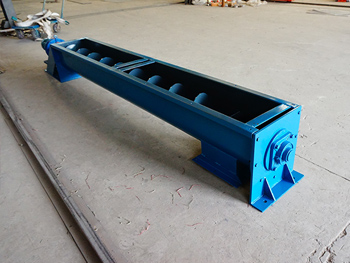
 Email
Email