


When selecting a Silica Sand Vibrating Screen, chemical process engineers must combat screen blinding and mechanical wear caused by the high Mohs hardness and angular shape of crushed quartz. This comprehensive technical guide compares Linear Vibrating Screens and Tumbler Screeners, focusing on anti-blinding dynamics, 3D particle classification, and iron contamination prevention for high-value quartz processing.
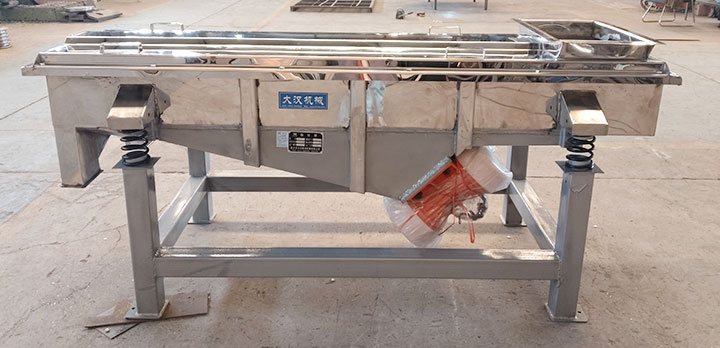
To accurately determine why one particular industrial screening machine outperforms another in specific silica plant circuits, we must analyze the micro-level physics governing how individual quartz particles interact with the active screening surface.
Linear Vibrating Screen: High G-Force Aggression
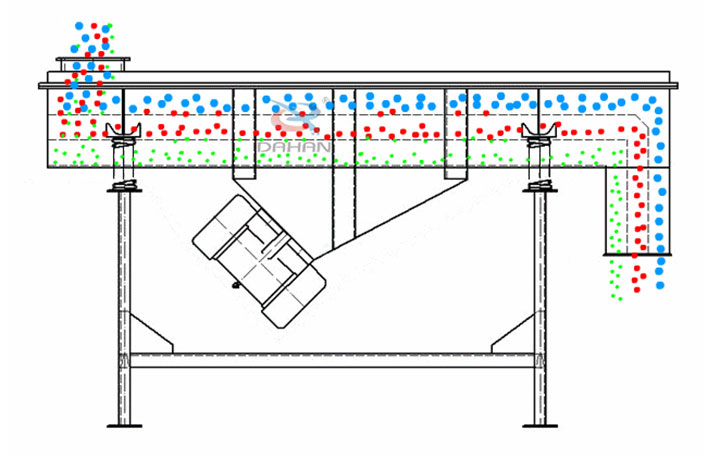
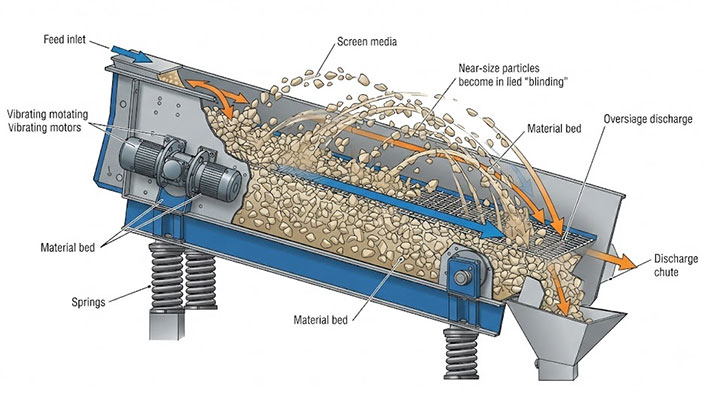
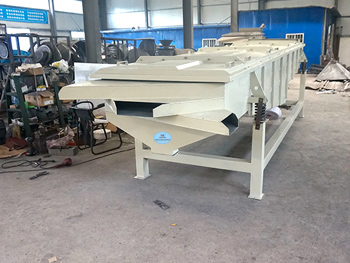
Linear vibrating screens utilize dual counter-rotating vibrating motors or mechanical exciters to generate a linear, forward-moving thrust vector. This force throws the material bed upward and forward at a specific design stroke angle, typically ranging from 30°to 45°relative to the horizontal screen deck.
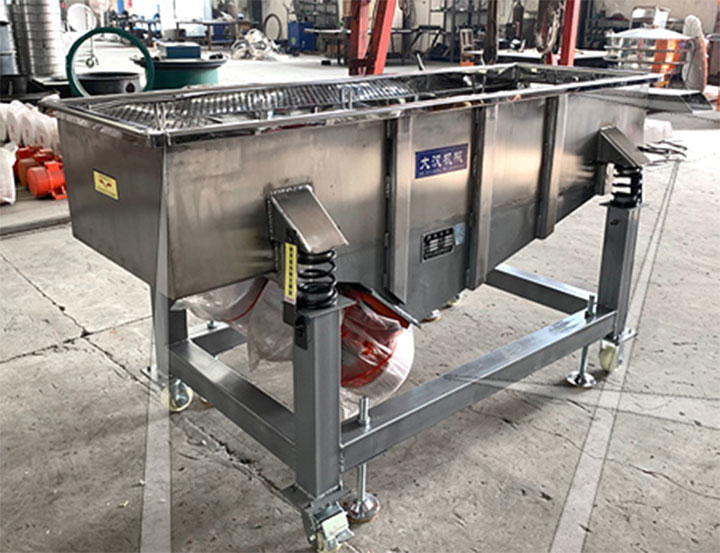
The Technical Advantage: The high vertical G-force (often exceeding 3.5 to 4.5 Gs) excels at throwing oversized material off the deck quickly. This high-amplitude acceleration is highly effective for handling massive bulk tonnages of coarse, wet, or lumped raw sand.
The Operational Blind Spot: Because the sand particles impact the woven wire mesh at a relatively steep, aggressive angle, irregular near-size silica grains are often forcefully driven and wedged directly into the square apertures. This results in severe mechanical blinding that high G-force alone cannot easily dislodge.
Tumbler Screener: Three-Dimensional Elliptical Stratification
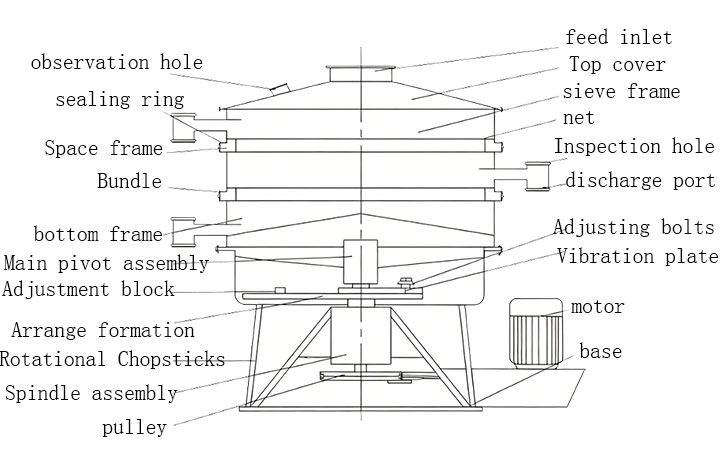
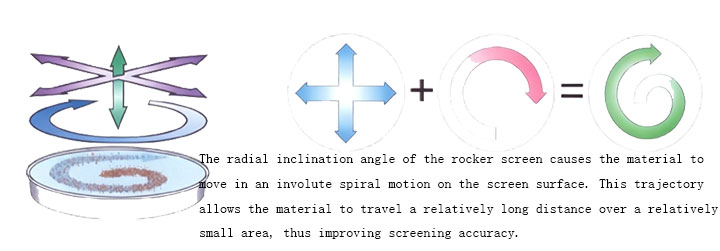
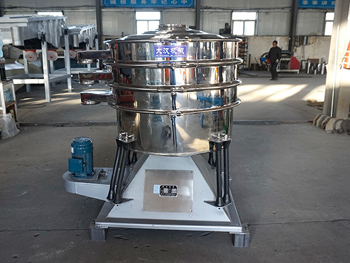
An industrial tumbler screener is a circular rocking machine that utilizes a completely different, multi-axis 3D motion profile. Driven by an eccentric shaft system with adjustable radial and tangential inclinations, it perfectly mimics the manual "hand-sieving" action (a combination of horizontal sweeping and vertical tossing).
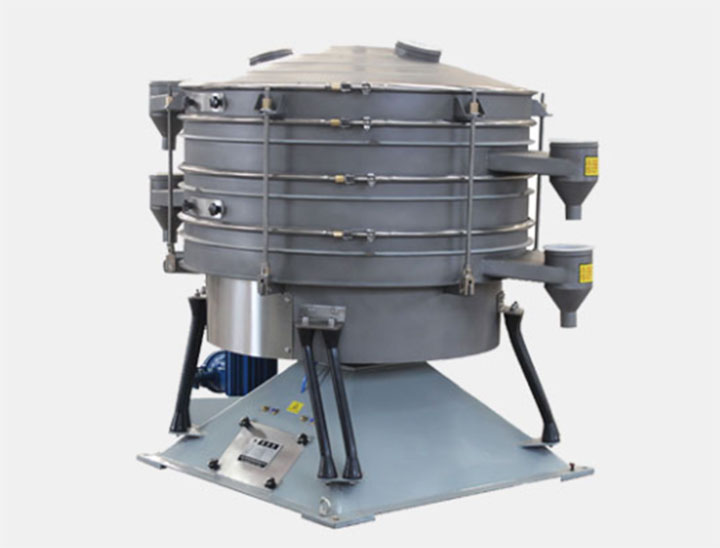
The Technical Advantage: Material enters directly into the center of the circular screen and spirals outward to the periphery along an involute helix path. The sand grains remain in constant, intimate contact with the mesh cloth, sliding gently rather than bouncing violently. This maximized dwell time allows ultra-fine silica powder to sink to the bottom of the stratified bed and pass through the openings with extreme precision.
The Operational Blind Spot: Due to its circular layout and spiral travel path, it cannot process thick, heavy top-size overburdens (such as raw mine run-of-mine scalpings). It is strictly engineered for high-precision finish-grading of dry materials.
In industrial quartz processing, screen blinding directly triggers off-spec products, cross-contamination of fractions, and unexpected downtime. The table below breaks down how both mechanical systems perform when challenged by dry, abrasive silica sand and fine powder.
| Technical Parameter | Linear Vibrating Screen | Circular Tumbler Screener |
| Primary Motion Profile | High-frequency, high-amplitude linear stroke | Low-frequency, three-dimensional rocking & tumbling |
| Material Travel Path | Straight line from feed end to discharge end | Center-to-edge spiral involute trajectory |
| Default Anti-Blinding System | Bouncing balls or rotary brush cleansers | Bouncing balls, rotary brushes, or Ultrasonic wave systems |
| Optimal Sifting Mesh Range | Coarse separation circuits (10 mesh to 40 mesh) | Fine to ultra-fine classification (40 mesh to 500 mesh) |
| Material Attrition & Degradation | High (violent particle-on-particle fracturing) | Zero (gentle rolling action preserves grain sphericity) |
| Screen Cloth Lifespan | Shorter due to high vertical impact and tension stress | Significantly longer due to purely sliding friction forces |
When attempting to isolate precise commercial fractions like 100 mesh, 200 mesh, or 325 mesh for electronics or casting-filler production, standard vertical vibration forces fail. The tumbler screener solves this through its dual-cleaning mechanism.
Beneath the active screening cloth, the machine incorporates an integrated secondary deck divided into a matrix of pockets filled with highly resilient bouncing balls or rotary brushes. As the sifter rocks in three dimensions, these balls strike the underside of the upper screen mesh with a gentle, non-destructive frequency.
Furthermore, for electrostatic fine silica powder (≤200mesh), a supplemental Ultrasonic de-blinding system can be seamlessly integrated. The ultrasonic transducer applies a high-frequency, low-amplitude micro-vibration directly to the wire mesh, breaking the surface tension and electrostatic bonds of the fine quartz dust, ensuring the apertures remain 100% open throughout the production shift.
For advanced applications like solar panel glass manufacture, semiconductors, or high-end ceramics, managing the residual iron content (Fe2O3) within the final product is just as critical as managing the grain size distribution. Standard carbon steel screen boxes or abrasive contact components will wear rapidly when subjected to the friction of abrasive silica materials, rubbing free mechanical iron into your clean product stream.
When configuring either a linear or a tumbler machine for high-purity silica processing, the structural design must strictly adhere to the following engineering criteria:
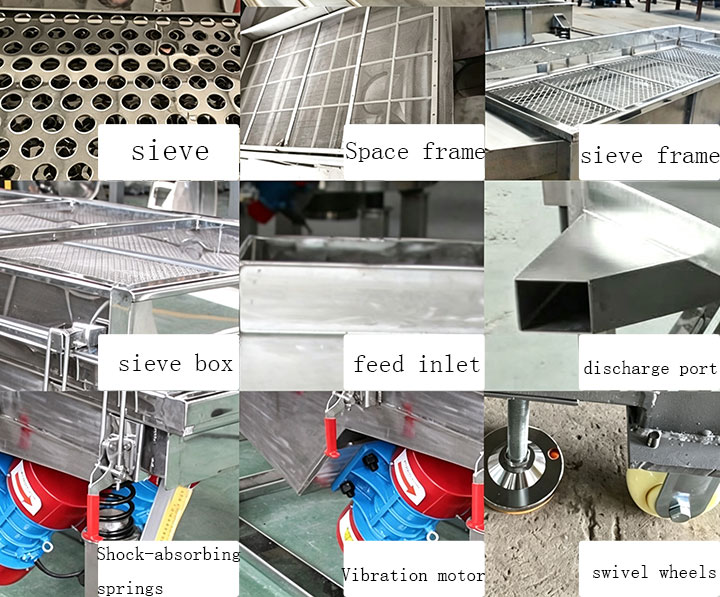
Material Contact Zones: All structural components interacting directly with the sand—including the feed inlet, internal circular screen frames, clamping rings, and discharge spouts—must be fabricated from Grade 304 or Grade 316L Stainless Steel.
Non-Metallic Linings: For ultra-low iron specifications requiring iron content ≤60ppm, stainless steel contact alone may not be sufficient to prevent microscopic trace contamination. High-wear impact zones, such as the initial center distribution cone, should be lined with polyurethane (PU) spray-coatings or high-density alumina ceramic tiles to act as an absolute barrier against metal-on-rock abrasion.
Screen Mesh Engineering: While polyurethane screen panels are exceptionally wear-resistant, they lack the high open-area percentage required for fine mesh sizing. Therefore, high-tensile stainless steel wire cloth fitted with reinforced tensioning hooks and protected by polyurethane side gaskets is recommended for fine screening applications.
To provide plant engineers with actionable data, we must examine the specific operating envelopes of these machines. Selecting the wrong parameters will accelerate screen blinding, regardless of the machine type.
Linear Vibrating Screen Operational Envelope
Linear screens operate at a higher frequency range, typically between 900 to 1500 RPM (15 to 25 Hz), with a total stroke amplitude of 4mm to 8mm.
Circular Tumbler Screener Operational Envelope
Tumbler screens operate at a much lower frequency, typically between 180 to 280 RPM (3 to 4.6 Hz), but utilize a gentle, wide three-dimensional rocking stroke.
To maximize your plant's overall Return on Investment (ROI) and completely eliminate screen blinding bottlenecks, experienced mineral processing engineers rarely rely on just one machine type. Instead, they implement a strategic hybrid layout:
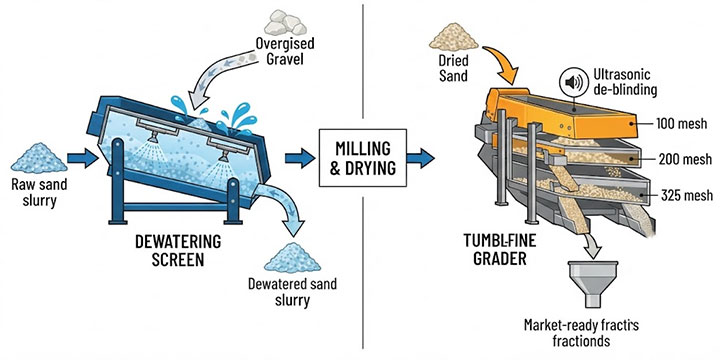
The Front-End Circuit (Wet Scalping & Dewatering): Use heavy-duty Linear Vibrating Screens at the front end of your circuit. They are the optimal choice for primary wet washing, removing plus-20 mesh oversized gravel from the slurry, and dewatering sand directly after hydrocyclone separation.
The Back-End Circuit (Fine Sizing & Micro-Powder Grading): Transition the material to Circular Tumbler Screeners at the backend of the plant, immediately following the milling and drying stage. Utilize a multi-deck tumbler configuration equipped with an ultrasonic cleaning system to split your ultra-fine dry silica powder into high-purity, precise market-ready fractions (e.g., 100 mesh, 200 mesh, 325 mesh) without blinding.
For linear screens, use brass wire brushes or air lances. For continuous automated production, install an ultrasonic de-blinding system or switch to a tumbler screener with built-in rubber bouncing balls.
Polyurethane has high elasticity and cross-linking, allowing it to absorb abrasive quartz impact energy without micro-abrasions. However, stainless steel is still required for fine meshes above 60 mesh.
A rotary screen uses aggressive high-speed vertical motors that can accelerate blinding. In contrast, a tumbler screener uses a gentle, low-speed eccentric 3D rocking motion to maximize accuracy and mesh life.
Avoid screen blinding and purity loss. Share your material specs (mesh size, moisture, capacity), and our Dahan engineering team will provide a free custom equipment configuration and layout proposal.
When comparing equipment options, it is important to evaluate their functions, specifications, and suitability for your process. You can also review our silica sand vibrator screen machine as a potential alternative.


Address:China,Yanjin county forest park gate to the west 1000 meters north road.


 Online Chat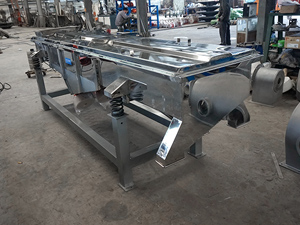
 Email
Email