


If you run a powder processing operation—whether in pharmaceuticals, chemicals, food, or battery materials—you've likely faced this frustrating scenario: your sieving machine starts strong, but within hours, throughput drops, product quality becomes inconsistent, and you're forced to stop production for manual cleaning.
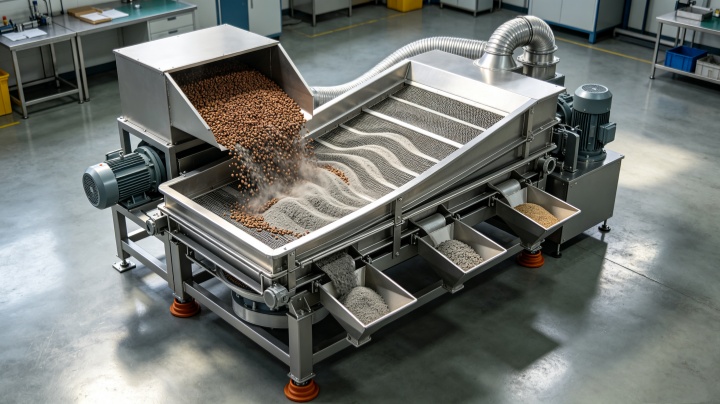
Screen blinding (or mesh blinding) is one of the most persistent and costly problems in industrial powder sieving. It occurs when particles block the mesh apertures, reducing the effective screening area and compromising your final product quality.
The good news? Most blinding issues can be solved once you identify the root cause. Here are 5 common causes of screen blinding and practical fixes you can implement today.
When your powder contains a significant percentage of particles that are close to the size of the mesh aperture, they tend to wedge themselves into the openings. These "near-size" particles become stuck, preventing other material from passing through. Over time, the screen progressively blinds from the inside out.
This is especially problematic when you're trying to achieve tight particle size distribution—common in industries like lithium battery material production or pharmaceutical API manufacturing.
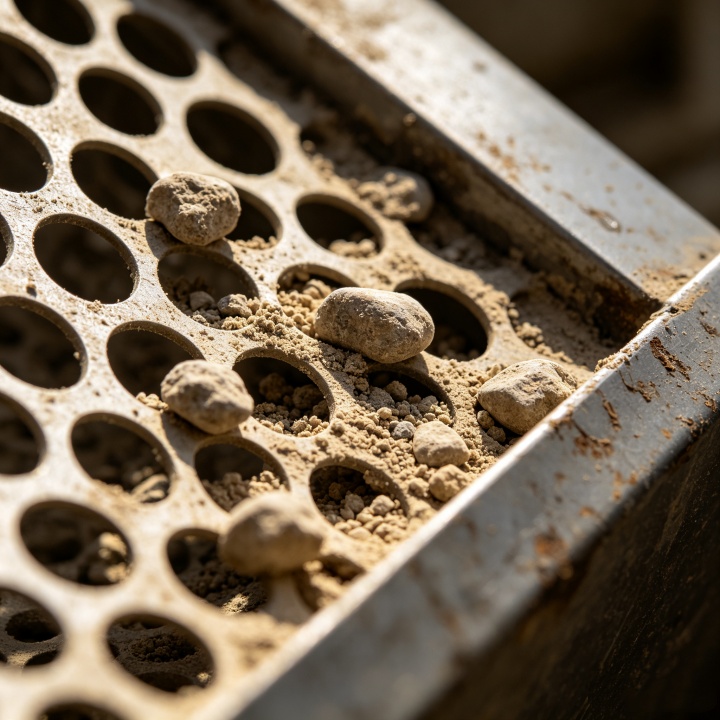
Some powders are inherently sticky, hygroscopic (moisture-absorbing), or cohesive. Materials like adhesive powders, certain food ingredients, or fine chemicals tend to build up on the screen wires, gradually reducing the hole size until the apertures close entirely.
When materials are prone to agglomeration or "caking," the problem intensifies—especially in humid conditions.

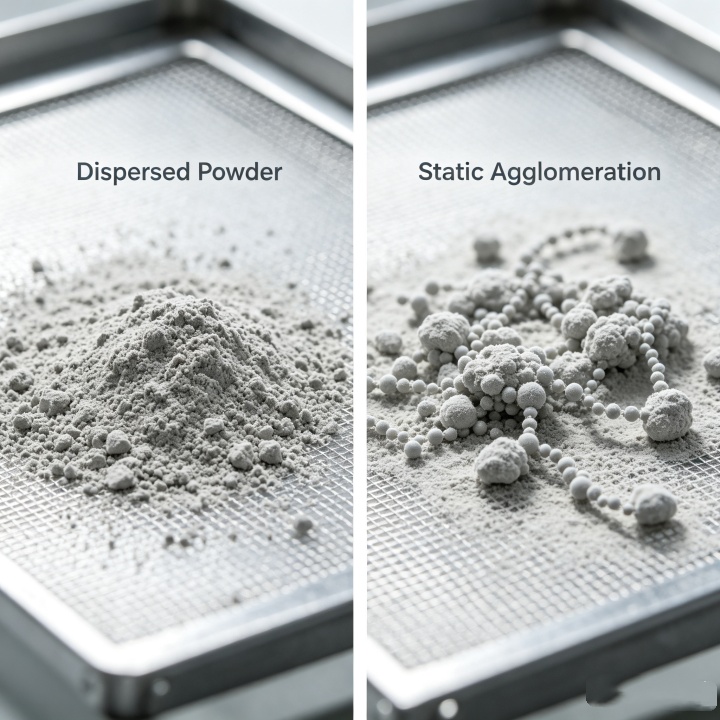
Electrostatically charged particles are among the most difficult to screen. Static causes two related problems: particles cling to the screen media (reducing aperture size), and particles agglomerate with each other, forming clumps too large to pass through the mesh.
This is particularly common when processing fine, dry powders like metal powders, pharmaceutical APIs, or powder coatings. Static problems are often more pronounced in winter when relative humidity is lower.
If you already have a self-cleaning system (like a ball tray or sliders) installed but your screens are still blinding, the problem might not be the system itself—it might be that the components are worn out or incorrectly sized.
Balls and sliders gradually wear down over time. Once they reach a certain size, they no longer have enough height to effectively impact the screen surface. Similarly, if the balls are too small for your application, they simply won't generate enough force to dislodge trapped particles.
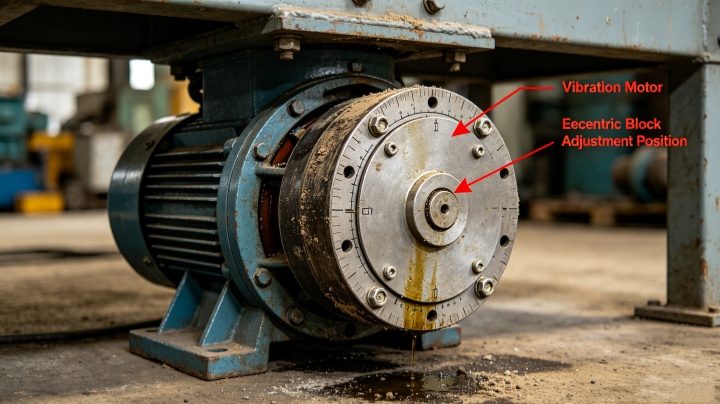
Sometimes the problem isn't the material or the screen—it's the machine itself. If your separator isn't generating enough vertical amplitude, even the best self-cleaning system won't work effectively. The balls won't bounce high enough to impact the screen, and material won't be properly fluidized to pass through the apertures.
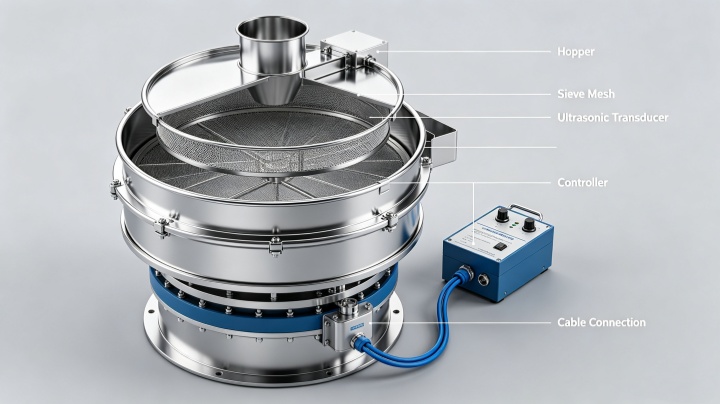
If you've tried multiple fixes and blinding continues to disrupt your production, an ultrasonic deblinding system may be the right long-term solution.
How it works: A transducer mounted directly on the mesh screen transmits high-frequency vibrations (typically above 20kHz) that create a bouncing effect on the screen surface. This prevents particles from sticking or lodging in the apertures—even for ultra-fine powders.
Why it's worth the investment:
Best applications: Ultrasonic systems are ideal for difficult-to-screen powders, including metal powders, pharmaceutical APIs, chemical compounds, and fine food ingredients.
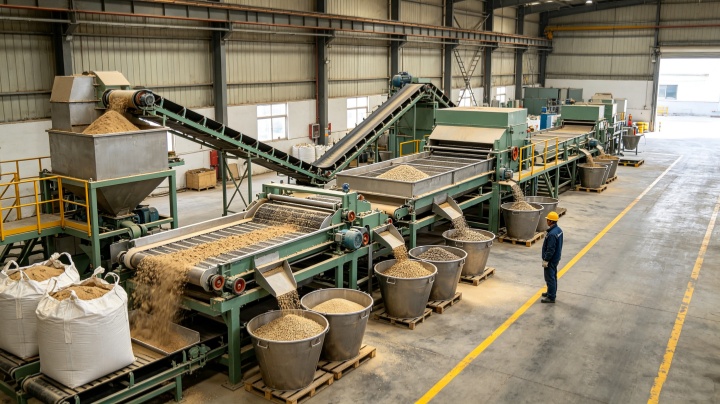
Screen blinding is a manageable problem—but it requires a systematic approach to diagnosis. Start by identifying which cause matches your situation:
| If you see... | Most likely cause | First step |
| Particles wedged in mesh holes | Near-size particles | Install ball tray or self-cleaning kit |
| Sticky buildup on screen surface | Hygroscopic / cohesive material | Add over-mesh cleaning system |
| Powder clinging due to static | Electrostatic charge | Ground the screen assembly |
| Cleaning system not working | Worn components | Replace balls/sliders |
| Poor separation overall | Wrong machine settings | Adjust motor weights |
Still struggling? Contact us to discuss your specific application—we can help you identify the right screening solution for your powder and ensure consistent, high-quality production.
Keywords: powder sieving machine, screen blinding, mesh blinding, ultrasonic deblinding system, powder screening efficiency, vibrating separator troubleshooting, API powder sieving


Address:China,Yanjin county forest park gate to the west 1000 meters north road.


 Online Chat
 Email
Email