


Selecting the right Industrial Sifter is one of the most critical decisions for production managers, quality assurance specialists, and procurement teams in food processing, pharmaceuticals, chemicals, and mining industries. The wrong choice can lead to product recalls, costly downtime, and inconsistent quality—while the right choice improves efficiency, ensures regulatory compliance, and protects your brand reputation.
This comprehensive guide focuses specifically on helping B2B buyers in food, pharmaceutical, and chemical industries navigate the industrial sifter market. Whether you are searching for a high-capacity industrial sifter for bulk powders or a sanitary industrial sifter for pharmaceutical applications, understanding the core differences between technologies is your first step toward a successful purchase.
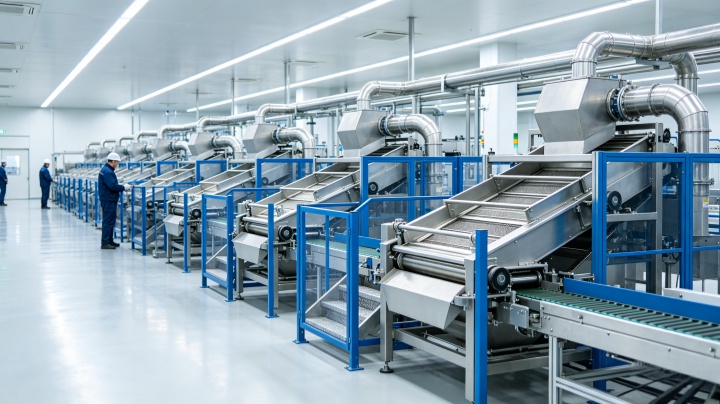
This comprehensive guide will walk you through everything you need to know: the main sifter types, key selection criteria, supplier evaluation, and a practical decision-making framework for 2026.
Before comparing sifter types, you must clearly define your process requirements. According to industry experts, three factors are fundamental to making the right choice:
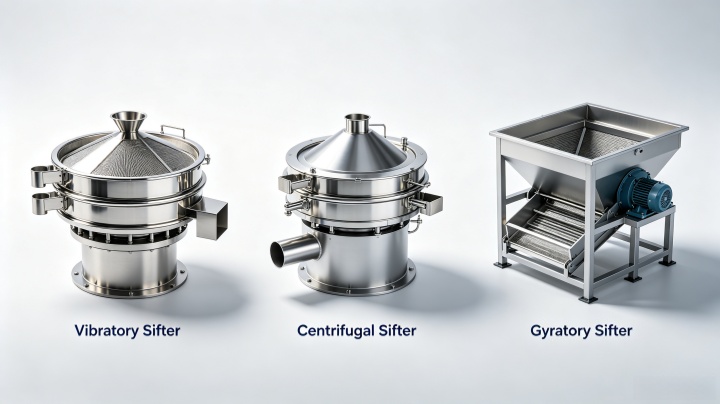
Vibratory sifters use an offset motor mounted externally to generate vibration that agitates powders across the screen surface.
Strengths:
Best Applications:
Limitations:
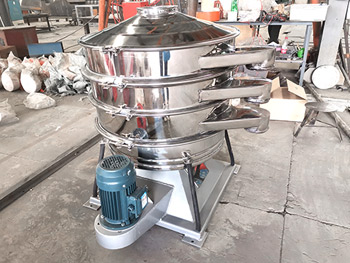
Centrifugal sifters use rotating paddles inside a cylindrical screen chamber to propel material against the mesh using centrifugal force.
Strengths:
Best Applications:
Limitations:
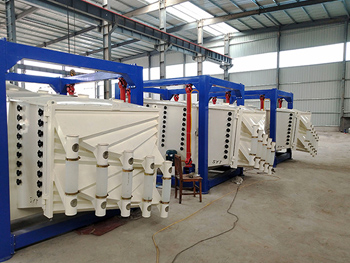
Gyratory sifters use a purely horizontal circular motion—no vertical component—which keeps material in contact with the screen longer.
Strengths:
Best Applications:
Limitations:
To help you compare, we've compiled a detailed overview of the three primary types of industrial sifters available on the market. This comparison will clarify which industrial screening equipment aligns best with your throughput, accuracy, and material handling requirements.
| Feature | Vibratory Sifter | Centrifugal Sifter | Gyratory Sifter |
| Best For | Multi-step accurate separation | High-throughput bulk screening | High-purity, gentle screening |
| Capacity | Lower per screen area | Higher per screen area | Highest throughput |
| Screening Accuracy | Medium-High | Medium | Highest |
| Number of Separations | Multiple decks possible | Single level only | Multiple decks possible |
| Dust Generation | Higher | Lower | Lowest |
| Noise Level | Noisy | Quiet | Moderate |
| Screen Type | Woven mesh | Wedge-wire or perforated | Woven mesh |
Data compiled from Advanced Screening Technologies
For applications involving superfine powders, sticky materials, or electrostatically charged particles, ultrasonic deblinding systems apply high-frequency vibrations directly to the mesh to prevent clogging and blinding.
Best for:
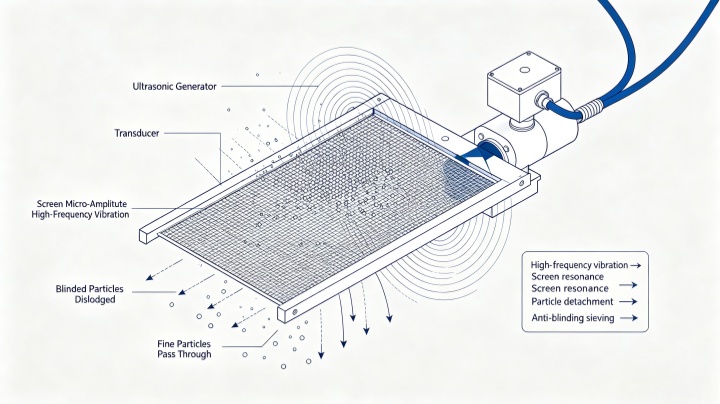
Ultrasonic systems can increase screening accuracy by up to 100% and extend screen service life significantly.
Sourcing from the right supplier is as important as choosing the right technology. China dominates the industrial sieving equipment market, with Henan Province—particularly Xinxiang City—housing over 80% of leading sifter manufacturers. This geographic concentration offers advantages in integrated supply chains, technical specialization, and export infrastructure.
| Criterion | What to Look For |
| Years in Operation | 10+ years indicates stability and expertise |
| Certifications | ISO 9001, CE marking, FDA compliance for food/pharma |
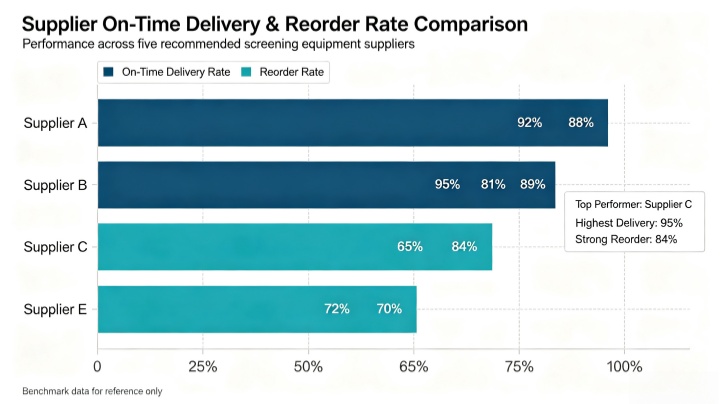
| On-Time Delivery Rate | Aim for ≥95% |
| Reorder Rate | ≥40% indicates customer satisfaction |
| Response Time | ≤2 hours for international buyers |
| Customization Options | Material options (SS304, SS316, carbon steel), custom mesh sizes |
| Supplier | Location | Review Score | Reorder Rate | On-Time Delivery |
| Xinxiang Gaofu Machinery | Henan, CN | 5.0 | 50% | 100% |
| Shanghai Tops Group | Shanghai, CN | 5.0 | 57% | 95.7% |
| WIN(Tianjin) Machinery | Tianjin, CN | 4.6 | 44% | 98.5% |
When comparing quotes, ensure all include:
Use this practical framework when evaluating your options:
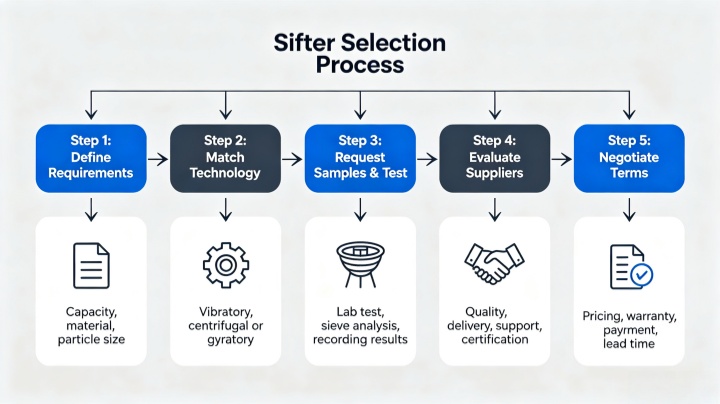
Request sample units from shortlisted suppliers
Test under real operating conditions for:
How do I verify an industrial sifter supplier's reliability?
Cross-check multiple data points: on-time delivery rate (aim for ≥95%), third-party certifications (ISO, CE), client testimonials, and sample test results. Conduct reference calls if possible, especially with buyers in your industry vertical.
What is the typical minimum order quantity (MOQ)?
Standard models often have no MOQ. Custom designs typically start at 5–10 units. Always confirm MOQ directly, as many vendors do not publish this information publicly.
How long does production take?
Standard units ship within 15–30 days. Custom projects involving new tooling may take 30–60 days. Expedited production may be available with rush fees of +15–30%.
Can I visit the factory?
Yes. Reputable suppliers welcome factory audits. For international buyers, virtual tours via live video are increasingly common and effective. Schedule meetings during Chinese business hours (GMT+8) for optimal responsiveness.
Selecting the right industrial sifter requires balancing technical excellence, operational reliability, and commercial value. By understanding your material characteristics, defining your screening purpose, and using a structured evaluation framework, you can minimize risk and maximize return on investment.
Key takeaways for 2026:
Whether you're sourcing your first sifter or expanding an existing line, prioritize suppliers with proven track records, responsive communication, and a commitment to quality. With careful due diligence, the right industrial sifter becomes not just equipment—but a strategic asset in your supply chain.
Ready to find the right supplier for your industrial sifter needs? Contact us today for a consultation or request a sample test from our verified manufacturer network.


Address:China,Yanjin county forest park gate to the west 1000 meters north road.


 Online Chat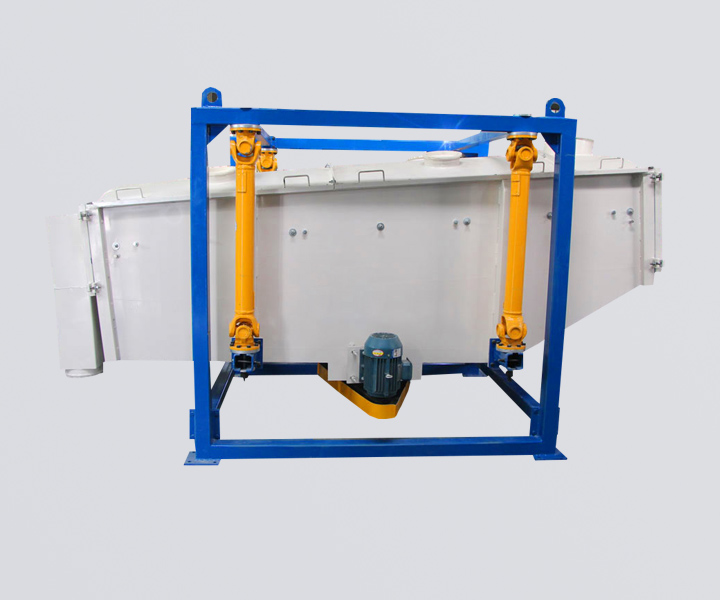
 Email
Email