Why Is Your Industrial Separator Underperforming? 5 Common Causes & Fixes
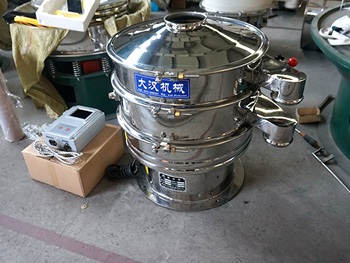
Industrial Separator are vital to your operations. This comprehensive guide dives deep into the root causes of industrial separator inefficiency. Whether you are troubleshooting a vibrating screen separator or a centrifugal separator, understanding these failure points is the first step to optimization. For a full range of high-quality industrial separation equipment, explore our product line.
Industrial separators are the workhorses of countless processing operations—from oil and gas production to chemical manufacturing and mineral processing. When they underperform, the consequences can be severe: off-spec product, equipment damage, unplanned shutdowns, and significant financial losses.
The frustrating reality? Poor separation performance is often blamed on the separator itself, but after a thorough analysis, the root cause frequently lies elsewhere—in design flaws, installation errors, instrumentation issues, or operational missteps.
This article breaks down the five most common causes of industrial separator underperformance and provides actionable fixes to get your equipment back on track.
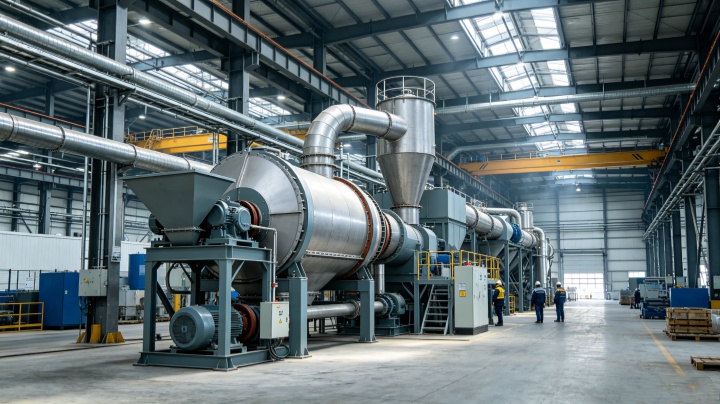
Cause #1: Installation Errors—The Hidden Performance Killer
One of the most overlooked yet prevalent causes of separator underperformance is improper installation. When internals aren't installed correctly, even the best-designed separator will fail to meet its performance specifications.
What Goes Wrong:
-
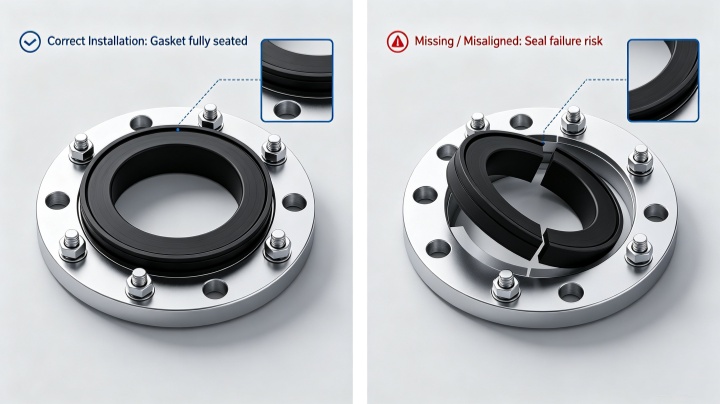
Missing or improperly placed gaskets: In one documented case, a plant experienced significant liquid carryover that forced a shutdown. Inspection revealed that several gaskets on cyclone boxes and deck plates were never installed, allowing gas and liquid to bypass the cyclones entirely. The installation report had been signed off, but the gaskets simply weren't there.
-
Reversed components: Dual mesh pads in scrubbers are designed with a specific order—the lower pad for removing large drops, the upper for catching smaller agglomerated drops. When these were installed in reverse order, the result was high liquid carryover. Simple tags marked "lower" and "upper" would have prevented the error.
-
Gaps in coverage: In a vertical vessel suffering from high carryover, investigators found that the installed mesh wasn't fully covering the flow area. The vessel was unusually out-of-round, and the supplied mesh wasn't oversized enough to compensate.
-
Overtightened wire mesh: Wire mesh sections tied together too tightly can create gaps where the mesh no longer fills the vessel, allowing bypass.
Fixes:
-
Inspect, don't just expect: As the experts say, "You don't get what you expect; you get what you inspect!" Always perform a flashlight test on gasketed internals to check for unsealed areas.
-
Document with photos: Every installation should be photographed and reviewed with the end user before closing up the vessel.
-
Have vendor representatives present: Having a supplier's representative during installation can prevent costly errors. In one case, plate pack coalescer blocks were flipped and oriented at 30° instead of the designed 60°—an error caught only when the vendor reviewed final installation photos.
-
Reinspect after transport: When vessels are shipped with internals pre-installed, bolting can loosen and internals can shift. Always perform a thorough reinspection after erection and before startup.
Cause #2: Screen and Filtration Media Problems
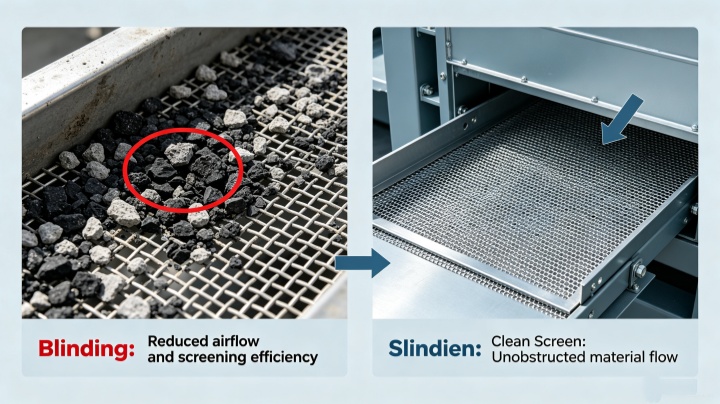
For any industrial separator that relies on screens, mesh, or filter media, these components are often the primary source of performance loss. Issues like screen blinding directly reduce the effective open area of your industrial screening separator, cutting its capacity capacity and efficiency.
What Goes Wrong:
-
Screen blinding: When near-size particles lodge in screen apertures or sticky/static materials build up around wires, the effective open area decreases. This reduces capacity and can eventually block passage entirely.
-
Premature screen failure: Screens can fail at the center (from improper center-tie-down installation or material feed slugging), at the periphery (from material buildup or excessive vertical amplitude), or through delamination (from temperature or pH issues exceeding the screen's rating).
-
Loss of tension: Over time, screen mesh can stretch. A loose screen produces inefficient results and should be replaced immediately.
Fixes:
-
Install self-cleaning devices: Options include ball trays (for dry applications with coarser cuts), self-cleaning kits, ultrasonic systems (for fine dry screening down to 20 microns), and spray systems (for wet applications to prevent drying and caking).
-
Check self-cleaning device condition: Sliders and balls wear down over time. Once they reach a certain size, they lose effectiveness and need replacement.
-
Adjust motor weight settings: If blinding persists, check whether the separator is producing enough vertical amplitude. Improper weight settings can prevent cleaning devices from impacting the screen effectively.
-
Match screen to application: Check temperature and pH ratings. Epoxy screens max out around 200°F, bonded screens at 120°F, while welded screens can handle up to 400°F.
Cause #3: Inlet Piping and Feed Issues
The performance of a separator is heavily influenced by what happens before the stream even enters the vessel. Poor inlet piping design can create small droplets that are difficult to separate and high liquid entrainment loads that overwhelm the internal components.
What Goes Wrong:
-
High inlet velocity: Excessive feed pipe velocity increases liquid entrainment and produces smaller droplets. Once the entrainment inception point is reached, liquid carryover increases rapidly.
-
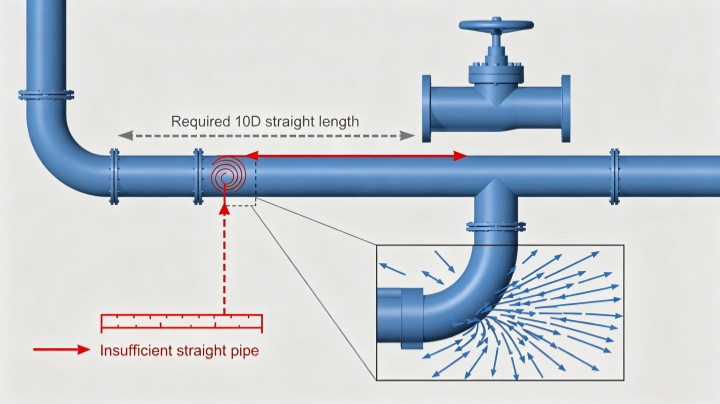
Poor piping geometry: Elbows, valves, expansions, or contractions close to the inlet nozzle can destabilize multiphase flow patterns, increasing entrainment and creating difficult separation conditions.
-
Inadequate inlet device: The inlet device is crucial for maximizing gas-liquid separation, minimizing droplet shearing, and optimizing velocity distribution. Using an impact plate (simple diverter) in a critical application where a vane-type or cyclonic inlet device is needed will result in poor performance.
Fixes:
-
Straight pipe requirements: Provide at least 10 diameters of straight pipe upstream of the inlet nozzle without valves, expansions, contractions, or elbows. If a valve is necessary, use only full-port gate or ball valves.
-
Check inlet momentum (ρV²): High inlet momentum indicates the need for a more robust inlet device. There are upper limits for different device types; exceeding these limits results in higher entrainment loads and smaller droplets.
-
Consider retrofitting internals: If the wrong inlet device was originally selected, retrofitting with a better-performing type (e.g., vane-type or cyclonic) is often feasible and cost-effective compared to replacing the entire vessel.
Cause #4: Mist Extractor Issues
The mist extractor is the final gas cleaning device in conventional separators. Its selection and condition largely determine the amount of liquid carryover remaining in the gas phase.
What Goes Wrong:
-
Incorrect type for the application: Mesh pads, vane packs, and axial flow demisting cyclones all have different performance characteristics. Using a mesh pad where liquid loading exceeds its capacity—or where high solids fouling is expected—will lead to carryover.
-
Overloading: If the liquid load reaching the mist extractor exceeds its design capacity, performance drops significantly. As a rule of thumb, capacity decreases by approximately 10% for every 42 L/min/m² above the design liquid load.
-
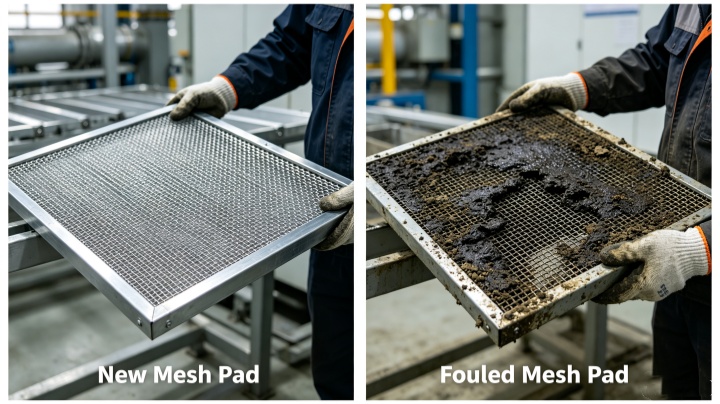
Reusing removed mesh: In turnaround situations, it's common to remove mesh for vessel inspection. If the same mesh is reinstalled instead of replaced, gaps often appear. Mesh is not springy—once removed, it deforms and loses its ability to fill gaps. Reinstalled dirty or fouled mesh also creates problems.
Fixes:
-
Always replace removed mesh: It's good practice to always install new mesh if the old mesh has been removed. If reuse is unavoidable, number the sections so they can be reinstalled in their original locations.
-
Verify design conditions: Check whether the mist extractor was sized for current operating conditions. If liquid loads have increased, retrofitting with a higher-capacity design may be necessary.
-
Match material to service: Ensure the mist extractor material is compatible with the process fluid. A case study described Incoloy internals being installed with stainless steel bolts/clips—an error that could have led to significant corrosion damage and unplanned shutdown.
Cause #5: Operational and Maintenance Neglect
Even a well-designed and correctly installed separator will underperform without proper operation and maintenance.
What Goes Wrong:
-
Flow fluctuations: Large variations in inlet flow rates can overwhelm the separator's capacity, leading to oil carryover and poor separation.
-
Improper pressure settings: Low separator pressure hinders gas-liquid separation. Incorrect oil-gas interface settings can also cause oil to enter the gas zone or gas to enter the liquid phase.
-
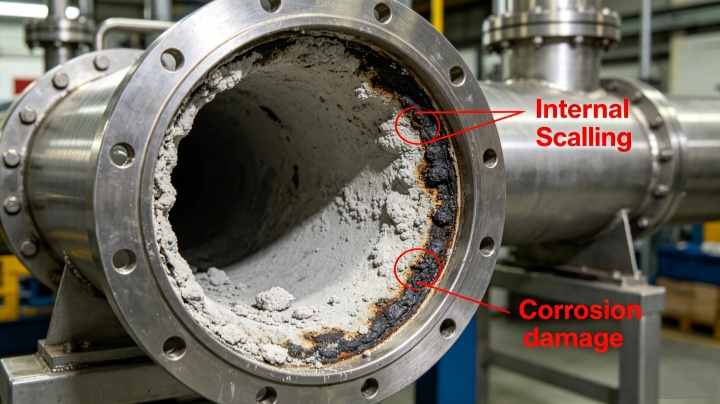
Blockages: Internal components—such as drain grids and separation internals—can become blocked with debris, scale, or polymer residues. One case reported a 30% reduction in flow area due to internal blockage, causing equipment surge. Similarly, blockages in outlet pipes from solid impurity accumulation can prevent proper discharge.
-
Corrosion and material incompatibility: Galvanic corrosion between different materials (e.g., vessel and internals) can cause failures. Proper isolation of different materials is essential.
Fixes:
-
Stabilize feed conditions: Ensure inlet flow rates stay within design capacity. If fluctuations are unavoidable, consider upstream surge drums or slug catchers.
-
Monitor key parameters: Track flow, pressure, temperature, and liquid levels. Deviations from normal ranges are early warning signs of problems.
-
Regular inspection and maintenance: Establish a preventive maintenance schedule that includes internal cleaning, inspection of separation media, and replacement of wear parts. Don't wait until performance drops to take action.
-
Train operators: Proper training ensures operators know correct startup/shutdown procedures, can recognize abnormal conditions, and respond appropriately to process upsets.
Summary Troubleshooting Checklist
Optimizing your industrial separator requires a systematic approach. Use this checklist to diagnose and resolve performance bottlenecks in your industrial separation system.
When your industrial separator isn't performing as expected, work through this checklist systematically:
|
Potential Cause |
What to Check |
Immediate Action |
|
Installation errors |
Gaskets, orientation, coverage, torque |
Inspect, photograph, reinspect after transport |
|
Screen/filter issues |
Blinding, tears, tension, delamination |
Clean, adjust weights, replace if damaged |
|
Inlet problems |
Velocity, piping geometry, momentum |
Ensure 10D straight pipe, consider retrofitting inlet device |
|
Mist extractor overload |
Liquid load, condition, type suitability |
Replace if removed, verify capacity, upgrade if needed |
|
Operational issues |
Flow stability, pressure, temperature, blockages |
Stabilize feed, maintain parameters, clean internals |
The key to resolving separator performance issues is systematic troubleshooting. Don't assume the separator itself is the problem—installation errors, upstream piping, and operational factors are often the real culprits. By understanding the common failure modes and applying the fixes outlined above, you can restore your separator's performance and avoid costly unplanned shutdowns.
Remember: You don't get what you expect; you get what you inspect. A thorough inspection and methodical approach to troubleshooting will pay dividends in uptime, product quality, and equipment longevity.


 Online Chat
 Email
Email