


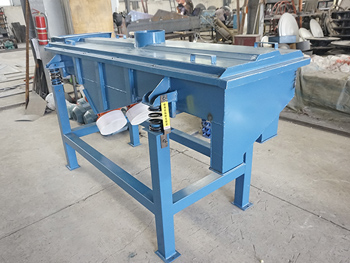
When you choose a heavy duty multi-layer linear vibrating screen for high-capacity industrial production, you gain a robust solid-liquid separation and material grading solution. This heavy-duty model integrates a high-strength, vibration-resistant frame with a multi-deck screen configuration, driven by dual synchronous motors to generate a forceful linear motion trajectory.
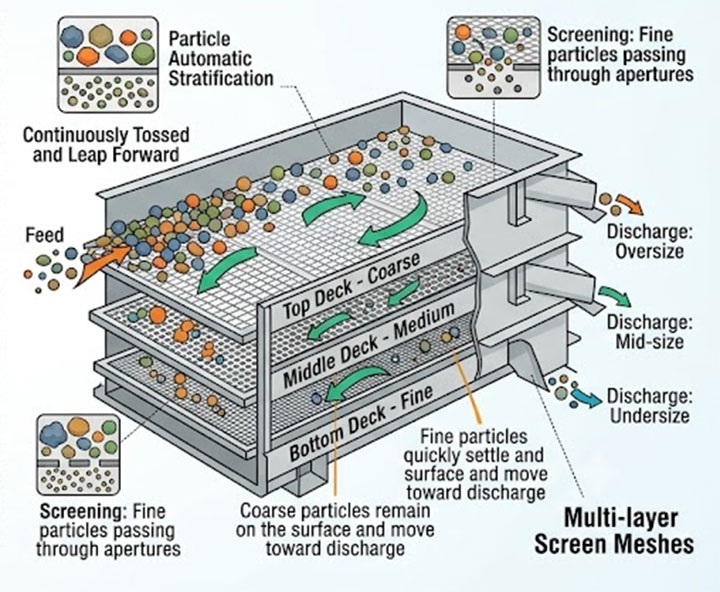
Deployed primarily in secondary and tertiary aggregate and mineral processing stages, it achieves precise multi-stage sizing per unit hour, maximizing processing capacity while minimizing material recirculation.
Achieving maximum throughput requires precise dynamic execution. Dahan engineering applies specific mechanical principles to optimize industrial screening performance:
Watch the Dahan heavy duty linear vibrating screen in action.
The system utilizes two matched vibrating motors rotating in opposite directions. The resulting synchronized centrifugal forces generate a powerful, uniform linear throw across the entire screen box and multi-deck mesh surfaces, ensuring rapid, continuous material advancement.
As raw feed enters the top deck, sustained linear excitation forces cause particles to leap forward and stratify instantly. Fine particles migrate downward through successive mesh apertures, while coarse aggregates remain on top to exit cleanly at the discharge chute.
Because the linear vibrating screen exerts high conveying momentum, it maintains efficient throughput even under horizontal or low-angle setups. The "one-time feeding, multi-stage sizing" framework eliminates bottlenecks commonly found in traditional single-deck setups.
To ensure maximum operational throughput in aggregate and mineral lines, selection must be based on exact technical specifications. Below are the key engineering design parameters configured by Dahan Machine:
| Core Parameter | Standard Engineering Range | Dahan Technical Design Focus | Impact on Processing Throughput |
|---|---|---|---|
| Screening Area & Deck Count | 1.2 m² – 15 m² | 1 to 4 Decks | Custom width/length ratios engineered per material flow rate | Directly determines maximum hourly processing capacity (up to 500 T/h). |
| Mesh Aperture Gradient | 0.5 mm – 80 mm | Stainless steel woven mesh, perforated plates, or PU panels | Prevents bed blinding and speeds up fine particle passage across layers. |
| Vibration Frequency & Stroke | 960 – 1460 rpm | 4 – 10 mm | Dual eccentric vibration motors with adjustable excitation force | Controls material forward conveyance speed and tossing trajectory. |
| Deck Angle / Inclination | 0° (Horizontal) to 15° | Adjustable support spring mounts for customized pitch | Accelerates discharge rate to eliminate material congestion. |
Configuring a heavy duty multi-layer linear vibrating screen requires balancing target mesh size with raw throughput. Dahan engineers follow strict mechanical criteria when customizing deck setups:
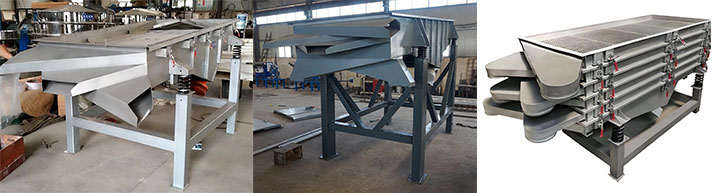
While multi-deck designs allow multi-stage separation in a single pass, adding too many decks increases overall box weight, dampens excitation force, and overloads lower screen layers. In high-tonnage mining and stone processing, a 2-deck or 3-deck setup usually yields the optimal capacity-to-precision ratio. For 4-deck configurations, Dahan integrates upgraded high-excitation motors to maintain full acceleration across all layers.
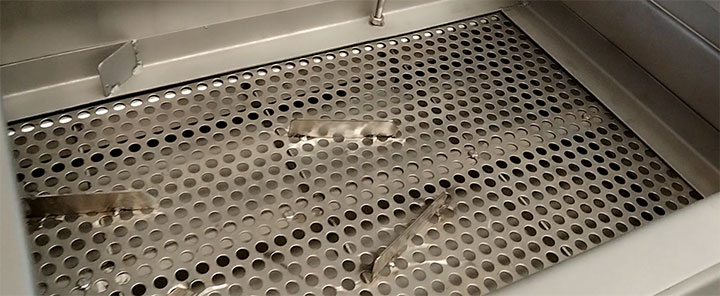
Screen deck apertures must strictly follow a step-down sizing principle (largest mesh on top, decreasing layer by layer). The rugged upper deck scalps coarse fractions, reducing bed depth on lower decks. This prevents mesh clogging on top while allowing fine materials on lower layers to pass through rapidly without accumulation.
To achieve uniform grading precision without sacrificing capacity, raw feed must be distributed evenly across the full width of the top deck using an upstream vibrating feeder or distributor. Maintaining a balanced material bed depth ensures every particle makes contact with the mesh, preventing premature discharge of unscreened fines.
In practical industrial production, the actual throughput of a heavy duty multi-layer linear vibrating screen depends not only on machine specifications, but also on raw material behavior and site environment. Dahan engineering evaluates three key factors:
To sustain long-term peak performance and prevent unplanned downtime, follow these routine maintenance practices:
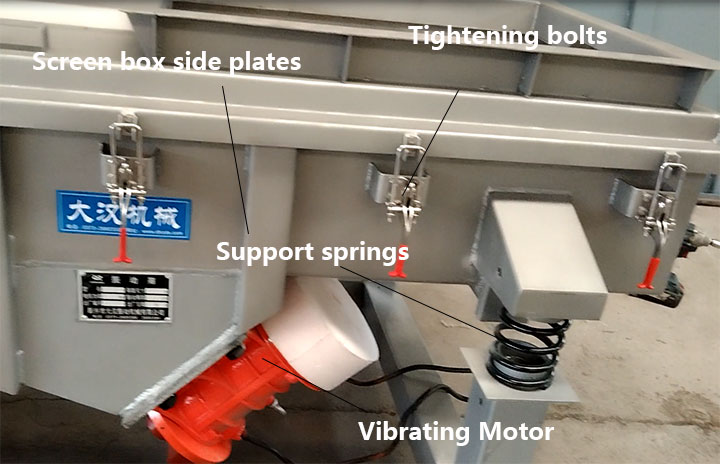
Under high-frequency heavy loads, loose mesh causes localized resonance and rapid wear. Periodic re-tensioning is essential for maintaining uniform screening efficiency across all decks.
The dual vibrating motors are the heart of the system. Apply high-temperature extreme-pressure grease regularly and monitor bearing housing temperatures to prevent thermal failure.
Inspect anti-blinding bouncing components and screen box side plates regularly for fatigue cracks, ensuring structural stability throughout heavy industrial cycles.
Choosing the ideal heavy duty multi-layer linear vibrating screen requires a thorough technical evaluation:
Clarify Material Profile and Target Capacity: Determine bulk density, moisture, and hourly tonnage (T/h) requirements. For laboratory verification of particle sizes, consult our precision test sieve models.
Evaluate Plant Layout and Material Flow: Consider factory footprint constraints and seamless integration with related material handling systems such as belt conveyors.
Collaborate with an Experienced Manufacturer: Partner directly with Dahan Machine for custom material testing, structural engineering, and turnkey processing solutions. Contact our engineering team today to request a tailored quotation and technical specification sheet.
Get expert equipment selection support, custom capacity calculations, and direct factory pricing from Dahan Machine engineers.
Request a Quote / Contact Us NowMesh blinding can be prevented by installing bouncing balls beneath the screen deck, using self-cleaning polyurethane screen panels, or increasing the stroke amplitude via motor adjustment. For high-moisture materials, wet screening with water spray nozzles is recommended.
Yes. By outfitting the equipment with high-open-area polyurethane dewatering screen panels and adjusting the excitation force to propel materials quickly, the heavy-duty linear vibrating screen efficiently performs both wet classification and dewatering operations.
The number of screen decks depends on how many final material fractions you need to separate. In heavy-duty conditions, a two-deck or three-deck setup is generally recommended to maintain optimal throughput and excitation efficiency.


Address:China,Yanjin county forest park gate to the west 1000 meters north road.


 Online Chat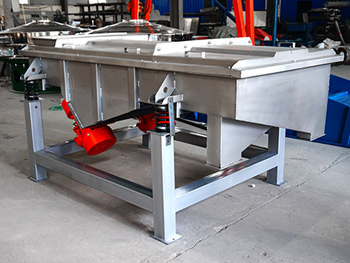
 Email
Email