


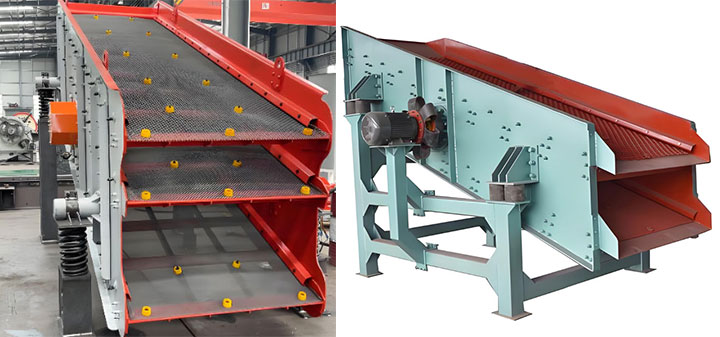
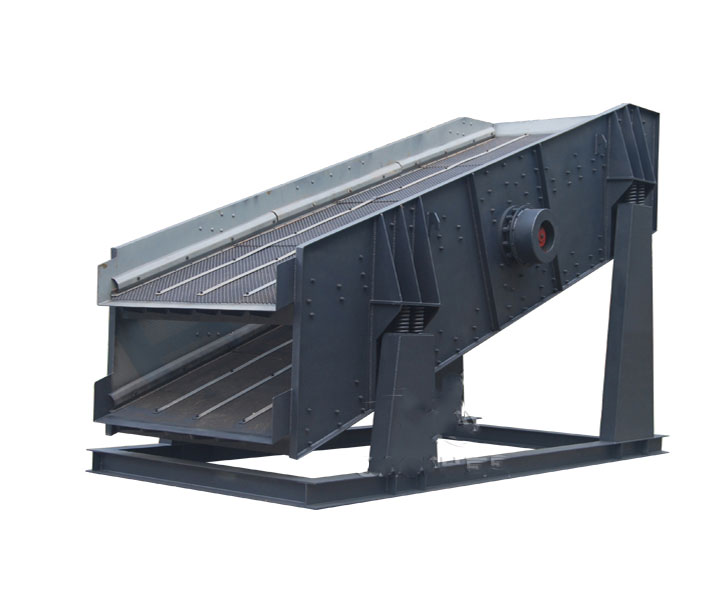
A triple deck vibrating screen is equipped with three stacked layers of linear vibrating screen mesh or heavy-duty circular frameworks. As raw bulk material feeds into the machine, the progressive sorting action allows the unit to separate the feed into four distinct product fractions—specifically, one oversize, two intermediate grades, and one fine fraction—in a single operational pass.
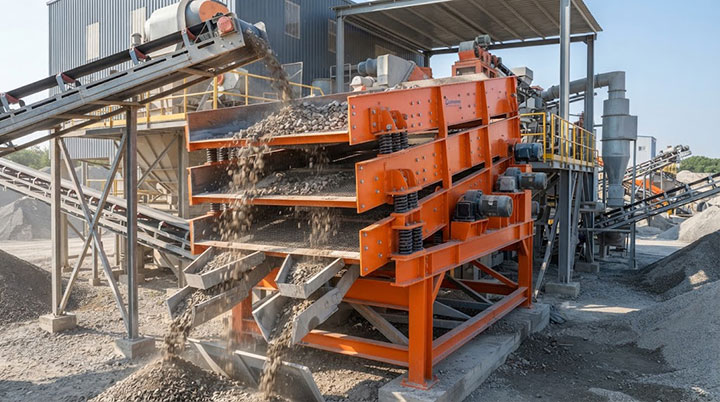
In contrast, a double deck vibrating screen features only two screening decks, limiting its output to three product fractions. While both systems rely on heavy-duty mechanical vibration to sort bulk feeds, their internal deck architectures fundamentally determine their classification limits and throughput efficiency. Understanding these mechanical differences ensures your aggregate processing line maintains target capacities, produces clean commercial-grade fractions, and avoids costly equipment sizing mistakes.
While both double and triple deck screening units are driven by heavy-duty mechanical vibration—typically generated by dual imbalance motors, eccentric shafts, or high-frequency vibrators—their internal physical layout and particle sorting behavior differ fundamentally.
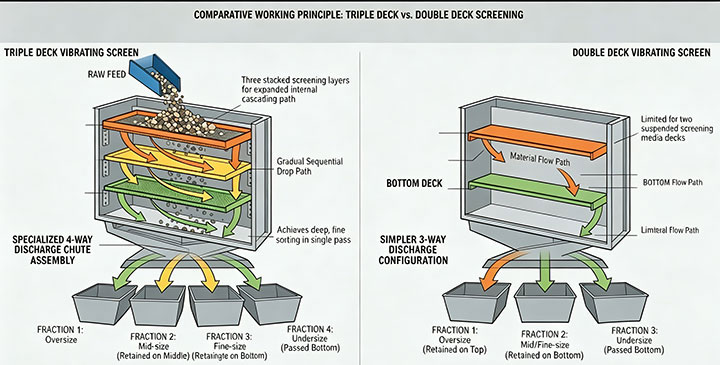
Internal Deck Architecture (Focus on Triple Deck): A high-performance triple deck vibrating screen is engineered with three stacked screening layers within a robust screen box framework. This extra tier creates an expanded internal cascading path, allowing the unit to intercept and separate three intermediate and fine grades before the remaining oversized material exits the bottom. In contrast, a standard double deck model houses only two suspended screening media decks, cutting off its internal classification at two split levels.
Material Flow and Stratification: When raw aggregate feed hits the top deck of a triple deck unit, the material undergoes a gradual, sequential drop through three progressive aperture stages (top, middle, and bottom), requiring precise mesh tensioning and open-area ratios to handle multi-stage separation. Meanwhile, a double deck setup processes feed through just two rapid sizing stages, limiting its capability for deep, fine multi-grade sorting in a single pass.
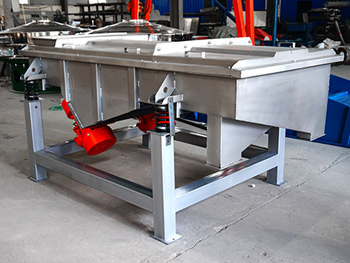
Watch the heavy-duty industrial vibrating screen in action at our processing site.
Discharge Configuration: Structurally, an industrial triple deck screen requires a specialized four-way discharge chute assembly beneath the screen box to handle four distinct output fractions separately without cross-contamination. In comparison, double deck screens rely on a simpler three-way discharge configuration.Industrial Vibrating Screen Running and Multi-Deck Structure Demonstration
When evaluating heavy machinery for an industrial mineral or aggregate processing line, plant managers and engineers judge performance through three critical metrics: throughput capacity, screening efficiency, and separation precision. The comprehensive comparison table below outlines how a triple deck vibrating screen stacks up directly against a double deck model across these core benchmarks:
| Comparison Metric | Triple Deck Vibrating Screen | Double Deck Vibrating Screen |
|---|---|---|
| Output Fractions | 4 distinct sizes (Oversize + 2 Intermediate + Fines) in a single pass. | 3 distinct sizes (Oversize + 1 Intermediate + Fines) in a single pass. |
| Throughput & Plant Footprint | Maximizes single-machine utility by reducing the need for extra secondary screening loops. | Excellent for high-volume coarse processing, but requires downstream equipment for extra sizing. |
| Screening Efficiency | Workload is distributed across three progressive decks; reduces blinding burden on the bottom fine mesh. | Concentrates sorting into two layers; offers high individual deck throughput for coarse applications. |
| Gradation Precision | Precise gradation control, ideal to meet strict commercial aggregate and mineral specs. | Restricted to two cuts; often requires compromises on intermediate particle sizing. |
While multi-deck units offer advanced separation capabilities, a double deck vibrating screen remains a highly practical, cost-effective choice for many industrial processing applications. Understanding precisely when a two-deck configuration is sufficient prevents costly over-engineering and keeps capital expenditures (CAPEX) perfectly aligned with actual production needs.
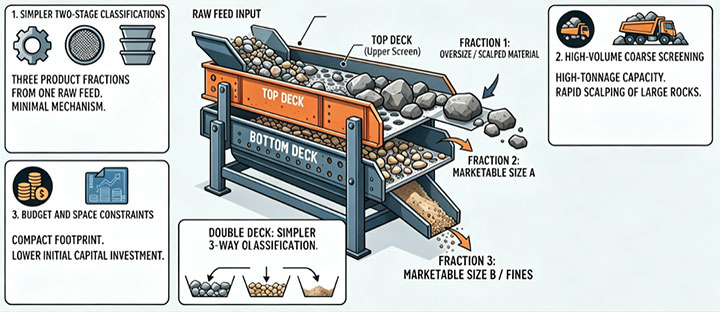
Simpler Two-Stage Classifications: If your aggregate or mineral operation only requires sorting raw feed into three distinct product fractions (such as one oversize rejection and two marketable sizes), an industrial double deck screen handles this efficiently without introducing unnecessary mechanical complexity.
High-Volume Coarse Screening & Scalping: For primary or secondary scalping operations where the main focus is on high tonnage, rapid removal of large rocks, or heavy coarse aggregates rather than fine multi-grade separation, a double deck unit provides robust, high-capacity performance.
Budget and Vertical Space Constraints: When processing plants operate on tighter initial equipment budgets or face limited vertical headroom within existing structural layouts, double-deck models offer a simpler footprint while maintaining reliable, steady output for standard aggregate grading.
While double-deck models handle standard operations effectively, certain production demands signal the technical and economic tipping point for upgrading to a triple deck vibrating screen. Recognizing these critical operational triggers helps plant managers maximize production efficiency and overall product market value.
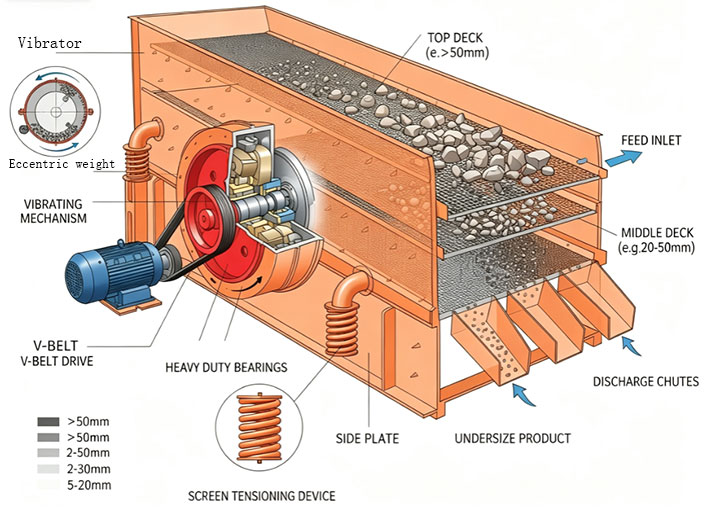
Stricter Commercial Gradation Specifications: When your local market demands or major project contracts require rigid particle size distribution across four distinct fractions simultaneously, a triple deck configuration eliminates the need for complex, expensive multi-stage secondary screening circuits.
Maximizing Plant Floor Space & Footprint: If your processing facility faces strict footprint or headroom limits that prevent the installation of an additional standalone screening machine, upgrading to a 3-deck unit allows you to achieve superior grade separation within the exact same structural footprint.
Complex Multi-Product Recovery: Operations processing diverse mineral ores, specialty aggregates, or industrial recycled materials that require precise recovery of multiple intermediate sizing grades benefit directly from the advanced progressive classification capacity of a heavy-duty triple deck vibrating screen.
Inspecting and replacing mesh on a triple deck unit demands careful planning. Because the middle and bottom decks are nested securely within the heavy-duty screen box frame, maintenance technicians require adequate side-access clearance. Ensuring proper side-tensioning or end-tensioning helps prevent screen cloth sagging, which otherwise leads to premature wear and severe material blinding.
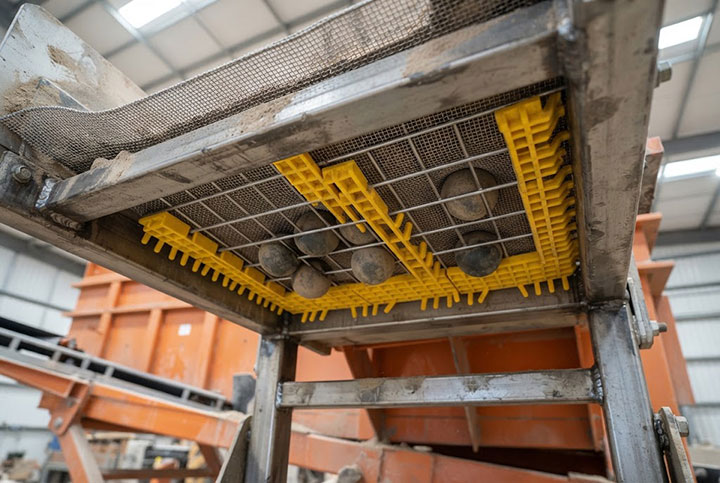
Handling finer material fractions across multiple lower decks increases the risk of near-size particles getting stuck (pegging) or clogging mesh openings (blinding). Integrating professional anti-blinding aids—such as polyurethane tension mats, rubber bouncing balls, or specialized cleaning systems—is essential for continuous operation in sticky, high-moisture aggregate applications.
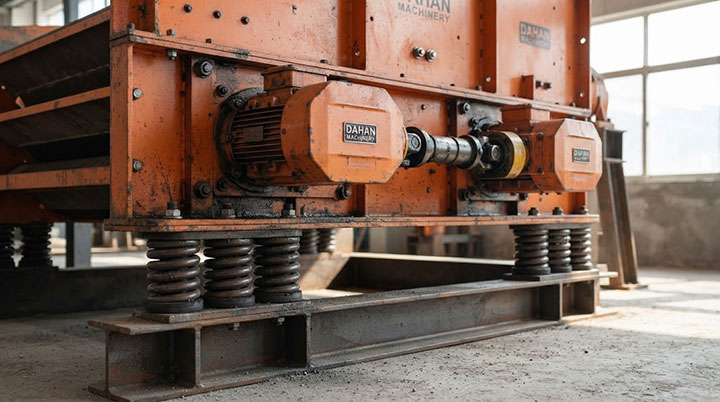
The addition of a third screening deck increases the dynamic vibrating mass and alters the overall center of gravity. Regular inspection of the drive mechanism (such as dual imbalance motors or eccentric shaft assemblies), heavy-duty spring isolators, and structural bolt torque ensures the machine maintains stable throw patterns without causing excessive frame fatigue.
Managing four distinct discharge fractions requires precisely engineered under-screen chute assemblies. Maintaining proper clearance and alignment beneath the bottom deck prevents material accumulation, cross-contamination between product fractions, and accelerated wear on the discharge lips.
Selecting between an industrial triple deck vibrating screen and a double-deck model ultimately depends on your specific product gradation requirements, plant layout constraints, and overall capital investment targets. While double-deck units provide a cost-effective solution for standard three-tier separations, investing in a high-performance triple deck configuration unlocks the precise control needed to capture four distinct product fractions in a single operational pass.
The equipment selection matrix below outlines clearly when to choose each configuration for your aggregate or mineral processing plant:
| Evaluation Criteria | Choose a Triple Deck Screen If... | Choose a Double Deck Screen If... |
|---|---|---|
| Product Gradation Needs | Market specs demand strict, multi-grade sizing across 4 distinct commercial product outputs. | Operation only requires separating raw feed into 3 size fractions. |
| Plant Efficiency & Layout | You want to maximize single-machine utility and reduce the need for extra secondary screening loops. | You prioritize high-tonnage, coarse scalping with minimal mechanical complexity. |
| Investment & Constraints | Optimizing plant floor footprint while achieving high-precision classification is a top priority. | Initial capital budget or vertical headroom on-site is strictly limited. |
By carefully aligning your equipment investment choice with these operational benchmarks, you can ensure long-term processing efficiency, consistent commercial product quality, and reliable plant performance.
A: Absolutely. You are welcome to send your raw material samples to our testing facility. Our professional engineers will conduct thorough material testing and recommend the exact machine configuration tailored to your specific production line.
A: No, the power consumption is quite similar. Motor sizing is calculated based on the total dynamic vibrating mass and stroke of the machine rather than simply the number of screening decks.
A: A triple deck unit is slightly taller than a double deck model to safely accommodate the extra screening deck and under-screen discharge clearance. We recommend verifying your facility's vertical clearance and drop space prior to installation.
A: Yes, you can mix screen media types across different decks. For instance, using durable polyurethane panels on the top impact deck and precision woven wire mesh on the fine lower deck is a common, highly efficient industrial practice.
Want to explore more heavy-duty separation options? Browse our full lineup of industrial Vibrating Screen models to find the ideal sizing solution for your processing plant.
Contact Dahan Machinery today to get expert engineering support, custom screening equipment solutions, or free material testing.


Address:China,Yanjin county forest park gate to the west 1000 meters north road.


 Online Chat
 Email
Email