


After granulation, fertilizer pellets are not always the same size. The finished material usually contains qualified granules, fine powder, and oversized particles. If these materials are packed without screening, product appearance, transportation, and spreading performance may be affected. A fertilizer vibrating screen separates granules by size. Qualified products move to the packaging process, oversized particles are returned for crushing, and fine materials are sent back for granulation. This helps reduce material waste, maintain consistent particle size, and keep the production line running smoothly.
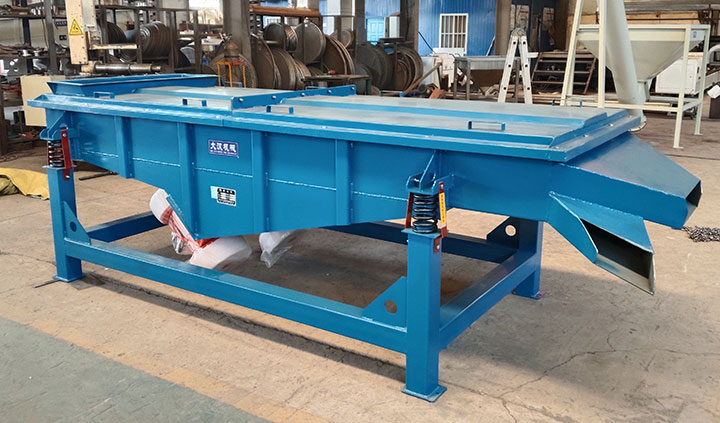
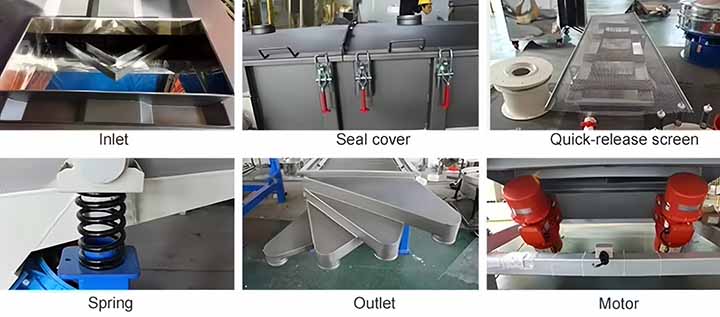
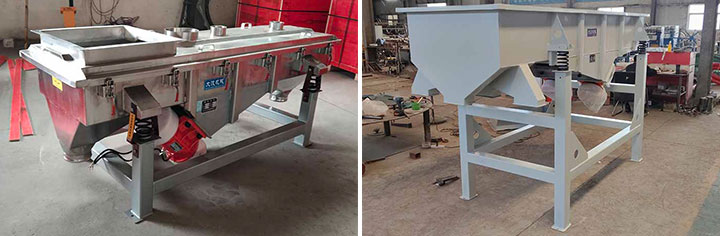
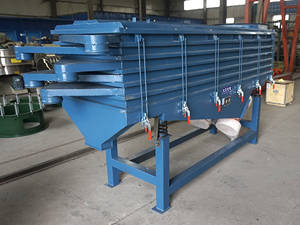
A Fertilizer Vibrating Screen is a screening machine designed to classify fertilizer granules by particle size through vibration. It consists of a feed inlet, screen box, screen mesh, vibration motor, support springs, and discharge outlets. The processing capacity ranges from 10 kg/h to 10 tons/h. Depending on the mesh size, the machine separates qualified granules, oversized particles, and fine powder. It is suitable for compound fertilizer, organic fertilizer, and other granular fertilizer production lines.
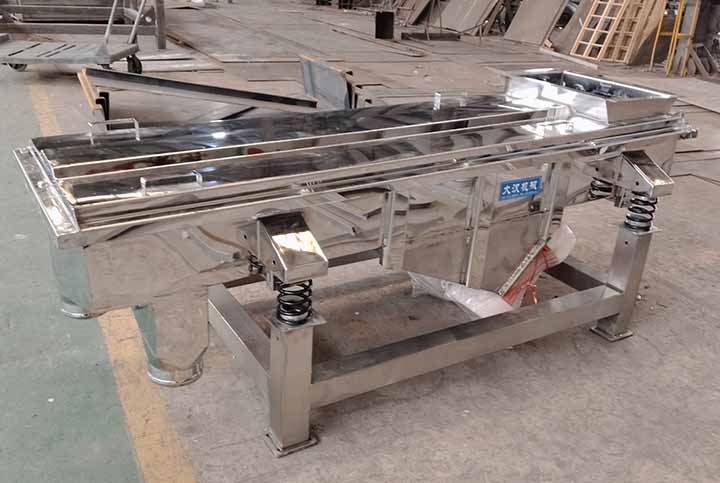
Different particle sizes can affect fertilizer packaging and product quality. A vibrating screen separates granules into different size grades, removes fine powder, and returns oversized particles to the crushing process. This reduces material loss, minimizes manual sorting, and keeps the production process stable. It also serves as a connection between the granulating, cooling, and packaging stages.
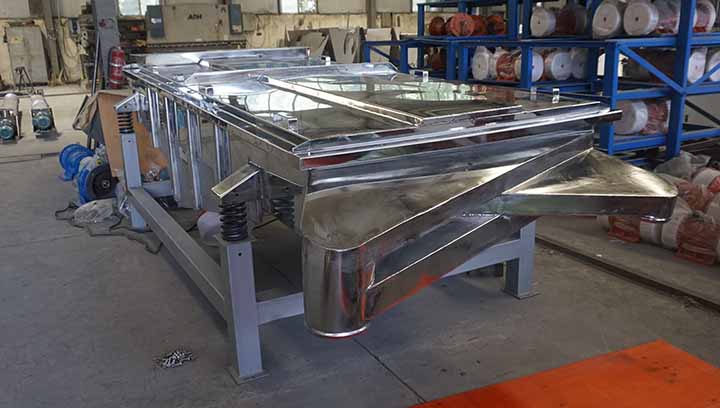
A fertilizer vibrating screen delivers fertilizer with a more uniform particle size for packaging. Fine powder and oversized particles can be recycled into the production process, reducing material waste. The machine connects smoothly with granulating, cooling, coating, and packaging equipment, allowing continuous material flow. By replacing the screen mesh, the same machine can produce different particle sizes to meet various production requirements.
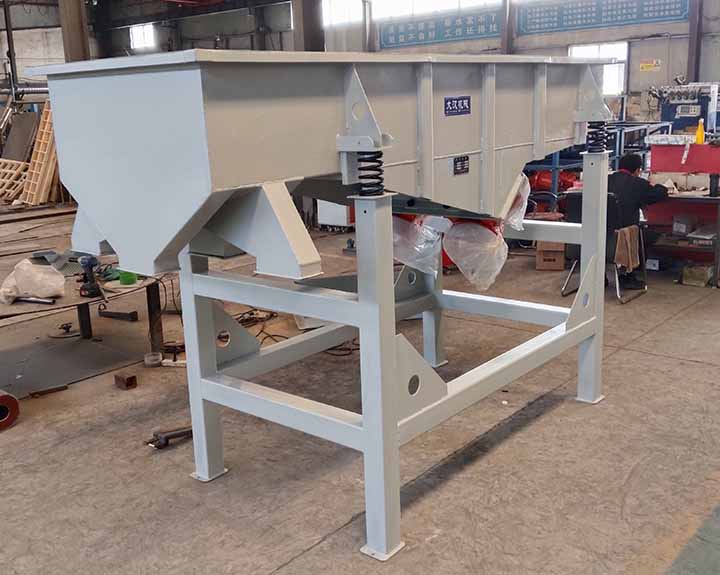
A fertilizer vibrating screen is normally installed after the cooler and before the coating or packaging machine. It separates qualified products from oversized and undersized particles before packaging.
Typical production process:
Raw Materials → Mixing → Granulating → Drying → Cooling → Vibrating Screening → Coating → Packaging
Rejected materials are returned to the production line for further processing.
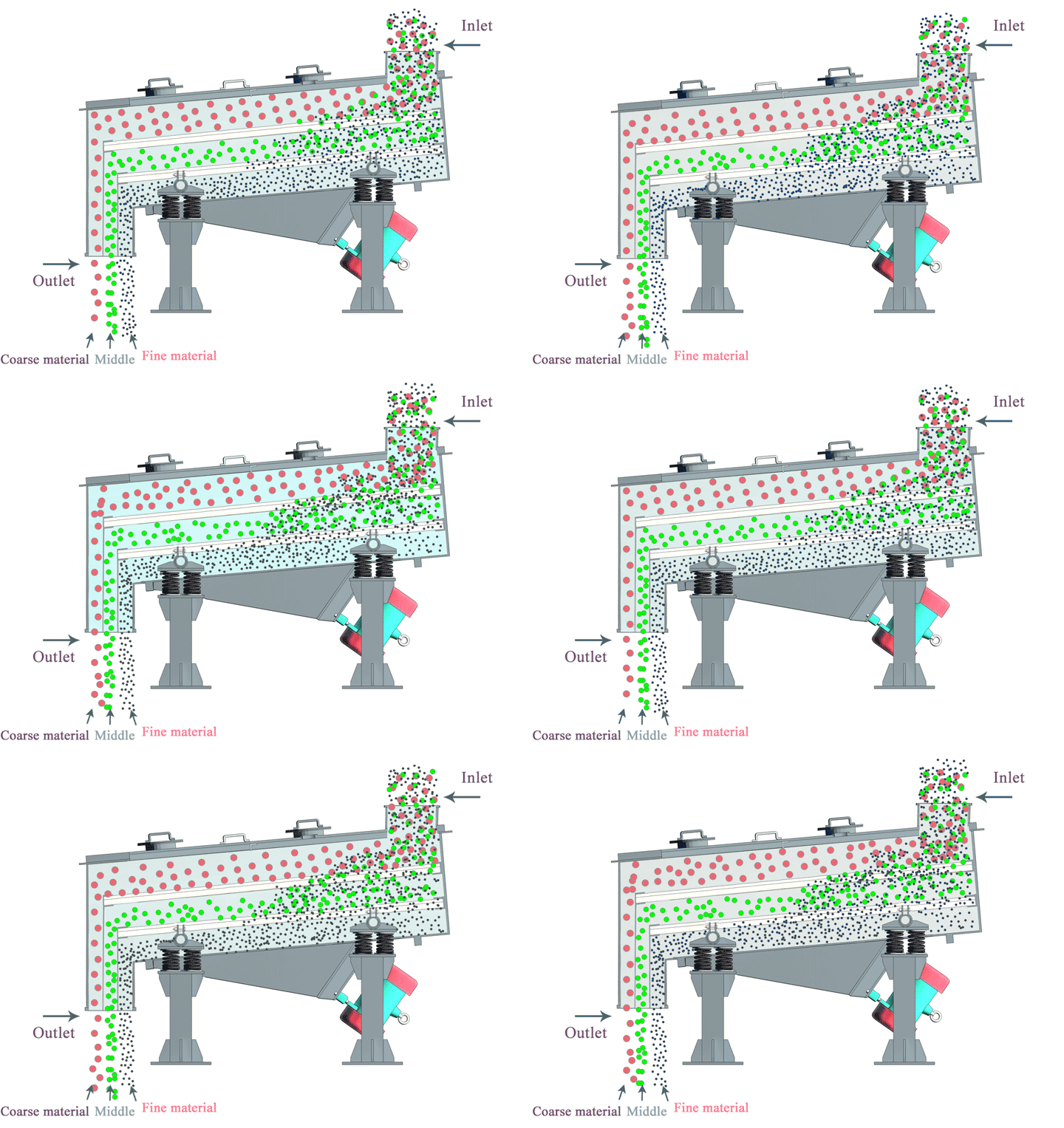
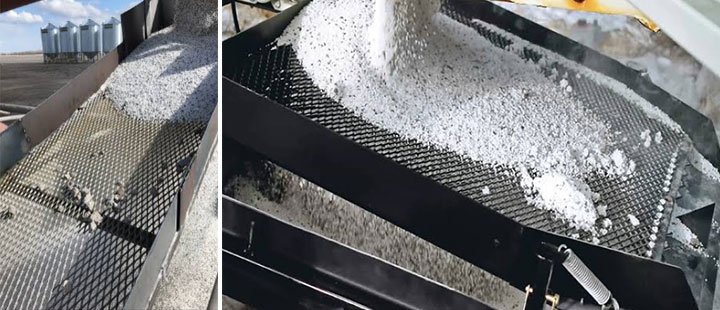
Granular fertilizer enters the screen through the feed inlet. The vibration motor drives the screen surface, causing the material to move forward while vibrating. Particles smaller than the mesh openings pass through the screen, while oversized granules continue moving toward another discharge outlet. Double-deck and multi-deck screens can separate several particle sizes in a single screening process.
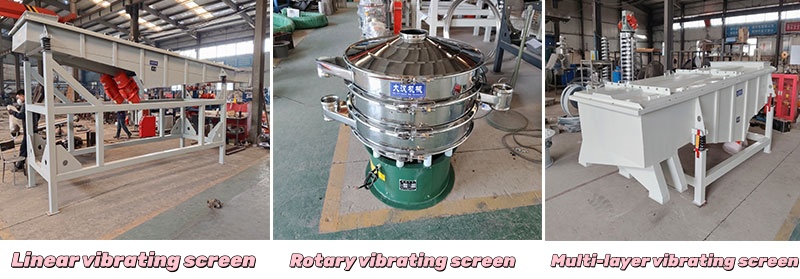
Linear Vibrating Screen: The material moves forward in a straight line. This type is suitable for production lines with large processing capacity.
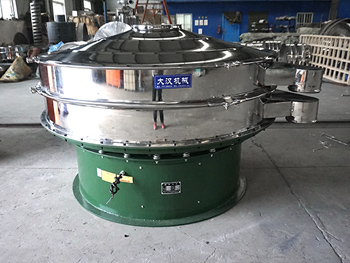
Rotary Vibrating Screen: The material moves in a circular motion. It is suitable for applications requiring finer particle classification and occupies less installation space.
Multi-deck Vibrating Screen:This machine uses two or three screen decks to separate fertilizer into different particle sizes in one operation. It is suitable for production lines requiring multiple product grades.
When selecting a fertilizer vibrating screen, consider the required processing capacity, particle size, material moisture, number of screen decks, machine material, installation space, and power supply. Materials with higher moisture content may require a screen cleaning device. Multi-deck models are suitable when several particle sizes are needed. Stainless steel contact parts are available for corrosive materials.
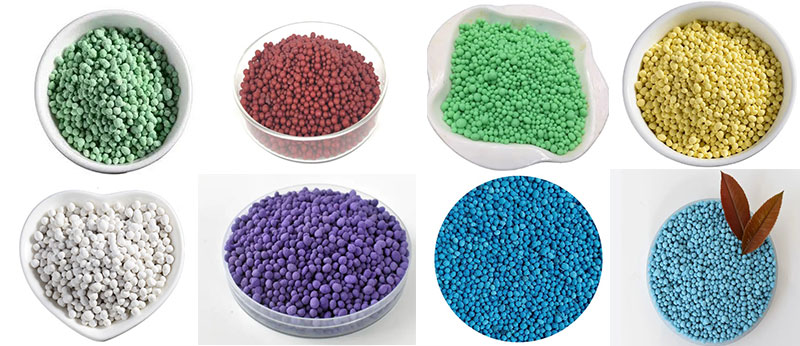
The machine is suitable for screening:
It can also be used for product grading and return material screening.
Technical specifications can be customized according to production requirements.
| Model | Layer |
Screening Area (mm) |
Mesh Size (mesh) |
Particle Size (mm) |
Capacity (t/h) |
Power (kw) |
Vibration Direction Angle (°) |
Screen Inclination (°) |
Dual Amplitude |
| DZSF-520 | 1-6 layers | 500*2000 | 2-400 | 0.074-10 | ≤3 | 0.37×2 | 45-60 | 0-7 | 3-4.5 |
| DZSF-525 | 500*2500 | ≤5 | 0.37×2 | ||||||
| DZSF-612 | 600*1200 | ≤8 | 0.37×2 | ||||||
| DZSF-1020 | 1000*2000 | ≤12 | 0.75×2 | ||||||
| DZSF-1025 | 1000*2500 | ≤16 | 0.75×2 | ||||||
| DZSF-1030 | 1000*3000 | ≤20 | 1.1×2 | ||||||
| DZSF-1224 | 1200*2400 | ≤23 | 1.5×2 | ||||||
| DZSF-1525 | 1500*2500 | ≤28 | 1.5×2 | ||||||
| DZSF-1530 | 1500*3000 | ≤32 | 2.2×2 |
Screen blockage is usually caused by high material moisture or an unsuitable mesh size. Replacing the screen mesh or installing a mesh cleaning device can help. If screening capacity decreases, check the feeding rate and screen condition. Abnormal vibration may be caused by loose bolts, worn springs, or incorrect motor installation. Damaged screen mesh should be replaced promptly to maintain normal screening performance.
An organic fertilizer manufacturer with an annual output of 30,000 tons installed a double-deck fertilizer vibrating screen in its production line. The machine separated qualified products and return materials through different discharge outlets. Fine powder entering the packaging process was reduced, return materials were sent back for crushing, and manual sorting time was lowered. The production line operated more smoothly after the installation.
Check the screen tension and fastening bolts before starting the machine. Clean the screen surface regularly to prevent material buildup. Lubricate the bearings according to the maintenance schedule. Inspect the screen mesh, springs, and vibration motor periodically, and replace worn parts when necessary. During shutdown, keep the screen clean and dry to reduce material residue.
It is suitable for compound fertilizer, organic fertilizer, granular fertilizer, bio-organic fertilizer, and other pelletized materials.
The price depends on processing capacity, screen layers, machine material, and configuration. Please provide your material type, capacity, particle size, and voltage. Our engineers will recommend a suitable model and provide a quotation.
Yes. Different mesh sizes can be installed according to your particle size requirements.
A single or double-deck screen is suitable for one finished particle size, while a multi-deck screen is recommended when several size grades are required.
Yes. With routine maintenance, the machine is suitable for continuous production.
A Fertilizer Vibrating Screen is used for fertilizer grading, return material screening, and fine powder removal. It can be integrated into granulating, cooling, coating, and packaging systems. Selecting the right model according to production capacity, material characteristics, and particle size requirements helps maintain stable production and consistent product quality. Routine maintenance also helps extend equipment service life and reduce downtime.


Address:China,Yanjin county forest park gate to the west 1000 meters north road.


 Online Chat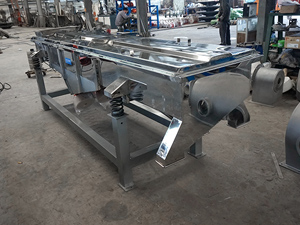
 Email
Email