


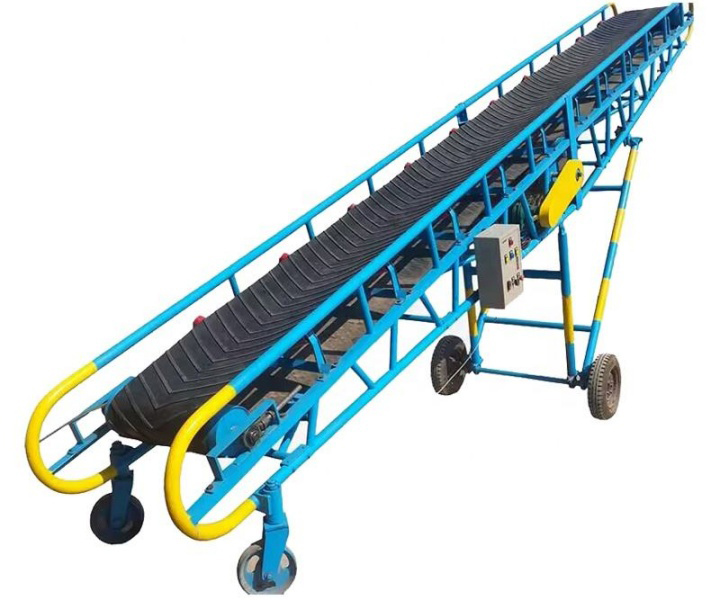
A Mobile Conveyor for Truck Loading provides a movable conveying solution for transferring cartons, bags, and other compatible goods between warehouse floors and trucks or trailers. It helps reduce repeated manual carrying and allows loading equipment to be positioned closer to the vehicle, making it easier to adapt to different loading areas.
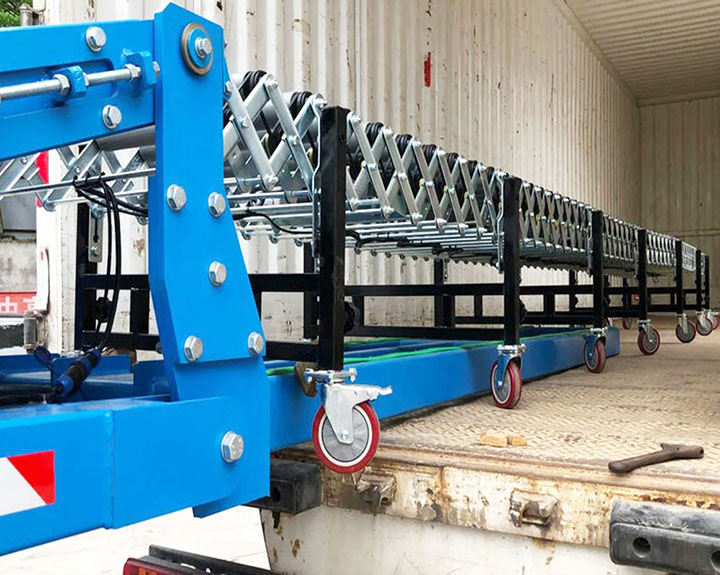
The appropriate conveyor configuration depends on the type of goods, required conveying capacity, loading distance, vehicle bed height, and available floor space. Depending on the model, options may include a mobile frame, an adjustable conveying angle, a reversible belt, or a telescopic conveying section. These functions should be selected according to the actual loading requirements.
The main components of a mobile truck loading conveyor typically include the conveyor frame, belt and drive assembly, supporting rollers, and a control system. Depending on the selected configuration, the equipment may also incorporate a mobile base, a height-adjustment mechanism, or a telescopic section.
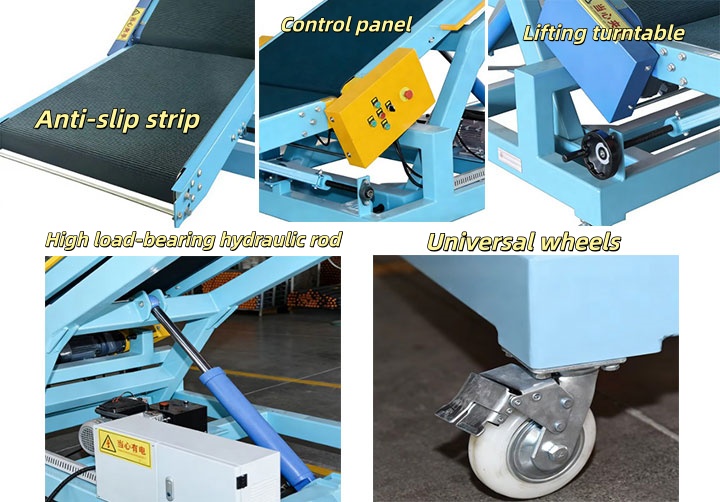
The frame supports the conveying components during operation. The belt type should match the goods being handled: a suitable PVC belt may be used for compatible cartons and packaged products, while a rubber belt or a patterned belt may be considered for applications requiring different grip characteristics. Belt selection should take into account the product surface, load weight, conveying angle, and operating environment.
For applications involving different truck bed heights, an appropriate lifting mechanism can help position the discharge end. Where loading distances vary, a telescopic configuration may provide additional reach. These options are not necessarily included in every model, so the required functions should be confirmed when requesting a quotation.
A mobile conveyor can help improve loading workflow by bringing the conveying point closer to the truck or trailer. Instead of repeatedly carrying compatible goods across the loading area, operators can use a mechanized conveying path to move products between the warehouse and vehicle.
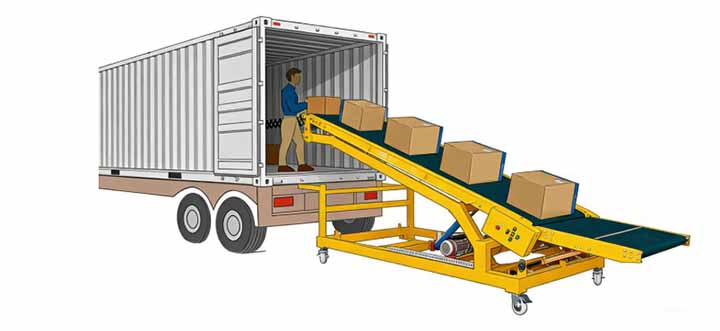
Mobility is useful in facilities that serve multiple loading positions. Depending on the model, the conveyor may be repositioned manually or moved using a powered system. Adjustable-height or telescopic configurations can provide additional flexibility where vehicle dimensions and loading distances vary.
The overall benefit depends on the goods being handled, the conveyor layout, the loading method, and the operating schedule. Before selecting a model, consider the required throughput, available working space, operator access, and the compatibility of the conveyor with the existing loading area.
| Parameter / Feature | Standard Mobile Model | Telescopic Heavy-Duty Model |
|---|---|---|
| Operation Function | Reversible (Truck Loading & Unloading) | Bi-directional (Fast Loading/Unloading Switch) |
| Belt Width | 500 mm / 600 mm / 800 mm | 600 mm / 800 mm / Customized |
| Extension / Telescopic Range | 6m - 10m (Fixed / Foldable Boom) | 6m Retracted -> Up to 15m Extended |
| Conveying Speed | 10 - 30 m/min (VFD Speed Control) | 10 - 35 m/min (Adjustable Speed) |
| Max. Load Capacity | 50 - 80 kg/m | 100+ kg/m (Total Capacity > 1000 kg) |
| Lifting / Height Adjustment | Hydraulic Cylinder (0.8m - 3.5m) | Heavy-Duty Hydraulic Power Pack |
| Belt Type / Material | Textured Anti-slip PVC / Rubber Belt | High-Grip Patterned Industrial Rubber |
| Motor Power | 2.2 kW - 5.5 kW | 5.5 kW - 11 kW |
| Vehicle Compatibility | Vans, Light Trucks, Box Trailers | 20ft / 40ft Containers, High-sided Trucks |
Selecting a mobile conveyor starts with the goods to be handled and the layout of the loading area. The following factors help determine the appropriate conveyor configuration.
Before requesting a quotation, prepare the goods specifications, target throughput, loading distance, vehicle dimensions, and available installation space. These details help the supplier recommend a suitable configuration.
The price of a Mobile Conveyor for Truck Loading depends on conveyor length, telescoping range, load capacity, lifting system, and drive configuration. Based on the selected configuration, the equipment can be divided into three general price ranges:
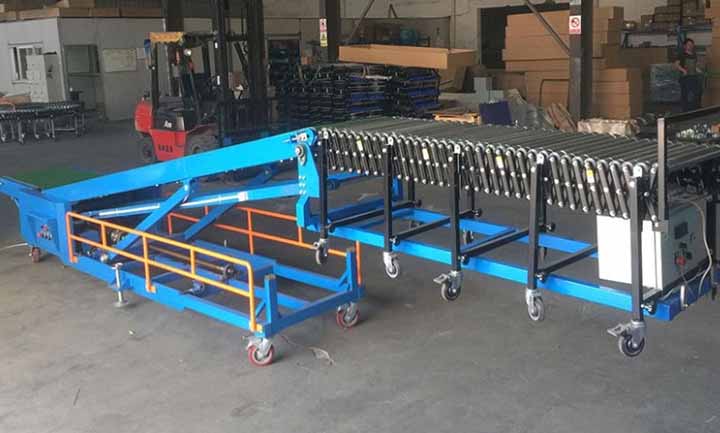
Standard Mobile Belt Conveyors: $3,500–$8,500. These models are suitable for basic loading and unloading applications where a fixed or limited conveying length meets the operating requirements.
Medium Duty Hydraulic Conveyors: $9,500–$19,500. These models may include hydraulic height adjustment and additional extension features for loading operations that require greater flexibility.
Heavy-Duty Telescopic Systems: $25,000–$45,000+. These systems are designed for applications requiring extended reach and higher load capacity, subject to the selected model and configuration.
The prices above are indicative ranges. The final quotation depends on the required specifications, optional features, and order requirements. Contact us with your truck dimensions, conveying distance, goods type, and required throughput to obtain a configuration-specific quotation.
Mobile truck loaders act as dynamic bridges, adapting to various spatial environments and vehicles. When fully retracted, the telescopic boom occupies only 3 to 5 meters of floor space on the warehouse floor, providing ample space for forklifts to access the loading and unloading platform. During deployment, the boom extends directly into the compact space of containers (such as 20-foot and 40-foot ocean shipping containers), delivering the conveyor belt directly to the front of the stacks, eliminating the need for workers to walk back and forth in dark, cramped compartments.
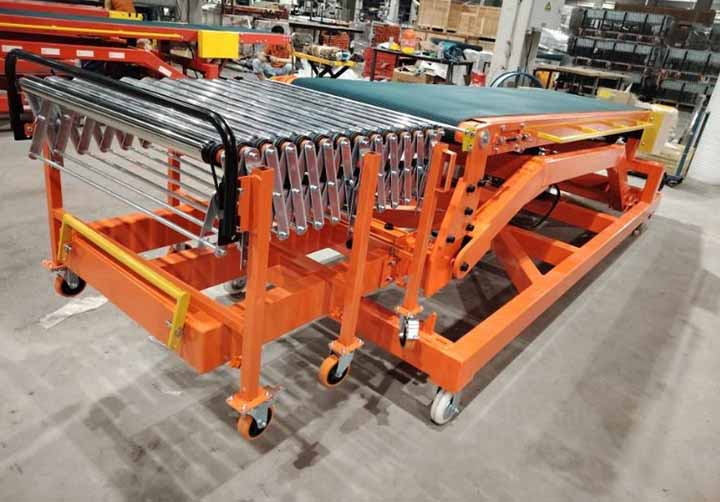
In terms of vehicle adaptability, it can accommodate both flatbed trucks and high-sided trailers with high lathes, as well as box trucks with low headroom. In industry applications, this configuration solves the flow and congestion problems encountered by e-commerce fulfillment centers handling thousands of packages daily, FMCG transshipment and distribution centers, and manufacturing plants loading finished products.
At a regional e-commerce fulfillment center in the United States, the center faced severe process disruptions during peak shipping periods. Due to the lack of elevated concrete loading and unloading platforms, workers had to manually carry 20-kilogram packages from the warehouse floor, across metal ramps, and into 40-foot containers; it took four workers nearly three hours to fill a single container.
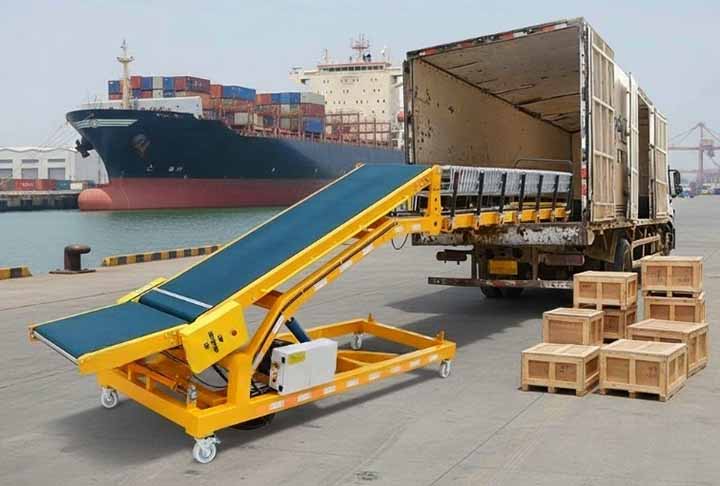
The workflow was transformed after the introduction of a custom-designed 12-meter mobile telescopic conveyor with hydraulic tilting capability. The equipment was pushed to the container door and extended into the truck bed, adjusted to a waist-high working position. This reduced the number of personnel working inside the container to two, and the overall loading time for a single container decreased to 1.5 hours, enabling the facility to handle twice the number of outbound trucks per shift.
Some mobile conveyors support both loading and unloading through a reversible belt drive. Confirm that the selected model includes this function and that the belt, drive system, and operating arrangement are suitable for the intended direction of material transfer.
Measure the distance from the conveyor's planned position to the loading point, together with the truck bed height. Compare these measurements with the verified dimensions of the available models. A telescopic or height-adjustable configuration may be suitable when the required reach or vehicle height varies.
Provide the type and dimensions of the goods, individual package weight, required throughput, loading distance, vehicle bed height, and available floor space. These details help determine the appropriate belt width, conveying length, drive system, and optional features.
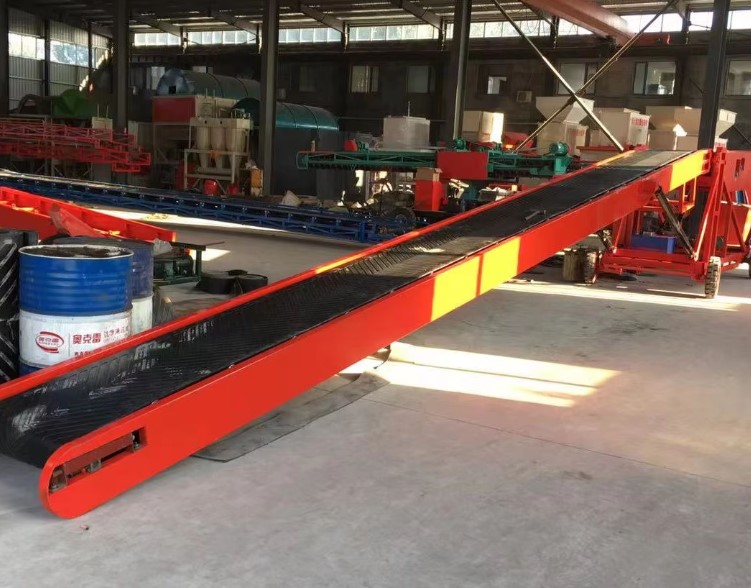
Mobile truck loading conveyors are essential machines in high-paced receiving and shipping operations. They combine robust steel construction with reliable drive hardware, solving the problems of high labor dependence, slow vehicle turnaround, and poor ergonomics on loading and unloading platforms. Whether navigating the compact space of a 40-foot container or adapting to the open lathe of a truck bed, their ability to streamline material flow makes them a cost-effective investment.
Choosing the right mobile conveyor starts with understanding your loading requirements. Share your goods type, target throughput, truck or trailer dimensions, loading distance, and available operating space with DAHAN. Our team can review these details and help identify a suitable conveyor configuration.
Contact us to discuss conveyor length, belt width, discharge height, drive options, and other requirements for your loading operation.


Address:China,Yanjin county forest park gate to the west 1000 meters north road.


 Online Chat

 Email