


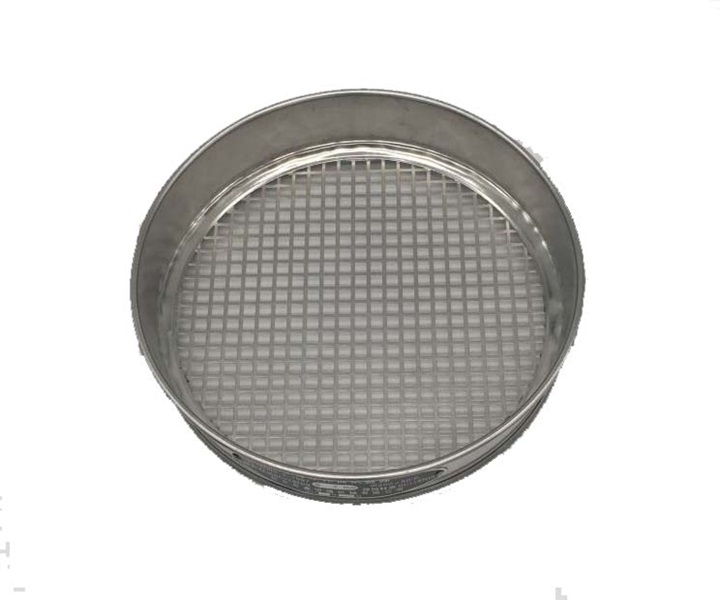
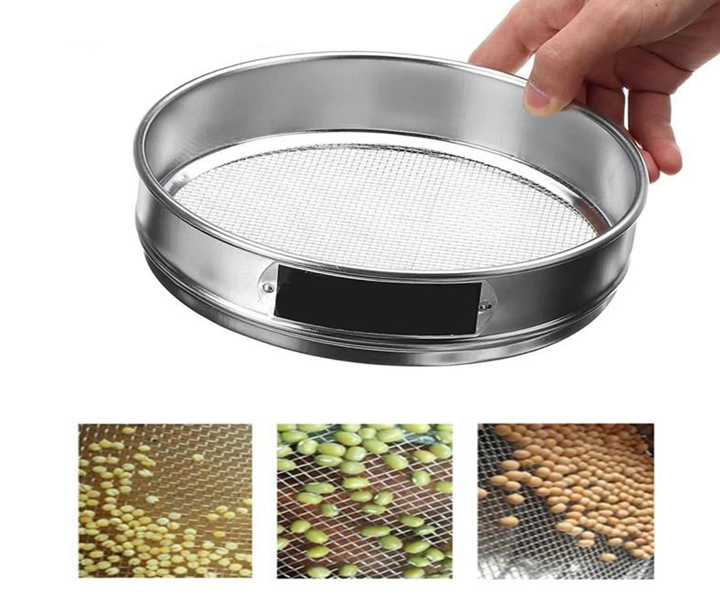
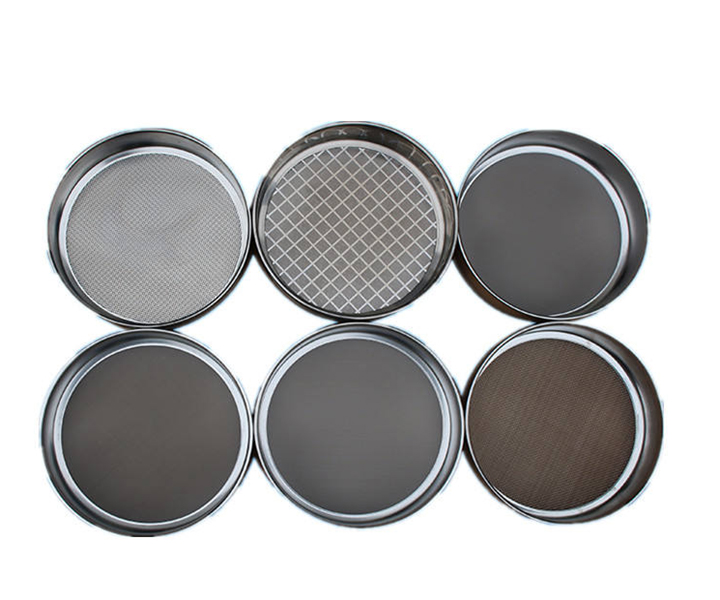
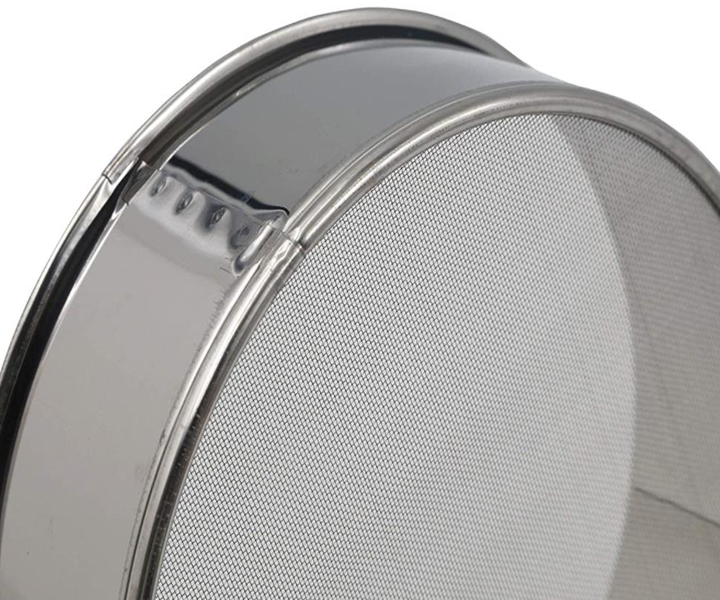
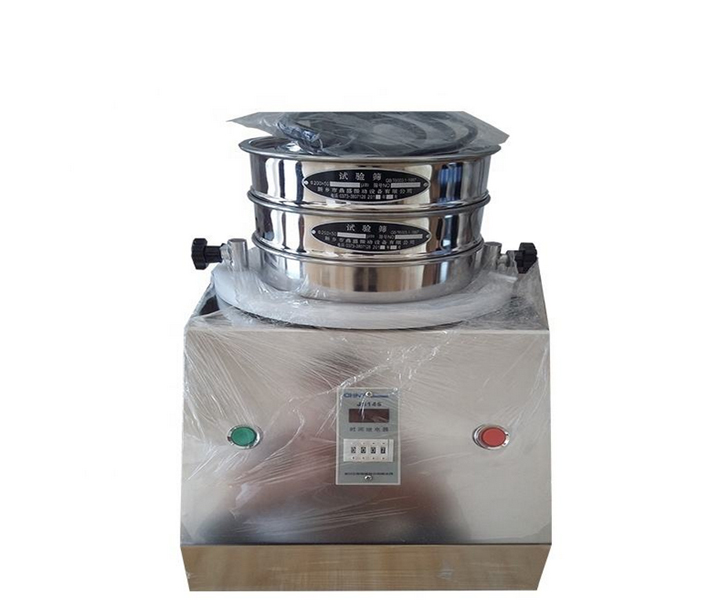
Paddy Grain Sieves use multiple layers of sieves with different pore sizes to separate impurities, stones, straw, and imperfect grains from grains, providing high-quality raw materials for subsequent processing.
Price:$8-$50 /Set
Consult now and enjoy a 10% discount
Frame Diameter: 500/400/300/200/120/80/75mm, or other sizes can be customized according to your requirements.
Surface Type: Woven Mesh/Perforated Plate/Electroformed Mesh
Aperture: 0.02-2.36mm/Customizable
Hole Type: Square/Round
Material: 304 Stainless Steel/Brass/Chrome Plated
Motion Method: Handheld, Electric
International Standard: ISO3310-1:1990 R20/3, R20, R40/3 Series
Applicable Materials: Yellow Corn, Quinoa, Buckwheat, Wheat, Soybeans, Rice
The Paddy Grain Sieves is a device used in the agricultural and grain processing industries for screening, grading, and cleaning rice and other grains. It can also be used to screen grains such as wheat and corn, as well as impurities such as chaff, gravel, and straw. The commonly used screen mesh size is 2–8, adjustable according to demand, with a throughput of 1–5 tons per hour, making it suitable for small and medium-sized grain processing plants. The Paddy Grain Sieves screens different particle size ranges depending on the processing scenario. For rice screening, the particle size range is typically 6–9 mm to remove long debris; for brown rice sorting, the particle size range is 1.5–2.5 mm to separate broken and whole grains; and for polished rice processing, a 1 mm screen is used to remove bran.
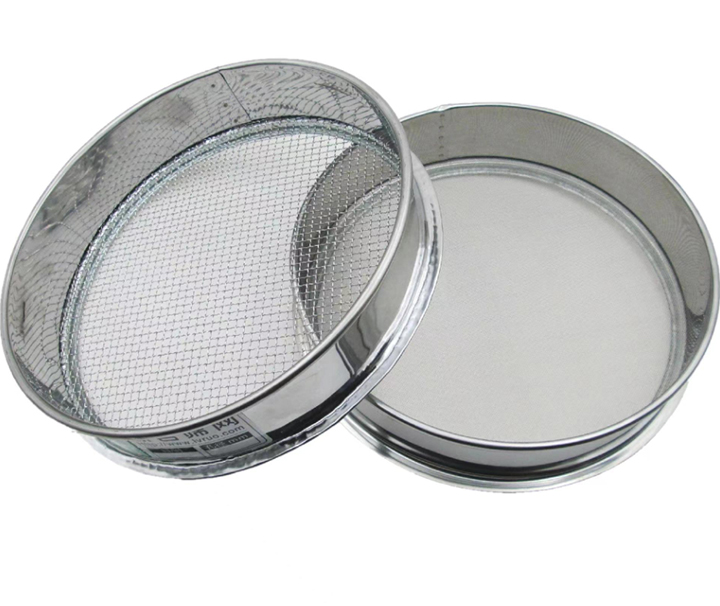
There are many reasons for screening crushed grains. First, different food processing processes have strict particle size requirements (for example, flour is classified into over 20 grades), and screening ensures particle uniformity. Second, it removes processing contaminants such as metal shavings and screen wear debris generated during the grinding process. Furthermore, after wheat is ground, it is graded through screens to precisely separate the endosperm (flour), bran (dietary fiber), and germ (oil source).
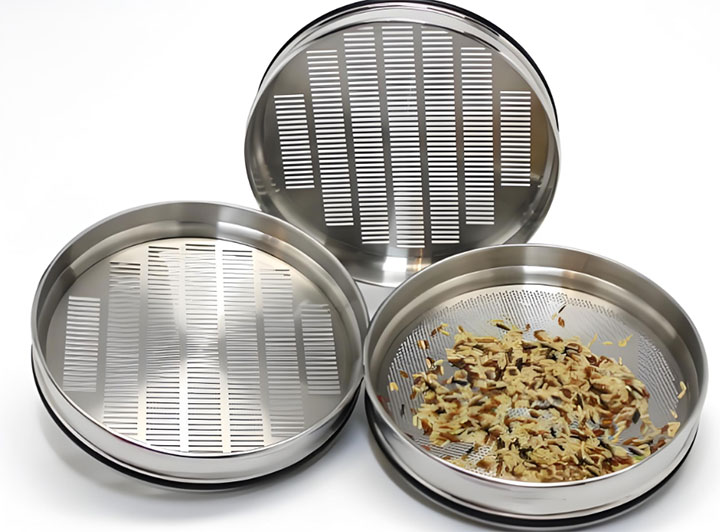
Paddy Grain Sieves are lightweight, easy to operate, offer high screening accuracy and stable, reliable data. Made of high-quality stainless steel, they are corrosion-resistant, easy to clean, and meet grain testing hygiene standards. Suitable for screening and testing various grains, they are versatile and have a long service life.
Improves rice quality: Efficiently removes impurities such as sand, gravel, husks, and straw, ensuring rice cleanliness and meeting the stringent rice quality requirements of the high-end market.
Increases processing yield: Accurately grades whole grains and broken grains, reducing breakage during milling and significantly increasing head rice yield (directly increasing profits).
Reduce production costs: Reduce wear and tear on processing equipment caused by impurities, extend machine life, and save maintenance costs; simultaneously optimize energy consumption and improve production efficiency.
Ensure storage safety: Remove fine impurities that are prone to moisture absorption and mold, reduce the risk of deterioration during storage, and avoid raw material loss.
Flexible adaptation: Screening parameters can be adjusted to meet customers' individual rice grading requirements (such as grain shape and purity), enhancing market competitiveness.
Our factory produces two types of Paddy Grain Sieves: handheld and electric. We can choose the one that best suits our usage scenario. The two models are suitable for different usage scenarios and meet the diverse testing needs of farmers, grain depots, laboratories and processing enterprises.
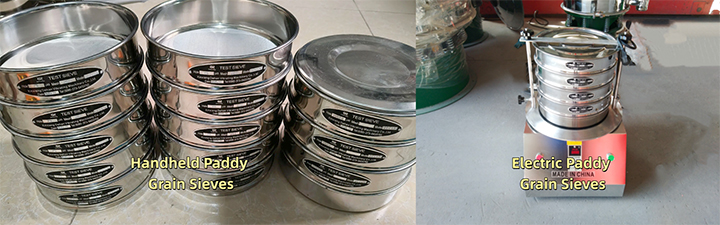
Handheld Paddy Grain Sieves: Compact and portable, these sieves can be operated manually without electricity, making them suitable for rapid on-site sampling, small-batch grain grading, and preliminary impurity screening. Their simple structure, lightweight design, and flexible operation make them suitable for any location.
Electric Paddy Grain Sieves: Motor-driven, these sieves provide uniform and stable vibration, consistent sieving force, and more accurate and reliable test data. They can be used with multiple sieve frames for simultaneous operation, automatically completing grading, impurity removal, and screening. This time-saving, labor-saving, and highly efficient solution meets the standardized testing needs of laboratories, grain processing enterprises, and testing institutions for grain particle size and quality.
| Parameter | Specification |
| Frame Diameter | 500/400/300/200/120/80/75mm, other sizes can be customized according to your requirements |
| Surface Type | Woven Mesh/Perforated Plate/Electroformed Mesh |
| Aperture | 0.02-2.36mm/Customizable |
| Hole Type | Square/Round |
| Material | 304 Stainless Steel/Brass/Chrome Plated |
| Motion Method | Handheld, Electric |
| Applicable Materials | Corn, Quinoa, Buckwheat, Wheat, Soybeans, Rice |
| Sieve Layer | 1-3 Layers (Customizable) |
| Vibration Amplitude | 0.5-3mm (Adjustable) |
| Power (Electric Type) | 0.1-0.5kW |
| Working Noise | ≤65 dB |
The Paddy Grain Sieves sieve particle size is commonly used to distinguish grain size and shape at various stages of rice processing: paddy rice, brown rice, and polished rice.
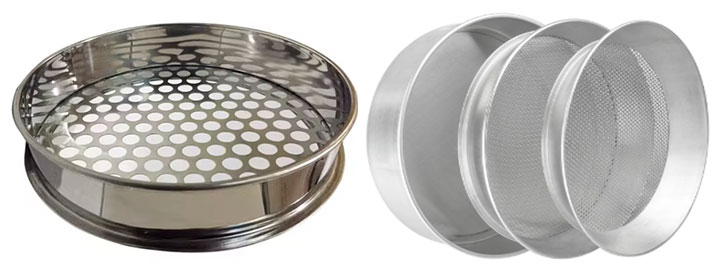
Rice: In mechanized agricultural production, rice is typically screened using a 6-9mm screen. This screen is primarily used to remove long debris, such as straw and weeds, from harvested rice, ensuring rice purity.
Brown rice: Brown rice is the product of hulled rice, and its screening particle size typically ranges from 1.5-2.5mm. This screen is used to separate broken and whole grains, improving the quality of brown rice.
Polished rice: Polished rice is the product of further processing, and its screening particle size typically ranges from 1mm. This screen is primarily used to remove fine impurities, such as bran, during the polishing process, improving the purity and taste of polished rice.
| Grain Type | Common Mesh Size | Description |
|---|---|---|
| Paddy Rice | 8 – 12 mesh | Screen out large impurities such as straw, stones, and unthreshed clumps. |
| Brown Rice | 10 – 16 mesh | Classify brown rice and separate unhulled grains. |
| Full-grain Rice | 16 – 20 mesh | Select intact rice grains and separate large broken rice. |
| Broken Rice | 20 – 30 mesh | Grade broken rice and control broken rice content. |
| Fine Impurities | 30 – 50 mesh | Remove rice bran, powder, sand, and small impurities. |
| Comparison Dimensions | Paddy Grain Sieves | Destoner |
|---|---|---|
| Core Function | Grading by particle size and thickness, removing light, large, and small impurities. | Separates stones, mud, metal particles, etc., specifically removing hard, heavy objects. |
| Working Principle | Adopts multi-layered screen reciprocating vibration combined with air separation to realize grading and screening by particle size. | Utilizes the difference in specific gravity and suspension velocity between materials and stones, and achieves separation through negative pressure air. |
| Types of Impurities Handled | Removes loose impurities of varying sizes such as straw, weeds, broken grains, fine soil, shriveled grains, and chaff. | Removes hard impurities similar in size to rice grains but with a higher specific gravity, such as stones, mud lumps, sand, and hard lumps. |
| Usage Scenarios | Pre-processing equipment:The first step in the rice milling process, used for initial cleaning and grading of raw materials. | After screening and before hulling:Used in conjunction with screening equipment to protect subsequent rice milling equipment. |
| Advantages | Multi-functional, high capacity, simple structure, and easy maintenance. | Precise stone removal; prevents equipment damage caused by hard objects and improves finished rice quality. |
| Limitations | Cannot separate heavy impurities such as stones with the same size but different specific gravities. | No grading function; only removes heavy stones and fails to clean light impurities, straw and other loose sundries. |
| Core Role | Overall preliminary purification. | Precise removal of heavy impurities. |
Paddy Grain Sieves are primarily used for cleaning, removing impurities, grading, and quality testing of paddy rice. They effectively separate impurities such as straw, broken rice, shriveled grains, mud, and weed seeds from paddy rice, distinguishing between rice grains of different sizes. Suitable for rice purchasing, storage, and processing, they improve rice purity and ensure processing quality and taste. The equipment is easy to operate and provides uniform screening, meeting the daily screening and grading needs of farmers, rice mills, grain depots, and testing institutions. It consistently improves the appearance and commercial value of rice, making it a commonly used screening device in rice processing and quality control.
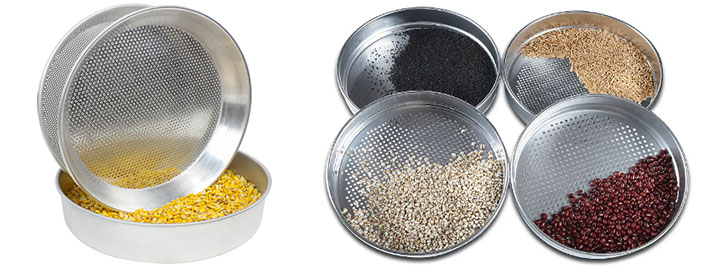
Manual Sorting Method: First, stack test sieves of different sizes neatly in order of larger holes on top and smaller holes on the bottom. Pour rice into the top sieve. Hold the sieve with both hands and shake it steadily back and forth. The material is separated by the size of the sieve mesh. Large pieces of impurities are blocked by the top sieve, clean rice remains in the middle sieve layer, and fine sand and chaff fall to the bottom. This removes impurities and cleans the rice.
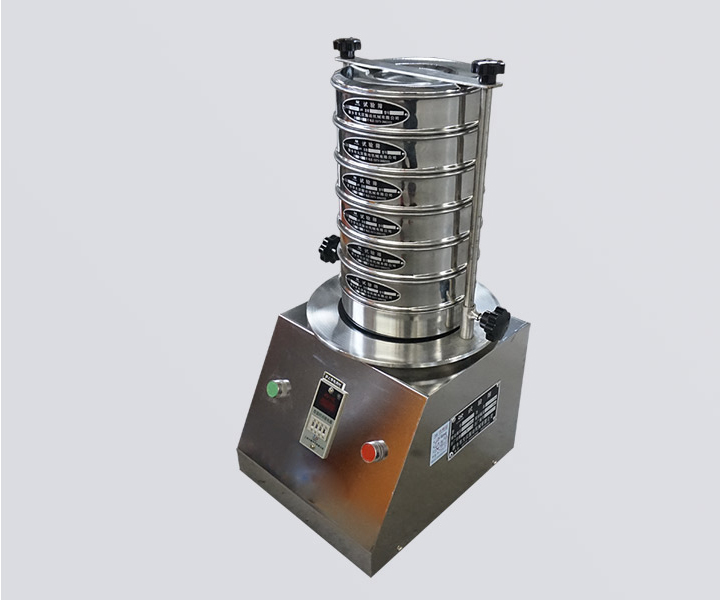
Electric Sorting Method: Fix the assembled test sieve set onto the electric sorting equipment, fill it with rice and close the lid. After turning on the machine, the equipment drives the sieve body to automatically vibrate and sieving. The mechanical operation is uniform and can effectively separate various impurities. It eliminates the need for manual operation, resulting in faster cleaning and more stable overall impurity removal.
Rice sieves are widely used in rice processing plants, grain storage facilities, and agricultural seed processing plants. By customizing the mesh size, they can effectively remove impurities such as straw, clods of earth, mud, sand, broken grains, and rice husks from raw rice. They can also grade rice according to grain size, separating unhulled rice from brown rice between the hulling and milling processes.
Q: What mesh size is suitable for rice grains?
A: The size of whole rice grains is not fixed, with the overall particle length generally ranging from 2 to 6 millimeters. Different varieties and levels of plumpness result in variations in grain size. Additionally, the size of impurities mixed in with the rice, such as broken rice, soil, sand, and straw fragments, varies. Therefore, a sieve with the appropriate mesh size must be selected based on the size of the raw grain grains and the particle size of the impurities to be separated.
Q: Can rice sieves be used for other grains?
A: Yes, they can. Rice sieves rely on the mesh size to separate materials and remove impurities. The equipment is highly versatile and can be widely used not only for rice processing and grading but also for wheat, corn, sorghum, millet, beans, and other grains. The appropriate sieve size must be selected based on the particle size and impurity type of the different grains.
Q: What is the capacity of a grain sieve?
A: Grain screening equipment offers a wide range of processing capacities to adapt to different production scenarios. There are small, simple screening devices suitable for farmers' homes and small workshops, with a small processing capacity; as well as large-scale industrial screening systems for large-scale grain processing plants. The maximum processing capacity of industrial equipment can reach 50 tons per hour, and the equipment model can be flexibly selected according to the processing output requirements.


Address:China,Yanjin county forest park gate to the west 1000 meters north road.


 Online Chat
 Email
Email