


With increasing demands for dust‑free environments, GMP compliance, and automated material handling, choosing the appropriate system requires careful evaluation of multiple factors.
This guide provides a systematic 5‑step approach to help you select the ideal electric vacuum conveyor for your specific application. An electric vacuum conveyor (also known as an electric vacuum feeder) uses an electric motor‑driven vacuum pump to transport powders, granules, and pellets through fully enclosed pipelines using negative pressure. Unlike pneumatic systems that require compressed air, electric‑driven models offer lower energy consumption, higher efficiency, and wider application flexibility.
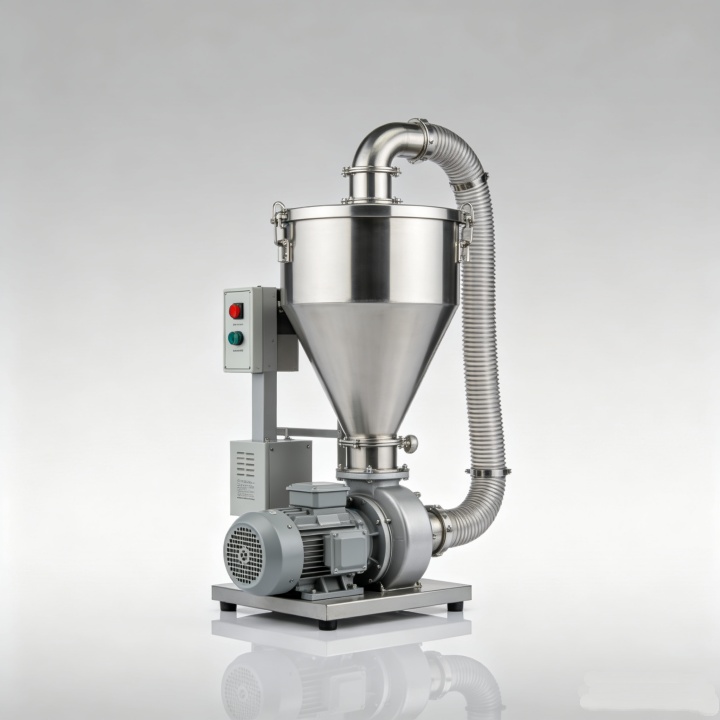
Understanding your material's properties is the foundation of proper equipment selection. Different materials behave differently during conveying, affecting everything from capacity to filter selection.
| Property | Why It Matters | Key Considerations |
| Bulk density (kg/m³) | Determines conveying capacity and power requirements | Denser materials require more power to convey |
| Particle size and shape | Affects flowability and filter selection | Fine powders may require specialized filters; abrasive materials need wear‑resistant components |
| Moisture content | Impacts flowability and risk of blockage | Hygroscopic materials may require special handling to prevent caking |
| Flowability | Influences conveying efficiency | Poor flowability may require anti‑bridging or vibration assistance |
| Abrasiveness | Affects equipment wear and longevity | Abrasive materials require hardened conveying lines |
| Hygienic requirements | Determines material of construction and design | Food/pharma contact surfaces typically require 304 or 316L stainless steel |

Accurately defining your operational needs ensures you select a system with adequate capacity and capability.
1. Required Throughput Capacity
2. Conveying Distance
3. Continuous vs. Batch Operation
4. Number of Feed/Destination Points
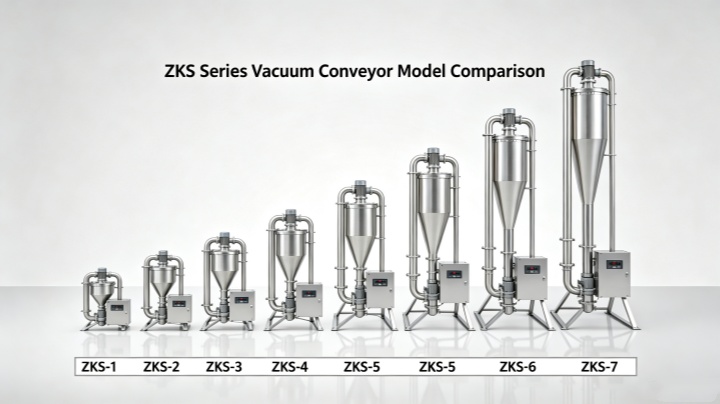
Once you understand your material and requirements, match them against available equipment specifications.
| Parameter | Electric Motor‑Driven | Pneumatic (Compressed Air) |
| Energy efficiency | Higher (no energy conversion loss) | Lower (compressed air generation is energy‑intensive) |
| Vacuum source | Vortex pump or Roots blower | Vacuum generator powered by compressed air |
| Noise level | Moderate | Typically lower |
| Operating cost | Lower over time | Higher due to compressed air consumption |
| Suitability for clean rooms | Good, with proper enclosure | Excellent (no electrics in certain hazardous zones) |
| Model | Capacity (kg/h) | Hopper Volume (L) | Motor Power (kW) | Vacuum Pump Type |
| ZKS‑1 | 200‑400 | 8 | 1.5 | Vortex |
| ZKS‑2 | 400‑600 | 8 | 2.2 | Vortex |
| ZKS‑3 | 600‑1,200 | 12 | 3.0 | Vortex |
| ZKS‑4 | 1,200‑2,500 | 42 | 5.5 | Vortex |
| ZKS‑6 | 1,500‑3,200 | 42 | 5.5 | Roots Fan |
| ZKS‑7 | 2,500‑6,000 | 60 | 7.5 | Roots Fan |
| ZKS‑10‑6 | ~6,000 (within 10m) | 120 | 7.5 | Roots Fan |
Note: Capacity varies based on material density, particle size, and conveying distance. Above figures tested with standard flour at 4m conveying distance.
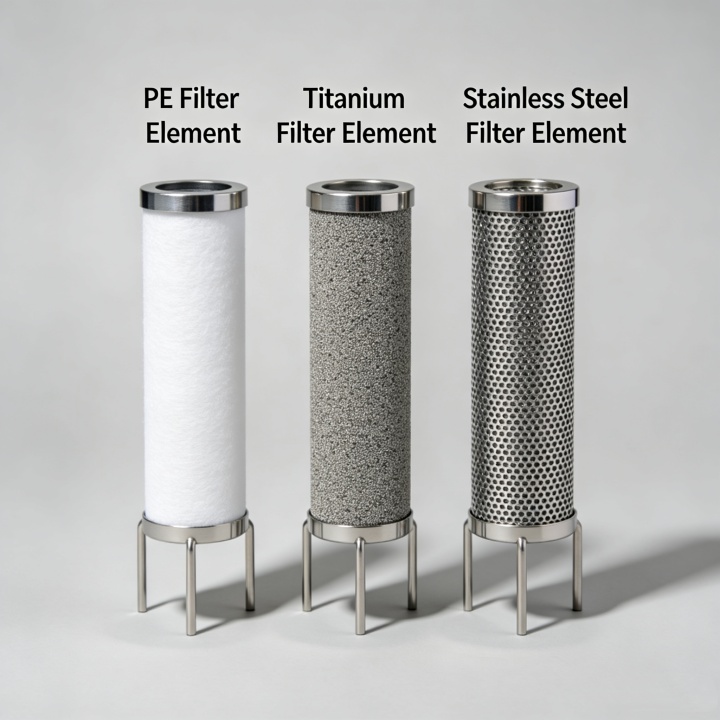
For food and pharmaceutical applications, hygienic design and safety features are paramount.
| Feature | Application | Benefit |
| ATEX certification | Zone 20/21/22 explosive dust environments | Ensures explosion safety |
| Intrinsically safe circuits | Hazardous areas | Eliminates electrical spark risk |
| Anti‑static design | Combustible powders | Grounding prevents static discharge |
| Inert gas protection | Highly reactive materials | Nitrogen inerting for additional safety |
| Fully enclosed system | All applications | Zero dust emission, protects workers |
| Filter Type | Best For | Key Advantages |
| PE (Polyethylene) | General powder conveying | Cost‑effective, good filtration efficiency |
| Titanium | Food, pharmaceutical, high‑sanitary | Excellent cleanability, GMP‑compliant |
| Stainless Steel | Abrasive materials, high temperatures | Durable, washable, long service life |
| Bag filters | Fine powders, high efficiency | Maximum filtration, suitable for API handling |
The final step ensures your chosen system integrates seamlessly into existing operations and is backed by proper support.
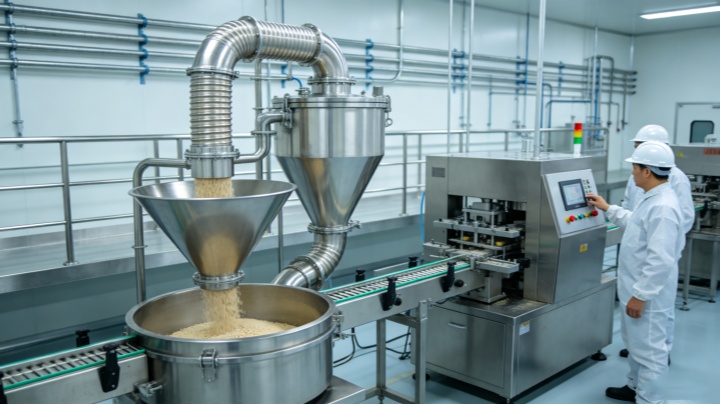
Use this checklist to guide your final decision:
| Criteria | Consideration |
| Material characteristics | Evaluated bulk density, particle size, moisture, flowability |
| Hygienic requirements | FDA/GMP compliance verified |
| Throughput capacity | Meets peak production needs |
| Conveying distance | Horizontal and vertical requirements assessed |
| Operation type | Continuous or batch selected |
| Power source | Electric pump confirmed (not pneumatic) |
| Material of construction | 304 or 316L stainless steel specified |
| Filter type | Appropriate for material and hygiene needs |
| Safety certification | ATEX if handling combustible dusts |
| Cleanability | Quick‑disconnect, CIP‑capable design |
| Integration | Compatible with existing PLC and systems |
| Supplier support | Technical assistance and spare parts available |
Selecting the right electric vacuum conveyor for food or pharmaceutical applications requires a systematic evaluation of your material properties, operational requirements, equipment specifications, hygiene and safety needs, and integration capabilities. By following these five steps, you can make an informed decision that ensures efficient, compliant, and reliable material handling for years to come.
An electric vacuum conveyor offers distinct advantages for food and pharmaceutical applications: dust‑free operation meeting GMP standards, energy‑efficient electric drive with lower operating costs, flexible installation options, and reduced labor intensity. When properly specified, it becomes an essential component of your production line's quality assurance and operational efficiency.
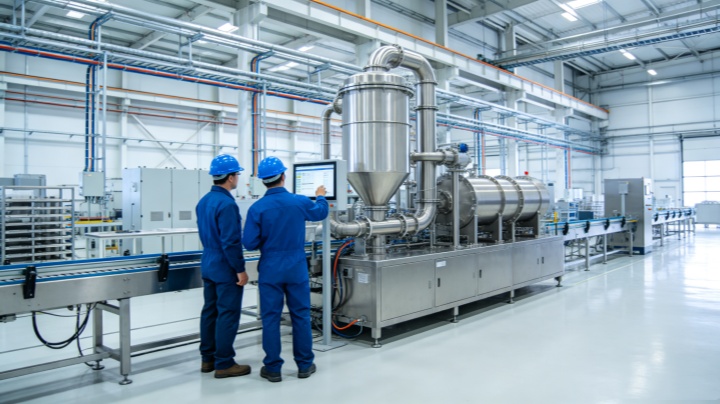
For tailored recommendations, share your specific material details and conveying requirements with our engineering team. We can help you select the optimal configuration for your facility, ensuring your electric vacuum conveyor meets both your immediate needs and long‑term production goals.
Our electric vacuum conveyors are available in multiple models with capacities from 200 to 6,000+ kg/h, constructed from 304 or 316L stainless steel, and customizable with various filter types (PE, Titanium, Stainless Steel) to suit your specific application. Contact us to discuss your requirements.


Address:China,Yanjin county forest park gate to the west 1000 meters north road.


 Online Chat
  Email
Email