


The Electric Vacuum Conveyor (also known as an electric vacuum feeder) is a state‑of‑the‑art material handling system designed for the efficient, dust‑free transfer of powders, granules, and pellets. Powered by an electric motor‑driven vacuum pump, this system uses negative pressure to transport materials through fully enclosed pipelines, offering a clean, safe, and automated solution for modern production facilities.
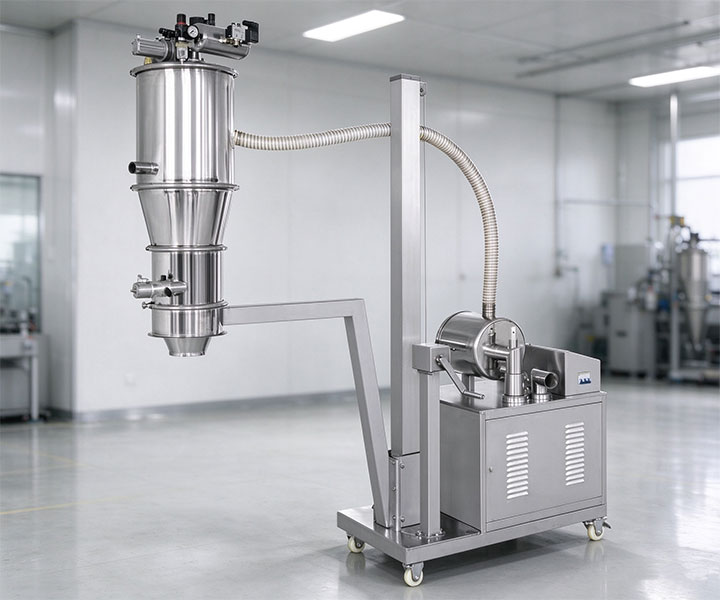
Unlike pneumatic systems that require compressed air, the electric‑driven vacuum pump delivers lower energy consumption, higher efficiency, and wider application flexibility—making it the preferred choice for industries ranging from food processing and pharmaceuticals to chemicals and lithium battery manufacturing.
The operating principle of an electric vacuum conveyor is straightforward yet highly effective. The system creates a vacuum (negative pressure) inside the conveying pipeline using an electric vacuum pump. This pressure differential draws materials from the feed source through the suction tube and into a separating hopper.
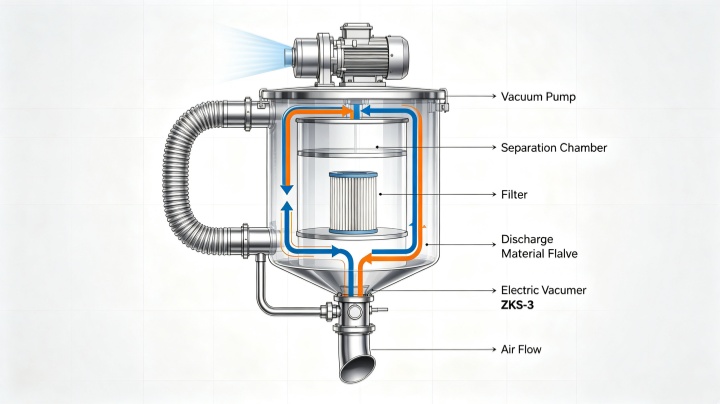
Vacuum Creation & Material Suction: The electric motor drives the vacuum pump to extract air from the system, creating negative pressure. Materials are sucked through the intake pipe into the separation chamber.
Air‑Material Separation: Inside the hopper, a high‑efficiency filter separates the material from the air stream. The filtered air is discharged, while the material remains in the hopper.
Discharge: Once the hopper reaches capacity, the system stops suction, opens the discharge valve, and releases the material into the receiving equipment (e.g., mixer, packaging machine, or tablet press).
Filter Cleaning & Cycle Reset: A reverse compressed air pulse cleans the filter to maintain optimal suction performance. The system then repeats the cycle automatically.
Simple Setup. Fully Automatic. Minimal Maintenance.
The fully enclosed conveying system eliminates dust leakage and cross‑contamination, meeting GMP and FDA sanitary standards—critical for food and pharmaceutical applications.
With no energy conversion losses, the electric vacuum pump offers lower operational costs compared to compressed air‑driven pneumatic conveyors.
The compact system can convey materials horizontally, vertically, or around obstacles, adapting to tight factory layouts. One unit can even serve multiple production lines in rotation.
Automated operation reduces manual labor intensity while the closed system prevents spillage and material loss—especially valuable for expensive or hazardous ingredients.
Quick‑disconnect designs and tool‑free filter changes simplify cleaning and maintenance, minimizing downtime.
| Feature | Benefit |
|---|---|
| Fully Enclosed System | Dust‑free, meets GMP/HACCP standards |
| Electric Motor Drive | Lower energy consumption, no compressed air required |
| Automatic PLC Control | Set suction/discharge times (0–99 seconds) |
| Stainless Steel Construction | Corrosion‑resistant, sanitary (SUS304 / 316L) |
| Multi‑Filter Options | PE, Titanium, Stainless Steel, or bag filters for different materials |
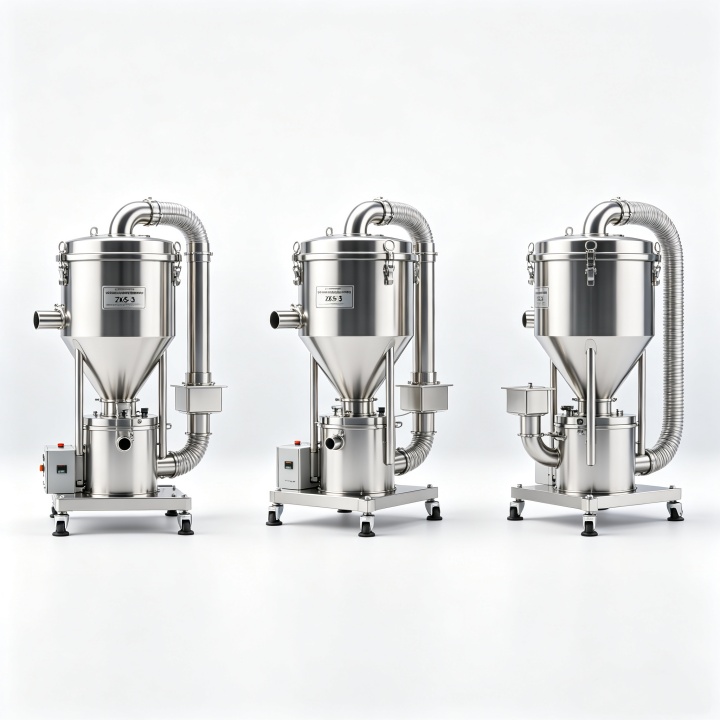
Our electric vacuum conveyors are available in a range of models to suit different capacity and distance requirements. Below is a standard specification table (based on the widely adopted ZKS series):
| Model | Conveying Capacity (kg/h) | Hopper Volume (L) | Motor Power (kW) | Vacuum Pump Type | Suction Tube Diameter |
|---|---|---|---|---|---|
| ZKS‑1 | 200–400 | 8 | 1.5 | Vortex Air Pump | φ38mm |
| ZKS‑2 | 400–600 | 8 | 2.2 | Vortex Air Pump | φ38mm |
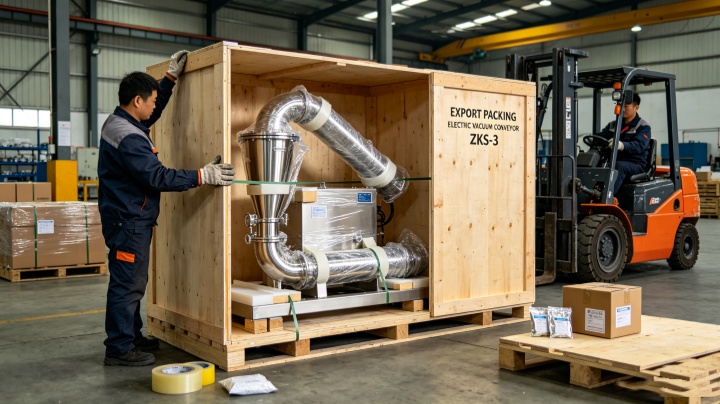
| ZKS‑3 | 600–1200 | 12 | 3.0 | Vortex Air Pump | φ51mm |
| ZKS‑4 | 1200–2500 | 42 | 5.5 | Vortex Air Pump | φ51mm |
| ZKS‑6 | 1500–3200 | 42 | 5.5 | Roots Fan | φ63mm |
| ZKS‑7 | 2500–6000 | 60 | 7.5 | Roots Fan | φ76mm |
| ZKS‑10‑6 | ~6000 (within 10m) | 120 | 7.5 | Roots Fan | φ76mm |
| ZKS‑20‑5 | ~5000 (within 10m) | 280 | 11.0 | Roots Fan | φ76mm |
Note: Conveying capacity varies based on material density, particle size, and conveying distance. The above figures are tested with standard flour at a 4‑meter conveying distance. Capacities decrease with longer distances.
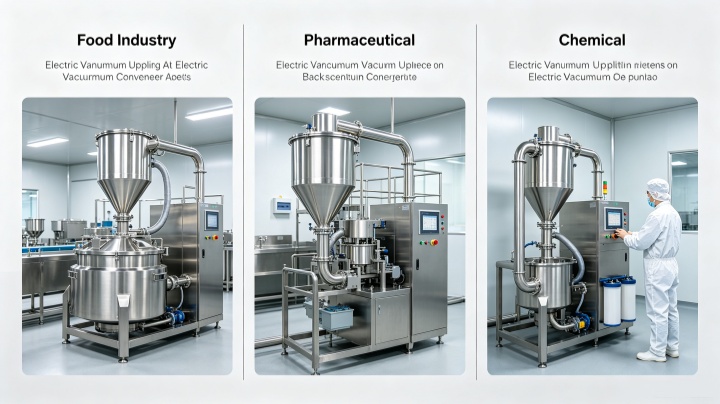
The electric vacuum conveyor is a versatile solution for handling a wide variety of bulk materials:
Food Industry: Flour, sugar, spices, coffee powder, grains, and additives
Pharmaceutical Industry: API powders, excipients, tablets, capsules—ensures sterile, contamination‑free transfer
Chemical Industry: Chemical powders, metal oxides, pigments, and resin pellets
Plastics & Lithium Battery: Plastic granules, pellets, cathode/anode materials
Other Industries: Coatings, ceramics, magnetic materials, and mining
Choosing the correct electric vacuum conveyor for your application ensures optimal performance and ROI. Consider these key factors:
Material Characteristics: What are the bulk density, particle size, and flowability? Is the material hygroscopic, abrasive, or fragile?
Required Capacity: How many kilograms or tons per hour need to be conveyed?
Conveying Distance: What are the horizontal and vertical distances? Longer distances require higher motor power and Roots fan configurations.
Hygiene Standards: Does your industry require GMP compliance? Stainless steel 304/316L construction is recommended for sanitary applications.
Integration Capability: Will the system need to interface with PLC controls, packaging machines, or existing automated lines?
Proven Quality: Built with premium stainless steel (SUS304 / 316L) and high‑performance vacuum pumps
Customizable: Available in multiple voltages (110V–460V, 50/60Hz) and filter types to suit your specific material needs
Comprehensive Support: We offer model selection guidance, installation support, and after‑sales service to ensure seamless integration
Competitive Pricing: Factory‑direct pricing with no middlemen—contact us for a quote tailored to your project
Don't settle for a one‑size‑fits‑all approach. Share your material specifications and conveying requirements, and our engineering team will recommend the optimal electric vacuum conveyor configuration for your facility.


Address:China,Yanjin county forest park gate to the west 1000 meters north road.


 Online Chat

 Email