


In the world of fine powder processing, one persistent challenge continues to frustrate production managers and quality control specialists alike: mesh blinding. This phenomenon occurs when particles become lodged in screen apertures, effectively reducing the usable screening area and dramatically decreasing throughput. For industries ranging from pharmaceuticals to battery materials, this isn't just an inconvenience—it's a bottleneck that directly impacts product quality and profitability.
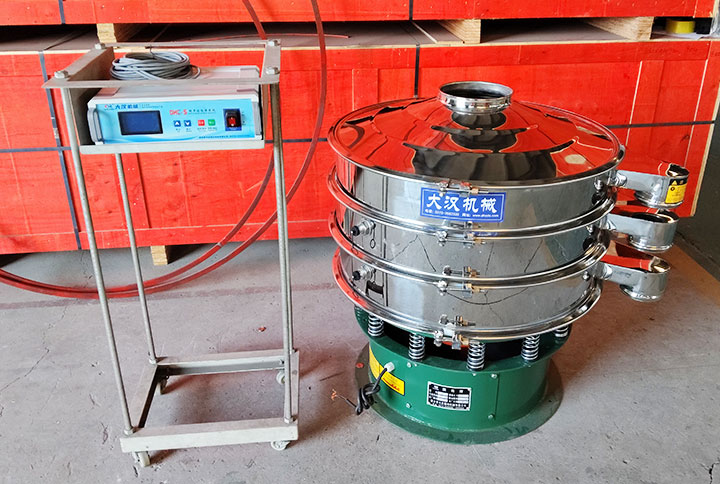
This guide explores the causes of mesh blinding, the limitations of traditional solutions, and how ultrasonic technology offers a superior approach to keeping your screening lines running at peak efficiency.
Mesh blinding is particularly problematic when processing fine, sticky, or electrostatically charged materials. Consider these common scenarios:
Lithium Battery Materials – Lithium nickel manganese cobalt oxide (NMC) powder, a critical cathode material for EV batteries, is ultra‑fine, dense, and naturally prone to forming hard agglomerates. These properties frequently cause mesh blinding and disrupt material flow during screening. With the explosive growth of the electric vehicle market, battery manufacturers cannot afford production stoppages.
Pharmaceutical Active Ingredients (APIs) – Pharmaceutical powders often present sieving challenges because they easily stick to mesh apertures, causing build‑up that reduces throughput rates and compromises product quality.
Metal Powders and Specialty Chemicals – Materials like aluminum, tungsten, and various chemical additives are notoriously difficult to screen due to their fine particle size and tendency to agglomerate.
The Bottom Line: When blinding occurs, the useful screening area is reduced, slowing down production levels and creating inconsistencies in final product quality.
Faced with mesh blinding, many manufacturers turn to conventional solutions—but each comes with significant drawbacks.
Manual Cleaning: Labor‑Intensive and Damaging
Some companies attempt to clean screens manually, stopping production to scrub or brush the mesh. This approach not only causes costly downtime but often results in the mesh becoming damaged or broken.
Mechanical Deblinding Systems: The Disc and Ball Approach
Many screening systems incorporate mechanical devices such as discs or rubber balls that bounce up and down, hitting the screen to shake free blockages. While this method can provide temporary relief, it introduces several problems
Mesh Damage: The repeated impact of discs and balls can damage and reduce the life of the mesh.
Contamination Risk: As these devices wear down, pieces of their rubber or plastic construction can fall off and contaminate the powder being sieve. For food‑grade and pharmaceutical applications, this contamination risk is unacceptable.
Excessive Noise: Mechanical deblinding systems can generate noise levels exceeding 90 dB(A), creating an unpleasant and potentially hazardous work environment.
The Vicious Cycle of Screen Replacement
One iron powder company illustrates the cumulative cost of these limitations. They were operating 30 conventional vibratory sieving machines with 200‑micron mesh screens fitted with discs. Despite this, progressive blinding occurred, forcing production to stop every two days for manual cleaning. After just 14 days, the mesh was so badly blinded that it had to be completely replaced. During this cycle, product specification naturally varied with the degree of blinding, compromising quality consistency.
Ultrasonic deblinding technology offers a fundamentally different approach—one that addresses the root causes of mesh blinding without the drawbacks of mechanical systems.
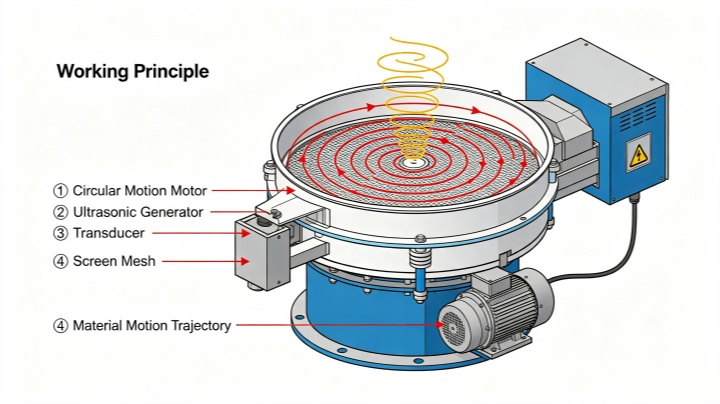
How It Works
In an ultrasonic deblinding system, a high‑frequency electrical signal is converted into mechanical vibrations by a transducer. These vibrations are transmitted through the screen frame to the mesh surface, typically at frequencies ranging from 18 to 36 kHz.
The ultrasonic energy operates on a microscopic level:
It breaks down the surface tension that causes particles to adhere to mesh wires.
It effectively makes the stainless steel wires "friction‑free," preventing particles from lodging in apertures.
It breaks apart electrostatic bonds and capillary forces that hold particles in place.
Case Study: Iron Powder Processing
The iron powder company mentioned earlier made the switch to ultrasonic deblinding technology with dramatic results
| Metric | Before (Traditional) | After (Ultrasonic) |
| Production Rate | 2,000 kg/hour | 2,500 kg/hour |
| Cleaning Frequency | Every 2 days | None (continuous operation) |
| Mesh Life | 14 days | Over 3 months |
| Product Consistency | Variable | Constant specification |
Studies have shown that ultrasonic deblinding sieves can increase sieving efficiency by up to 300% compared to traditional methods.
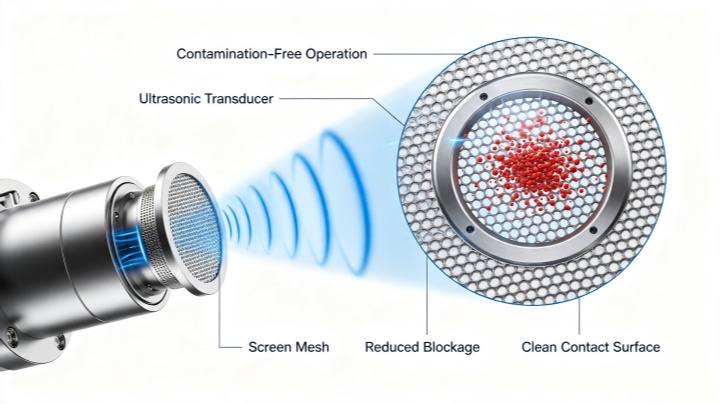
Eliminates Mesh Blinding: The ultrasonic vibration actively prevents particles from becoming trapped in screen apertures, maintaining rated throughput continuously.
Extends Screen Life: By eliminating mechanical cleaning devices and reducing particle impaction, mesh life can be extended by 50% to 300%.
Contamination‑Free Operation: The ultrasonic system is a non‑contact solution, making it ideal for food‑grade, pharmaceutical, and high‑purity applications.
Ultra‑Fine Screening Capability: Effective separation down to 500 mesh (25 microns) or even smaller.
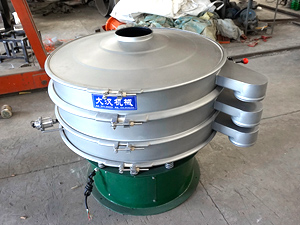
While ultrasonic deblinding systems can be retrofitted to many existing screeners, the most effective solution combines ultrasonic technology with a circular motion vibrating screen—creating a dual‑action system that addresses both material transport and mesh cleaning simultaneously.
How the Combination Works
The circular motion handles bulk material movement:
A vertically oriented vibratory motor with adjustable eccentric weights creates a circular vibration that spreads material across the entire screen deck.
This motion ensures that every particle is presented to the screening surface for an adequate period to achieve effective separation.
The ultrasonic system works at the microscopic level:
High‑frequency vibrations break down surface tension and electrostatic bonds.
The mesh remains clear and productive even when processing materials that would quickly clog a standard vibrating screen.
Why This Combination Matters
What makes this approach particularly effective is that neither function interferes with the other. Operators can independently adjust vibration amplitude and ultrasonic frequency to suit different materials—offering process flexibility that is unavailable with conventional screening equipment.

Battery Materials: Processing lithium‑ion cathode and anode materials where ultra‑fine screening is critical for electrode coating consistency.
Pharmaceutical Manufacturing: Classification of APIs and excipients meeting GMP and FDA requirements.
Food Processing: Separation of flour, starch, sugar, and protein powders with contamination‑free operation.
Chemical Industry: Screening of resins, pigments, polymer powders, and catalysts.
Metal Powder Processing: Aluminum, tungsten, and specialty alloy powders.
Mesh blinding doesn't have to be an accepted cost of doing business in fine powder processing. With ultrasonic deblinding technology, manufacturers can achieve continuous operation, consistent product quality, and significantly extended mesh life.
Whether you're processing battery materials, pharmaceutical ingredients, or specialty chemicals, the combination of circular motion and ultrasonic vibration offers a proven solution to one of the industry's most persistent challenges.
Ready to eliminate mesh blinding from your production line? Learn more about how our circular motion ultrasonic vibrating screen can transform your screening efficiency. Contact our team today for a personalized consultation and material testing.


Address:China,Yanjin county forest park gate to the west 1000 meters north road.


 Online Chat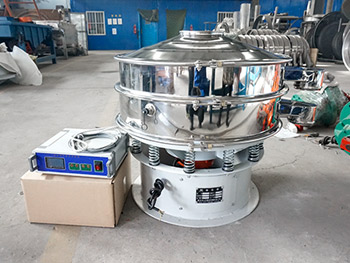
 Email
Email