


The global nickel market is navigating a complex landscape in 2026.While the market remains in surplus—forecast at 261kt for the year—Indonesia's evolving mining policies and the surging demand for battery-grade nickel are reshaping the industry's infrastructure needs. At the heart of this transformation lies a critical piece of equipment: the nickel ore belt conveyor system.
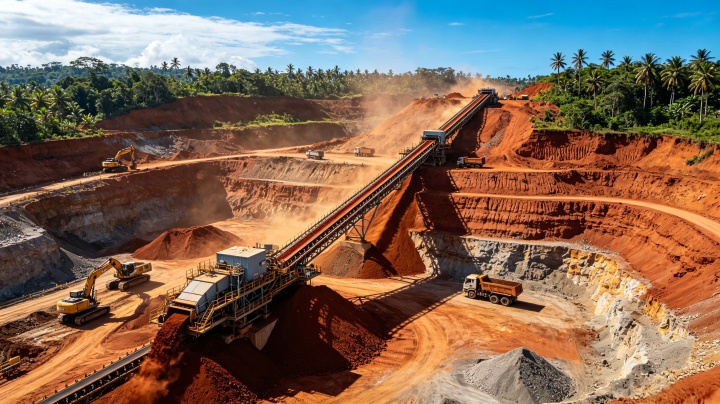
As mining operations expand across Asia-Pacific—the region that accounts for approximately 45.4% of global conveyor belt demand—high-capacity conveying solutions are becoming essential for cost-effective, efficient, and sustainable nickel extraction. This article examines the market dynamics, technology trends, and regional opportunities shaping the nickel ore belt conveyor sector in 2026 and beyond.
Nickel laterite ores, particularly those found in Indonesia and the Philippines, present unique handling challenges. The material is often abrasive, moist, and requires high-volume, continuous transport from mine pits to processing facilities. Traditional truck haulage is not only costly but also increasingly scrutinized for its environmental footprint.
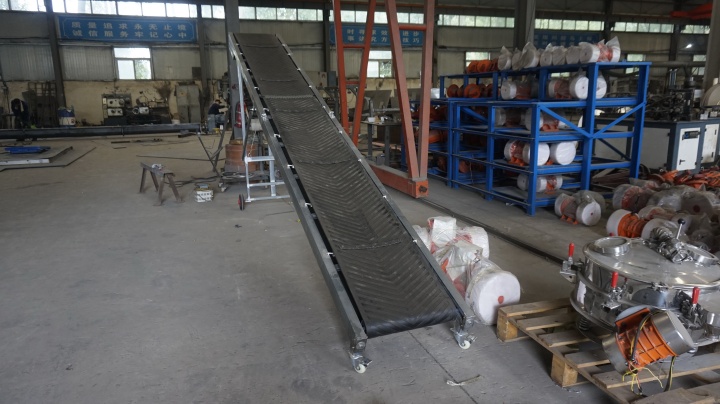
Heavy-duty belt conveyor systems offer distinct advantages for nickel mining operations:
Modern conveyor systems can achieve throughput rates of 2,000 to 4,000 tonnes per hour, with some underground installations reaching 11,000 tonnes per hour. For a nickel laterite operation processing low-grade ores, this volume capacity is essential for maintaining economic viability.
Nickel mines often require ore movement across several kilometers. Overland conveyor systems spanning 10–30 km reduce fuel consumption and emissions compared to diesel truck fleets, aligning with operator decarbonization commitments. The Sasol Impumelelo coal conveyor in South Africa—a 27 km system with capacity of 2,400 t/h—demonstrates the feasibility of such installations.
Belt conveying offers significantly lower cost-per-ton compared to truck haulage. Studies show that downhill conveyors equipped with energy-recuperation drives can achieve energy savings of nearly 40%. The Navoi Mining and Metallurgical Company (NMMC) operates 54.3 km of conveyor lines, moving over 3.1 million m³ of rock mass monthly, with substantial reductions in fuel consumption and maintenance costs.
The nickel market in 2026 is characterized by two opposing forces: persistent surplus supply and intensifying Indonesian policy interventions.
Indonesia accounts for approximately 60% of global nickel output and is the primary driver of mine supply growth. The country's strategic pivot—from raw ore export bans (2020) to restrictions on intermediate product permits—is accelerating investment in high-value downstream processing, particularly through HPAL (High-Pressure Acid Leach) facilities that convert low-grade laterite ores into battery-grade nickel.
This shift has direct implications for conveyor system demand:
Expanding HPAL capacity requires reliable ore feed systems, driving demand for durable, high-capacity conveyors.
Stricter permit enforcement (including annual RKAB quotas and suspension of 190 mining permits) is increasing production uncertainty, pushing operators to invest in efficient, low-cost transport infrastructure to maintain profitability.
Environmental scrutiny of HPAL operations—due to intensive acid use, high waste volumes, and complex tailings storage—is pressuring mines to adopt enclosed, dust-suppressed conveyor systems.
The Philippines, with its rich nickel, gold, and copper deposits, is experiencing moderate growth in conveyor belt demand. However, the market faces challenges including inconsistent regulations, environmental scrutiny, and high maintenance requirements in harsh mining environments. Investment opportunities exist in abrasion-resistant, energy-efficient conveyor designs that can reduce downtime and enhance safety.
The mining conveyor belt market is projected to grow from USD 2.03 billion in 2026 to USD 2.44 billion by 2031, at a CAGR of 3.75%. Key technology trends driving procurement include:
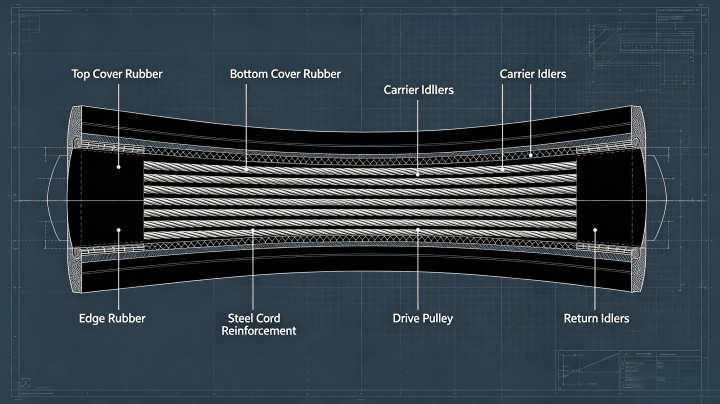
For high-tensile, long-distance nickel ore transport, steel cord conveyor belts remain the preferred choice. They deliver the tensile strength required for deeper mines and longer hauls. The Chuquicamata Underground Mine in Chile, for example, uses a steel-cord belt with 10,000 kN/m tensile strength to transport 11,000 t/h over 7 km.
Operators prioritizing weight savings and energy efficiency are increasingly adopting aramid and hybrid belt constructions. These offer comparable strength with reduced belt mass, lowering energy consumption.
Integration with autonomous haulage systems is driving demand for variable-speed drives, high-precision load-zone monitoring, and sensor arrays to prevent spillage and belt stretch. Companies like Freeport-McMoRan, deploying 33 autonomous trucks at the Bagdad mine, require belts that operate in 24/7 duty cycles with minimal unscheduled stoppages.
Enclosed conveyor systems that minimize dust and noise emissions are becoming standard, especially in regions with strict environmental regulations like the Philippines and, increasingly, Indonesia.
Asia-Pacific accounts for the largest share of the mining conveyor belt market, driven by:
China and India: Intensive infrastructure spending and steel expansion plans anchor demand.
Australia: Hosts the largest fleet of autonomous haulage units (907), driving continuous upgrades to higher-capacity, sensor-equipped belts.
Indonesia and Philippines: Nickel mining expansion, combined with the transition to downstream processing, is creating significant demand for durable, high-capacity conveying solutions.
The Middle East is the fastest-growing region (CAGR 4.38% through 2031), fueled by Saudi Arabia's Vision 2030 mining build-out—a USD 46 billion domestic mining investment target.
When selecting a belt conveyor system for nickel ore applications, operators should prioritize:
| Consideration | Why It Matters for Nickel |
| Belt tensile strength | Nickel laterites are abrasive; high-tensile steel cord belts (e.g., ST2000–ST10000) withstand long-distance wear . |
| Intermediate drive systems | Distributes drive forces, reducing maximum belt tension and extending belt life—critical for 20+ km routes . |
| Soft start/stop systems | Smooth acceleration protects the belt from tension spikes, reducing maintenance costs . |
| Enclosed structure | Minimizes dust pollution—increasingly required by environmental regulations in Indonesia and the Philippines . |
| After-sales support | Mining belts typically require replacement on an 18–36 month cycle; reliable local support reduces downtime . |
The nickel ore belt conveyor market in 2026 and beyond will be shaped by the interplay of nickel supply dynamics, policy shifts in Southeast Asia, and the global push for cleaner, more efficient mining operations. As Indonesian producers face stricter environmental scrutiny and shifting permit regimes, investment in reliable, high-capacity conveying infrastructure becomes not just an operational advantage—but a competitive necessity.
For suppliers, the opportunity lies in offering abrasion-resistant, smart, and energy-efficient systems tailored to the specific demands of nickel laterite mining, supported by robust after-sales service and local manufacturing capabilities.
Are you planning a nickel mining project in the Asia-Pacific region? Contact us to discuss your conveyor system requirements. Our team specializes in high-capacity, durable solutions designed for the toughest nickel ore applications.


Address:China,Yanjin county forest park gate to the west 1000 meters north road.


 Online Chat
  Email
Email