


Salt test sieve price varies greatly, ranging from as low as $23 to $480, with complete sieve sets even reaching $850. The reason lies not in appearance, but in the details. Salt itself is corrosive, especially in coastal salt fields or laboratories where the sieve frames are constantly exposed to chlorine particles and moisture. After a period of use, ordinary metal sieves will develop rust spots on the edges, and the mesh tension will gradually decrease, leading to inconsistent particle size measurements.
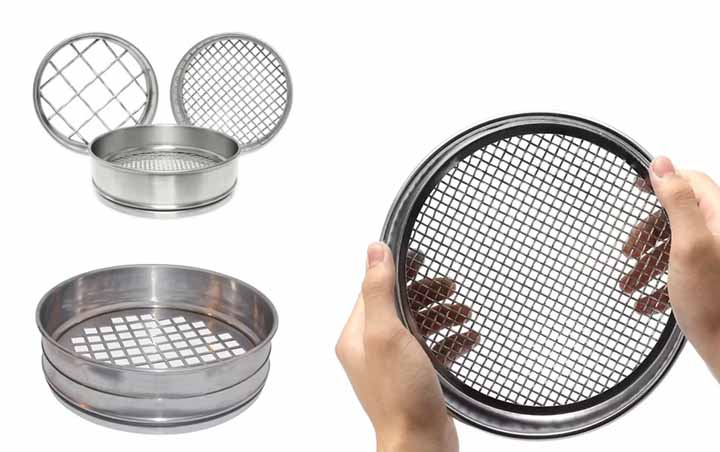
Different materials immediately create a price difference. 304 stainless steel is suitable for routine testing, while 316L is more durable in high salt spray environments, but also more expensive. The finer the mesh, the stricter the requirements for sieve weaving and tension. For example, 200 mesh and 325 mesh salt particle size test sieves are usually significantly more expensive than 20 mesh ones. Whether the sieve conforms to ASTM E11 or ISO 3310 will also affect the price.
In procurement, there are two configurations: Industrial Salt Test Sieve Price and Heavy Duty Salt Test Sieve Price. The two differ in sieve frame thickness, sieve tension method, and continuous use scenarios. The Industrial type is mostly used in salt plant laboratories, salt packaging lines, and water treatment workshops. The sieve frame thickness is typically 0.6–0.8 mm, and the common price ranges from $45 to $180. The heavy duty frame uses a thicker frame and higher sieve tension, making it less prone to deformation even with larger sample volumes. For example, it can maintain its flatness even when sieving 3–5 kg of coarse salt particles at once. The price of this type of heavy duty salt test sieve is typically $120–$420. The difference between the two is not only in weight. The industrial type is more suitable for daily sampling, while the heavy duty structure is more suitable for continuous use and frequent cleaning. If the laboratory only performs tests a few times a day, the industrial type is sufficient; if the sieve is frequently placed on a vibrating sieve machine for continuous operation, the heavy duty structure usually has a longer service life.
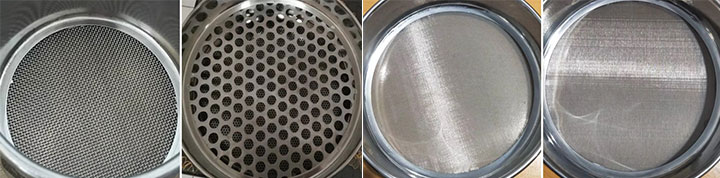
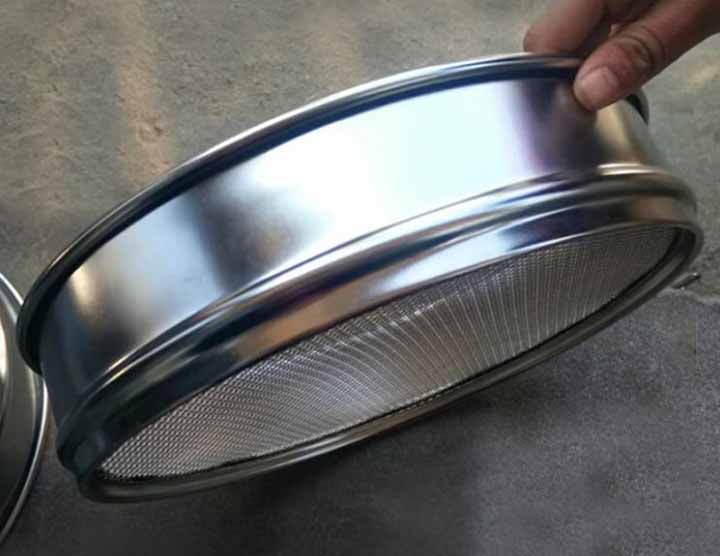
The price can be seen from several specific dimensions. Larger diameters require more material; 200 mm laboratory salt sieves are the most inquired about, with prices typically ranging from $30 to $150; 300 mm models are commonly used for large-volume sampling, and prices can reach over $250. Mesh size determines the sieve difficulty; 10 mesh is used for coarse salt, while 325 mesh is used for refined salt powder, the latter requiring a more meticulous meshing process. Regarding materials, 304 stainless steel is suitable for normal environments, while 316L has a longer service life in humid salt chambers. Standards also affect cost; sieves conforming to ASTM E11 require controlled aperture tolerances, and the addition of test reports and laser numbering will increase the processing steps. If customers request customization, such as a 75 mm small diameter, a taller frame, company name engraving, or a complete salt test sieve set with a cap and base, the price will be higher than the standard model.
This can be determined based on the actual usage conditions. If the sample being tested is table salt, a 20–60 mesh size is common; sea salt has coarser particles, so 10–30 mesh is more frequently used; powdered salt typically requires 100 mesh or more. Consider the sample volume. For daily sampling of around 100 g, a 200 mm sieve is sufficient; if testing several kilograms at a time, a 300 mm or thicker sieve is recommended. The operating environment is also important. In southern warehouses with high humidity, the sieves are constantly exposed to salt spray, so many customers directly choose 316L sieves. If experimental data needs to be submitted to the customer or a third-party organization, ASTM or ISO standards are usually required. Providing the salt particle size range, required mesh size, and whether a vibrating sieve machine is needed before purchasing will allow the supplier to provide a more realistic quote.
| Diameter | Common Frame Height | Typical Sample Weight | Typical Price (USD) |
| 75 mm | 25 mm | 20–50 g | $23–$55 |
| 100 mm | 50 mm | 50–100 g | $28–$75 |
| 150 mm | 50 mm | 100–300 g | $35–$110 |
| 200 mm | 50 mm | 100–500 g | $30–$150 |
| 200 mm (316L) | 50 mm | 100–500 g | $80–$220 |
| 300 mm | 75 mm | 500 g–3 kg | $90–$280 |
| 400 mm | 100 mm | 3–5 kg | $180–$480 |
| Type | Typical Configuration | Price Range (USD) | Common Use |
| Standard Salt Test Sieve | 304 stainless steel, standard mesh | $23–$80 | Conventional particle size testing |
| Fine Mesh Salt Test Sieve | 100–325 mesh | $45–$150 | Refined salt and powdered salt analysis |
| ASTM Standard Salt Test Sieve | ASTM E11 compliant | $65–$220 | Third-party testing and export inspection |
| 316L Stainless Steel Salt Test Sieve | Corrosion-resistant material | $80–$250 | High-humidity salt warehouses and coastal environments |
| Industrial Salt Test Sieve | Reinforced frame | $45–$180 | Salt factory laboratory and production sampling inspection |
| Heavy Duty Salt Test Sieve | Thickened frame and high-tension mesh | $120–$420 | High-frequency sieving and large sample volumes |
| Custom Salt Test Sieve | Special diameter, mesh or laser marking | $90–$500 | Non-standard specification procurement |
| Salt Test Sieve Set | Multiple sieves with lid and pan | $200–$850 | Complete particle size analysis configuration |
The Salt Test Sieve Price is not a single number, but is determined by the material, mesh size, standard, and structure. When choosing sieves, don't just focus on the lowest price. Later on, salt corrosion of the sieve frame or inaccurate sieve apertures may occur, requiring retesting of salt particle size, which increases testing time and repetitive costs. If a sieve's aperture remains unchanged after dozens of consecutive cleanings, and the test results are consistent, then the price of this type of sieve is often more worth considering.


Address:China,Yanjin county forest park gate to the west 1000 meters north road.


 Online Chat
 Email
Email