


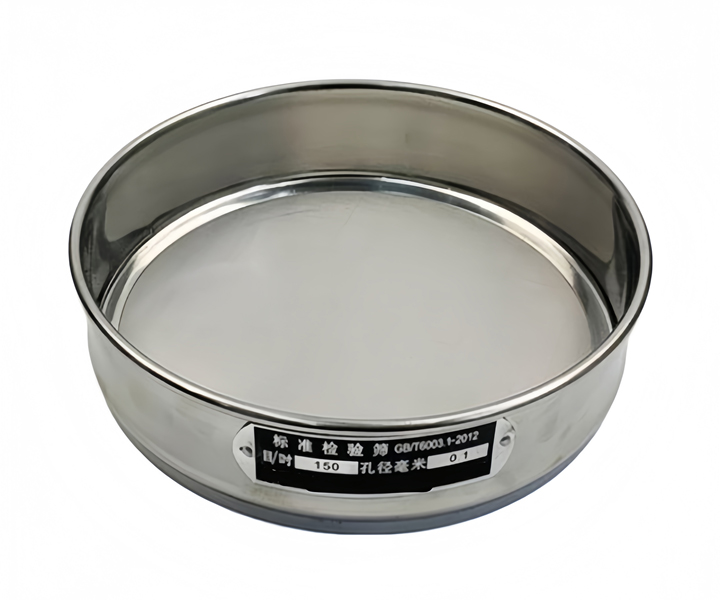
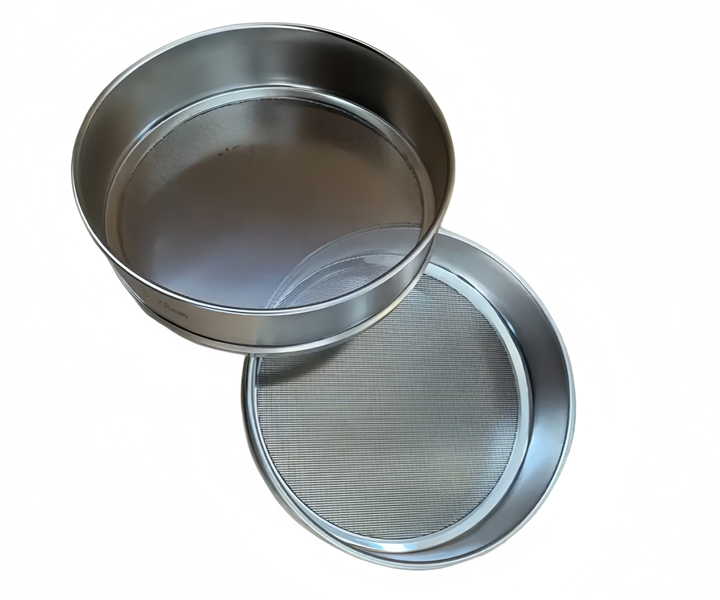

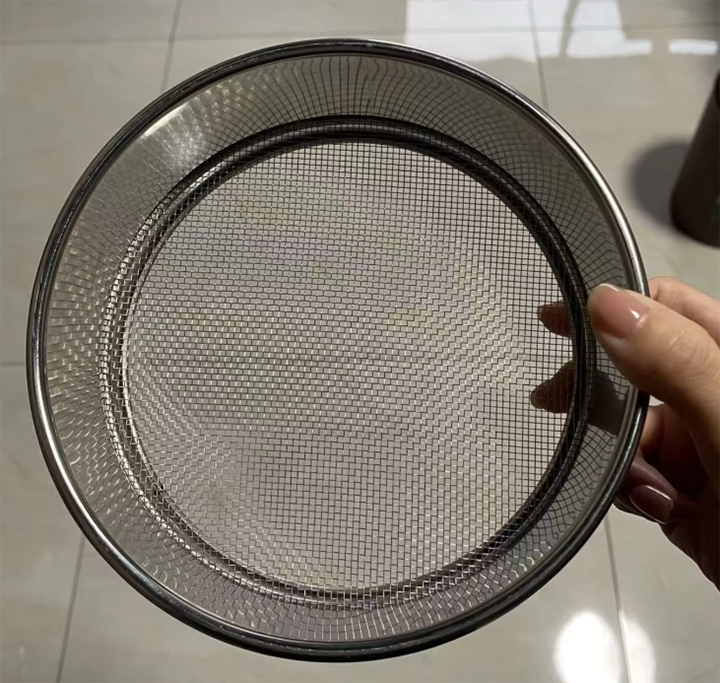
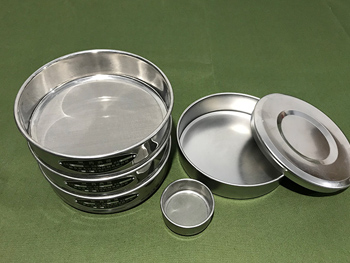
salt test sieve is a standard sieving instrument for particle size detection and grading of salt products such as table salt and industrial salt. It can be matched with the sieving and testing needs of different particle sizes, such as large-particle salt, medium-particle salt, and fine salt.


Price:$23.00-$850.00 per set
Consult now and enjoy a 10% discount
Material: 304, 316 stainless steel
Frame Diameter: 500/400/300/200/120/80/75 mm / Customization available.
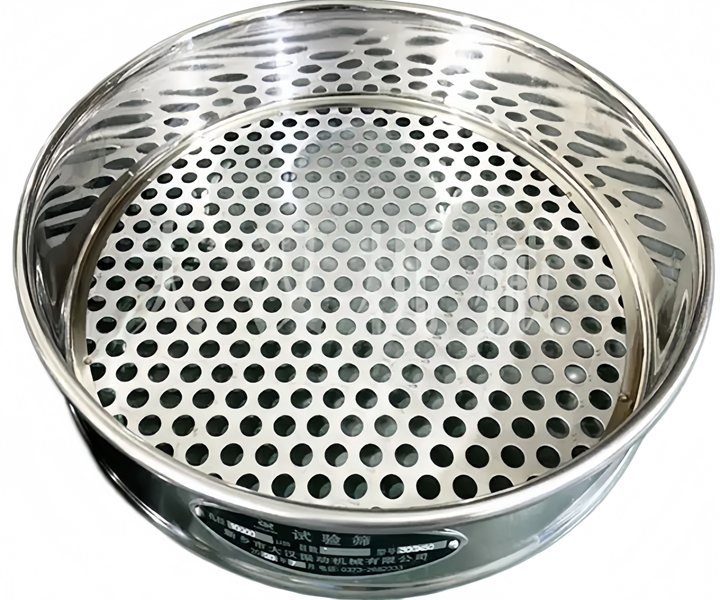
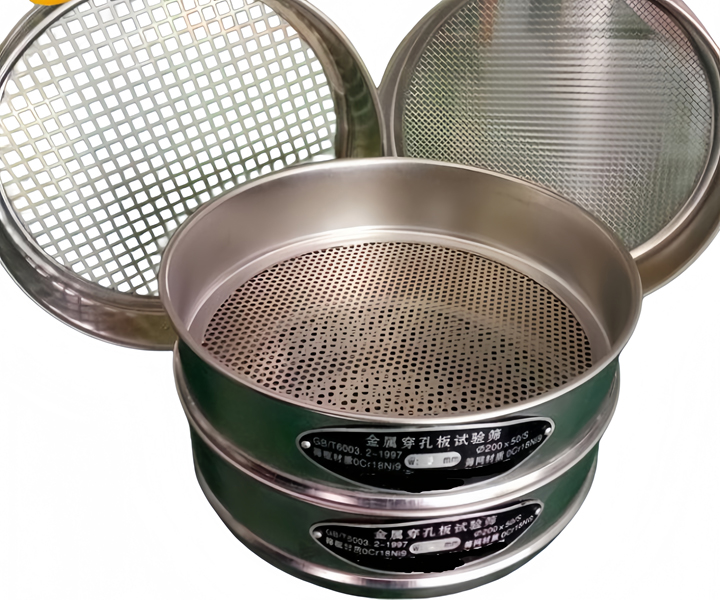
Surface Type: Woven mesh/Perforated plate/Electroformed mesh
Sieve Type: Metal woven mesh, metal perforated plate
Mesh Size: 10 mesh, 24 mesh, 50 mesh, 65 mesh, 80 mesh, 100 mesh, 120 mesh, 150 mesh, 200 mesh
Applications: Coarse salt, medium salt, fine salt, sea salt, granular salt.
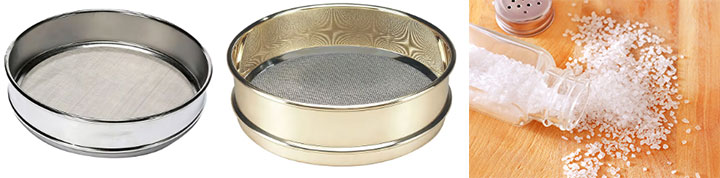
salt test sieve analyzes salt to control its particle size range or determine its purity. The sieve is suitable for sieving salts from 20 to 200 mesh. The sieve frame is made of 304/316 stainless steel, which is resistant to salt corrosion and easy to clean. The number of sieve layers can be configured from 1 to 8 layers, depending on requirements. The sieve conforms to GB/T 6005 and ASTM E11 standards and can test various types of salt, including edible salt, sea salt, and industrial salt.
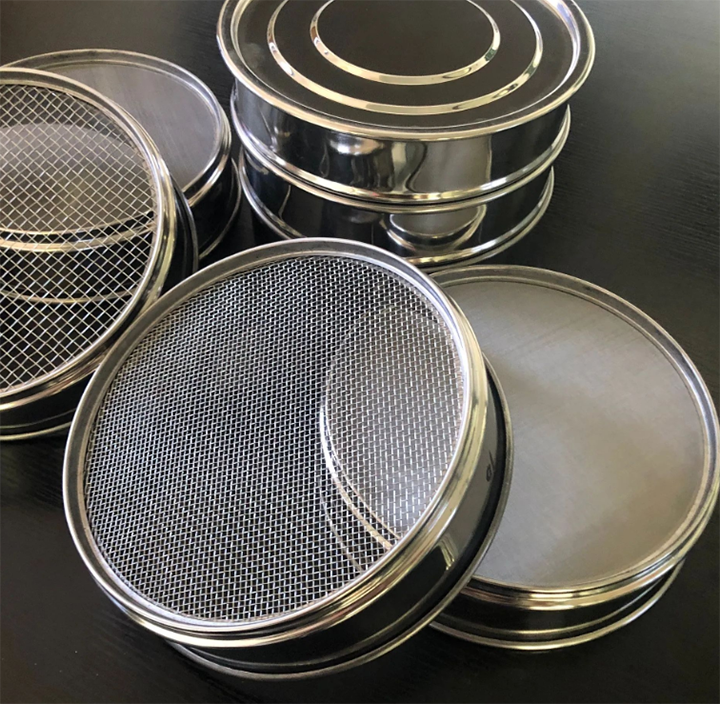
The mainstream diameter of the salt test sieve is φ200mm. Both the sieve frame and screen are made of stainless steel, featuring corrosion resistance, rust resistance, stable structure, and long service life. Handheld and electric sieves are available to suit different application scenarios, and non-standard customization is supported. Round and square holes are available as options.
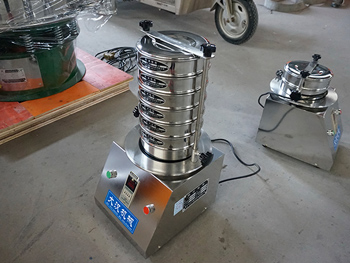
Before testing, prepare standard test sieves, a balance, sample pans, soft brushes, etc. During testing, stack different sieves according to their aperture size from largest to smallest, ensuring that the largest aperture is on top and the smallest aperture is on the bottom. The setup time is generally 5-10 minutes.
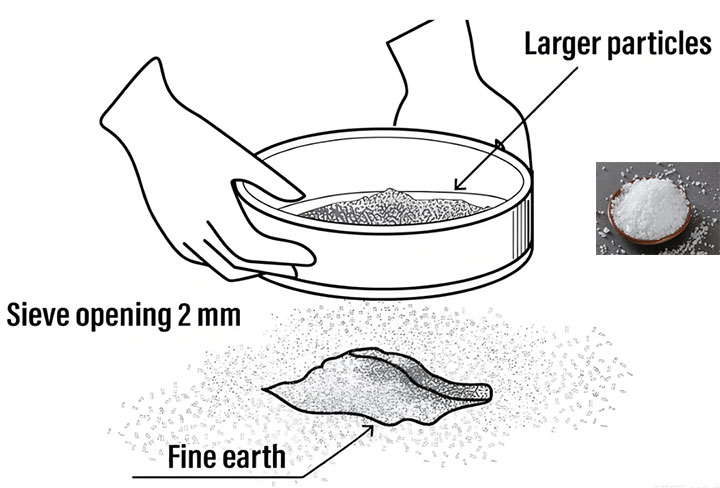
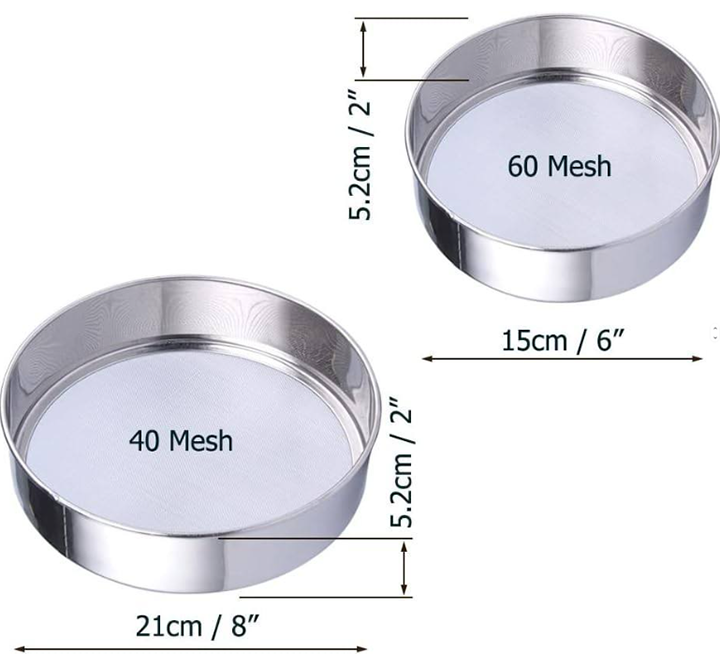
The sieve mesh of a salt test sieve is commonly made of stainless steel. This is to prevent the salt from corroding the mesh and causing inaccurate sieving results. Common sieve diameters are 200mm, 300mm, and 75mm, which can be selected according to the amount of salt sample. The sieve height is available in half-height and full-height versions. Half-height sieves are approximately 25-30mm high, which is easier for manual operation; full-height sieves are approximately 50mm high, which can hold more salt.
In salt sieving tests, some salt particles may be sharp and abrasion-resistant. Salt test sieves, by using abrasion-resistant metal mesh, can withstand prolonged high-frequency vibration of the salt sample without easily being damaged, ensuring the accuracy of salt sieving. Some table salt is prone to absorbing moisture and clumping. By using a vibrating sieve machine, the pseudo-crystal clumps in the salt can be broken up, ensuring that the true particle distribution of the salt is detected. Salt test sieves can also be used for grading, helping manufacturers control indicators such as salt processing effectiveness and dissolution rate, thus ensuring high-quality salt production.
| Mesh | Sieve Size (mm) | Applicable Material |
| 4 | 4.75 | Coarse salt, large-grain salt |
| 6 | 3.35 | Coarse salt, seasoning salt |
| 8 | 2.36 | Coarse salt, industrial salt |
| 10 | 2.00 | Edible coarse salt, industrial salt |
| 12 | 1.68 | Coarse salt, edible salt |
| 14 | 1.41 | Edible salt, refined salt |
| 16 | 1.19 | Refined salt, seasoning salt |
| 20 | 0.841 | Refined salt, fine salt |
| 25 | 0.707 | Refined salt, food-grade salt |
| 30 | 0.595 | Refined salt, seasoning salt |
| 40 | 0.420 | Food-grade fine salt, medical salt |
| 50 | 0.297 | Superfine salt, pharmaceutical salt |
| 60 | 0.250 | Superfine salt, chemical salt |
| 80 | 0.177 | Superfine powder salt, analytical salt |
| 100 | 0.149 | Superfine powder salt, analytical salt |
| 120 | 0.125 | Micro-fine salt, laboratory analysis |
| 140 | 0.105 | Micro-fine salt, laboratory analysis |
| 200 | 0.074 | Ultra-micro salt, chemical analysis |
The price of salt test sieves varies depending on the mesh size and sieve diameter. If using a woven wire mesh with a mesh size of 2mm-5mm, the price is approximately $12 to $20 per sieve; if using a mesh size of 500 microns to 1mm, the price is $17 to $28. The choice should be based on the particle size of the salt to be sieved. A single sieve with a 200mm diameter typically costs $25-$90. When selecting a sieve, provide your specific requirements to the supplier so they can provide suitable sieves and a quote.
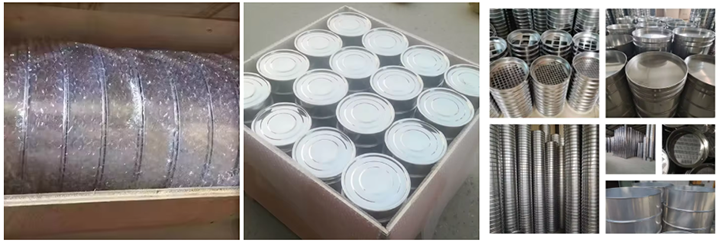
Dahan Machinery, as a manufacturer of salt test sieves, ensures that its sieves conform to ISO 9001 and ISO 3310 standards. As an experienced manufacturer, we not only provide sieves but also matching testing sieve machines and sieves of various materials, sizes, and apertures. As a direct supplier, we can provide suitable sieves according to your needs at competitive prices, offering excellent solutions for salt testing.
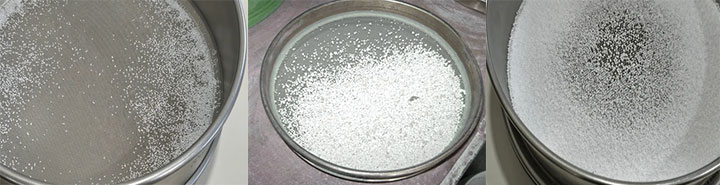
Salt test sieves can be used for particle size inspection after raw salt crushing and before finished salt leaves the factory; they can also be used for incoming inspection of purchased edible salt; and in various situations requiring particle size grading and testing, such as particle size analysis and testing of salt-related indicators, by quality inspection agencies and research institutions. Whether for salt quality control, research, or testing salt purity, salt test sieves can be used and play a valuable role.


Address:China,Yanjin county forest park gate to the west 1000 meters north road.


 Online Chat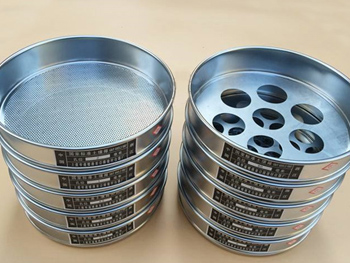
 Email
Email