


The Stainless Steel Salt Test Sieve measures the particle size of salt. Table salt is highly hygroscopic, easily absorbing moisture when exposed to air, causing surface dissolution and adhesion. Salt also corrodes metals. Using ordinary sieves will render them unusable after only a few tests due to rust. The stainless steel salt test sieve, made of a material resistant to chloride ion corrosion, resists this double damage. In standard testing procedures, its sieve mesh size typically ranges from 20 to 200 mesh, separating and retaining salt particles of different sizes.
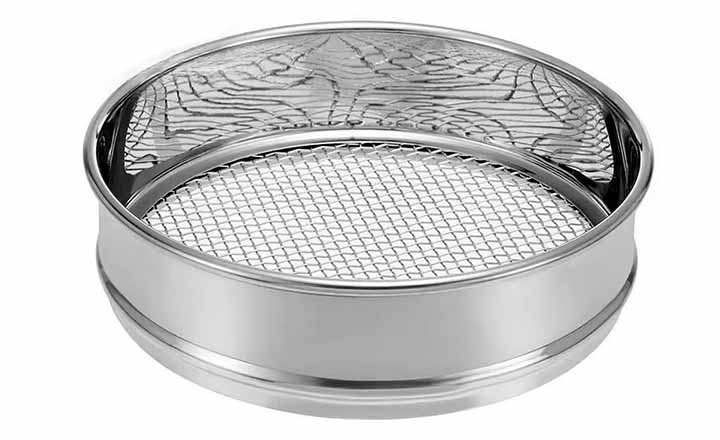
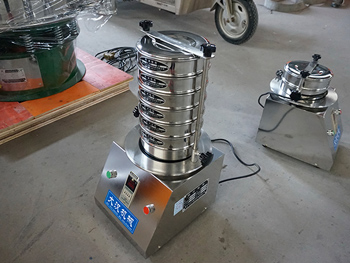
The stainless steel salt test sieve is made of high-grade 316L stainless steel, possessing strong corrosion resistance and able to withstand high concentrations of chloride ions for extended periods. The sieve's manufacturing process abandons traditional welds, achieving seamless one-piece molding through a double-layer molded, integrated stretching process, preventing fine salt particles from getting stuck in the gaps. Its high-precision screen is uniformly stretched by a CNC screen tensioning machine, ensuring the wires are taut and do not shift, thus maintaining a constant geometric shape of the square mesh openings. Furthermore, this screen has excellent standard compatibility; its 200mm or 300mm dimensions and geometric tolerances strictly match mainstream measuring equipment, allowing it to be directly stacked on machines such as tapping sieves and standard sieves for continuous and smooth sieving operations.
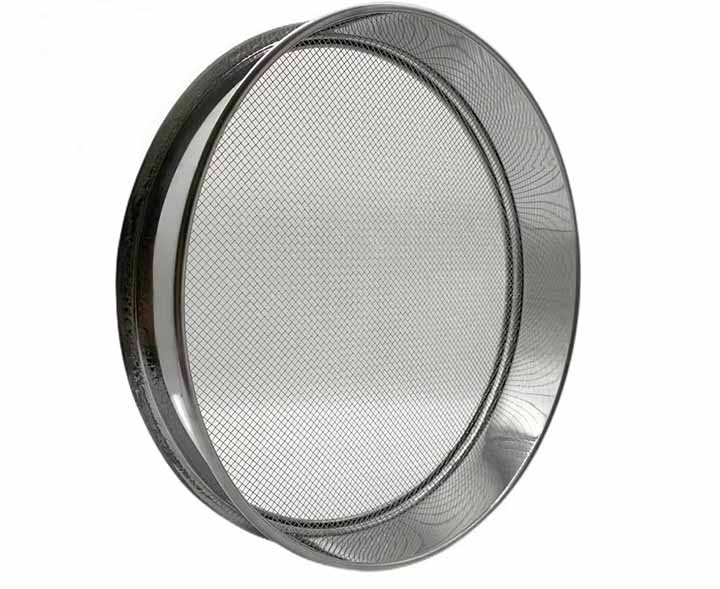
The reasons for choosing this stainless steel testing sieve are primarily focused on the corrosion of equipment by materials and the purity of the test samples. The following is a comparison of the performance of this material with conventional metal materials in salt industry testing.
| Evaluation Dimension | This Stainless Steel Salt Test Sieve (316L/304) | Conventional Metal Materials (Such as ordinary carbon steel or low-grade stainless steel) |
| Pitting Resistance Performance | Contains trace molybdenum element. The surface passivation film will not crack under high-concentration chloride ion environment, and no pinhole corrosion blind holes will be generated. | After contact with wet salt particles, the surface passivation layer is quickly penetrated by chloride ions, forming dense black pitting pits within a few days and eventually perforating. |
| Pollution Control | The surface is electrochemically polished without metal debris peeling off, so metal oxides (rust) will not be mixed into salt particle samples. | Peeling oxide layers will turn white salt particles yellow and dark, directly contaminating test samples and causing failure of quality inspection composition analysis. |
This sieve is frequently used in the mid-stage control and final quality inspection stages of salt production. For refined salt, the production line needs to control its flow rate and solubility; technicians typically use a combination of 40 to 60 mesh to trap excessively coarse particles. Sea salt and coarse salt have large, often irregularly shaped particles. After the grinding process, a 10- to 20-mesh sieve is typically used to check the effectiveness of the coarse crushing. Industrial salt and de-icing salt also have specific requirements for particle size distribution; particles that are too large cannot melt quickly, while particles that are too fine are easily dispersed by the wind. For testing, 8- to 14-mesh sieves are commonly used. The mesh size and geometric tolerances of these sieves are strictly tested and calibrated according to ASTM E11 and ISO 3310-1 international standards.
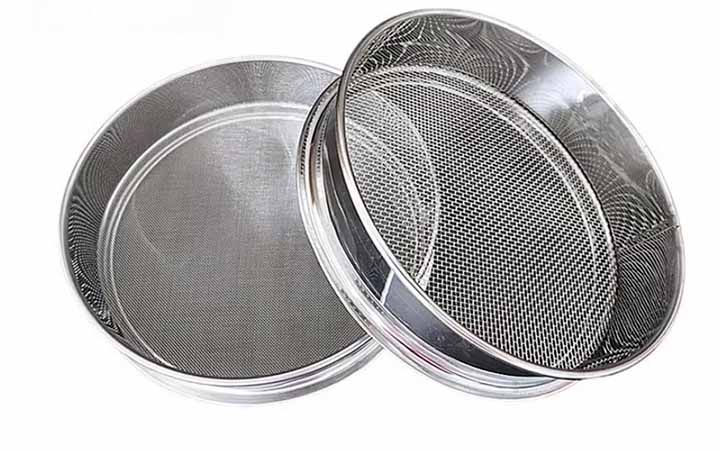
| Parameter | Specifications & Details |
| Material | Mesh: 316L Stainless Steel / Frame: 304 or 316 Stainless Steel |
| Aperture Size | 75 μm - 2000 μm (Customizable in millimeters or microns) |
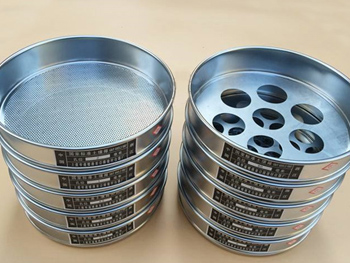
| Mesh Size | 10 mesh, 20 mesh, 40 mesh, 60 mesh, 80 mesh, 200 mesh, etc. |
| Diameter | Φ200 mm / Φ300 mm |
| Height | 50 mm (Standard working depth) |
| Standards | ISO 3310-1 / ASTM E11 / GB/T 6003 |
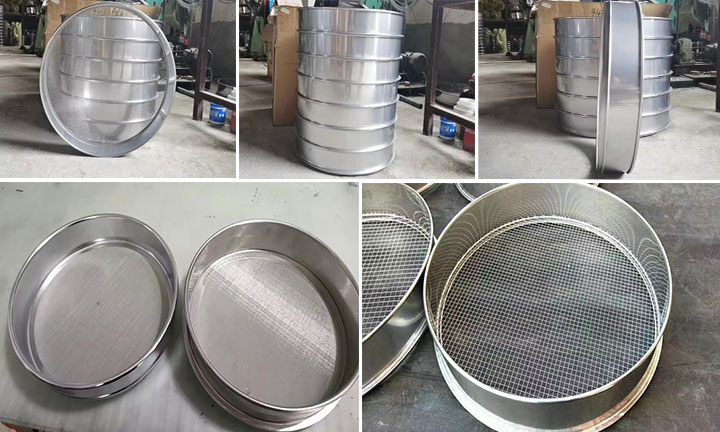
The operation process for testing salt using a stainless steel test sieve consists of three steps: preparation, sieving, and maintenance. Stack the sieves of various mesh sizes from largest to smallest on a receiving tray. Pour 100 grams of dry salt sample into the top coarse-mesh sieve and seal it tightly. Fix the entire sieve set onto a vibrating screen, set it to start sieving after 5 minutes, and weigh the residual mass of each layer after the machine stops, calculating the percentage. After testing, rinse the residual salt with warm water, dehydrate and dry in a drying oven, and then store in boxes.
A: 316L stainless steel contains molybdenum, which gives it stronger resistance to chloride ion pitting corrosion than 304, allowing it to withstand salt water corrosion for longer.
A: Direct testing is not recommended. High-moisture salt particles will clump together and even clog the mesh, leading to inaccurate test data. The sample should first be placed in a drying oven and dried at 105 degrees Celsius to constant weight. After cooling, grading measurements should be performed.
A: Wire brushes have extremely high hardness. Mechanical friction will scratch the passivation layer on the stainless steel surface, and strong pulling will directly damage the geometric spacing of the filaments, causing the mesh to enlarge or deform.
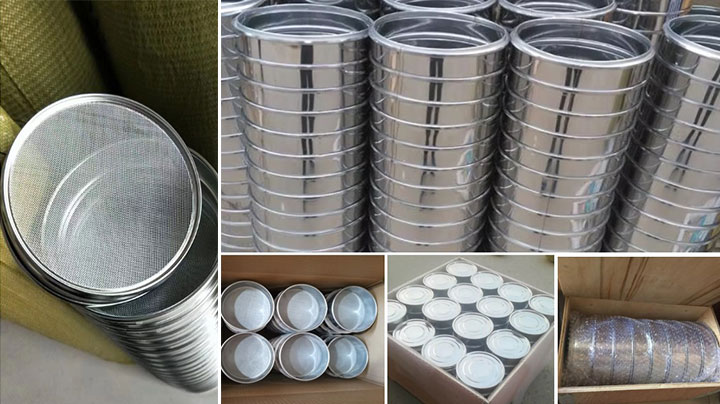
Stainless steel salt test sieves, as tools for physicochemical analysis in the salt industry, are valuable because they overcome the corrosion of metal by chloride ions through a seamless, one-piece stretching process and highly corrosion-resistant stainless steel material. Through standardized operation and rigorous physical cleaning and maintenance, they can provide long-term particle size data conforming to ASTM E11 and ISO 3310-1 standards, providing a solid data reference for the production and processing of refined salt, sea salt, and industrial salt.


Address:China,Yanjin county forest park gate to the west 1000 meters north road.


 Online Chat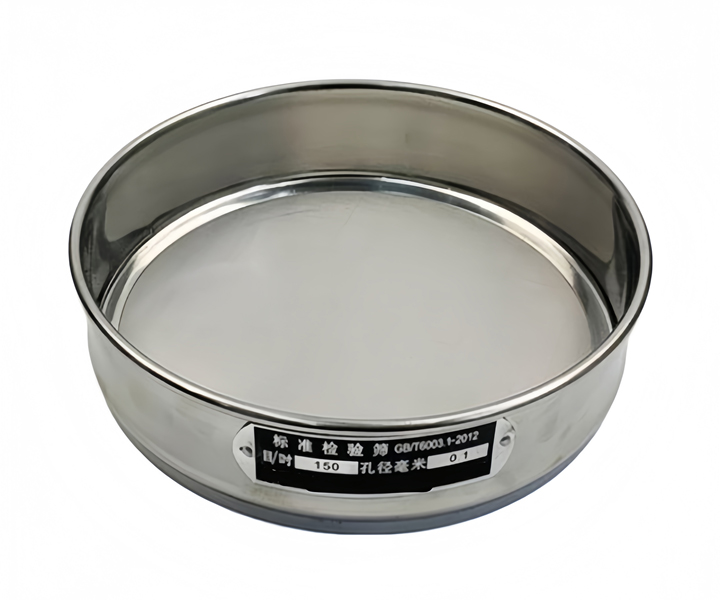
 Email
Email