


When a powder conveyor line halts unexpectedly mid-batch, the financial ripple effect hits hard. Incorporating structured screw powder conveyor daily maintenance routines and mastering efficient screw powder conveyor troubleshooting prevents material jams, protects equipment integrity, and shifts plant operations away from costly crisis management.

Daily Inspection Checklist (Pre-operation & Post-operation): Pre-operation checks require verifying that the motor drive operates without unusual whining and that no residual powder cakes the trough walls from previous runs. Post-operation procedures focus on a quick visual sweep of the discharge port and clearing any fine particulate buildup around the end plates.
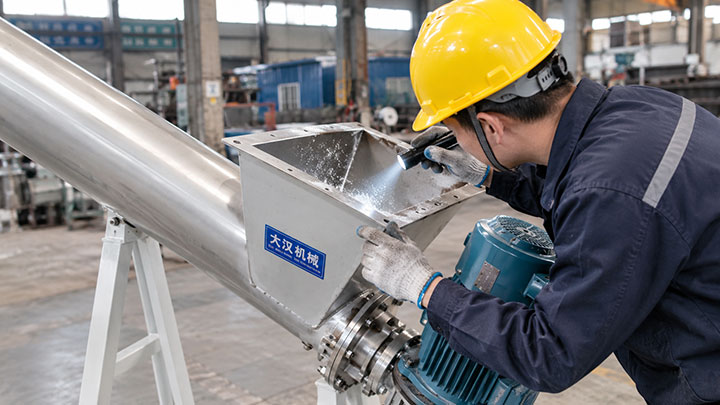
Weekly and Monthly Maintenance Tasks (Lubrication & Alignment): Weekly servicing centers on greasing exterior pillow block bearings using recommended high-temperature industrial lubricants, avoiding over-packing that blows out seals. Monthly routines demand checking V-belt tension, examining gear reducer oil levels, and verifying drive shaft alignment to stop premature coupling wear.
Critical Components Inspection: Shaft Seals, Flights, and Hanger Bearings: Inspect shaft packing glands and air-purge seals monthly for minor powder seepage. Measure the radial clearance on internal hanger bearings and check the outer edge thickness of screw flights to catch abrasive wear before metal-on-metal contact damages the trough.
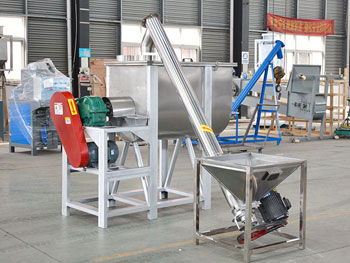
Observing proper equipment movement during operation helps maintenance teams better identify normal versus abnormal mechanical behavior. Watch a Dahan stainless steel powder screw feeder operating smoothly on-site:
Watch Dahan stainless steel powder screw feeder operating on-site.
A structured schedule minimizes missed inspection intervals. Use the reference matrix below to coordinate daily, weekly, and monthly technical checks across your powder processing line:
| Interval | Inspection Item | Operational Focus & Standard |
|---|---|---|
| Daily | Pre-run & Post-run Checks | Check for unusual drive noise; ensure discharge port and trough interior are clear of hardened residue. |
| Weekly | Lubrication & Drive Tensions | Grease pillow block bearings moderately; check V-belt tension and reducer oil sight glass. |
| Monthly | Seals & Internal Clearance | Inspect shaft packing/air purges for fine powder seepage; check hanger bearing wear and shaft alignment. |
When powder handling lines encounter performance hurdles, rapid troubleshooting prevents localized jams from escalating into complete plant stoppages. Reviewing root causes for material choking, vibration, and thermal wear helps maintenance teams restore baseline output quickly:
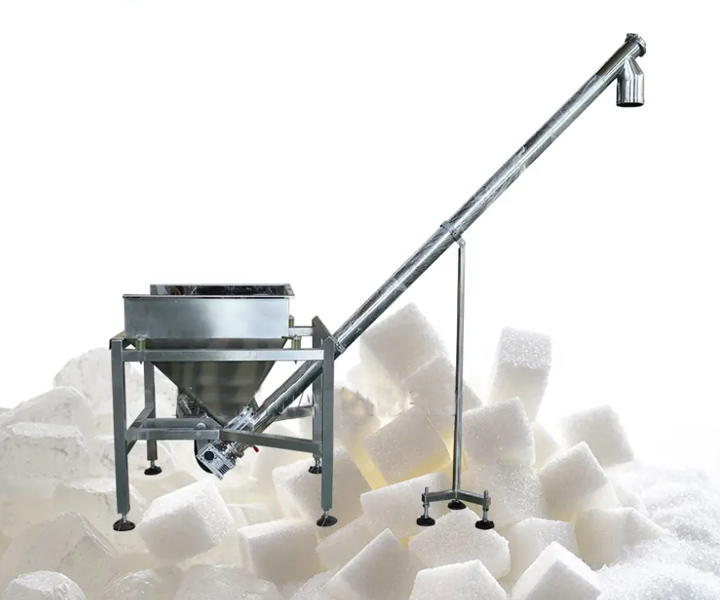
See Dahan Machinery's industrial screw conveyor operating smoothly in a powder processing line.
Material Blockage and Reduced Conveying Capacity: Sudden throughput drops usually stem from over-feeding wet or cohesive powders that bridge across the screw flights. Verify that the infeed rate matches design parameters, clear compacted buildup near the inlet throat, and check if flight pitch distortion is impeding forward material translation.
Abnormal Noise, Vibration, and Mechanical Binding: Rhythmic metallic clanking or excessive housing vibration indicates shaft bow, loose coupling bolts, or foreign debris trapped between the helical flight and trough wall. Shut down immediately to inspect internal clearances and realign the drive assembly.
Severe Bearing Overheating and Premature Failure: Hot bearing housings signify over-greasing, lubricant contamination by fine dust particles, or angular misalignment under heavy axial load. Purge old grease, inspect seal integrity, and ensure correct thermal operating limits are maintained.
Powder Leakage at Shaft Ends and Flange Connections: Fine dust escaping around end plates or shaft penetrations points to worn packing glands or failing air-purge pressures. Adjust gland follower bolts evenly and verify that purge air flow remains uninterrupted to keep particles out of seals.
When and How to Replace Hanger Bearings and Auger Flights
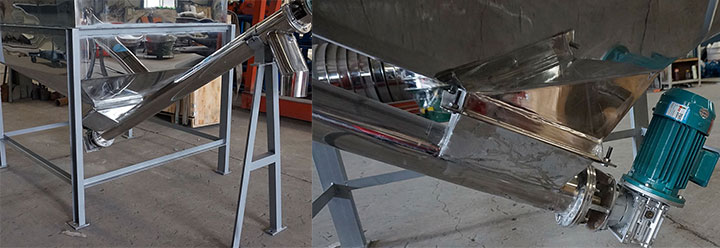
Internal hanger bearings and helical screw flights experience constant abrasive friction from granular and fine powders. Monitor radial play during monthly inspections; once clearance exceeds manufacturer tolerances or flight outer edges thin past structural thresholds, schedule immediate replacement to avoid gouging the conveyor trough.
Choosing the Right Materials for Abrasive and Corrosive Powders
Selecting appropriate metallurgy directly extends wear intervals. Upgrade standard carbon steel troughs and flights to hardened wear-resistant alloys or 304/316L stainless steel when handling chemically reactive, abrasive, or high-temperature fine minerals.
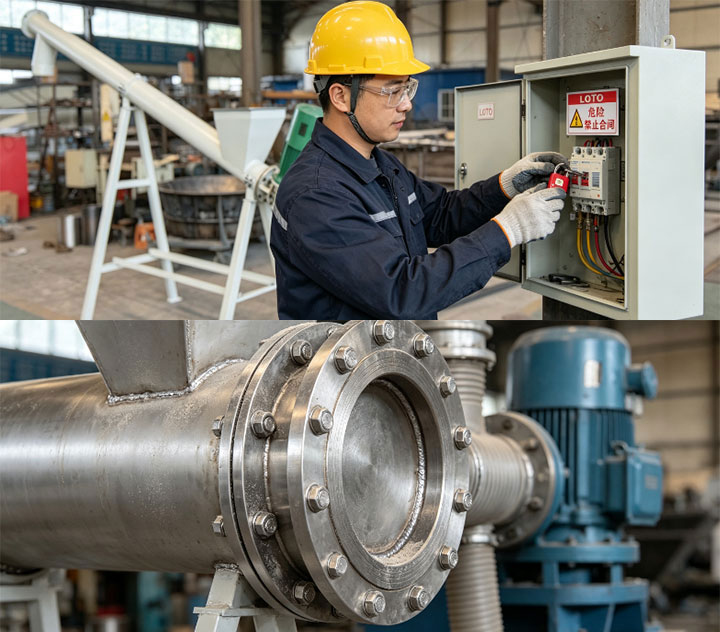
Lockout-Tagout (LOTO) Procedures Before Servicing: Never perform internal inspections, flight cleanouts, or seal adjustments without executing strict Lockout-Tagout protocols. Disengage the main electrical breaker, apply physical padlocks, and verify zero residual rotational energy stored in the drive assembly before opening trough covers.
Safe Handling of Fine Powders and Dust Explosion Prevention: Fine organic or chemical powders suspended in enclosed conveyor housings can create hazardous combustible dust clouds. Maintain tight housing seals, utilize appropriate dust collection systems, and strictly control potential ignition sources during any maintenance or hot work near the powder stream.
Exterior pillow block bearings typically require greasing on a weekly or bi-weekly schedule depending on operating hours and ambient dust levels. Always apply moderate amounts of high-temperature grease to prevent over-packing, which can rupture internal seals.
Excessive vibration usually stems from drive shaft misalignment, loose mounting bolts, a bent center shaft, or material buildup causing uneven mass distribution along the helical screw flights.
Preventing fine powder seepage requires maintaining properly tightened packing glands, inspecting air-purge systems to ensure positive pressure barriers are active, and replacing worn shaft seals before clearance gaps widen.
Routine inspections and minor part replacements can be managed effectively by your internal maintenance team. However, complex challenges such as severe structural misalignment or custom component retrofits benefit greatly from partnering directly with original equipment manufacturers.
Consult Our Application Engineers for Custom Conveyor Solutions
Proper troubleshooting and routine care extend the lifespan of your heavy-duty equipment. For tailored maintenance protocols, spare parts guidance, or system design, reach out to Dahan Machinery's engineering team for practical, tailored guidance.


Address:China,Yanjin county forest park gate to the west 1000 meters north road.


 Online Chat
 Email
Email