


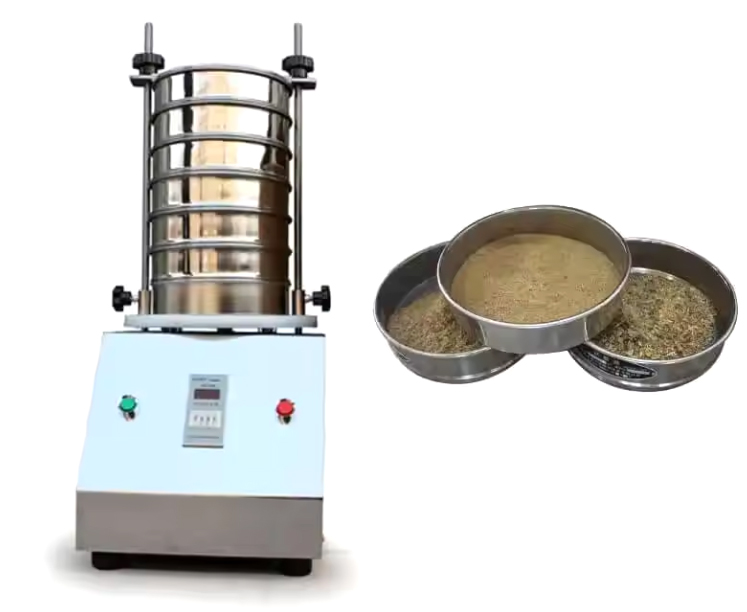
A Soil Particle Size Analyzer (also professionally known as a soil test sieve shaker or inspection sieve) is an essential laboratory instrument for geotechnical engineering, soil mechanics, and agricultural analysis.
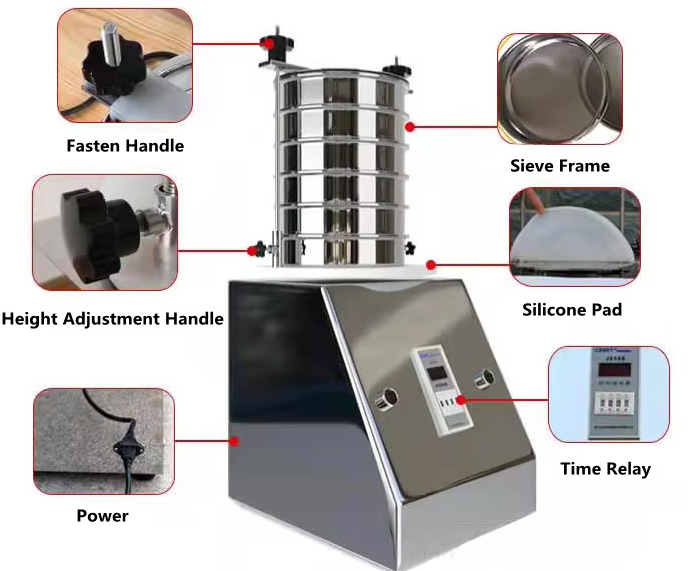
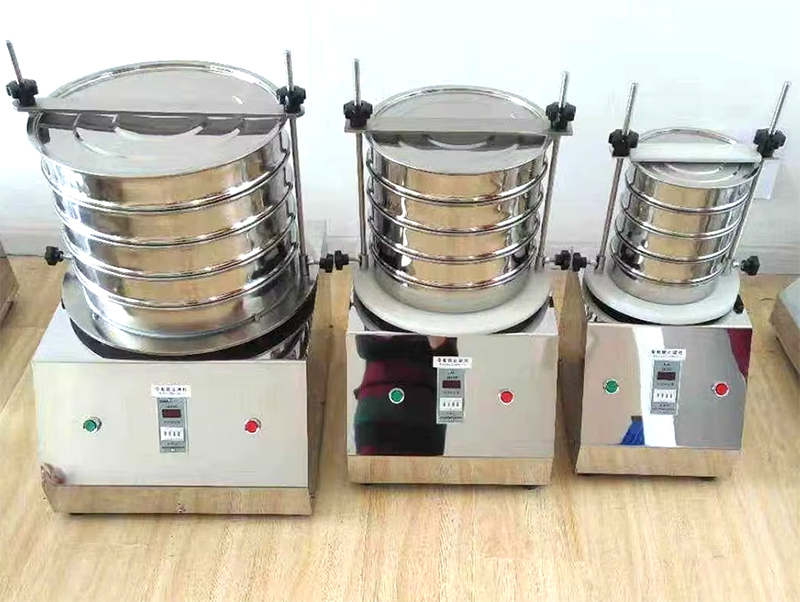
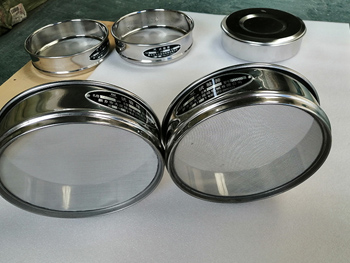
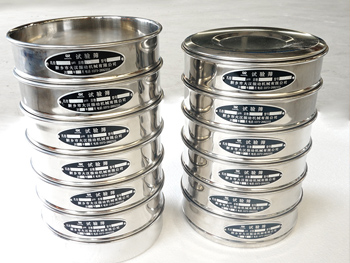
The equipment holds a nested stack of standard test sieves graded by precise opening sizes. Supporting both manual parameter configuration and automated high-frequency electric shaking, its core function is to accurately fractionate, grade, and filter soil samples. This process efficiently isolates soil particles from large organic impurities like stones and straw, delivering a standardized, pure sample base for grain size distribution curves (GSDC) and soil classification. To match diverse laboratory requirements, Dahan offers custom sieve diameters, heights, and both round and square aperture options.
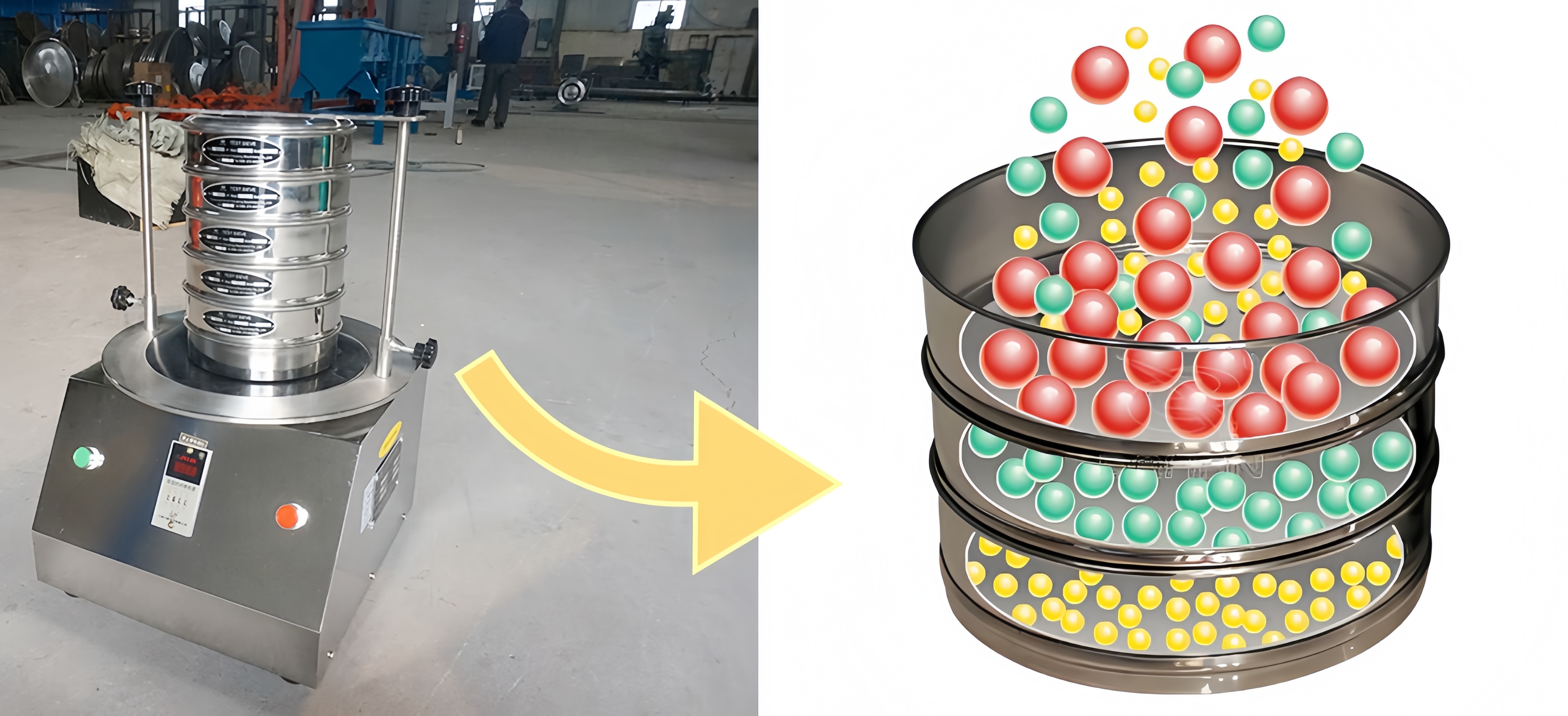
The Dahan Soil Particle Size Analyzer operates on a synchronized mechanism of high-frequency vertical vibration and layered volumetric grading.
To begin analysis, the pre-treated soil sample is charged onto the topmost sieve featuring the largest aperture. Once the heavy-duty vibrating motor is activated, the sieve body agitates at a precise frequency, causing the soil matrix to fluidize across the mesh surfaces. Particles smaller than the nominal sieve opening seamlessly pass through the apertures into the subsequent lower sieve level, while larger fractions are accurately retained. Through this top-to-bottom sequence of progressively diminishing mesh sizes, the bulk soil sample is fractionated into precise granular components, ensuring highly reliable, repeatable data for engineering and agricultural quality detection.
| Mesh size comparison table | |||||
| Mesh size | Aperture (μm) | Mesh size | Aperture (μm) | Mesh size | Aperture (μm) |
| 5 | 3900 | 140 | 104 | 1300 | 11 |
| 10 | 2000 | 170 | 89 | 1600 | 10 |
| 16 | 1190 | 200 | 74 | 1800 | 8 |
| 20 | 840 | 230 | 61 | 2000 | 6.5 |
| 25 | 710 | 270 | 53 | 2500 | 5.5 |
| 30 | 590 | 325 | 44 | 3000 | 5 |
| 35 | 500 | 400 | 37 | 3500 | 4.5 |
| 40 | 420 | 425 | 33 | 4000 | 3.4 |
| 45 | 350 | 460 | 30 | 5000 | 2.7 |
| 50 | 297 | 540 | 26 | 6000 | 2.5 |
| 60 | 250 | 650 | 21 | 7000 | 1.25 |
| 80 | 178 | 800 | 19 | ||
| 100 | 150 | 900 | 15 | ||
| 120 | 124 | 1100 | 13 | ||
Standard mesh number is a classification system used to describe the particle size of the sieve. It is usually used to describe the size range of particulate materials for screening and classification. Standard mesh number is formulated according to international standards. Common standard mesh numbers include ASTM (American Society for Testing and Materials Standards) and ISO (International Organization for Standardization).
The so-called mesh number refers to the particle size or coarseness of the material. It is generally defined as the number of mesh holes in an area of 1 inch * 1 inch, that is, the number of mesh holes of the screen. The mesh number that the material can pass through is defined as the mesh number: for example, 200 mesh means that the material can pass through a screen with 200 mesh holes in 1 inch * 1 inch. By analogy, the larger the mesh number, the finer the particle size of the material, and the smaller the mesh number, the larger the particle size of the material.
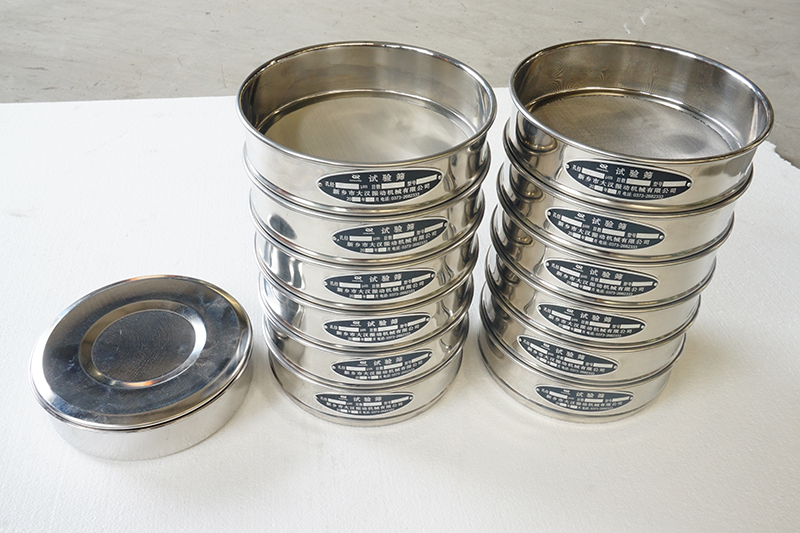
| Millimeter and mesh comparison table | |||||
| Millimeters/mm | Sieve Frame Dimensions (mm) | Number of stitches | Millimeters/mm | Sieve Frame Dimensions (mm) | Number of stitches |
| Φ200*50mm | 4.75 | 4 | Φ200*50mm | 0.250 | 60 |
| 4.00 | 5 | 0.212 | 70 | ||
| 3.35 | 6 | 0.180 | 80 | ||
| 2.80 | 7 | 0.150 | 100 | ||
| 2.36 | 8 | 0.125 | 120 | ||
| 2.00 | 10 | 0.106 | 140 | ||
| 1.70 | 12 | 0.090 | 170 | ||
| 1.40 | 14 | 0.0750 | 200 | ||
| 1.18 | 16 | 0.0630 | 230 | ||
| 1.00 | 18 | 0.0530 | 270 | ||
| 0.850 | 20 | 0.0450 | 325 | ||
| 0.710 | 25 | ||||
| 0.600 | 30 | ||||
| 0.500 | 35 | ||||
| 0.425 | 40 | ||||
| 0.355 | 45 | ||||
| 0.300 | 50 | ||||
Soil particle size testing is a crucial step in analyzing soil physical properties, and the overall process is standardized and highly systematic. It begins with collecting representative soil samples, followed by pretreatment such as impurity removal, drying, and crushing. Particle size is then determined using methods such as sieving, sedimentation, or laser analysis. The data is then processed to create distribution curves, and finally, the soil properties are interpreted based on the results.
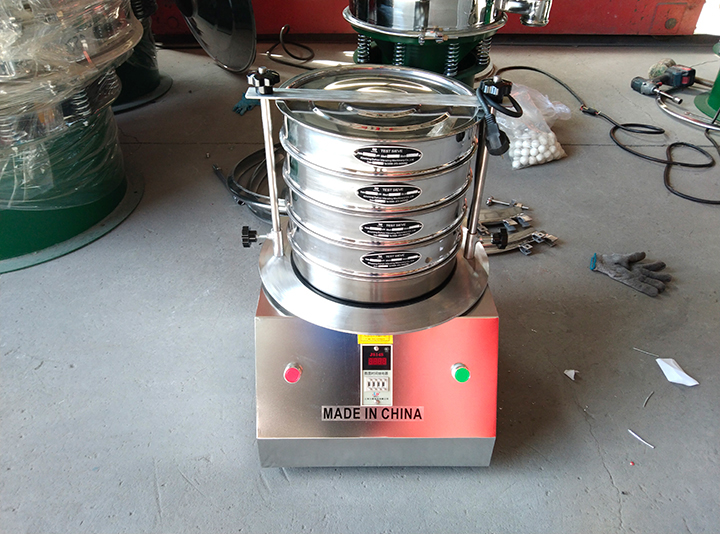
Collecting soil samples: First, representative soil samples need to be collected from the study area. The collection of samples should follow certain sampling methods to ensure the representativeness and reliability of the samples.
Sample pretreatment: The collected soil samples usually need to be pretreated, including removing impurities, drying and crushing, so as to carry out subsequent particle size analysis.
Particle size analysis: Particle size analysis can be done by different methods, including screening, sedimentation, laser particle size analyzer, etc. These methods can help determine the content and distribution of various particle sizes in the soil.
Data processing and analysis: The data obtained by the particle size test needs to be processed and analyzed, and a particle size distribution curve or table is usually drawn to more intuitively understand the particle composition of the soil.
Result interpretation: Finally, based on the results of the particle size test, the physical properties of the soil can be analyzed and interpreted to provide a reference for engineering design, soil improvement, etc.
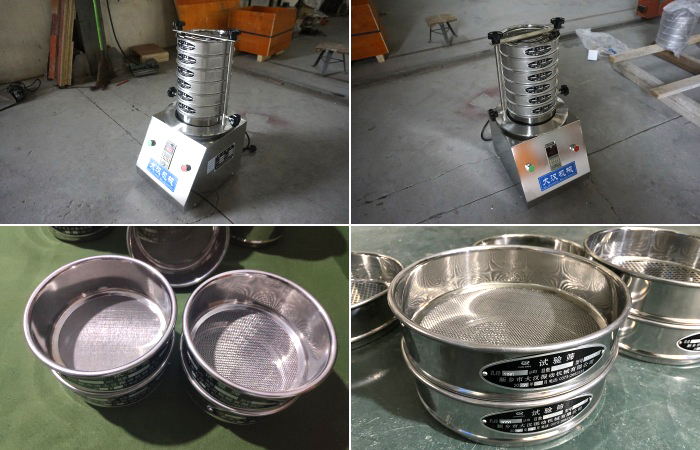
Soil particle size test is of great significance in the fields of soil mechanics, soil physics, soil improvement, etc. Through this test, people can understand important parameters such as soil pore structure, permeability, water retention, etc., and provide a scientific basis for agricultural production, soil protection and engineering construction. Therefore, mastering the methods and significance of soil particle size testing is of great significance for soil research and engineering practice.


Address:China,Yanjin county forest park gate to the west 1000 meters north road.


 Online Chat
 Email
Email