


Test sieves used in sieve analysis are essential tools for determining the particle size distribution of granular materials. This method is widely applied across industries such as construction, pharmaceuticals, and food processing. Below, we take a deep dive into test sieves, including their construction, standards, sieve analysis procedures, and the significance of particle size distribution.
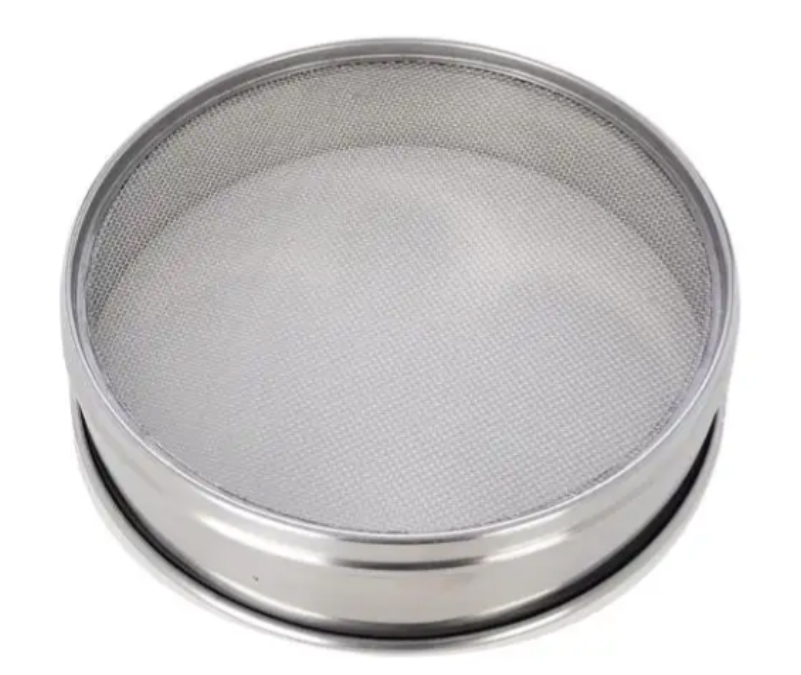
Test sieves are commonly used for the sieve analysis of silica sand, construction sand, aggregates, limestone powder, calcium carbonate powder, fly ash, fertilizer granules, coffee powder, grain products, and metal powders.
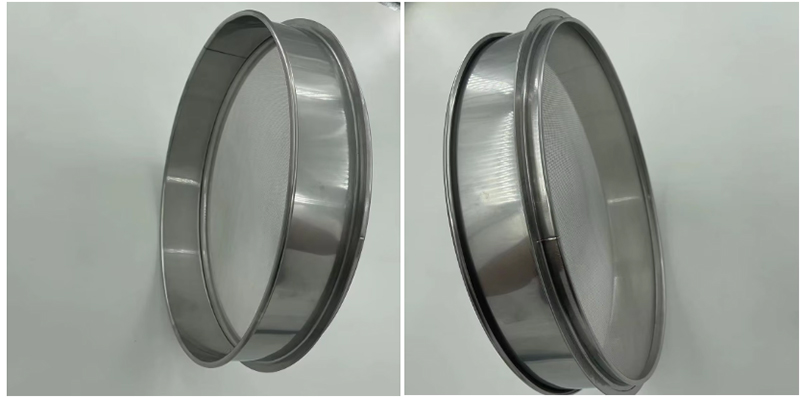
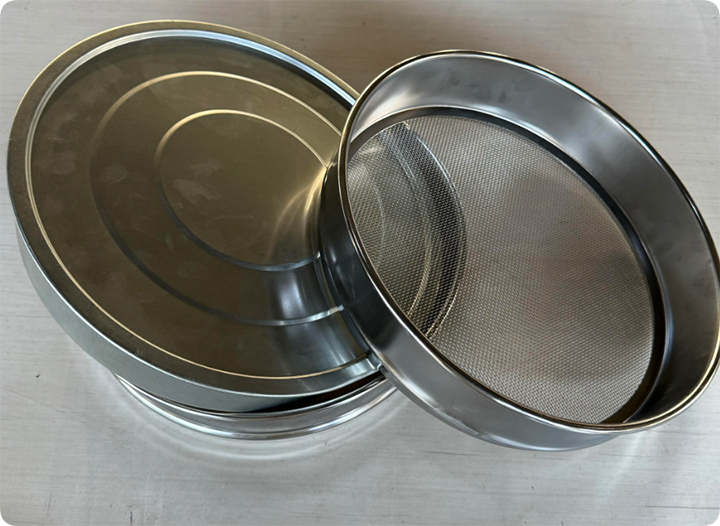
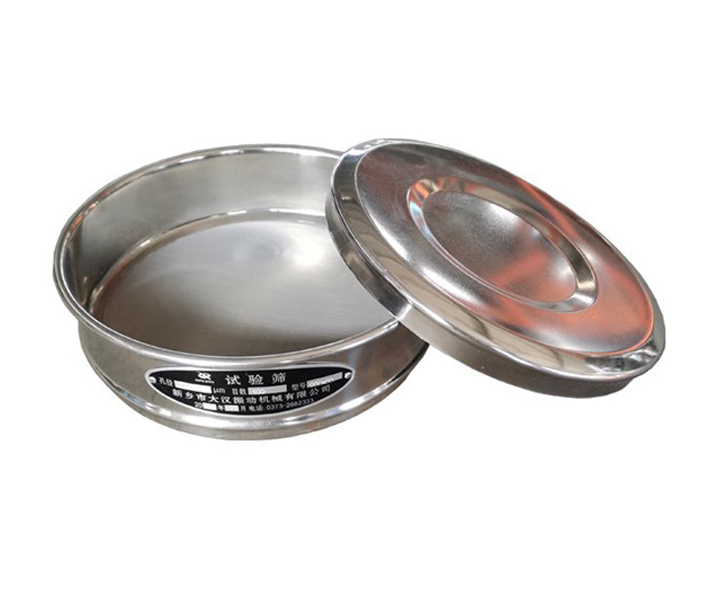
Frame: Typically made of stainless steel or brass to ensure durability and corrosion resistance.
Mesh: The woven wire mesh that determines the particle retention size. It can be made from stainless steel, brass, or other specialized materials.
Aperture Size: The precise opening size of the mesh mesh screen, which is critical for accurate particle size analysis.
Diameter: Test sieves come in various diameters, with 8-inch and 12-inch sizes being the most common.
Certification: Some test sieves are certified to comply with specific international standards, ensuring measurement accuracy.
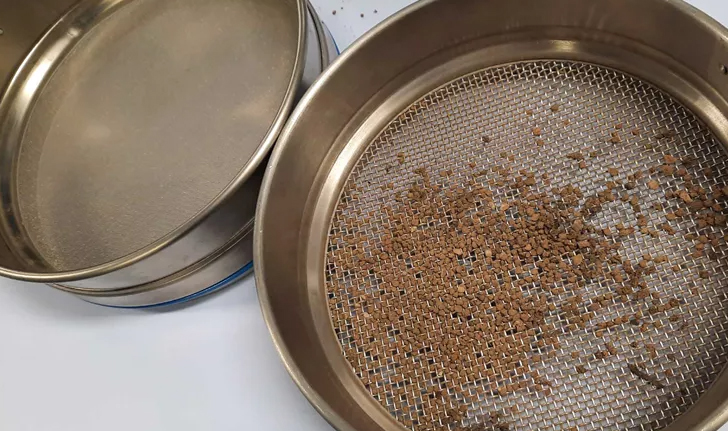
ASTM E11: The ASTM International standard for wire cloth and test sieves used for testing purposes.
ISO 3310: The international standard specifying technical requirements and testing methods for test sieves.
BS 410: The British Standard for test sieves used in particle size analysis.
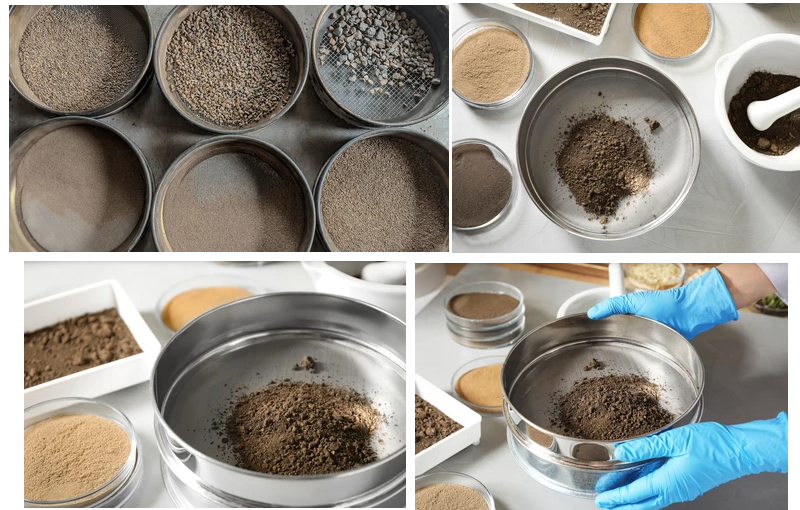
Sample Preparation: The material to be analyzed is properly prepared and weighed.
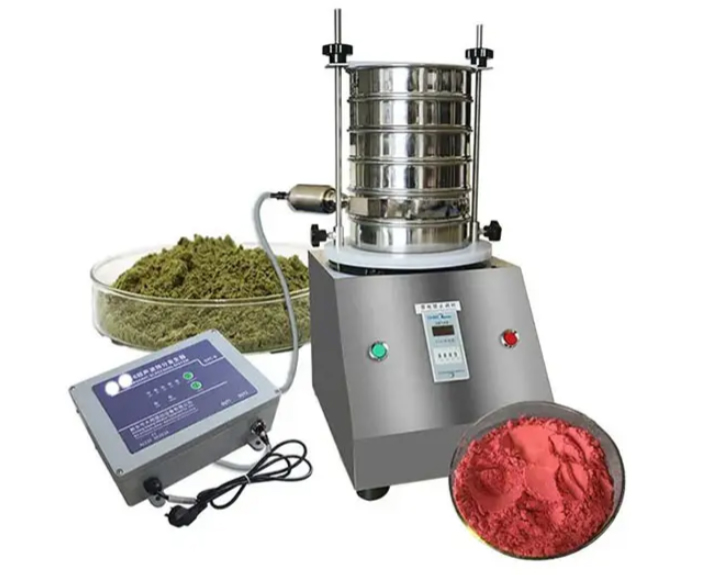
Stacking: The test sieves are arranged in a stack in descending order of mesh size, with the smallest sieve placed at the bottom.
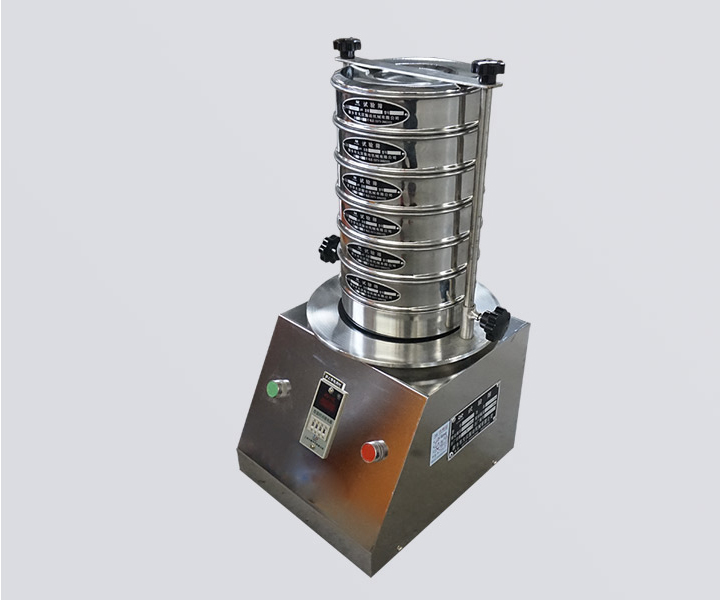
Sieving: The sample is placed onto the top sieve, and the stack is agitated mechanically or manually to separate particles.
Weighing: After sieving, the material retained on each sieve is weighed to determine the percentage of material in each size fraction.
Calculation: The particle size distribution is calculated based on the weight retained on each sieve.
Quality Control: Helps ensure product quality and consistency in industries like pharmaceuticals and food processing.
Process Optimization: Understanding particle size distribution helps optimize manufacturing processes such as mixing, granulation, and packaging.
Material Characterization: Provides vital information about the physical characteristics and behavior of granular materials.
Regulatory Compliance: Ensures compliance with specific particle size standards required in regulated industries.
Standard Test Sieves: Compliant with standard specifications and widely used across general industries.
Wet Wash Test Sieves: Specially designed for wet sieving applications to analyze materials that tend to agglommerate or aren't suitable for dry sieving.
Air Jet Test Sieves: Utilize air flow to assist the sieving process, commonly used for extremely fine powders.
Test sieves are indispensable tools in sieve analysis, offering essential insights into the particle size distribution of bulk materials. By following standardized procedures and regularly maintaining and calibrating sieves, industries can secure accurate test results for quality control and process optimization.
| Material | Particle Size Range (mm) | Recommended Mesh Size | Application |
|---|---|---|---|
| Sand | 0.075–4.75 | 4–200 Mesh | Construction / Aggregates |
| Soil | 0.002–2 | 10–325 Mesh | Geotechnical / Agriculture |
| Gravel / Crushed Stone | 2–75 | 4–10 Mesh | Roads / Concrete |
| Powder | 0.01–1 | 20–500 Mesh | Chemical / Food |
| Cement | 0.01–0.1 | 100–400 Mesh | Construction |
| Flour | 0.02–0.5 | 60–200 Mesh | Food Industry |
| Metal Powder | 0.01–0.5 | 50–400 Mesh | Powder Metallurgy |
| Diameter (mm) | Mesh Size | Aperture (mm) | Frame Material | Standard |
|---|---|---|---|---|
| 75 | 20–400 | 0.038–0.85 | Stainless Steel | ISO / ASTM |
| 100 | 10–500 | 0.025–2.0 | Stainless Steel | ISO / ASTM |
| 200 | 4–500 | 0.025–4.75 | Stainless Steel | ASTM E11 |
| 300 | 4–400 | 0.038–4.75 | Stainless Steel | ISO 3310 |
| 450 | 4–200 | 0.075–4.75 | Stainless Steel | Customized |
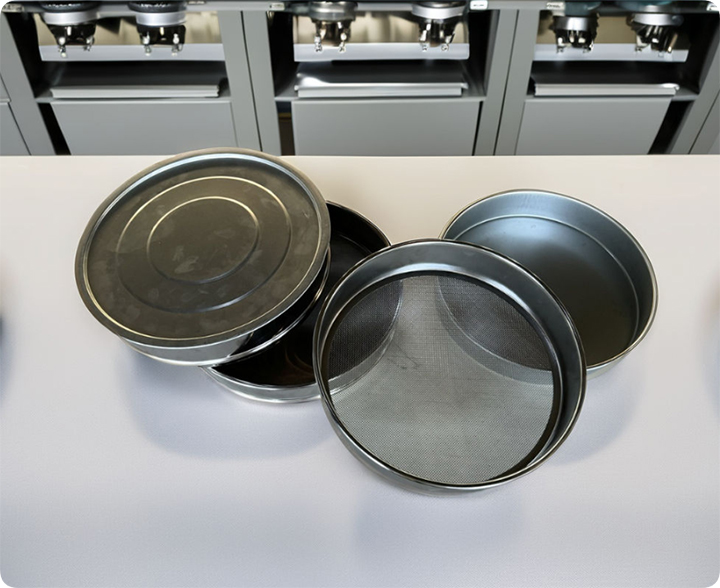
The particle size distribution of silica sand particles ranging from 20 mesh to 200 mesh was analyzed using a 200 mm diameter test sieve. The sample weight was 500 g, and the test was completed in 10 minutes using a laboratory sieve shaker.
| Item | Specification |
| Material | Silica Sand |
| Test Sieve Diameter | 200 mm |
| Mesh Range | 20 Mesh – 200 Mesh |
| Sample Weight | 500 g |
| Testing Equipment | Laboratory Sieve Shaker |
| Testing Time | 10 minutes |
| Purpose | Particle Size Distribution Analysis |
| Sieve Aperture / Mesh Size | Material Retained (%) |
| 20 Mesh | 5% |
| 40 Mesh | 18% |
| 60 Mesh | 32% |
| 100 Mesh | 28% |
| 200 Mesh | 17% |
What mesh sizes are used in sieve analysis?
The mesh size depends on the material being tested. For example, sand typically uses 4 to 200 mesh sieves, while fine powders may require up to 500 mesh.
What standards apply to test sieves?
Common standards include ASTM E11 and ISO 3310, which guarantee structural precision and measurement consistency.
What is the difference between mesh size and aperture size?
Mesh size refers to the number of openings per linear inch, whereas aperture size refers to the actual measurement of the individual opening, typically expressed in millimeters or microns.
Can test sieves be used for wet analysis?
Yes, many test sieves are suitable for both dry and wet sieving, depending on the properties of the material.
How do I select the right test sieve?
Selection depends on the target particle size range, material characteristics, and required testing precision.


Address:China,Yanjin county forest park gate to the west 1000 meters north road.


 Online Chat
 Email
Email