


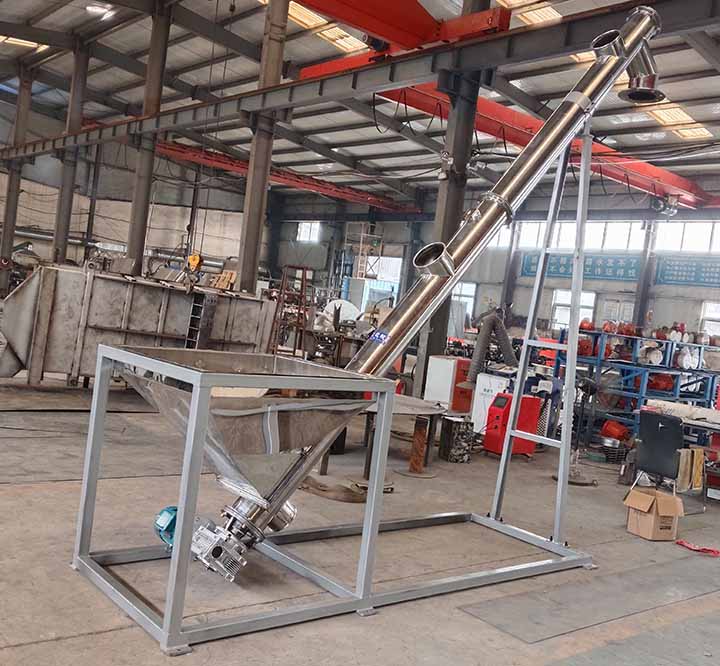
Powder conveyor is a continuous conveying system that transfers dry powders such as milk powder and resin powder from one device to another. After the device is started, the blades rotate, continuously and automatically feeding the material to the discharge port, solving the problems of high labor intensity, low efficiency, and dust dispersion associated with manual handling.
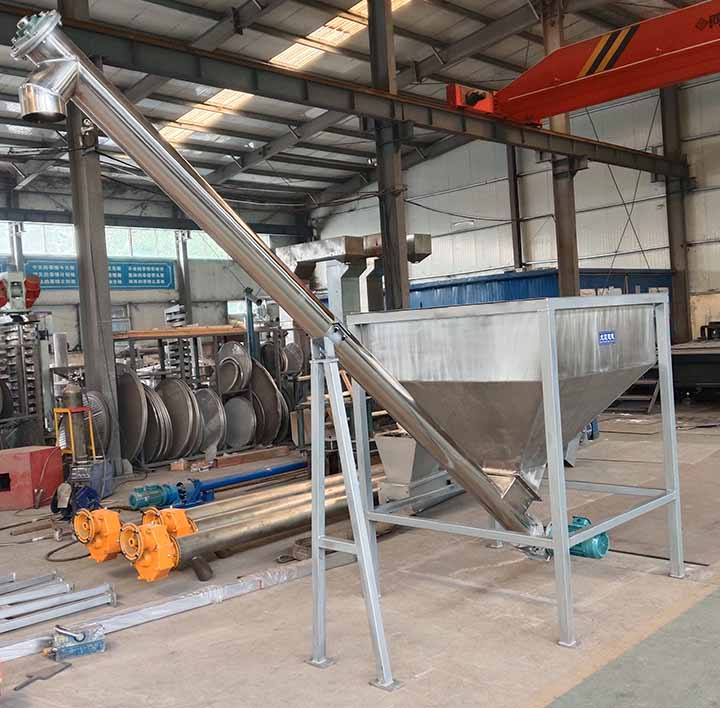
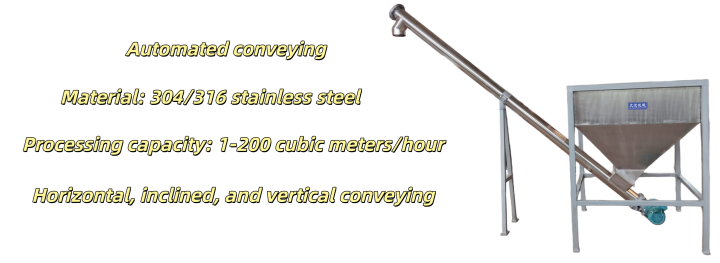
The parts of the device that come into contact with the material are typically made of 304 or 316L stainless steel, with polished inner walls and smooth welds for easy cleaning. The conveyor offers highly customizable conveying capacity, ranging from 30 kg to over 20 tons per hour, adjustable according to material density and conveying distance.
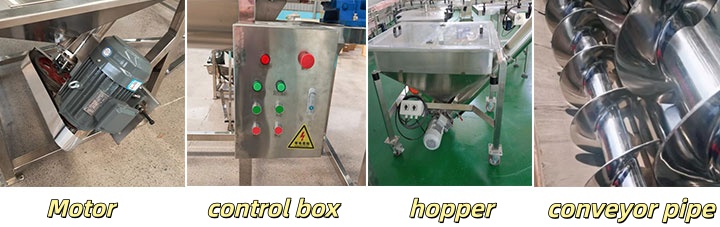
When selecting equipment, the key considerations are whether the machine can operate according to demand and improve conveying efficiency and safety. Below are the detailed advantages of this equipment.
The powder conveyor uses a modular design; the inlet, bends, dust collector, and hopper interface can be assembled according to the workshop layout, eliminating the need to relocate the factory layout for the machine. The machine is made of mirror-polished stainless steel, ensuring zero contamination between batches and making it safe for food or chemical raw material processing. The control system is typically equipped with a PLC touchscreen, allowing for setting start/stop sequences, material level linkage, and alarm prompts. The user interface supports both Chinese and English, allowing new employees to learn quickly. For materials that easily generate dust, such as aluminum powder, creamer powder, and wood flour, the system can be equipped with explosion-proof motors, pressure relief devices, and grounding structures. The design selects appropriate pipe diameters, speeds, and bend radii based on the powder's flowability to avoid material jamming. For example, when conveying cocoa powder, which is prone to bridging, a vibrator is added to the bottom of the hopper to reduce the probability of blockage. Wear-resistant bushings can be thickened or replaced at wear-resistant locations. Long-term maintenance focuses on seals, chains, or bearings, making daily costs relatively easy to predict.
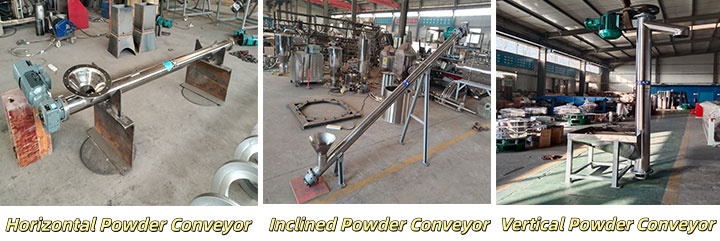
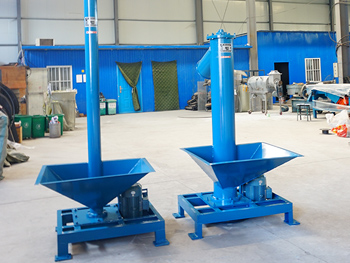
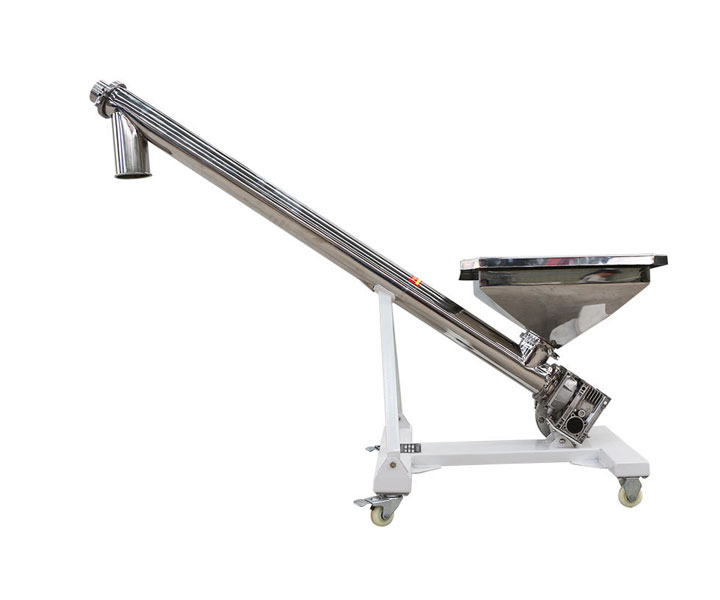
The main differences between different types of Powder Conveyors lie in the conveying direction and applicable working conditions. Horizontal conveyors are suitable for transporting powder from one workstation to adjacent equipment, typically over distances of 1–30 m, with a conveying capacity of 0.5–50 m³/h. They have a simple structure and are commonly found between packaging lines and mixers. Inclined conveyors are used in situations where there are height differences between equipment, such as transporting powder from a ground-level ton bag station to a second-floor silo. The inclination angle is typically controlled at 20°–45° to prevent material from falling back. Vertical conveyors are suitable for short-distance transport of 1–6 m and are ideal for workshops with limited space. When choosing a conveyor, it's not about which type is better, but rather whether it matches the powder's flowability, the conveying distance, and the site layout.
The price of a powder conveyor depends on the conveying method, material, length, conveying capacity, and control configuration. A simpler inclined hopper conveyor generally costs between USD 3,000 and 6,500 and is suitable for transporting materials such as milk powder, seasoning powder, and starch from the ground to packaging machines or silos. If the conveyor length exceeds 5 meters, or if it uses 304/316L stainless steel, has a closed enclosure, material level linkage, and touch screen control, the price is generally between USD 7,000 and 12,500. For production lines with a conveying capacity of 10 tons per hour or more, or requiring multiple units to operate in tandem, the price of the entire system can reach USD 13,000 to 25,000. Providing the material name, conveying height, hourly output, and site photos when requesting a quote will allow you to obtain a more realistic price more quickly.
| Model |
Diameter (mm) |
Pitch (mm) |
Rotating speed (r/min) |
Capacity (m³/h) |
Rotating speed (r/min) |
Capacity (m³/h) |
Rotating speed (r/min) |
Capacity (m³/h) |
Rotating speed (r/min) |
Capacity (m³/h) |
|
| Small | 100 | 100 | 100 | 140 | 2.2 | 112 | 1.7 | 90 | 1.4 | 71 | 1.1 |
| 125 | 125 | 125 | 125 | 3.8 | 100 | 3 | 80 | 2.4 | 63 | 1.9 | |
| 160 | 160 | 160 | 112 | 7.1 | 90 | 5.7 | 71 | 4.5 | 56 | 3.6 | |
| 200 | 200 | 200 | 100 | 12.4 | 80 | 9.9 | 63 | 7.8 | 50 | 6.2 | |
| Small | 250 | 250 | 250 | 90 | 21.8 | 71 | 17.2 | 56 | 13.6 | 45 | 10.9 |
| 315 | 315 | 315 | 80 | 38.8 | 63 | 30.5 | 50 | 24.2 | 40 | 13.4 | |
| 400 | 400 | 355 | 71 | 62.5 | 56 | 49.3 | 45 | 38.6 | 36 | 31.7 | |
| Large | 500 | 500 | 400 | 63 | 97.7 | 50 | 77.6 | 40 | 62 | 32 | 49.6 |
| 630 | 630 | 450 | 50 | 138.5 | 40 | 110.8 | 32 | 88.6 | 25 | 69.3 | |
| 800 | 800 | 500 | 40 | 198.5 | 32 | 158.8 | 25 | 124.1 | 20 | 99.3 | |
Powder conveyors are commonly used in food, plastics, building materials, cosmetics, lithium battery materials, and feed mills. In food workshops, milk powder and white sugar are conveyed from the unpacking station to the mixing tank, preventing a layer of fine powder from forming on the workshop floor. In building material production, cement, quartz powder, and mineral powder can be continuously fed into the metering system. In the plastics industry, PVC resin powder and calcium carbonate are fed into high-speed mixers through closed pipelines, reducing errors from manual feeding. Applicable materials include fine powders with good flowability, as well as powders with higher density and abrasiveness. For materials prone to moisture absorption and clumping, the powder conveyor system can be equipped with a drying air inlet or insulation structure.
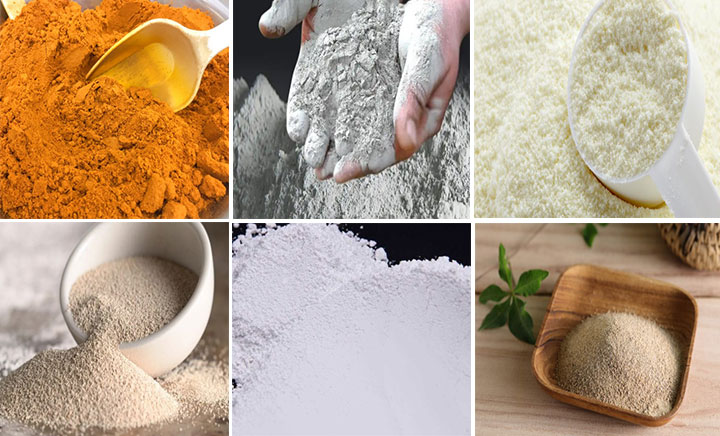
A Singaporean condiment factory previously used a manual feeding method, pouring 25kg bags of garlic powder one by one into the mixer. After production began, two workers had to constantly move, unpack, and empty the bags, causing dust to escape and requiring cleanup. Later, the factory installed a powder conveyor system. After workers poured the garlic powder into the machine's hopper, the rotating screw steadily conveyed the material at a 30-degree angle to a second-floor temporary storage hopper. The hopper is equipped with a level switch that automatically replenishes the mixer when it is low on material, and the system stops operating once the set height is reached.
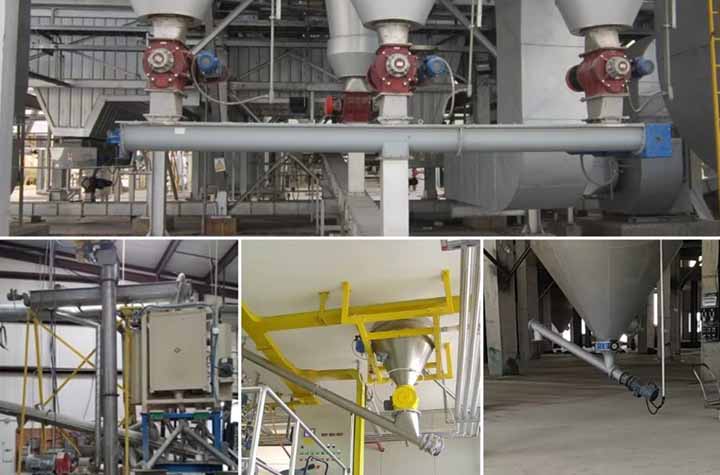
After the equipment was put into use, there was almost no scattered garlic powder in the workshop, and workers no longer needed to repeatedly carry bags up and down stairs. Previously, the mixer often stopped due to waiting for material; now, upstream and downstream equipment can work continuously. Six months later, the factory added a new production line, expanding capacity by simply adding a section of curved pipe and a distribution valve to the existing system, without significantly altering the original layout.
Different powder conveyor manufacturers have different strengths in their equipment manufacturing. For example, some manufacturers specialize in vacuum conveyors suitable for ultrafine powders. Others, like Dahan Machinery, specialize in custom-made powder conveyors. Still others have advantages in the materials used in powder conveyor manufacturing. When purchasing, it's advisable to first understand your material name, conveying capacity, installation height, and workshop space, then communicate your requirements to engineers for specific selection of a suitable powder conveying system.
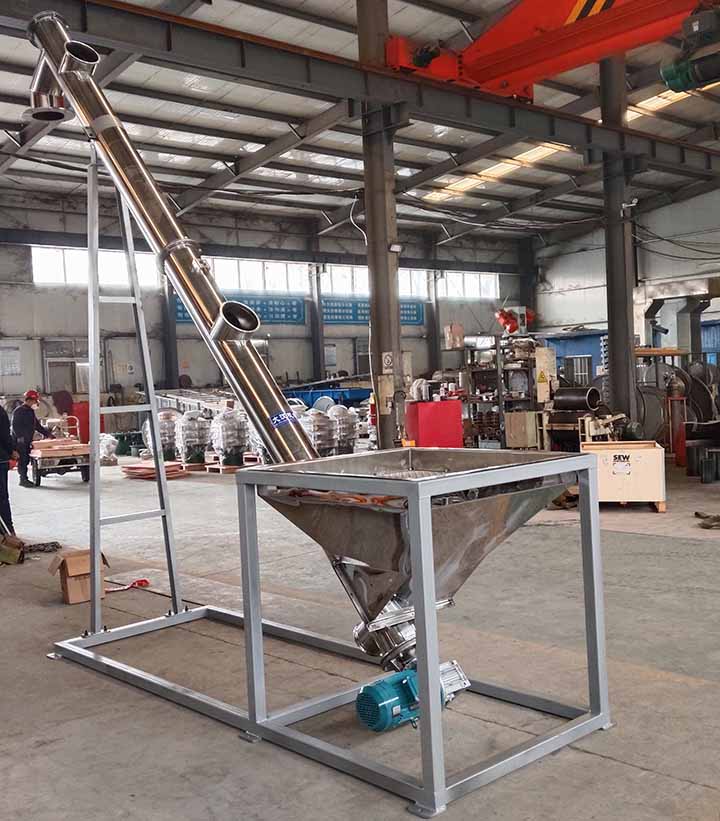
Powder conveyors combine high-quality hygienic materials, intelligent automated control systems, and dustproof modular design. They not only transport powder but also protect workers, reduce maintenance costs, and ensure product quality. They solve problems such as dust spillage, manual handling, discontinuous feeding, and limited workshop layout. Powder conveyors not only have a large conveying capacity but are also relatively inexpensive, making them suitable for workshops, factories, and production lines.


Address:China,Yanjin county forest park gate to the west 1000 meters north road.


 Online Chat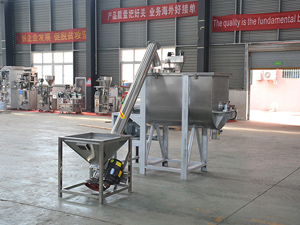
 Email
Email