


Particle Size Test in Pharmaceuticals is an important quality control process used to evaluate powder fineness, granule distribution, and formulation consistency. In pharmaceutical production, stable particle size can affect mixing uniformity, dissolution rate, tablet hardness, and final product quality. This customer case introduces how a pharmaceutical manufacturer used DAHAN laboratory Test Sieve equipment for daily particle size testing.
The customer is a pharmaceutical manufacturer engaged in the production of tablets, capsules, and powder formulations. During raw material preparation and final product inspection, particle size testing was required to maintain production standards and internal quality control procedures.
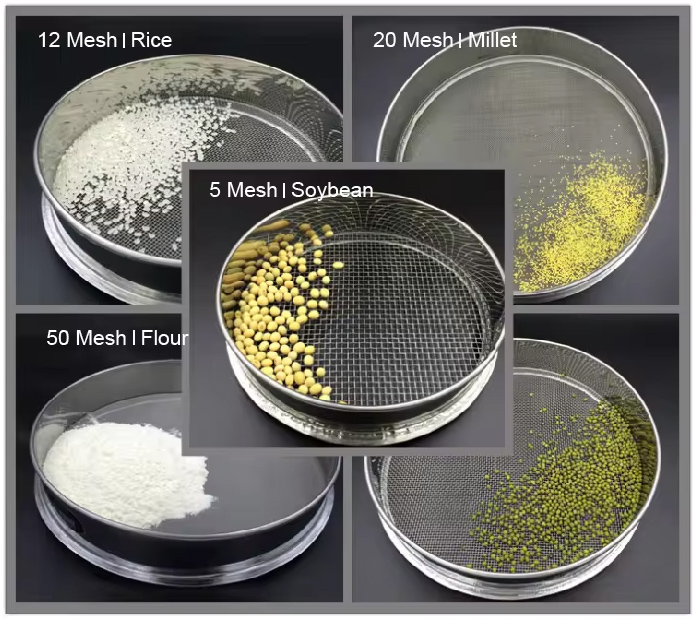
The materials tested by the customer mainly included pharmaceutical powder, excipients, granules, and blended materials. Different batches required regular sieve analysis to verify particle size consistency.
The particle size distribution of drug particles has an important impact on the bioavailability and efficacy of drugs. Customers require accurate and reliable measurement of the particle size characteristics of pharmaceutical particles for quality control, process optimization and product improvement. They face the following challenges:
Wide range of particle sizes: Different pharmaceutical dosage forms have different particle size requirements, ranging from micron to millimeter particle sizes. The customer needed a test method that could accurately measure particles across a wide range of particle sizes.
Precision and repeatability: Particle size testing requires high precision and repeatability to ensure accuracy and consistency of test results.
Speed and efficiency: Customers want to be able to complete particle size testing of a large number of samples in a short time to improve production efficiency and laboratory work efficiency.
To meet customer needs, pharmaceutical companies have adopted the following solutions:
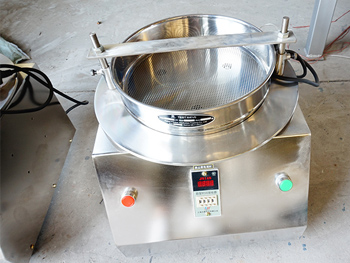
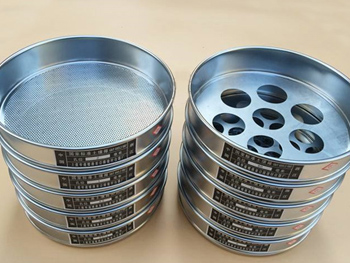
Test screening equipment:The customer used high-precision test screening equipment, such as a rotary test sieve machine. This equipment can separate and classify particles by passing samples through sieves of different particle sizes in a controlled vibration manner.
Multi-sieve mesh combination: Customers choose appropriate mesh size combinations based on different particle requirements. By using different sized mesh openings, they can analyze and control particles in different size ranges.
Screening speed and efficiency: In order to improve screening efficiency, the customer reasonably arranged the sample processing sequence and adopted an efficient vibration screening method. They also conduct necessary operational training to ensure that operators can operate the equipment proficiently.
Recommended Equipment: According to the customer’s material characteristics and laboratory capacity requirements, DAHAN recommended a standard laboratory test sieve machine.
| Parameter Name | Parameter Value |
|---|---|
| Machine Type | Test Sieve Shaker |
| Sieve Diameter | 200 mm |
| Material | Stainless Steel |
| Mesh Size Range | 20 mesh to 500 mesh |
| Drive Type | Vibratory Motor |
| Application | Powder and granule particle size analysis |
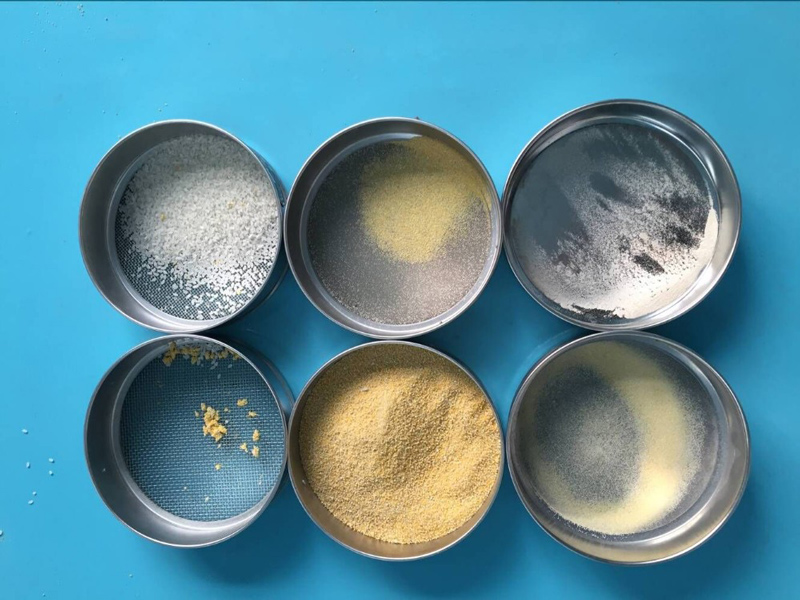
Through particle size testing, drug manufacturers can obtain important information about the particle size of drug products. They can evaluate whether a product meets the required particle size range, optimize process parameters to improve product performance, and ensure product consistency and quality. In addition, particle size analysis helps them meet pharmacopeial standards and regulatory requirements to ensure product safety and effectiveness.
Particle size plays an important role in pharmaceutical production because it may influence powder flowability, mixing uniformity, tablet compression, capsule filling, and dissolution speed. Materials with consistent particle size are easier to process and can help improve production stability. Regular particle size testing is commonly used as part of internal quality control procedures.
Particle Size Test in Pharmaceuticals remains an essential process for powder quality evaluation and production control. Through this customer case, the pharmaceutical manufacturer improved testing efficiency and particle size consistency by using DAHAN test sieve equipment. For pharmaceutical powder screening, Pharmaceutical Vibro Sifter and regular sieve analysis can provide practical support for stable production.
Why is particle size test important in pharmaceuticals?
Particle size may affect powder flowability, mixing uniformity, dissolution rate, and product consistency.
What equipment is used for pharmaceutical particle size testing?
Laboratory test sieves and sieve shaker machines are commonly used.
Can very fine powder be tested?
Yes. Fine powders can be tested by selecting suitable mesh sizes and proper screening time.
Is stainless steel material suitable for pharmaceutical use?
Yes. Stainless steel is commonly used because it is durable and easier to clean.
Address:China,Yanjin county forest park gate to the west 1000 meters north road.


 Online Chat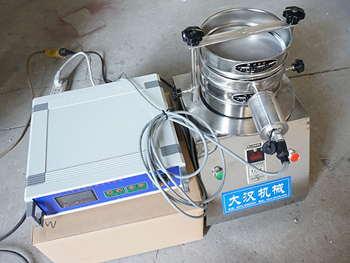
 Email
Email