


How much does a vibrating screen cost? This is almost always the first question every purchasing manager asks when dealing with this type of equipment. As a core screening device widely used in mining, metallurgy, chemical, food, and pharmaceutical industries, there is no single standard answer to the price of a vibrating screen.
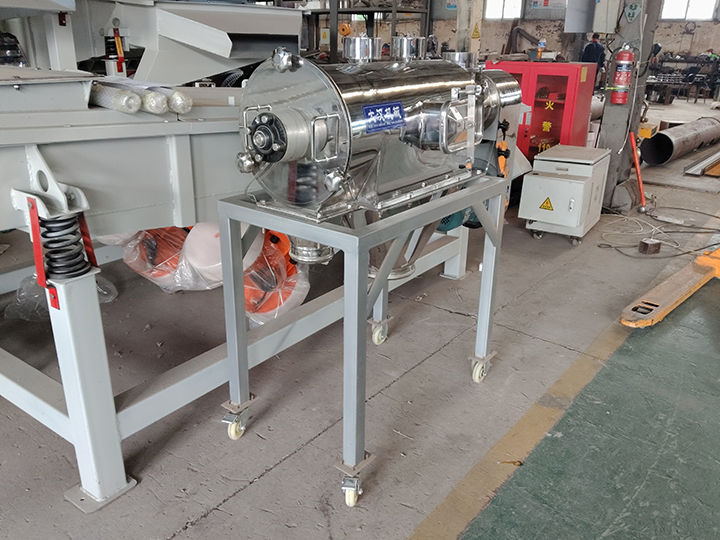
On the market, a small laboratory sieve may start at just $270, while a large mining screening system can cost tens of thousands or even hundreds of thousands of dollars. This huge price difference stems from variations in equipment type, materials, specifications, and degree of customization.
In the current industry market, the price ranges for different types of vibrating screens are roughly as follows. It should be noted that the prices below are typically reference prices for basic equipment; actual transaction prices may vary depending on specific configurations.
| Equipment Type | Common Models | Market Price Range (USD) | Core Features and Applications |
|---|---|---|---|
| Laboratory Sieving Machine | 200mm-500mm | $483 - $2070 | Small, precision for laboratory R&D and quality control |
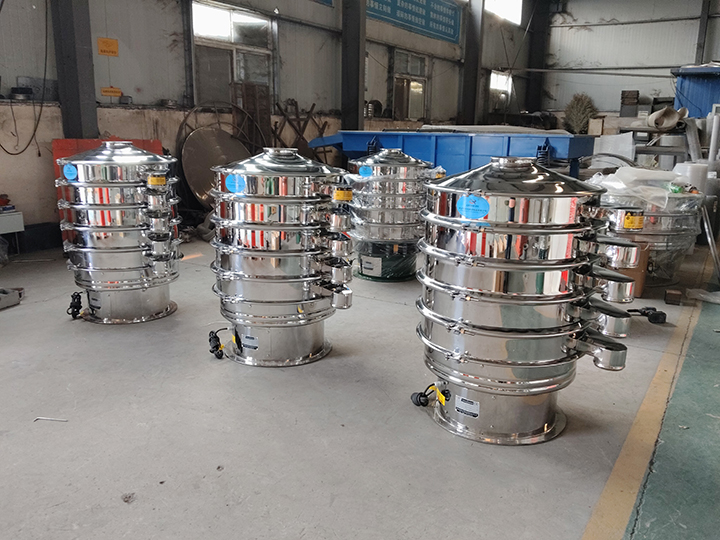
| Rotary Vibrating Screen | 600mm-1500mm | $414 - $3450 | Widely used for powder and granule classification, high cost-performance ratio |
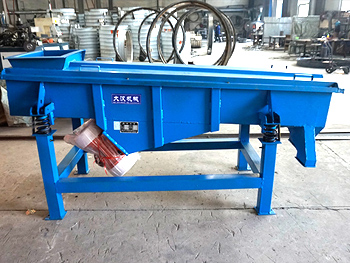
| Linear Vibrating Screen | 520-2040 | $690 - $2760 | Screening of dry materials such as sand and fertilizer, large processing capacity |
| Circular Vibrating Screen | YK1536, etc. | $1380 - $6900 | Classification of mining stone materials, robust structure, suitable for heavy-duty working conditions |
| Ultrasonic Vibrating Screen | 600mm-1500mm | $497 - $5520 | Solves screen clogging of ultrafine powders like pharmaceuticals and metal powders |
| Large Mining Screen | 3.6m × 7.3m and above | $6900 - $38640 | Primary screening for coal and ore, processing capacity over 300 t/h |
Simply looking at the listed price is far from sufficient; behind the price lies the actual manufacturing cost. The main factors leading to price differences include:
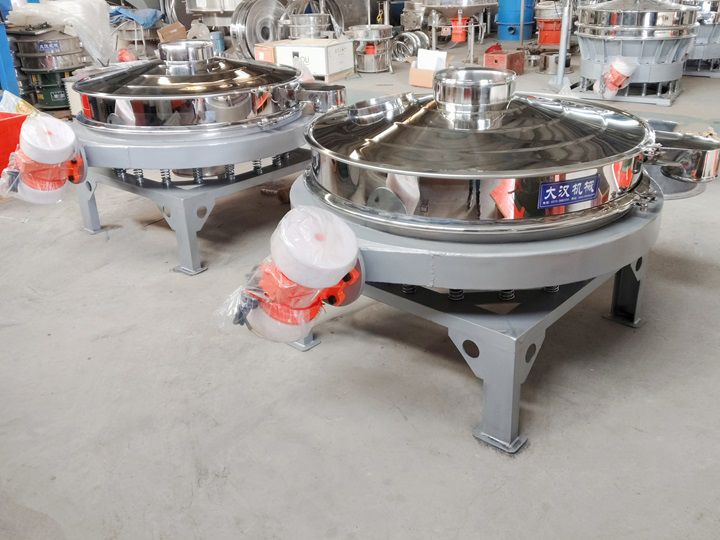
Carbon steel is relatively inexpensive and suitable for industries with low corrosion resistance requirements. 304 stainless steel is about 30%-50% more expensive than carbon steel, but has strong corrosion resistance. 316L stainless steel is even more expensive and is used in environments with strong acids, alkalis, or extremely high hygiene requirements. Even among stainless steels, differences in nickel content and pipe wall thickness determine the durability and price of the equipment.
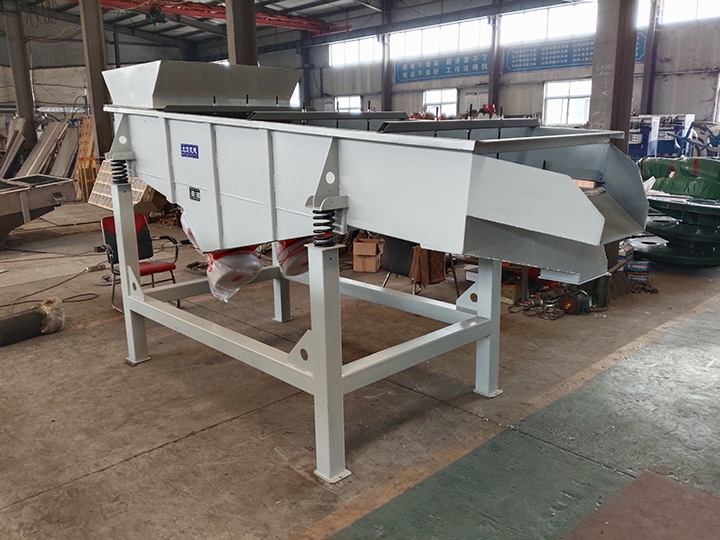
Ordinary Screening: Rotary vibrating screens and linear vibrating screens have relatively simple structures and low costs.
Fine Screening: Ultrasonic vibrating screens add ultrasonic generators and transducers, costing approximately $276-690 per unit. The technological cost typically results in a selling price 1.5-3 times that of ordinary screens.
Heavy-duty Screening: Such as the YK circular vibrating screen, which uses a thick steel plate box-type vibrator, requiring a large amount of material, making its cost significantly higher than that of light-duty screens.
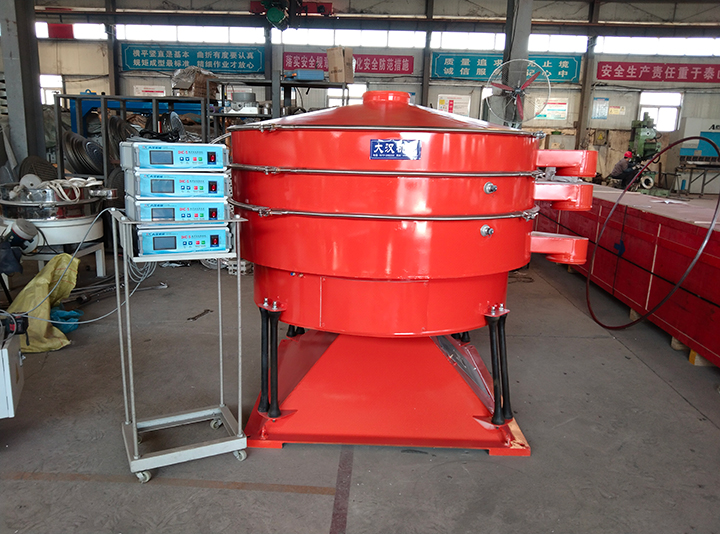
The larger the equipment, the higher the price. For example, a small household linear vibrating screen with an electric motor costs approximately $1076, while a large mining linear vibrating screen with an area of 26 square meters or more can reach $78,660. The change in processing capacity, from a few hundred kilograms to thousands of tons, directly relates to the power configuration and physical dimensions of the equipment.

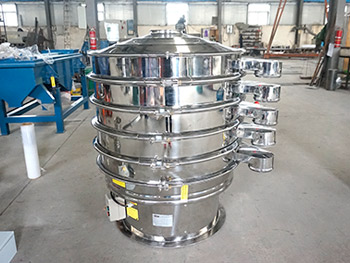
A single-layer screen can only separate two types of materials, a double-layer screen can separate three, and a triple-layer screen can separate four. Each additional layer not only increases the cost of the screen but also changes the structural strength requirements of the machine, typically increasing the price by 10%-20%.
Explosion-proof motors, dual-motor drive structures, etc., all increase costs. Adding a raised base, casters, or observation windows can increase the price by 15%-30% or more.
Budget Distribution Across Different Industries
| Industry | Recommended commonly used models | Budget Reference Range (USD) | Key Requirements and Avoidance Points |
|---|---|---|---|
| Food japanese version | 304 Stainless Steel Vibrating Screen, Ultrasonic Screen | $828 - $8280 | Stainless steel must be used and the inner wall must be polished. |
| Chemical and coating | Corrosion-Resistant Vibrating Screen, Linear Screen | $1380 - $11040 | Pay attention to sealing and explosion-proof configuration. For handling viscous liquids, consider a high-flow-rate linear screen. |
| Mining and sand | Circular Vibrating Screen, Heavy-Duty Linear Screen | From $6900 | Side plate thickness, vibrator life, and welding process are key. Don't just look at the price; verify if the vibration force meets the requirements. |
| Pottery and metallurgy | High-Alumina Lined Brick Screen, Ultrasonic Screen | $2070 - $13800 | Ease of screen replacement and adequacy of wear-resistant treatment are important. If the material has high hardness, confirm whether the screen frame has a protective layer. |
In summary, small or general-purpose equipment ranges from $400 to $2,800; mainstream industrial-grade stainless steel equipment ranges from $2,800 to $11,000; and large, heavy-duty, or high-precision custom equipment often exceeds $11,000, even reaching as high as $78,000. Simply comparing the total price is a rudimentary approach when purchasing. Only by comprehensively evaluating equipment performance, materials, production capacity requirements, and subsequent maintenance costs can the most cost-effective solution be found.


Address:China,Yanjin county forest park gate to the west 1000 meters north road.


 Online Chat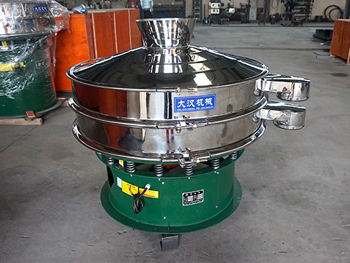
 Email
Email