


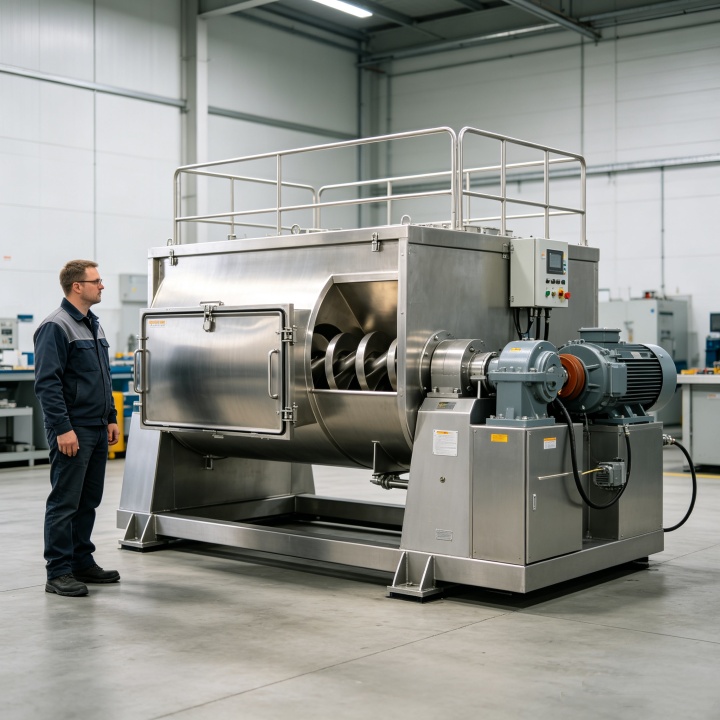
The selection result of a Double Shaft Paddle Mixer often becomes clear only after the equipment arrives at the plant. Material is repeatedly thrown up and crossed by two counter-rotating paddle shafts inside the drum, forming fast convective mixing.
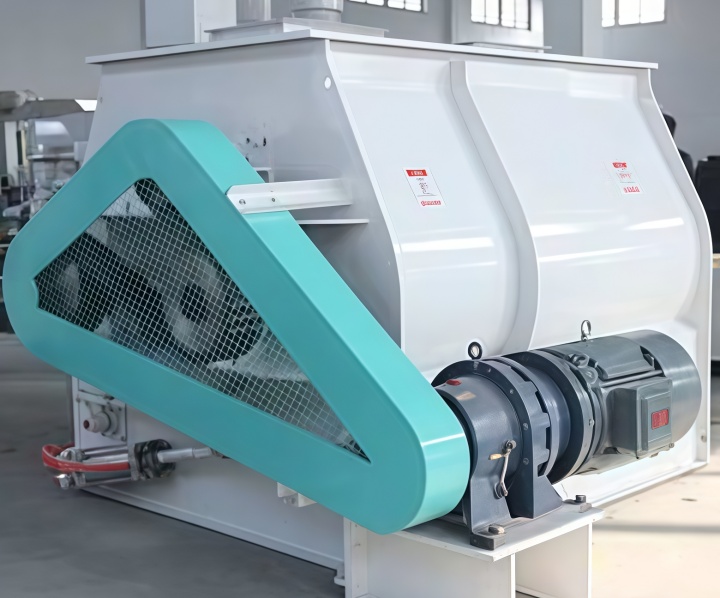
Take the Ottevanger DPMA series as an example. Its mixing cycle ranges from 30 to 60 seconds, mixing precision reaches 1 in 100,000, coefficient of variation is below 5, single-unit volume covers 500 to 12,000 liters, and drive power ranges from 7.5 to 110 kW.
However, selection is not completed by comparing parameter tables. Any mismatch in material characteristics, throughput rhythm, component materials, or compliance requirements can lead to insufficient uniformity or premature equipment wear. How to Choose Double Shaft Paddle Mixer, the following five dimensions deserve individual verification.
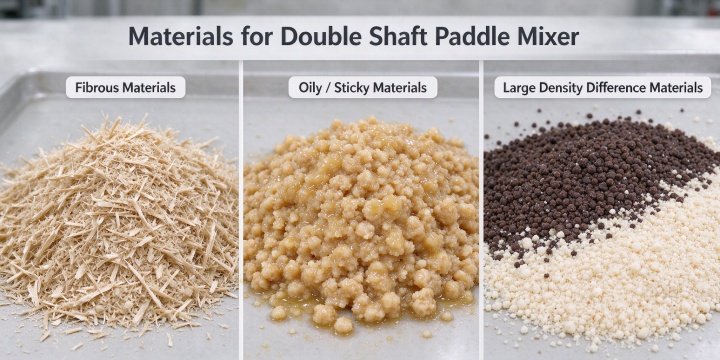
Material characteristics are the primary basis when you choose double shaft paddle mixer. Materials containing fibers or prone to tangling require high-speed choppers at 1,000 to 2,000 rpm, and fiber dispersion uniformity can reach above 95. Highly adhesive or oil-containing materials require polishing of the inner drum wall, with surface roughness controlled within 0.8 micrometers, plus a scraper device.
Ottevanger equipment surface treatment precision can reach 0.3 micrometers, suitable for hygiene requirements in food and pharmaceutical scenarios. Materials with large density differences require guide plates, otherwise heavy particles settle and light particles float, and composition deviation can exceed 2.
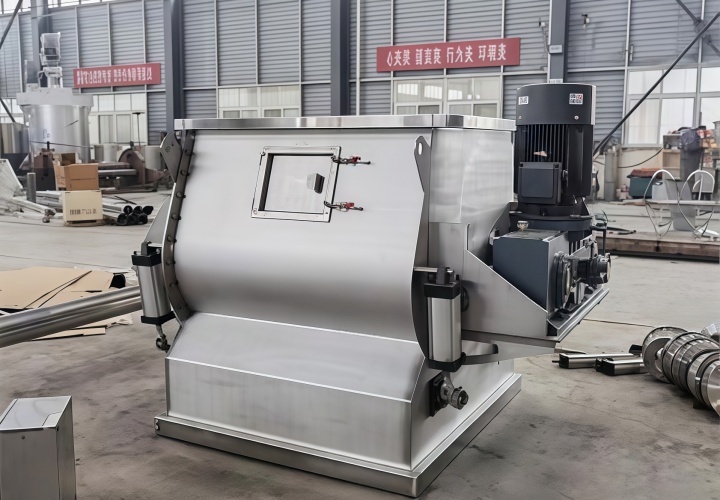
Throughput matching affects the specifications and operation mode when you choose double shaft paddle mixer. Batch production handles single batches from 0.5 to 20 cubic meters, and a 15 percent throughput margin is suggested. The Ottevanger DPMA series has a lower loading limit of only 25 percent of nominal volume, offering flexibility for small-batch multi-product scenarios.
Continuous production handles 10 to 50 tons per hour, and the inlet diameter should not be less than 1.2 times the conveyor pipe diameter. For loading coefficient, the conventional range for a double shaft paddle mixer is 0.4 to 0.6. If single-batch output is estimated by total drum volume, actual effective throughput will be noticeably lower.
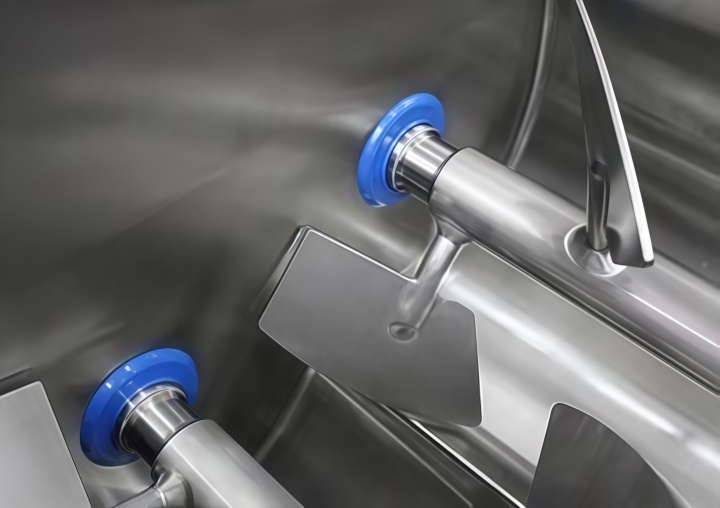
Core components relate to the service cycle and maintenance expense when you choose double shaft paddle mixer. For abrasive materials, high-manganese steel paddles with thickness not less than 10 mm are suggested. Ottevanger offers Hardox replaceable paddle options for maintenance under abrasive conditions. Food and pharmaceutical scenarios require 304 or 316L stainless steel. For sealing, double mechanical seals are a more reliable choice in dusty environments.
There is an easily overlooked compliance coordination issue in ATEX requirements. According to EN ISO 80079-36, ATEX compliance for gear motor units and mechanical seals is covered by the manufacturer's EU type examination and declaration. If a seal supplier separately issues an Ex d compliance statement, but the overall equipment compliance assessment only covers Ex t protection, the equipment may be deemed incomplete in compliance during final acceptance. Purchasers need to confirm that the equipment category and temperature class in the seal's EU type examination certificate match the explosion-proof nameplate of the entire machine, rather than only checking the letter combination on the explosion-proof marking.
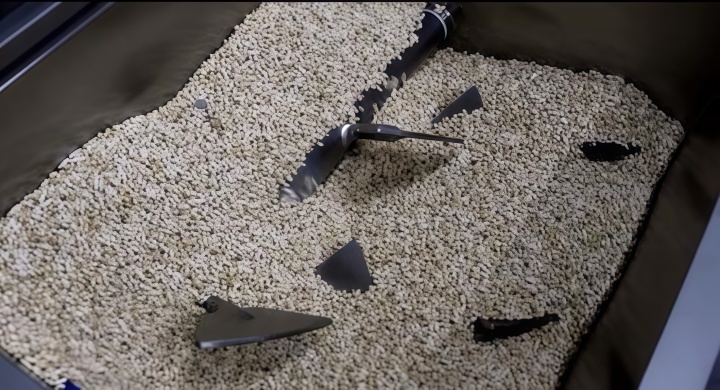
Uniformity is the core performance indicator when you choose double shaft paddle mixer, usually measured by coefficient of variation. Ottevanger's measured data is CV below 5. Famsun's SLHS series achieves CV not exceeding 5 within 45 to 60 seconds, with test methods based on the methyl violet method in GB/T 5918, and test materials and methods also referring to GB/T 32536.
During selection, it is suggested to require the supplier to run at least three batches of tests with your actual material, taking ten sampling points per batch. If the supplier cannot provide test reports for the same type of material or on-site trial arrangements, the credibility of nominal parameters needs to be discounted.
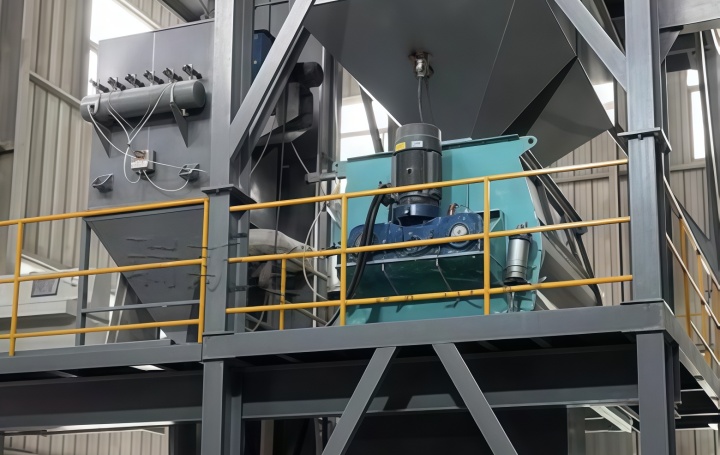
In actual selection, when you choose double shaft paddle mixer, you often face multiple options. The following comparison table uses three typical scenarios to help narrow the range quickly.
In the above parameter ranges, the loading coefficient for those who choose double shaft paddle mixer refers to the lower fill rate of 25 for the Ottevanger DPMA series and the technical specifications of the Famsun SLHS series. The uniformity target CV refers to Famsun's public test data of CV not exceeding 5 within 45 to 60 seconds and the measurement method in GB/T 5918. Specific projects still require actual material testing. The value of this table is to help you identify which parameters are hard constraints determined by the scenario and which are flexible items open to negotiation.
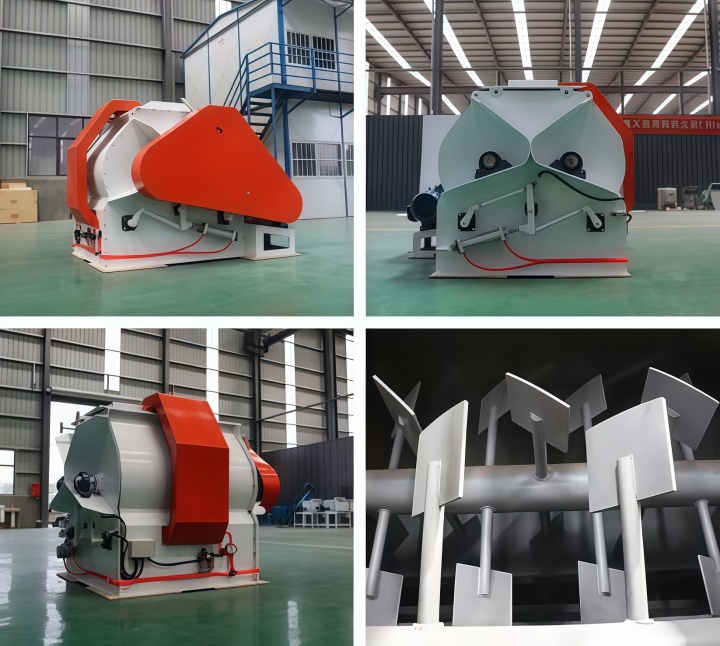
Compliance in food and pharmaceutical scenarios when you choose double shaft paddle mixer is often not a matter of missing standards, but a matter of coordination between standards. Food-grade scenarios require equipment to meet Hazard Analysis and Critical Control Point system requirements. Pharmaceutical-grade scenarios require Good Manufacturing Practice requirements.
Before signing the purchase contract, it is suggested to confirm item by item: spare parts list and replacement cycle quotation, engineer on-site response time, whether operation training is included in the equipment payment, and spare parts supply period after the warranty expires. Some purchasers reported that after the equipment arrived, they found the seal was a non-standard custom part, and a single replacement wait exceeded three weeks, which led to production line shutdown. This type of risk can be avoided at the contract stage by requiring the supplier to provide spare parts inventory proof.
A: Yes. Liquid addition is usually no more than 5 to 10 percent and requires a spray device. For higher liquid ratios, a ribbon mixer or vacuum mixing equipment is suggested. Ottevanger and ABRAZIV models for those who choose double shaft paddle mixer both offer liquid addition options, and the latter's nozzle system supports a higher liquid ratio.
A: Low-speed paddle designs generally run with relatively low noise and low dust generation. If noise exceeds 85 dB, first check the radial gap between paddle and drum wall. When this gap exceeds 1.5 times the design value, not only does mixing efficiency drop, but impact noise also rises noticeably. One design feature of the Ottevanger DPMA series is low noise and low dust generation.
A: Usually 1.5 to 2 meters of operating space above the drum is needed, depending on the feeding method. Ottevanger's wide inspection door design facilitates cleaning and maintenance. Before selection, confirm whether the plant clearance height meets the door opening requirement.
A: Yes, but high-temperature seals and bearings are required, and material temperature generally should not exceed 150 degrees Celsius. Above this range, a cooling jacket or special structure is needed.
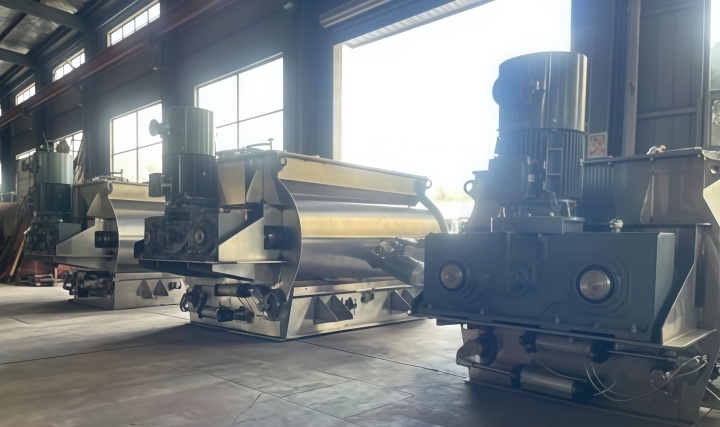
The selection of a double shaft paddle mixer is essentially a matching problem, not a matter of higher parameters being better. Material characteristics influence internal structure, throughput rhythm influences specification mode, component materials influence service cycle, uniformity and residual rate influence product quality, and compliance and after-sales influence continuous operation stability.
If you are preparing to purchase equipment for premix production, the easily overlooked inquiry parameter is not volume, but changeover frequency. In scenarios with more than two changeovers per day, a difference of one thousandth in residual rate can accumulate to over 100 hours of extra cleaning time in a year. Before you choose double shaft paddle mixer, including changeover frequency and cleaning time expense in the inquiry comparison table reflects actual operating expense better than comparing equipment quotations alone.


Address:China,Yanjin county forest park gate to the west 1000 meters north road.


 Online Chat

 Email