


Choosing the right Mining Vibrating Screen is not simply a matter of selecting a larger screen or a higher-capacity model. The correct choice depends on the material being processed, feed size, required capacity, separation size, moisture, abrasiveness, and the number of products required.
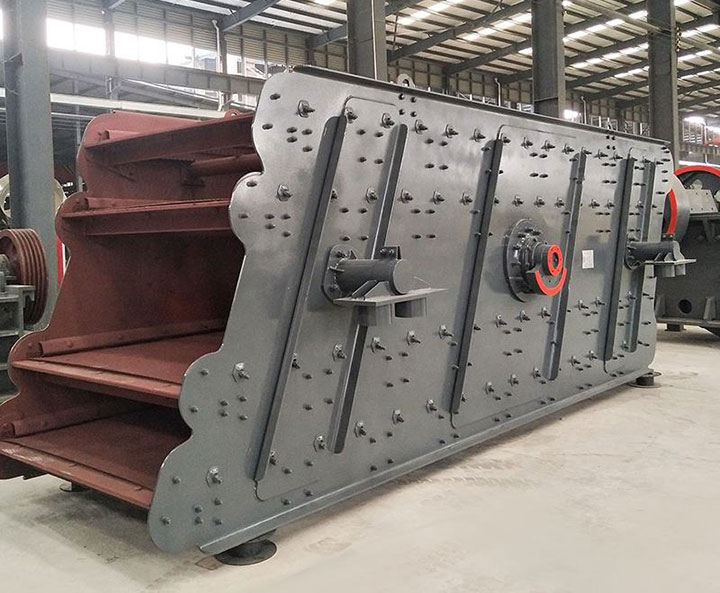
A screen that works well for dry crushed stone may not perform the same way with wet ore or sticky material. For this reason, screen type, screening area, screen surface, deck configuration, and operating conditions should be considered together rather than selected separately. If you want to choose the right Mining Vibrating Screen for your application, you need to evaluate these factors together before selecting a specific model. This guide focuses on the practical factors that affect Mining Vibrating Screen selection, helping you narrow down the suitable equipment before requesting a quotation.
In short: start with the material and screening requirements, then match the screen structure and configuration to the actual working conditions.
The material should be the first point to consider when selecting a mining vibrating screen. Two materials with the same required output may require very different screen configurations because their particle size, moisture, density, and abrasiveness can affect how the material moves across the screen.
Once the material characteristics are clear, define what the screen must produce. Required capacity and separation size are two of the most important inputs for choosing a suitable mining vibrating screen. A machine rated for a certain capacity is not automatically suitable for every screening application at that capacity.
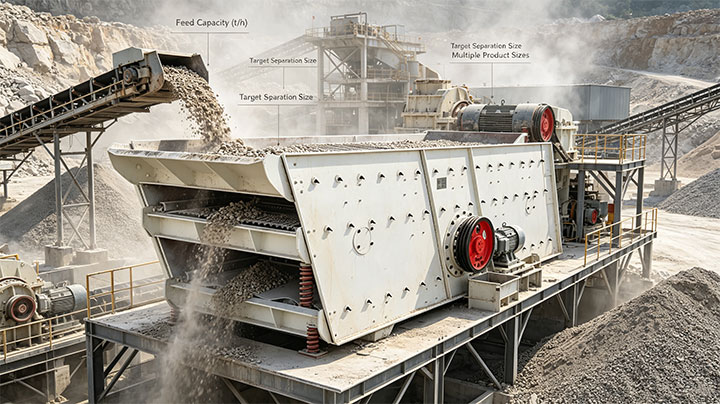
Required Capacity: Give the expected feed rate in t/h rather than only describing the operation as low, medium, or high capacity. The actual feed rate, together with material properties and feed size, determines how much screening area is needed and how heavily the screen will be loaded.
Target Separation Size: Specify the cut size you need to achieve, such as separating material above and below a particular particle size. The finer the separation requirement, the more attention should be given to the screen opening, available screening area, and material residence time on the deck.
Number of Product Sizes: If the process requires only oversize and undersize separation, a single screening deck may be sufficient. When several finished sizes are required from the same feed, multiple decks can separate the material into different size fractions in one screening stage.
For a practical selection, the manufacturer should know the required capacity, maximum feed size, target separation size, and number of final products before recommending a screen model.
There is no single screen type that is suitable for every mining application. The choice should follow the way the material needs to move, separate, and discharge. For mining operations, inclined, linear, horizontal, and heavy-duty vibrating screens each have their own suitable working conditions.
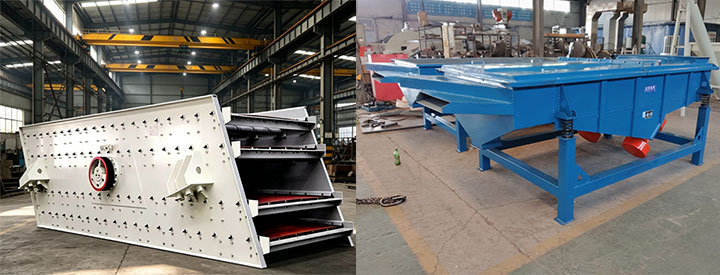
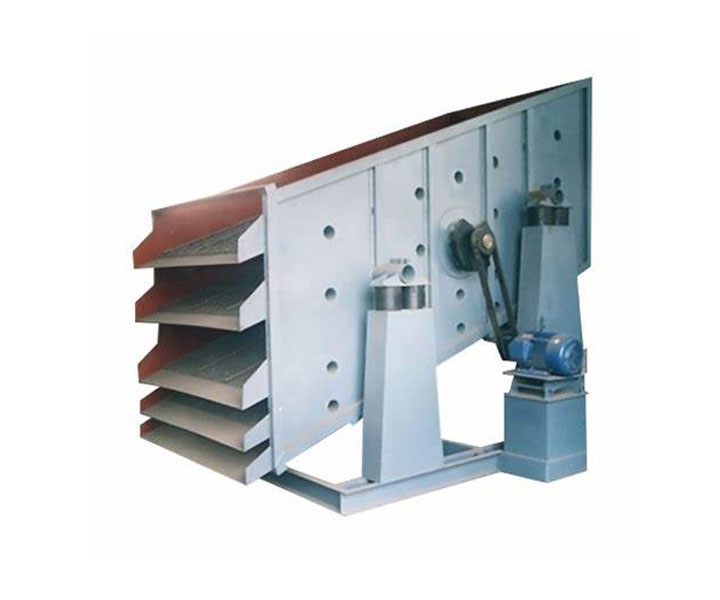
Inclined Vibrating Screen
An inclined screen uses a sloped screening surface to help material travel from the feed end toward the discharge end. It is a practical choice for many conventional crushing and screening applications, particularly when the feed contains coarse and abrasive material.
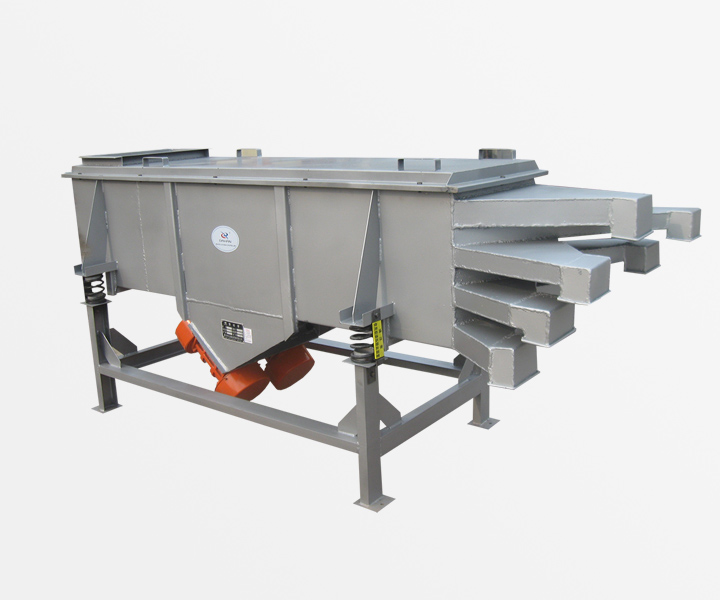
Linear Vibrating Screen
A linear vibrating screen moves material forward along the screening surface and is suitable when controlled conveying and separation are required. It can be used for different screening duties depending on the material, feed rate, and required cut size.
Horizontal Vibrating Screen
A horizontal configuration keeps the screening surface level while using vibration to move and separate the material. It can be considered when the installation layout or the required material movement makes an inclined screen less suitable.
Heavy-Duty Screen for Coarse Feed
When the feed contains large, heavy, or highly abrasive particles, screen construction becomes as important as the screening motion. A heavy-duty configuration is better suited to applications where impact loads and continuous abrasive service place greater demands on the screen box, support structure, and screen media.
The right choice is therefore not based on the screen name alone. Material characteristics, feed size, capacity, separation requirements, and operating conditions should be considered together when selecting the screen type.
After choosing a suitable screen type, the next step is to determine the screening area and deck configuration. Screen size should be matched to the actual material flow rather than selected only by the machine's overall dimensions.
Screen Width and Length
Screen width affects how much material can pass through the screening surface at one time, while screen length provides more distance for separation. A wider or longer screen is not always better; the useful screening area should match the feed rate, material properties, and required separation.
Single-Deck or Multi-Deck?
A single-deck screen is suitable when the process needs one main separation. If several particle sizes need to be recovered from the same feed, multiple decks can perform successive separations within one machine and reduce the need for separate screening stages.
Consider the Feed Distribution
The material should be distributed across the available screening surface instead of entering heavily on one side. Uneven feeding can overload part of the deck and leave other areas underused, reducing the effective screening capacity even when the machine itself is correctly sized.
For final sizing, the manufacturer should evaluate the required capacity, feed size, cut size, material characteristics, and number of decks together. This gives a more reliable basis for selecting the screen dimensions than capacity alone.
The screen surface is the part that directly controls which particles pass through and which remain on the deck. Its opening size, material, and open area should therefore match the feed characteristics and the required separation size.
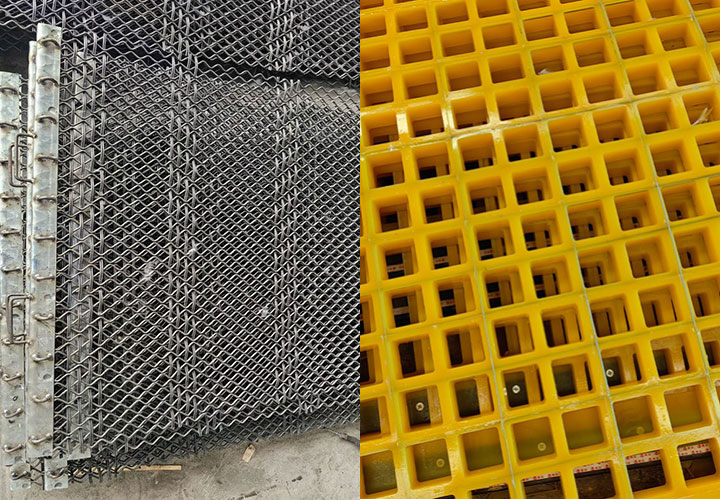
Opening Size: The screen opening should correspond to the required cut size. If the opening is too small for the intended separation, material may accumulate on the deck and reduce capacity. If it is too large, particles outside the desired size range may pass through.
Woven Wire Mesh: Woven wire mesh provides a large number of regularly distributed openings and is commonly considered when accurate particle separation is important. The wire diameter and opening size should be selected according to the material and the expected wear conditions.
Rubber or Polyurethane Screen Panels: Rubber and polyurethane panels can be considered when the application places greater demands on impact resistance, wear life, or noise control. The suitable panel depends on the material characteristics and the required opening rather than simply choosing the most wear-resistant option.
Open Area vs. Wear Life
A screen surface with more open area can provide more effective passage for correctly sized particles, while heavier screen media may offer better resistance to demanding service. The practical choice is a balance between screening performance and the expected service life of the screen surface.
For difficult applications involving wet, sticky, or highly abrasive material, screen media selection should be evaluated together with the operating conditions rather than treated as a separate component choice.
Some screening problems only appear after the equipment starts running. Wet feed, sticky particles, heavy abrasion, and oversized material can all change how a mining vibrating screen performs. These conditions should be identified before the screen is selected.
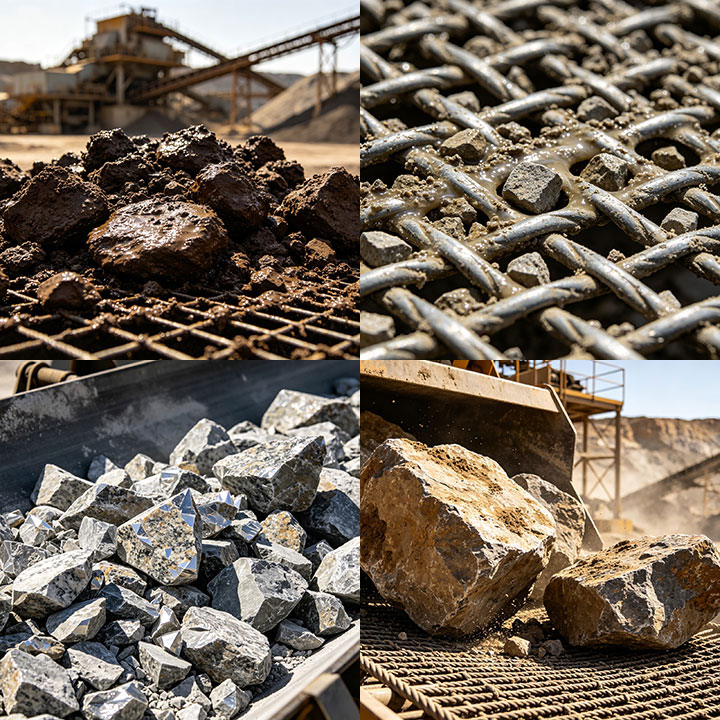
Wet or Sticky Material
Moist material can form lumps and stay on the screening surface instead of passing through the openings. If the feed is both wet and fine, the selection should give particular attention to material flow and the risk of screen blinding.
Blinding and Pegging
Blinding occurs when material covers the screen openings, while pegging happens when particles become trapped in the openings. Both reduce the effective open area of the screen. The solution may involve changing the screen media, opening configuration, or operating conditions rather than simply increasing machine capacity.
Highly Abrasive Material
Hard ore, rock, and other abrasive feed can wear the screen surface and other working components more quickly. In these applications, expected wear life should be considered when selecting the screen structure and screen media, especially when the machine will operate continuously.
Large or High-Impact Feed
Oversized particles can create concentrated impact at the feed end and place additional stress on the screen deck and supporting structure. If large feed is unavoidable, the equipment should be selected with the actual feed size and impact conditions in mind rather than relying only on the average particle size.
These conditions are often the difference between a screen that works adequately in a specification sheet and one that remains stable in continuous production.
When several screen configurations appear suitable, compare them according to the actual screening task rather than capacity alone. The following table provides a quick starting point for narrowing down the options.
| Screen Configuration | Best Suited For | Key Selection Consideration |
|---|---|---|
| Inclined Vibrating Screen | Coarse and abrasive materials in conventional screening lines | Feed size, material flow, deck angle, and wear conditions |
| Linear Vibrating Screen | Applications requiring controlled forward conveying and separation | Material characteristics, required cut size, and feed rate |
| Horizontal Vibrating Screen | Applications where a level screening surface fits the process layout | Installation conditions, material movement, and screening requirements |
| Heavy-Duty Vibrating Screen | Large, heavy, or highly abrasive feed | Maximum feed size, impact load, structural strength, and wear resistance |
If two options both appear suitable, use the actual feed condition and separation target as the deciding factors. The better choice is the configuration that can maintain the required separation under continuous operating conditions, not simply the machine with the highest nominal capacity.
The same mining vibrating screen configuration is not necessarily suitable for every material. The feed condition changes from one application to another, so the screen should be selected around the actual characteristics of the material being processed.
Application of a vibrating screen for apatite screening in a mining process.
Iron Ore: Iron ore screening commonly involves heavy and abrasive particles. The selection should therefore consider feed size, impact at the feed end, required separation size, and the expected wear on the screen surface.
Coal: Coal can contain a wide range of particle sizes and may also carry moisture or fine material. The screening configuration should provide sufficient separation while limiting the effect of wet or sticky particles on screen openings.
Granite and Hard Rock: Crushed granite and other hard rock materials can place high impact and wear loads on the equipment. A robust screen structure and suitable wear-resistant screen surface become especially important when processing coarse feed continuously.
Limestone: Limestone screening requirements vary according to the final products and crushing stage. Feed size, required product size, capacity, and the number of finished fractions should be considered together when determining the screen configuration.
Sand and Gravel: Sand and gravel operations often require the separation of several particle sizes within a continuous production line. The number of required products, feed rate, moisture condition, and screen deck arrangement are key factors when selecting the equipment.
For a specific project, the material name is only the starting point. Feed size, capacity, moisture, target separation size, and required products provide a much more reliable basis for selecting the right mining vibrating screen.
The purchase price is only one part of the cost of a mining vibrating screen. A screen that requires frequent media replacement or unplanned shutdowns can cost more over time than a machine with a higher initial price but more stable operation.
A suitable Mining Vibrating Screen should therefore be judged by how reliably it performs the required separation throughout its service life, not just by its specifications when it is new.
A manufacturer cannot reliably select a mining vibrating screen from the material name alone. The more complete the project information is, the easier it is to match the screen size, configuration, and screen surface to the actual working conditions.
| Project Information | What to Provide |
|---|---|
| Material | Material name and whether it is dry, wet, sticky, or abrasive |
| Feed Size | Maximum feed size and approximate particle size distribution |
| Capacity | Required processing capacity in t/h |
| Target Size | Required separation or finished product size |
| Number of Products | How many particle size fractions are required |
| Installation | Available space, installation position, and connection requirements |
If you can provide these basic details, Dahan can evaluate the screening conditions and recommend a suitable Mining Vibrating Screen configuration for your application instead of selecting a model from capacity alone.
Planning a new screening line or replacing an existing screen? Send us your material, feed size, required capacity, target separation size, and other available project details.
Based on your screening conditions, Dahan can evaluate the required screen configuration and provide a suitable Mining Vibrating Screen solution for your application.
Send Your Screening Requirements to Dahan for a Technical Recommendation and Quotation.


Address:China,Yanjin county forest park gate to the west 1000 meters north road.


 Online Chat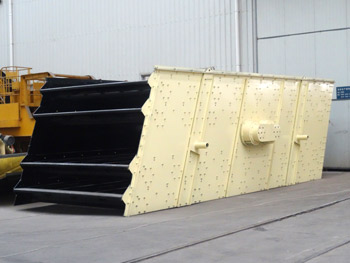
 Email
Email