


A high amplitude vibrating screen solves mesh blinding and pegging when processing damp, cohesive bulk materials by utilizing long stroke lengths of 6 to 15 mm at low-to-medium frequencies (700–1,200 RPM). This aggressive displacement generates high vertical G-forces that overcome viscous surface tension and break moisture bonds between damp fines, fluidizing the material bed for rapid stratification. Consequently, operators can maintain maximum throughput and continuous undersize discharge without frequent shutdowns for manual screen cleaning.
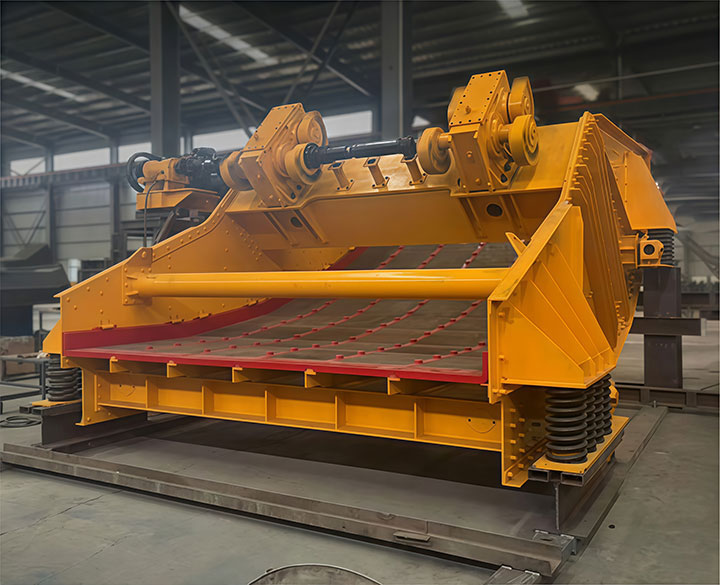
Screen blinding occurs when surface moisture (4%–12%) forms liquid films that generate strong capillary tension between particles. These capillary forces cause sticky fines to agglomerate and bind tightly inside screen apertures. A high amplitude vibrating screen overcomes this limitation by delivering the high shear force needed to break these moisture bonds and keep the mesh clear.
This progressive buildup manifests in two distinct operational failures:
Traditional screening motion with low amplitudes (under 3 mm) lacks the dynamic impact required to shear these liquid bonds. Instead of dispersing, the damp material bed consolidates, forcing plant operators to stop production for labor-intensive manual cleaning.
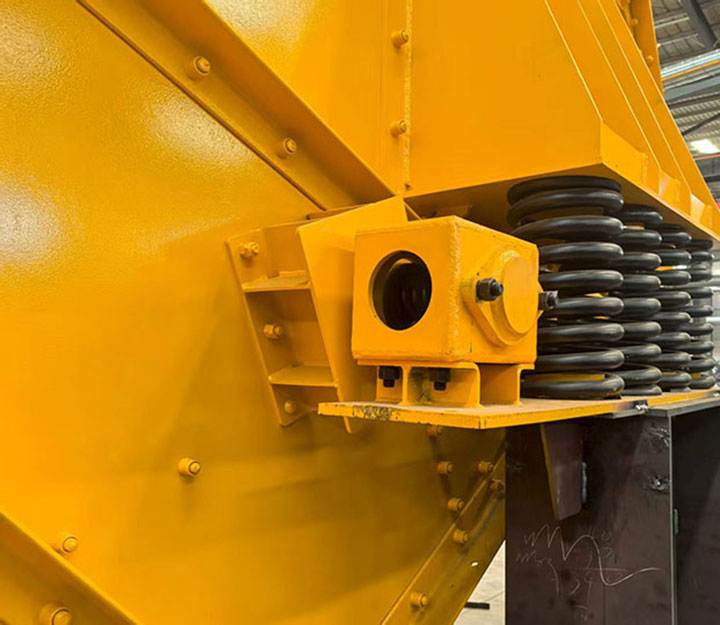
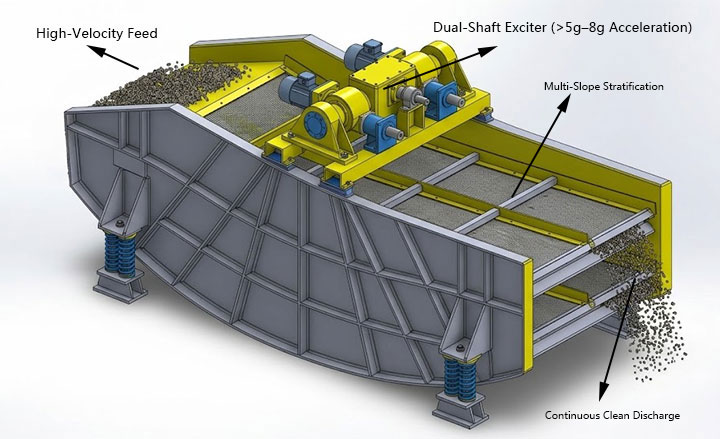
High amplitude motion prevents mesh blinding by applying long displacement strokes (6–15 mm) that generate peak vertical accelerations exceeding 5g to 8g. This high G-force overcomes viscous adhesion forces, projecting sticky particles upward to shatter liquid capillary bridges upon impact. The prolonged spatial separation fluidizes the material bed, enabling rapid stratification where undersize fines discharge cleanly through open apertures.
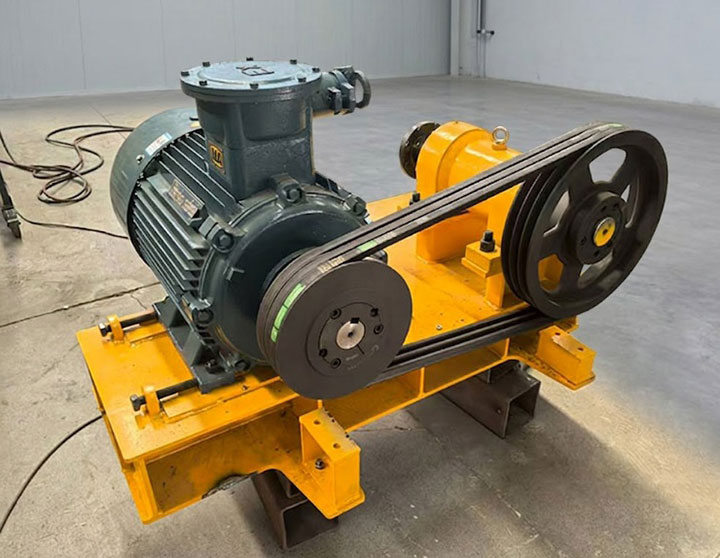
To deliver high amplitude forces without structurally damaging the machine frame, specialized screen designs utilize tailored mechanical driving systems for demanding separation tasks.
Flip-flow screens combine main screen box vibration with flexible polyurethane mats that alternately tension and relax. This dual-vibration mechanics generates acceleration forces up to 50g directly on the screening surface, stretching elastic apertures to continuously eject trapped, high-moisture fines. Consequently, this technology provides a proven solution for processing sticky coal, moist clay, and fine mineral slimes.
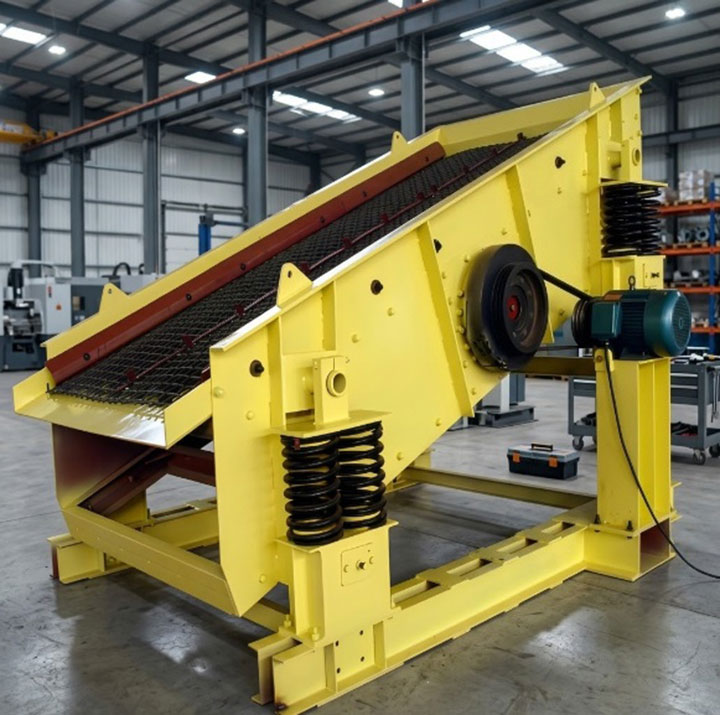
Banana screens feature a multi-slope deck geometry—ranging from steep angles at the feed end to flatter angles at the discharge—driven by high-amplitude exciter units. The steep initial deck uses high stroke length to rapidly thin incoming thick bed layers, while the lower slopes ensure accurate sizing of remaining particles. This multi-angle configuration maximizes volumetric capacity when handling sticky, lump-rich run-of-mine ores.
Achieving optimal throughput without blinding on a high amplitude vibrating screen requires balancing stroke length, rotational speed, and throw angle based on material moisture.
| Material Condition | Recommended Stroke | Frequency (RPM) | Throw Angle |
|---|---|---|---|
| High Moisture / Cohesive Fines (>8% water) | 9.0 – 14.0 mm | 750 – 950 RPM | 50° – 60° |
| Medium Moisture / Sticky Lumps (4%–8% water) | 6.0 – 9.0 mm | 950 – 1,150 RPM | 45° – 50° |
| Dry / Heavy Primary Ore (<4% water) | 4.0 – 6.0 mm | 1,150 – 1,350 RPM | 35° – 45° |
Higher moisture levels demand longer strokes and steeper throw angles to maximize vertical impact force. Conversely, reducing frequency prevents excessive structural fatigue while providing sufficient retention time for stratification.
Sustaining anti-blinding performance requires systematic field inspection and dynamic parameter verification. Plant operators should enforce four mandatory daily maintenance protocols:
Measure stroke length by placing visual stroke cards on all four corners of the screen frame during operation. The overlapping lines create a precise optical reading in millimeters, instantly revealing dynamic side-to-side stroke imbalances or spring dampening failures.
Yes. Operating standard screen frames at stroke lengths exceeding 8 mm causes severe dynamic stress and side-plate cracking. High-amplitude systems require specialized huck-bolted construction, stiffened side members, and reinforced exciter beams designed to withstand high peak G-forces.
A high amplitude vibrating screen handles moisture levels between 6% and 14%. For extreme sticky applications exceeding 15% moisture, integrating dynamic elastic flip-flow polyurethane mats prevents severe slurry buildup and ensures continuous undersize discharge.
Sustaining high throughput without blinding requires balancing stroke displacement, operating frequency, and screen media dynamics. Our engineering team provides custom screen sizing, motion analysis, and deck configuration tailored to your specific material moisture and particle size distribution. Contact our technical specialists to evaluate your material characteristics and receive a custom high-amplitude screening proposal.


Address:China,Yanjin county forest park gate to the west 1000 meters north road.


 Online Chat
  Vibrating Screen
 Email
Email