


A mixer that looks perfect on paper can still underperform on the production floor—causing inconsistent blends, longer cycle times, difficult cleaning, and costly downtime. The problem is rarely the equipment category itself. It is usually a mismatch between the blender design and the actual material behavior, batch requirements, and process objectives.
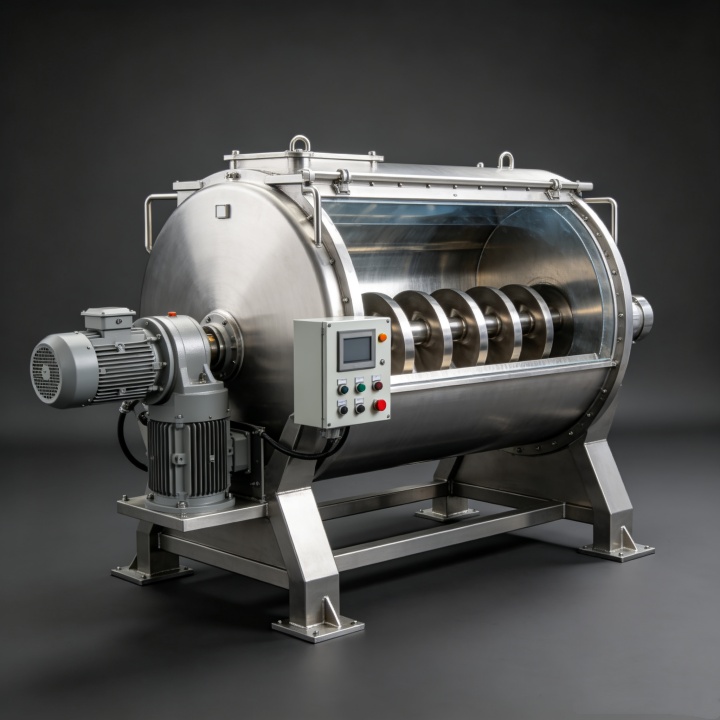
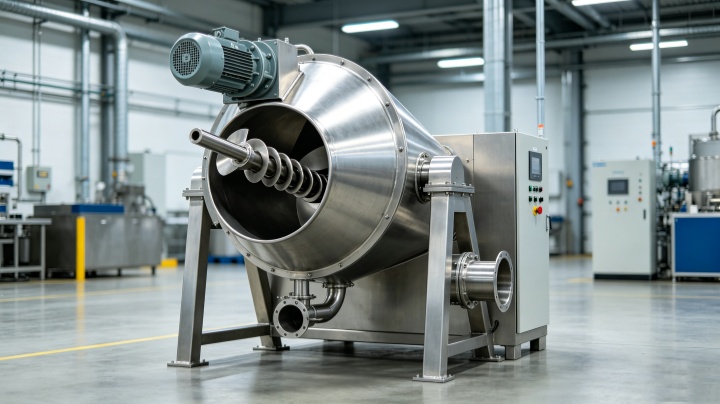
Ribbon Mixer Blenders remain one of the most widely used and cost‑effective solutions for dry powder blending across food processing, pharmaceuticals, chemicals, nutraceuticals, agriculture, and construction materials. Their double helical ribbon design delivers efficient convective mixing that achieves homogeneous blends in 3–10 minutes with a coefficient of variation (CV) of less than 5%.
But not every powder belongs in a ribbon blender. This guide walks you through the key selection criteria—from material properties and capacity planning to design features and discharge considerations—so you can choose the right Ribbon Mixer Blender for your specific application.
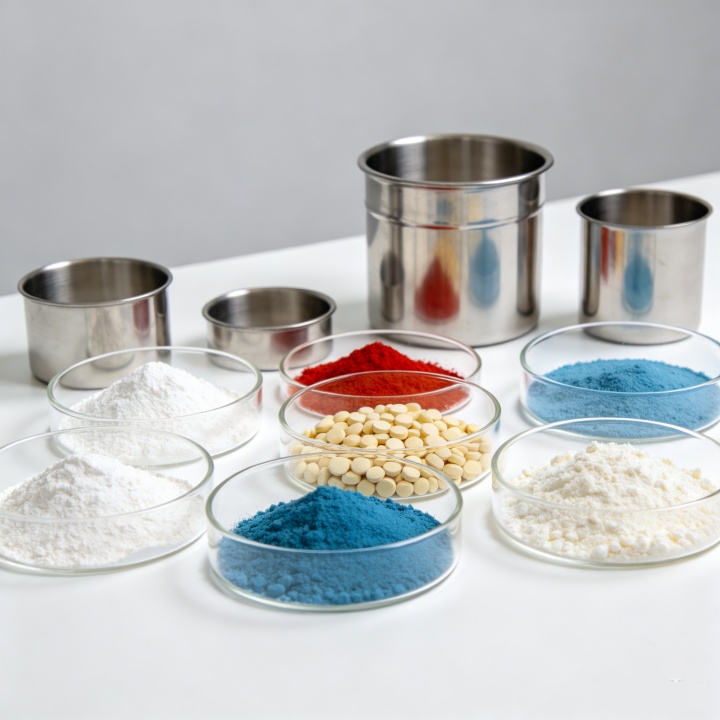
The fastest way to make a poor equipment decision is to shop by blender style before understanding your material. Two products from the same industry can require completely different mixer designs. Material properties drive the equipment decision far more than the market category.
| Property | Why It Matters |
| Bulk Density | Affects batch weight and motor load. Size the machine around your most demanding formulation. |
| Particle Size Distribution | Ingredients with major size differences risk segregation during blending, discharge, or transfer. |
| Flowability | Ribbon blenders perform best with free‑flowing to moderately cohesive powders. Bridging or packing requires design modifications. |
| Friability (Shear Sensitivity) | Fragile particles may break down under the ribbon's counter‑flow action. Consider paddle blenders for friable materials. |
| Moisture Content & Hygroscopy | Sticky or hygroscopic formulations can adhere to ribbons and trough walls. |
| Liquid Addition Requirement | Determine how much liquid can be added before the product becomes sticky and coats the agitator. |
What This Means for Your Choice: A Ribbon Mixer Blender excels with free‑flowing dry powders that have relatively uniform particle characteristics. If your material is fragile, highly cohesive, or requires significant liquid addition, you may need a paddle blender, plow mixer, or other specialized equipment.
Many buyers describe the material accurately but still skip over the actual production objective. That is where selection errors happen.
What This Means for Your Choice: If your process is simple dry blending, a standard Ribbon Mixer Blender is often the most practical and economical choice. If you need liquid addition, high‑speed choppers for deagglomeration, or jacketed temperature control, look for a ribbon blender with these optional features.
Choosing capacity by nominal vessel volume is one of the most common mistakes in blender selection. Usable working capacity depends on the material, the mixer geometry, and the process itself.
| Factor | Recommendation |
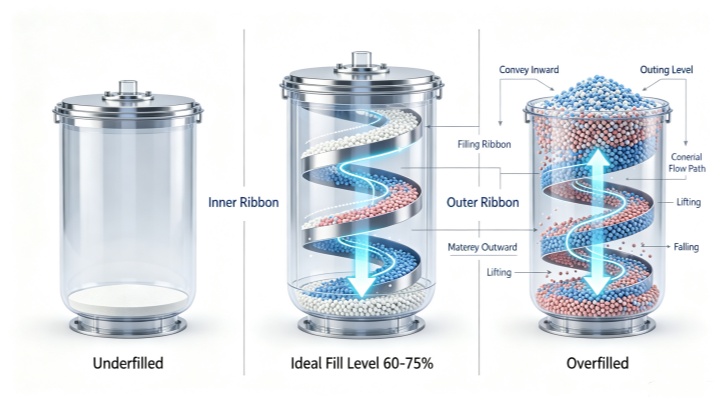
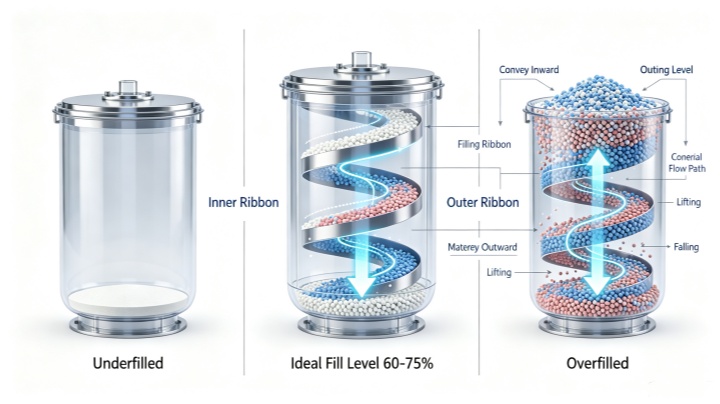
| Working Fill Level | Most ribbon blenders operate best at 60–75% of total vessel volume. Overfilling reduces circulation; underfilling hurts mixing efficiency. |
| Bulk Density Calculation | Start with your desired batch weight (kg or lbs), then calculate required volume based on bulk density at actual plant conditions. |
| Total Cycle Time | Include loading, blending, sampling, discharge, and cleaning—not just blend time. A blender that mixes in 8 minutes but takes 20 minutes to empty or clean becomes a bottleneck. |
| Future Growth | Balance current efficiency against expansion plans. Oversizing can hurt performance on small batches; undersizing forces early capital upgrades. |
Example: A 500‑liter Ribbon Mixer Blender typically handles approximately 300–375 liters of effective batch volume at 60–75% fill.
The material used to build your blender directly affects durability, cleanability, and regulatory compliance.
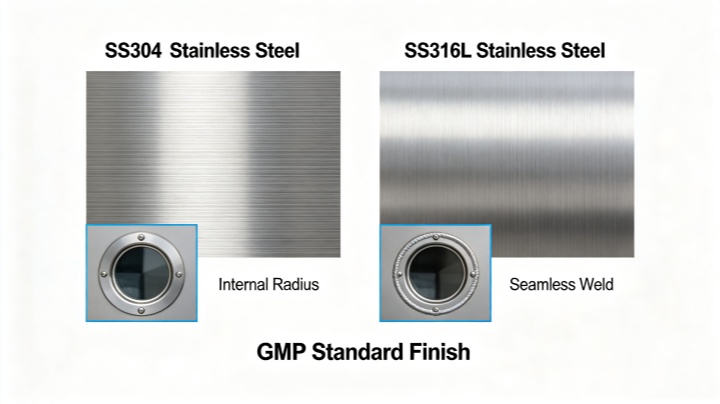
| Material | Best For |
| SS304 | General food and chemical applications |
| SS316 / 316L | Pharmaceuticals, cosmetics, nutraceuticals, and corrosive products. Required for FDA/GMP compliance. |
| Mild Steel (MS) | Cost‑effective option for non‑sensitive industrial applications |
If you operate in food, pharmaceutical, or nutraceutical markets, ensure the blender meets GMP, FDA, CE, or ISO standards. Look for:
The drive system must match your product load and operating conditions.
| Consideration | Details |
| Motor Type | Direct‑coupled or chain‑driven geared motor. Variable Frequency Drive (VFD) for speed control. |
| Power Rating | Ensure motor HP matches batch capacity and material density. Dense materials require heavier‑duty gearboxes. |
| Sealing | Double mechanical seals and robust shaft packing prevent dust leakage. Critical for fine powders and clean environments. |
| Overload Protection | Essential for preventing damage if material jams or overloads occur. |
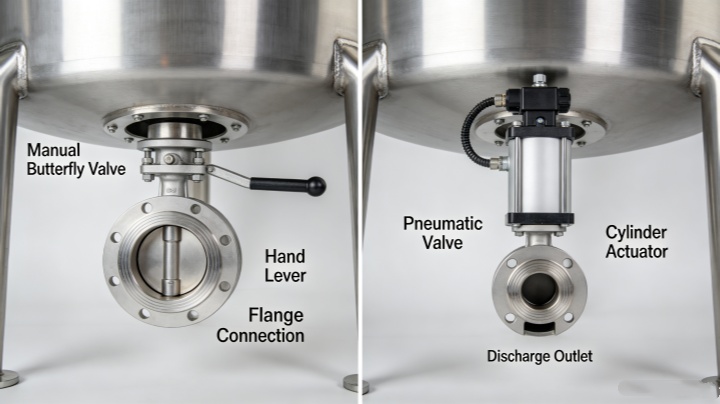
Fast, complete discharge is a major advantage of a well‑designed ribbon blender. It reduces cycle time, limits retained material, and supports batch traceability. Yet discharge is also a common source of segregation and quality variation.
| Valve Type | Best For |
| Butterfly Valve / Slide Gate | Powders and granules. Provides dust‑tight, rapid bottom discharge. |
| Ball Valve | Semi‑wet or pasty materials |
| Pneumatic Valve | Automated operations |
| Manual Valve | Smaller operations or budget‑conscious setups |
Important: Discharge design should be evaluated along with downstream transfer methods. Segregation can occur after discharge if material is conveyed, dropped, or packaged too quickly.
A Ribbon Mixer Blender can be customized with add‑ons to match your specific process requirements.
| Optional Feature | Purpose |
| Liquid Injection System (Spray Nozzles) | For adding oils, flavors, binders, or active solutions during mixing. |
| Heating/Cooling Jacket | Temperature control for heat‑sensitive materials. |
| High‑Speed Choppers | Faster deagglomeration and liquid dispersion. |
| Vacuum/Pressure Sealing | For vacuum mixing or pressure‑rated operations. |
| PLC / Automation | Precise control for regulated industries like pharma and food. |
| Dust‑Proof Cover | Essential for fine powders that create dust hazards. |
| Removable Shaft Ends | Easier cleaning and product changeovers. |
Spray Nozzle Caution: The real question is not simply whether liquid can be added. It is how much can be added before the product shifts from free‑flowing to sticky and starts coating the ribbons or vessel wall. That threshold varies by formulation.
Select a manufacturer with reliable after‑sales support, including:
Budget vs Long‑Term Value: Don't just choose the cheapest option. Evaluate durability, maintenance requirements, and energy efficiency over the equipment's lifecycle.
Selecting the right Ribbon Mixer Blender is about matching equipment design to your material behavior, process goals, and plant realities. When properly specified, a ribbon blender delivers reliable, repeatable, and cost‑effective dry powder blending that protects product quality and supports production efficiency.


Address:China,Yanjin county forest park gate to the west 1000 meters north road.


 Online Chat
 Email
Email