


Selecting the right Fine Powder Screening Sifter Machine is only half the battle. Maintaining its efficiency against screen blinding and clogging is the key to consistent production. This comprehensive guide covers everything from understanding the root causes of fine powder screen blinding to implementing advanced deblinding solutions like ultrasonic screening systems and anti-blinding ball trays for your vibratory sifter.
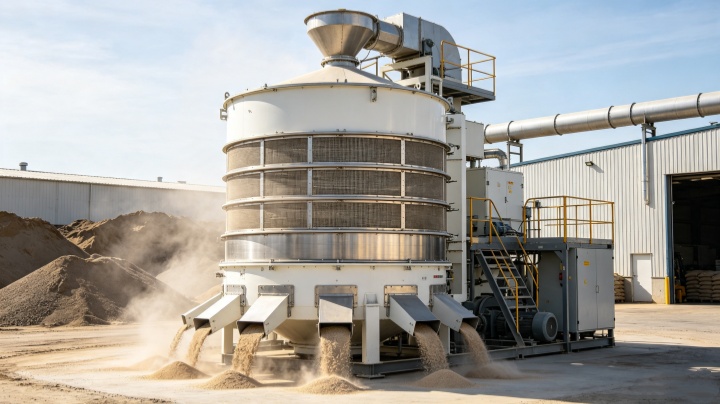
This comprehensive guide explores the root causes of screen blinding and provides actionable solutions ranging from operational adjustments to advanced deblinding technologies.
Screen blinding is rarely caused by a single factor. It typically results from the interaction between material characteristics, equipment parameters, and operating conditions. Understanding the specific cause is the first step toward an effective solution.
When particles are close in size to the screen openings, they can become mechanically wedged into the apertures. This near-size particle entrapment is one of the most common causes of blinding.
Materials with high moisture content or natural stickiness tend to form a coating layer over the screen surface. This(screen covering) prevents fine particles from passing through the mesh and is particularly problematic for hygroscopic powders, food ingredients, and certain chemical compounds.
Ultra-fine powders often generate static electricity during processing. The electrostatic charge causes particles to cling to the screen surface, forming a stubborn layer that blocks apertures. This is especially common with dry, fine powders below 100 microns.
Fine particles with strong inter-particle forces (van der Waals forces or surface tension) tend to form agglomerates that cannot pass through the mesh, even though individual particles would be small enough to do so.
When material is not evenly distributed across the screen surface, localized buildup occurs, leading to premature blinding in specific areas. Overloading the screen with excessive feed rate also exacerbates the problem.
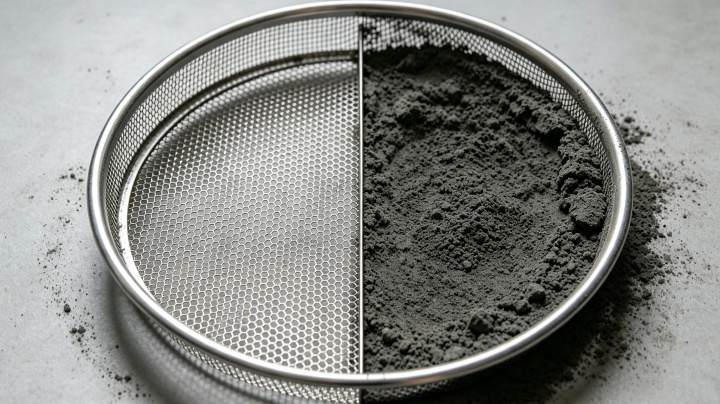
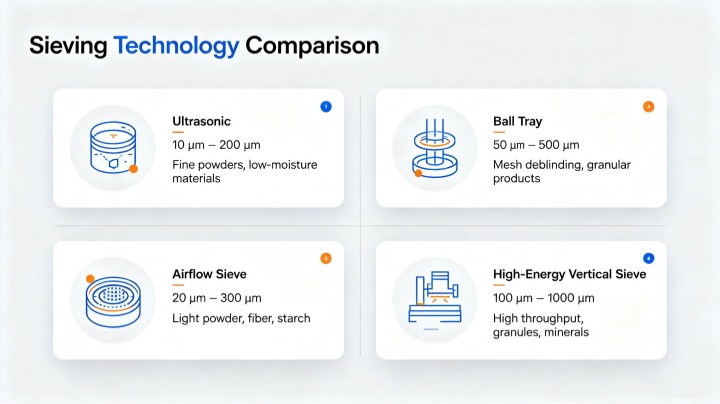
Ultrasonic technology is widely considered the most effective solution for fine powder screening challenges. The system transmits high-frequency ultrasonic vibrations directly to the screen mesh, causing it to vibrate at microscopic levels.
How it works: A generator and converter create ultrasonic frequencies that are passed through the screen via a resonator. These high-frequency vibrations break down static charges and surface tension, preventing particles from sticking to or lodging in the mesh apertures.
Key advantages:
Suitable applications: Aerosil (fumed silica), pharmaceutical powders, metal powders, powder coatings, and materials prone to agglomeration.
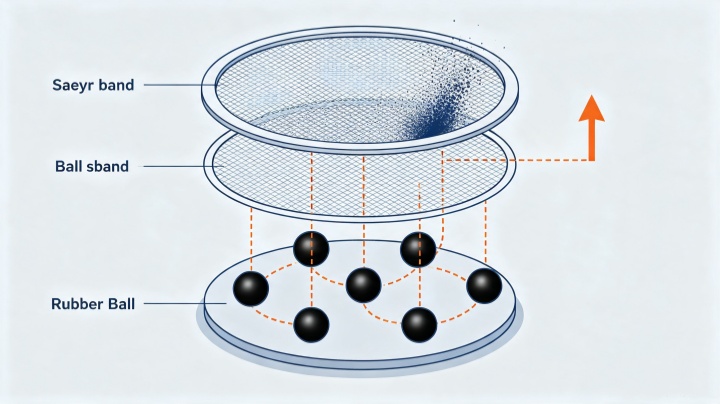
For dry materials that tend to clog screen apertures, mechanical ball trays provide a simple and cost-effective solution.
How it works: Elastomeric balls are captured between the operating screen and a lower coarse-mesh ball screen. As the vibratory sifter operates, the balls bounce against the upper screen, dislodging particles that would otherwise block the apertures.
Key advantages:
Limitations: Less effective for ultra-fine powders, highly adhesive materials, or applications requiring very fine mesh (below 50 microns).
Airflow sieve technology uses aerodynamic forces to prevent blinding during fine powder screening.
How it works: The equipment creates a negative-pressure airflow within the screening chamber. Air is injected through nozzles onto the screen surface, keeping the powder in a dynamic air environment. Particles smaller than the mesh pass through with the airflow, while larger particles remain on the screen surface.
Anti-blinding advantages:
Ideal for: Easily agglomerated powders, fine powders in pharmaceutical and chemical applications, and materials requiring gentle screening without mechanical auxiliary devices.
Some advanced screening technologies employ high-energy vertical action to achieve fine powder screening down to 10 microns without relying on ultrasonic deblinding systems.
How it works: The machine applies vertical energy directly into the screen surface, creating a high-frequency impact that keeps the mesh clear of blinding particles. This technology eliminates the need for deblinding devices such as balls, sliders, or ultrasonics.
Key advantages:
Suitable for: Battery materials, metal powders, and pharmaceutical applications
Industries served: Battery materials (Graphite, LFP, NMC), additive manufacturing, aerospace & defense, and semiconductor/advanced ceramics.
| Material Type | Primary Issue | Recommended Solution |
| Ultra-fine powders (<50μm) | Static, agglomeration | Ultrasonic deblinding system |
| Sticky/high-moisture materials | Adhesion, covering | Airflow sieve or ultrasonic |
| Dry, near-size particles | Mechanical plugging | Ball tray system |
| High-volume production (10μm) | Precision + throughput | High-energy vertical action sifter |
| Lightweight, sensitive powders | Surface tension | Ultrasonic with low-amplitude operation |
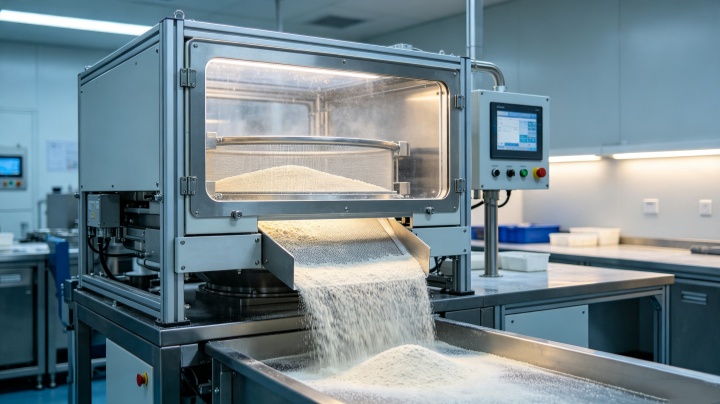
Screen blinding is a significant challenge in fine powder screening, but it is not insurmountable. The right solution depends on understanding the root cause—whether it is mechanical plugging, adhesion, electrostatic buildup, or agglomeration.
For most fine powder applications, ultrasonic deblinding systems offer the most versatile and effective solution, particularly when processing materials below 50 microns. However, advancements in high-energy screening technology now provide alternatives that achieve 10-micron separation without ultrasonics, offering additional options for manufacturers with specific process requirements.
The most effective approach combines appropriate technology selection with sound operational practices: proper screen selection, regular maintenance, feed control, and preventive procedures. By addressing screen blinding systematically, manufacturers can achieve consistent production rates, maintain product quality, and minimize costly downtime.
Need assistance selecting the right deblinding solution for your powder application? Consider consulting with screening equipment manufacturers who can perform material testing and provide tailored recommendations for your specific process requirements.
For more details on specific equipment, explore our range of ultrasonic vibrating screens for fine powder or learn about linear sifters for dry powders.


Address:China,Yanjin county forest park gate to the west 1000 meters north road.


 Online Chat
 Email
Email