How to Solve Screen Blinding and Low Efficiency in Powder Sieving? A Practical Guide
Screen blinding is one of the most frustrating and costly problems in powder processing. When your sieve mesh clogs, throughput drops, product quality suffers, and you waste valuable production time on cleaning and maintenance. This guide will help you understand why blinding happens and give you practical solutions to keep your powder screening machine running at peak efficiency.
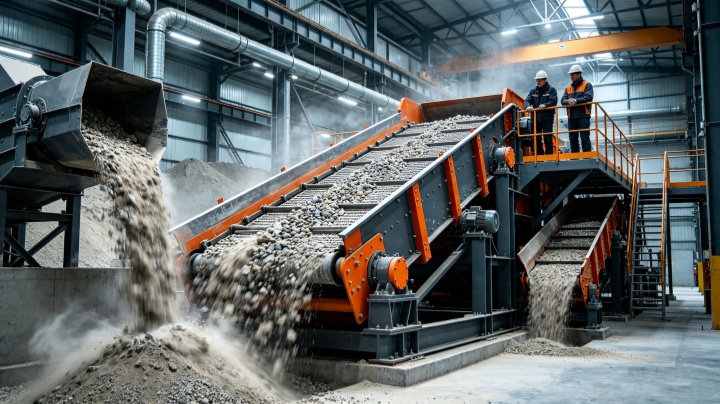
What Is Screen Blinding and Why Does It Happen?
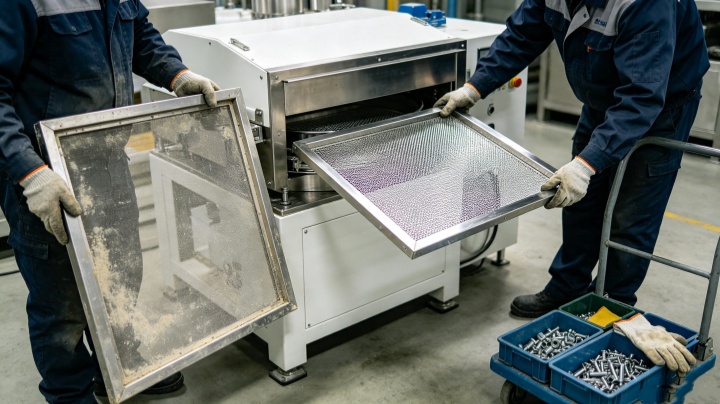
Screen blinding occurs when the apertures of your sieve mesh become blocked, preventing material from passing through. There are two primary ways this happens:
-
1. Near-size particle lodging – When a significant percentage of your material is close to the mesh aperture size, those particles tend to wedge themselves into the holes. Once lodged, they block additional material from passing through.
-
2. Particle adhesion – Some powders are sticky, hygroscopic, or carry static charges. These particles adhere to the mesh wires themselves, gradually building up and reducing the effective open area until the screen is completely blocked.
Sticky materials like adhesive powders or hygroscopic substances are particularly problematic, as they tend to clump and clog screens rapidly. Similarly, metal powders used in additive manufacturing can suffer from electrostatic buildup that causes blinding.
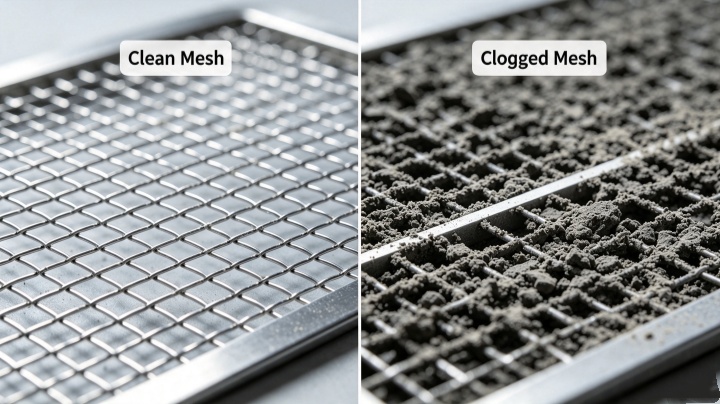
The Impact of Screen Blinding on Your Production
The consequences of screen blinding go beyond simple inconvenience:
-
Reduced throughput – As the screen area becomes blocked, fewer particles can pass through
-
Inconsistent product quality – Uneven screening leads to off-spec particles in your final product
-
Increased maintenance costs – Frequent cleaning and screen replacement drive up operational expenses
-
Production downtime – Every minute spent unblocking screens is lost production time
-
Premature screen failure – Excessive cleaning and flexing can cause screens to fail sooner
Practical Solutions to Prevent and Fix Screen Blinding
Install Anti-Blinding Devices
Several mechanical solutions can help keep your screen mesh clear:
-
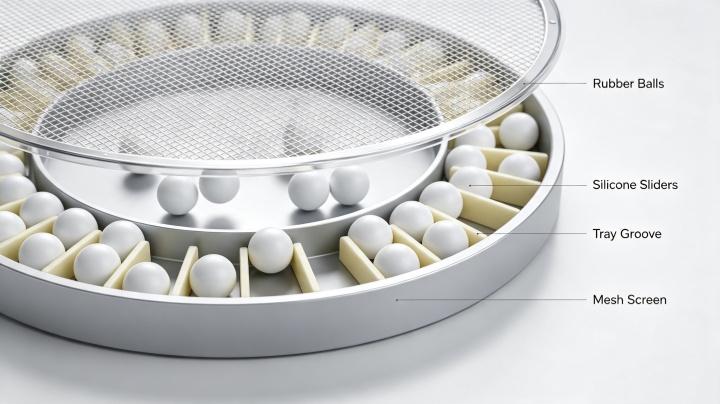
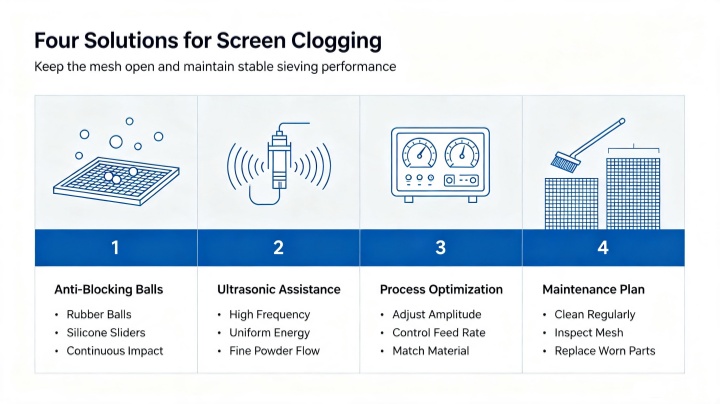
Self-cleaning kits and ball trays – These use rubber balls or sliders mounted beneath the screen that bounce during operation, tapping out lodged particles. Ball trays work best for dry applications with coarser cuts.
-
Self-cleaning screens – These incorporate built-in cleaning mechanisms and can be used in both wet and dry applications across various mesh sizes.
-
Spray systems (for wet applications) – Rotary or stationary spray systems introduce liquid onto the screen surface to prevent material from drying, caking, and plugging the mesh. This is especially effective for wet screening processes.
Upgrade to Ultrasonic Sieving Technology
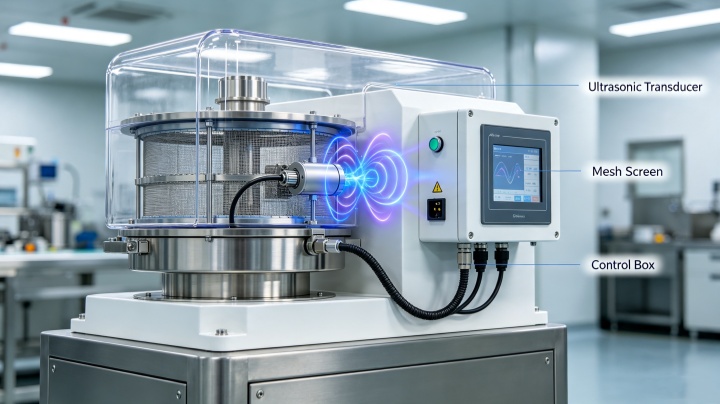
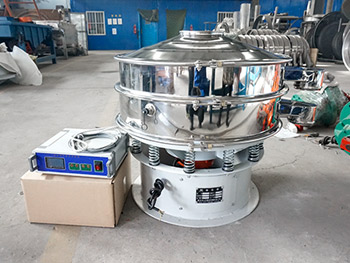
For fine powder applications, ultrasonic deblinding is a game-changer. This technology applies high-frequency vibrations directly to the mesh surface, creating a micro-suspension effect that keeps apertures clear.
How it works – An ultrasonic generator creates a high-frequency signal that a converter transforms into mechanical vibrations. These oscillations are transmitted to the mesh, reducing frictional resistance between powder particles and the screen.
Key benefits include:
-
Up to 300% improvement in throughput in some cases
-
Enables sieving down to 20 microns (635 mesh)
-
Prevents particle agglomeration and static buildup
-
Extends screen life by reducing mechanical cleaning
-
Consistent deblinding without operator intervention
The Russell Vibrasonic® system, for example, uses continuously varying frequency to avoid "hot spots" that can cause premature mesh failure.
Optimize Your Machine Setup
Sometimes the solution is as simple as adjusting your equipment correctly:
-
Check motor weight settings – If your separator lacks sufficient vertical amplitude, anti-blinding devices like balls or sliders won't impact the screen effectively. Adjust the lower weights to achieve proper amplitude.
-
Verify lead angle settings – Excessive product mounding or slow material discharge can stress screens and contribute to blinding. Adjusting the lead angle on your motor weight system promotes quicker discharge and reduces accumulation.
-
Inspect and replace worn components – Anti-blinding devices gradually wear down. Check that balls and sliders are the correct size and replace them when they become ineffective.
Address Feed-Related Issues
How you introduce material to the screen matters:
-
Prevent feed slugging – High-velocity feed can weaken mesh at the impact point. For wet applications, install a velocity reducer. For dry materials, reduce the vertical drop to the screen.
-
Control feed rate – Overloading the screen creates excessive material buildup that stresses the mesh, particularly along the tension ring. Maintain consistent, appropriate feed rates.
Regular Maintenance and Inspection
Prevention is better than cure. Implement a routine inspection program:
-
Inspect screens regularly for signs of wear, delamination, or corrosion
-
Replace screens immediately when tension loosens – loose screens are unproductive
-
Ensure proper screen orientation during installation
-
Check that clamp rings are tight to prevent screen rotation
-
Verify center tie-downs are correctly installed
When to Replace Your Screens
Understanding common screen failure modes can help you spot problems before they cause costly downtime.
Screen fatigue is responsible for approximately 90% of screen failures. This occurs from repeated flexing and is often caused by loose screens, improper tension, or worn anti-blinding devices. If your screen looks "floppy," it's time to replace it.
Other failure modes include:
-
Corrosion – Use appropriate screen materials for your product's pH and temperature
-
Abrasion – Moist or wet materials accelerate abrasive wear
-
Shock – Foreign objects or tools dropped on the screen can cause immediate damage
Choosing the Right Solution for Your Application
The best approach depends on your specific powder characteristics:
|
Application Type |
Recommended Solution |
|
Dry, free-flowing powders |
Ball trays or self-cleaning screens |
|
Fine powders (<300 micron) |
Ultrasonic deblinding system |
|
Sticky/hygroscopic materials |
High-energy screening + ultrasonic |
|
Metal powders (AM, MIM) |
High-energy sieving to prevent agglomeration |
|
Wet screening |
Spray systems + proper feed control |
Screen blinding doesn't have to be an inevitable part of powder processing. By understanding the root causes and implementing the right combination of technology, setup optimization, and maintenance practices, you can significantly improve your powder screening machine's efficiency and throughput.
Start with the basics: check your equipment setup, ensure proper installation, and consider adding anti-blindings devices. For fine or difficult powders, ultrasonic sieving technology can deliver dramatic improvements, often increasing throughput by up to 300%.
If you're still experiencing issues after troubleshooting, consult with a reputable screening equipment supplier. Their experience across a wide range of applications can help identify the root cause and recommend the best solution for your specific process.


 Online Chat
 Email
Email