


While both technologies effectively separate solids from liquids, they differ dramatically in energy consumption, chemical usage, maintenance requirements, and long‑term operational expenses. Here's a comprehensive cost comparison to help you make an informed decision.
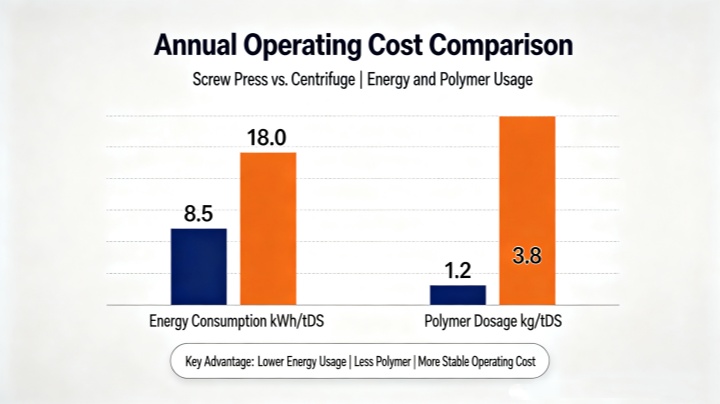
Independent data from real‑world installations shows that screw press solid‑liquid separators consistently outperform centrifuges on operating costs. A documented comparison from a UK wastewater treatment facility revealed savings of:
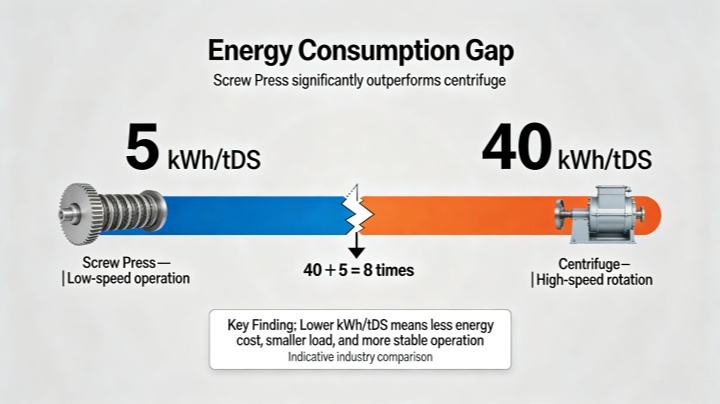
HUBER's Q‑PRESS® screw press, for example, demonstrated specific power consumption of approximately 5 kWh per ton of dry solids, compared to 40 kWh per ton of dry solids for a modern decanter centrifuge. At an electricity price of €0.26/kWh, this translates to annual electricity costs of €1,300 for the screw press versus €10,400 for the centrifuge—a saving of over €9,000 per year for a typical 50,000 PE plant.
The most significant cost difference lies in how each technology removes water.
The screw press operates at extremely low speed (typically less than 1 RPM). The rotating screw conveys material through a wedge‑wire screen, applying gentle mechanical pressure that squeezes water out through the screen openings. No high‑speed spinning is required.
Power consumption: ~5 kWh/tDS
The centrifuge relies on high‑speed rotation (up to 4,500 RPM or more) to create centrifugal force thousands of times stronger than gravity. This separates solids from liquid but requires powerful motors and generates significant mechanical stress.
Power consumption: ~40 kWh/tDS
This eightfold difference in energy consumption is the primary driver of the cost advantage for solid‑liquid separators.
Polymer (flocculant) consumption is another major operating cost. Screw presses typically require less polymer because the gentle dewatering process relies more on mechanical compression than on chemical coagulation.
The documented comparison showed:
| Technology | Polymer Consumption |
| Screw Press | 6 kg/tDS |
| Centrifuge | 8–10 kg/tDS |
At polymer costs of approximately $5/kg, this difference can mean tens of thousands of dollars in annual savings for medium to large operations.
The low‑speed operation of a screw press translates directly to:
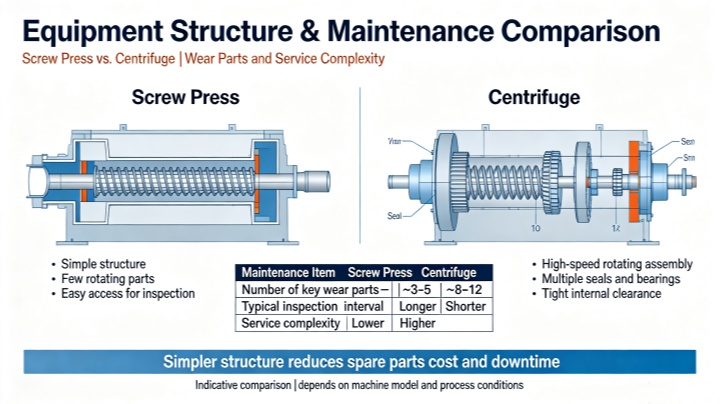
Centrifuges, with their high‑speed rotating assemblies, experience significantly more wear. Bearings, seals, and the bowl itself require more frequent replacement. Maintenance typically demands specialized technicians.
One operator noted that their screw press dewatering system could operate unattended overnight or over the weekend, with automatic adjustments to sludge consistency eliminating the need for constant operator attention. This labor saving further reduces total operating costs.
While centrifuges can sometimes produce slightly drier cake under optimal conditions (typically 21–30% dry matter), screw presses are highly competitive, achieving 18–35% dry solids.
For applications requiring maximum dryness, the screw press allows operators to adjust the counter‑pressure cone to increase compression. However, this may reduce throughput—a trade‑off worth understanding.
Agricultural applications show that screw presses can achieve 24–35% dry matter in separated solids, comparable to centrifuges for many slurry types.
| Technology | Capital Cost (approx.) | Notes |
| Screw Press (solid‑liquid separator) | Lower to moderate | Simpler construction, fewer moving parts |
| Decanter Centrifuge | Higher | Complex high‑speed rotating assembly, precision machining |
Data from agricultural applications suggests centrifuge capital costs can be significantly higher—with one analysis showing centrifuge capital costs of approximately €28,570 per m³/h capacity compared to lower‑cost alternatives.
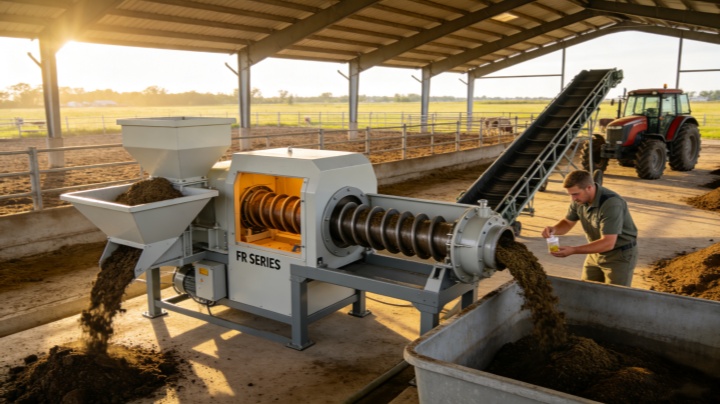
For the vast majority of applications—agricultural manure management, biogas digestate separation, food processing waste, and municipal sludge dewatering—the solid‑liquid separator (screw press) delivers substantially lower total operating costs than a centrifuge.
The combination of 80% energy savings, up to 50% polymer savings, minimal maintenance, and fully automatic operation makes the screw press the superior economic choice.
Every application is unique. To determine which technology delivers the best cost performance for your specific operation, consider these factors:
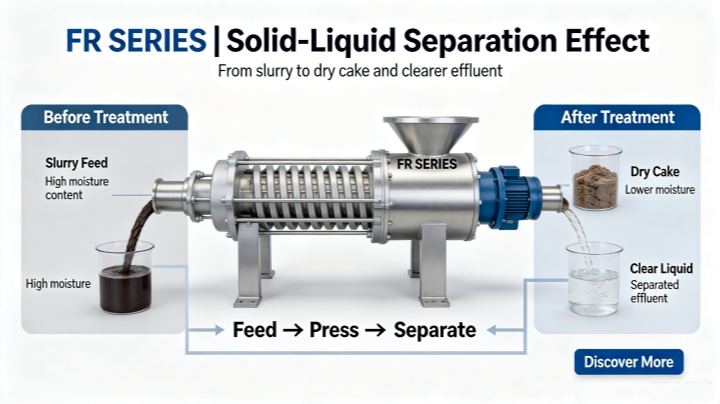
Our solid‑liquid separator is built with durable stainless steel components and powered by a low‑speed, high‑torque gear motor, achieving dry matter content of up to 40–50% in the solid phase—significantly reducing waste volume and hauling costs. With wedge‑wire screens available from 0.25mm to 1.0mm and models processing 5–20 m³/h, we have a solution for your operation.


Address:China,Yanjin county forest park gate to the west 1000 meters north road.


 Online Chat
  Email
Email