


The first step in test sieve size selection is to define the particle size you need to measure. Instead of choosing a sieve from a mesh chart first, start with the material and the size range that matters in your test.
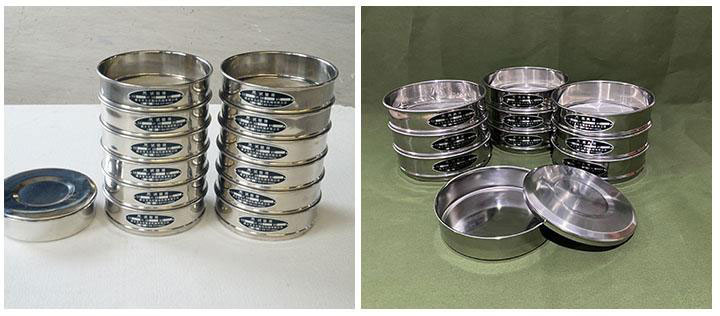
For example, a powder that needs to be checked below 150 μm requires a different sieve setup from a granular material mainly distributed between 1 and 5 mm. The target range determines which sieve openings are useful and whether one sieve or several sizes are needed.It is also important to distinguish between checking one critical particle size and measuring a complete size distribution. A single test sieve may be sufficient for a simple size check, while a wider particle range usually calls for a set of sieves with progressively smaller openings.
Once the target particle range is clear, the next step is to match it with the appropriate sieve opening.
Once the target particle range is known, select a sieve opening that can separate the material at the size you need to evaluate. The opening should relate directly to the separation point, rather than being chosen simply because a particular mesh number is commonly used.
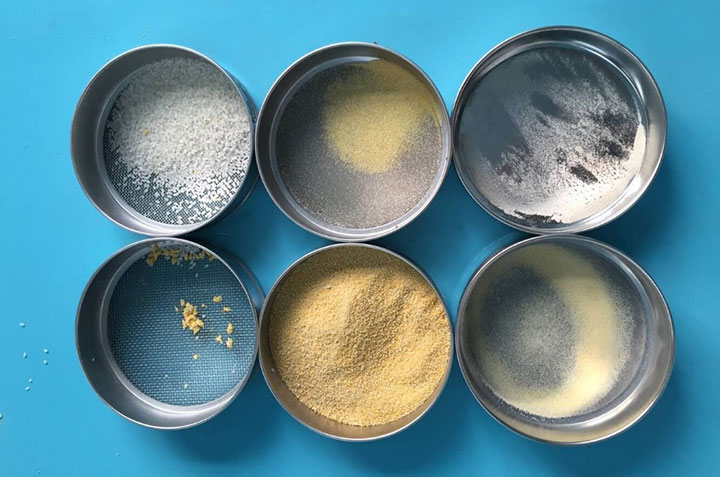
For a test focused on particles around 500 μm, for example, a sieve with a nominal opening close to that size can be used to determine how much material passes or remains on the sieve. If the purpose is to measure a broader particle-size distribution, several openings can be arranged from larger to smaller so that the sample is separated into different size fractions.
The material itself also matters. Particles with an irregular shape, a tendency to agglomerate, or a wide size distribution may not behave like uniform spherical particles at the same nominal size. In these cases, the selected opening should be considered together with the actual separation behavior of the sample.
Mesh number is useful for identifying a test sieve, but it should not be the only information used when selecting one. Two sieve specifications may use different mesh designations while referring to different opening dimensions, depending on the applicable standard and wire diameter.
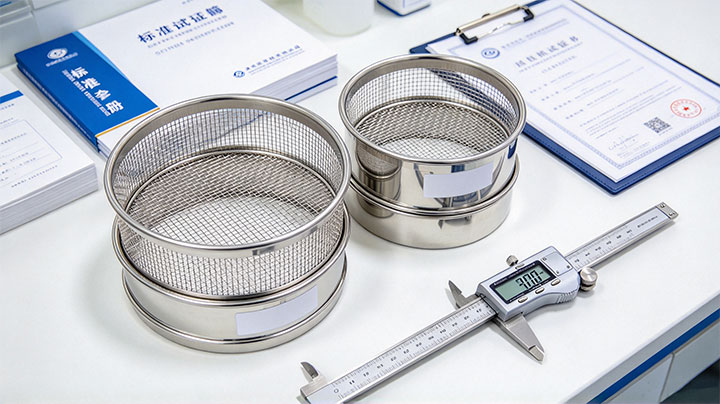
For particle size analysis, the nominal aperture is more directly related to the size of particles that can pass through the sieve. This is why a test sieve should be checked by its specified opening as well as its mesh designation, especially when a particular separation size is important to the test result.
For example, if the test requires separation around 150 μm, selecting a sieve simply because it is labeled with a familiar mesh number can introduce unnecessary uncertainty. Confirming the nominal aperture against the required particle size gives a more reliable starting point for the test sieve size selection.
The choice therefore depends on what the test needs to tell you. Use one sieve when you are checking a defined size limit; use multiple sieves when you need a broader picture of the particle-size distribution.
For aggregate materials, test sieves can be used to separate particles into different size fractions and evaluate the particle-size distribution of the sample. The following video shows a test sieve application for aggregate particle size testing and provides a practical example of how sieve selection is applied during screening.
Sieve diameter mainly affects the available screening area and the amount of sample that can be handled during the test. It should therefore be considered after the required particle-size range and sieve opening have been established.
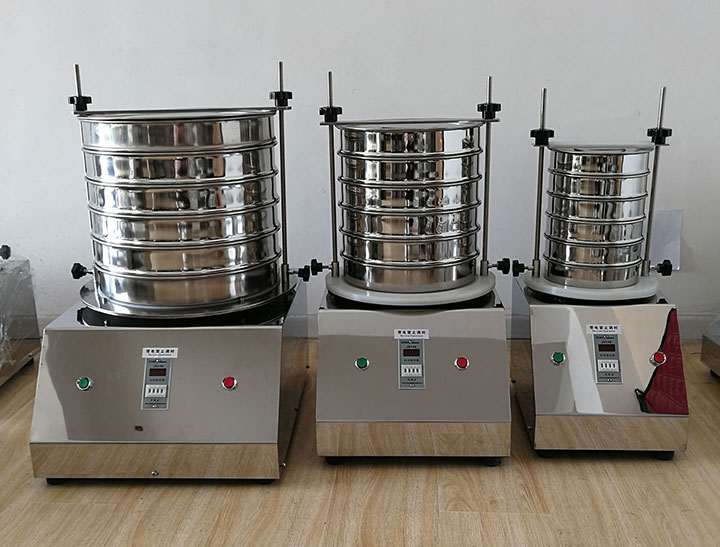
For a small laboratory sample, a compact sieve may provide enough working area without taking up unnecessary space. Larger samples may benefit from a larger diameter because the material has more surface area through which to pass. The sample quantity, available equipment, and test procedure should all be considered before choosing the diameter.
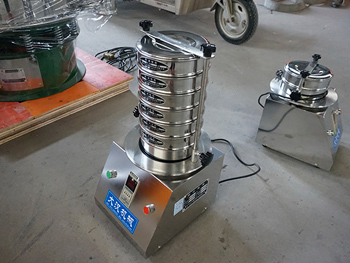
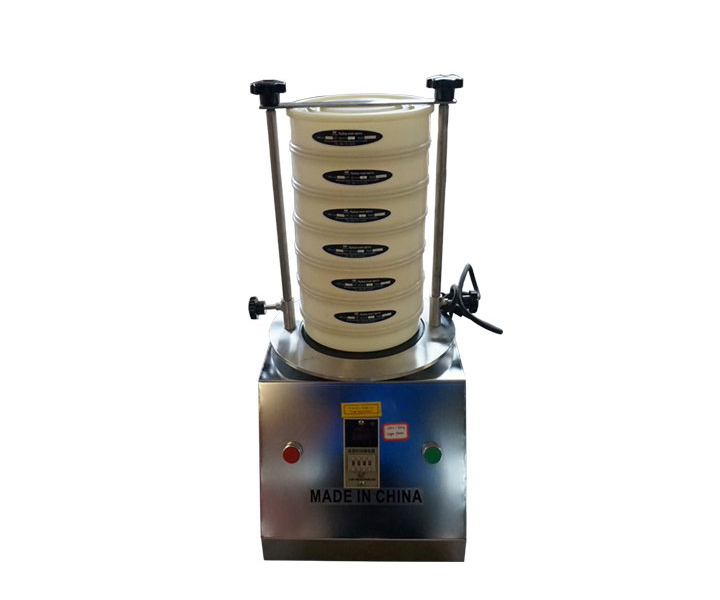
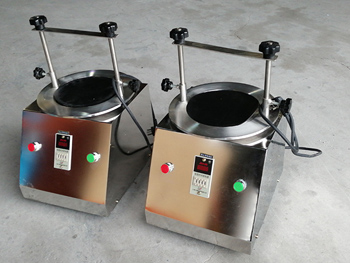
It is also important to make sure the sieve diameter is compatible with the sieve shaker being used. A correctly selected opening will not give the expected testing results if the sieve size is unsuitable for the equipment or the sample load.
The sieve size should also fit the test method used for the analysis. A specified test method may define the sieve standard, aperture tolerance, frame dimensions, or other requirements that affect which sieve can be used for the test.
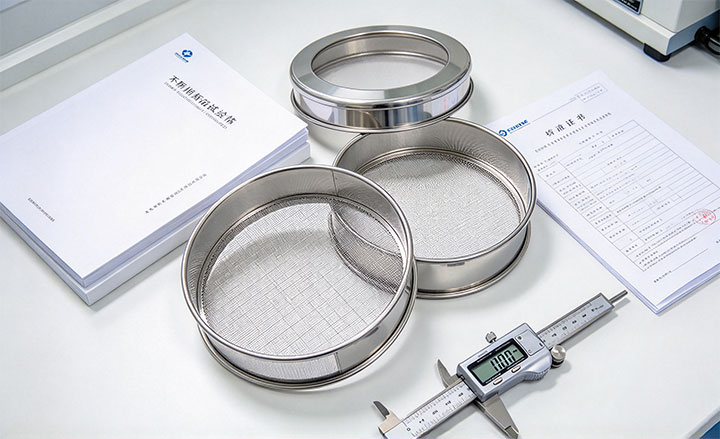
For example, ASTM E11 and ISO 3310 are commonly used as references for laboratory test sieves, but the applicable requirement depends on the material, testing procedure, and specification being followed. A sieve with the correct nominal opening may still be unsuitable if it does not meet the standard required by the test.
Before ordering, check the test method or laboratory specification for the required sieve standard and designation. This helps ensure that the selected sieve is suitable not only for the target particle size, but also for the way the sample will actually be tested.
The table below gives a quick reference for several commonly used test sieve openings. Use the nominal aperture as the primary reference when matching a sieve to the particle range being measured.
| Sieve Designation | Nominal Aperture | Typical Particle Range |
|---|---|---|
| No. 20 | 850 μm | Coarser particles |
| No. 40 | 425 μm | Medium-sized particles |
| No. 60 | 250 μm | Fine particles |
| No. 100 | 150 μm | Fine powders |
| No. 200 | 75 μm | Very fine particles |
| No. 325 | 45 μm | Very fine powders |
These sizes are useful as a starting reference, but the final selection should follow the required particle-size range and test method. A commonly used sieve is not necessarily the right sieve for every material or analysis.
Consider a powder sample that needs to be evaluated across a particle-size range of about 75 to 425 μm. The purpose is to see how the material is distributed within this range rather than simply determine whether it passes one specified size.
A practical starting set could include No. 40 (425 μm), No. 60 (250 μm), No. 100 (150 μm), and No. 200 (75 μm), arranged from the largest opening to the smallest, with a pan below the stack.
| Sieve | Nominal Aperture | Purpose in the Set |
|---|---|---|
| No. 40 | 425 μm | Retains particles above the upper range |
| No. 60 | 250 μm | Separates the upper-middle fraction |
| No. 100 | 150 μm | Separates the finer middle fraction |
| No. 200 | 75 μm | Defines the lower end of the selected range |
This example shows the selection process rather than a universal sieve combination. If the material has a different distribution or the test method specifies different intervals, the sieve set should be adjusted accordingly. The important point is to choose openings that provide useful separation within the particle range being measured.
Start with the particle-size range you need to measure, then select sieve openings that provide the required separation. The appropriate sieve size depends on the target particle range and the test method being followed.
Use the nominal aperture as the main reference when a specific separation size is required. Mesh number can help identify the sieve, but it should be checked against the specified aperture and applicable standard.
Use as many sieve openings as needed to separate the particle-size ranges that matter to your analysis. A simple size-limit check may need only one sieve, while particle-size distribution testing generally requires several openings.
Sieve diameter mainly affects the available screening area and the amount of sample that can be handled. The diameter should be selected according to sample quantity, test procedure, and sieve shaker compatibility.
A test sieve can be used for different samples when its opening and specification are suitable for the required separation. However, a sieve selected for one particle-size range may not provide useful separation for another range.
If you are unsure which sieve opening, diameter, or sieve combination is suitable for your particle size analysis, send us your material, target particle-size range, sample quantity, and applicable test standard. We can recommend a suitable test sieve configuration based on your testing requirements.
Send us your test requirements to discuss the right sieve configuration.


Address:China,Yanjin county forest park gate to the west 1000 meters north road.


 Online Chat
 Email