


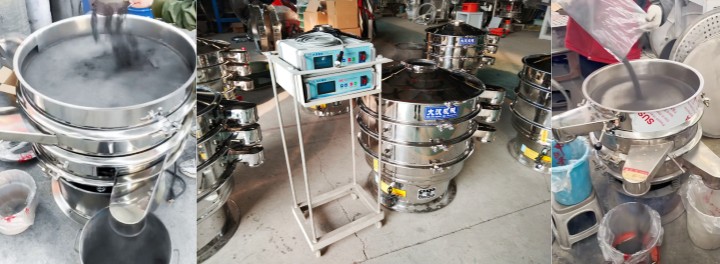
Tungsten Powder Sieving Machine is specifically designed for the classification and impurity removal of tungsten powder. Due to its high density, tendency to agglomerate, and stringent particle size requirements, tungsten powder typically employs a vibrating screen or airflow sieve structure. It is available in stainless steel, carbon steel, and PP materials and can accommodate 1-6 layers of sieves of different sizes. It can simultaneously classify and remove impurities from tungsten powder. An ultrasonic system can be added to any model, easily adapting to adhesive or moisture-affected tungsten powder. Our factory supports custom-designed tungsten powder sieves, tailored to your specific screening requirements and application scenarios.
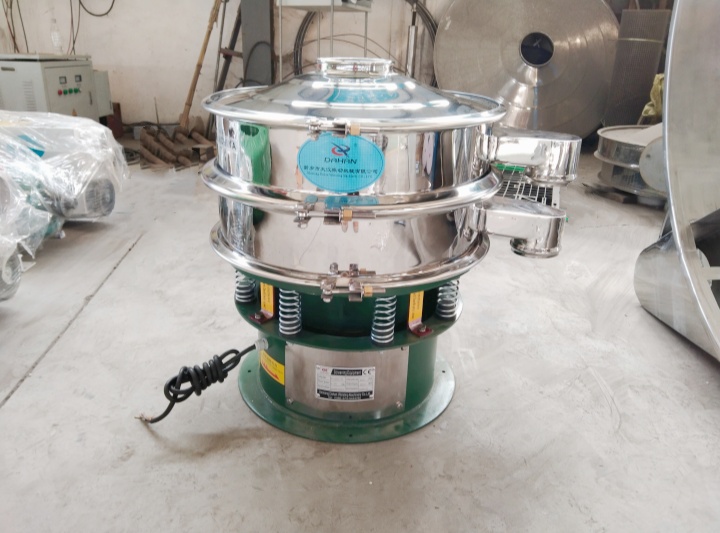
The Tungsten Powder Sieving Machine boasts advantages such as accurate grading, wear and corrosion resistance, rapid operation with low energy consumption, and flexible customization. It can perform multi-stage sieving, and the machine body is made of wear-resistant materials, suitable for continuous operation.
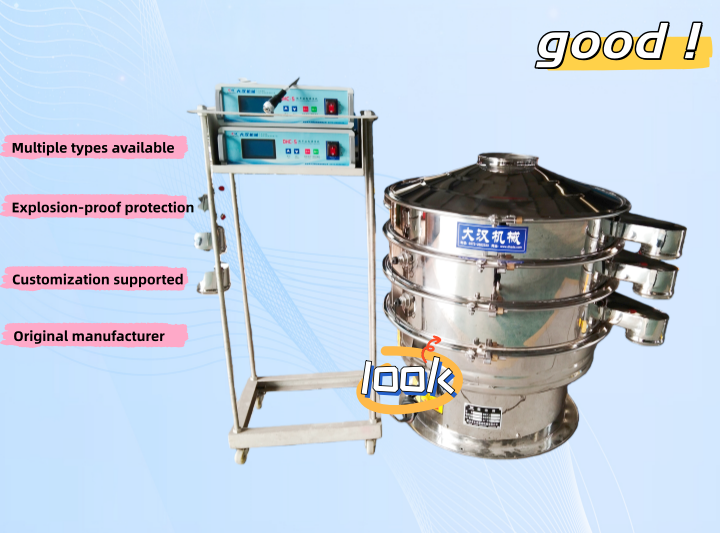
Accurate Grading: Addressing the high density and agglomeration characteristics of tungsten powder, it employs high-frequency vibration or airflow sieving technology to quickly break up powder agglomerates, achieving fine sieving and ensuring uniform particle size in the output.
Wear and Corrosion Resistance: The machine body and core sieving components are made of stainless steel or wear-resistant alloys, resisting high-speed impact and wear from tungsten powder, while also being corrosion-resistant and easy to clean, preventing material contamination.
Explosion-Proof Protection: The overall anti-static design and the installation of an explosion-proof motor effectively mitigate the risk of combustion and explosion caused by frictional static electricity during the sieving process.
Customization Support: Screen aperture, machine size, and discharge method can be customized according to customer needs. It can be equipped with explosion-proof and anti-static devices to adapt to tungsten powder impurity removal and grading operations under different working conditions.
Addressing the high density and tendency to agglomerate of tungsten powder, we offer a variety of tungsten powder sieving machines, including vibrating sieves, test sieves, cyclone sieves, and gas-protected sieves. Each type is tailored to different working conditions based on its differentiated structure and operating principle.
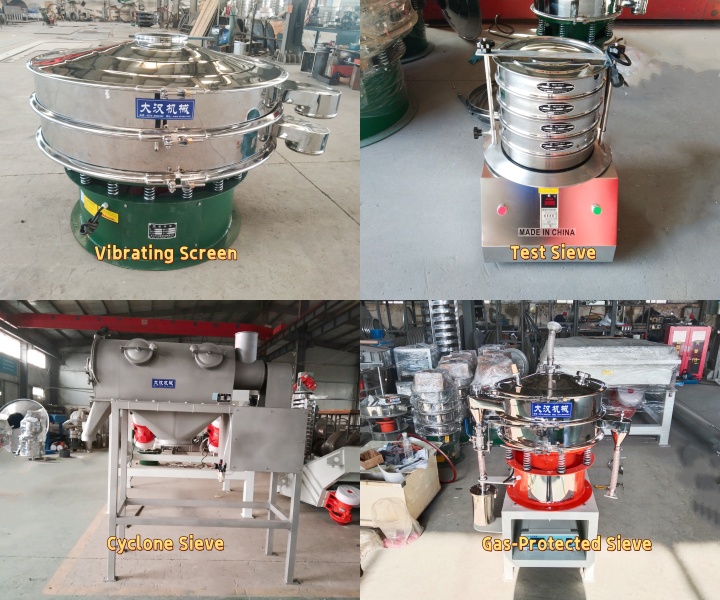
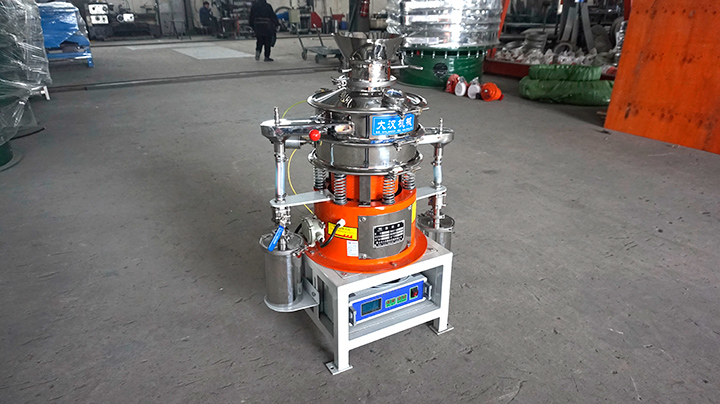
Vibrating Sieve: Driven by a vertical vibrating motor, it achieves material sieving through three-dimensional high-frequency vibration. It features a compact structure, simple operation, and can be equipped with multiple layers of screens for multi-stage grading. It also supports the addition of an ultrasonic system and is suitable for sieving different specifications of tungsten powder.
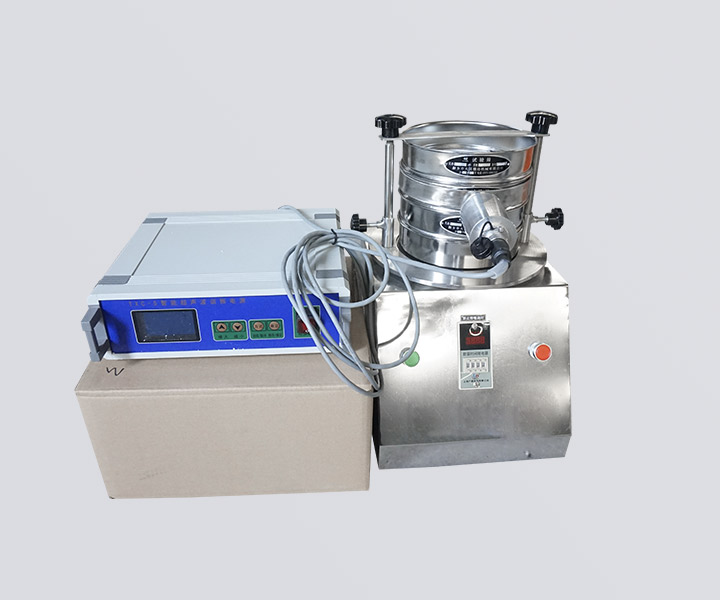
Test Sieve: Primarily designed for laboratory or small-batch sample testing scenarios, this sieve can achieve a mesh size of up to 1800 mesh, accurately sieving tungsten powder of different particle sizes and providing data support for industrial production. It supports 1-8 layers of screen stacking.
Cyclone Sieve: Utilizing airflow as the core driving force, it breaks up tungsten powder agglomerates using aerodynamic principles, simultaneously achieving grading. The sieving process is gentle, without strong mechanical extrusion, effectively preventing tungsten powder particle breakage.
Gas-protected screen: Designed for easily oxidized tungsten powder, the entire screening process is conducted under an inert gas atmosphere to prevent oxidation of the tungsten powder upon contact with air, ensuring material purity.
A Tungsten Powder Sieving Machine primarily operates on the principle of mechanical vibration screening. It typically uses a high-frequency vibrating motor as the power source to drive the screen box and multiple layers of screens to generate three-dimensional vibration. When the tungsten powder material is evenly fed into the top layer of the screen through the inlet, under continuous vibration, fine particles smaller than the screen aperture pass through the screen and enter the lower grading layer or are collected as finished products, while coarser particles larger than the screen aperture move along the screen surface to the discharge port for separation. For easily agglomerated ultrafine tungsten powder, the ultrasonic screening machine also adds high-frequency mechanical waves to effectively break up agglomerated particles and prevent screen clogging, thereby improving screening efficiency.
| The name of material | Mesh | The capacity of Common vibrating screen (kg/h) | The capacity of Ultrasonic vibrating screen (kg/h) | The model of machine |
| Phosphor | 500 | 90 | 300 | φ800 |
| Zinc powder | 325 | 68 | 300 | φ800 |
| seasoning powder | 60 | 500 | 1200 | φ1000 |
| Resin powder | 200 | 340 | 745 | φ1000 |
| Sweet potato starch | 200 | 400 | 1500 | φ1000 |
| lron powder | 100 | 96 | 300 | φ800 |
| Kaolin | 200 | 38 | 200 | φ1000 |
The core differences between air classifiers and vibrating screens in tungsten powder sieving operations lie in their sieving principles, suitable material characteristics, and application scenarios. Vibrating screens rely on a vertical vibrating motor to generate three-dimensional high-frequency vibration, driving the screen mesh in reciprocating motion to achieve tungsten powder grading. They are compact, easy to operate, and can adapt to multiple screens for multi-stage sorting, supporting tungsten powder sieving from 80-400 mesh. They are more suitable for small to medium batches of conventional tungsten powder for impurity removal and particle size screening. Air classifiers, on the other hand, use airflow as the core driving force, utilizing aerodynamic principles to gently break up tungsten powder agglomerates. The sieving process is gentle and fast, preventing tungsten powder particle breakage. They are suitable for manufacturing fields with strict requirements for powder particle size uniformity. However, their energy consumption is relatively high, making them more suitable for large-scale, high-precision production scenarios.
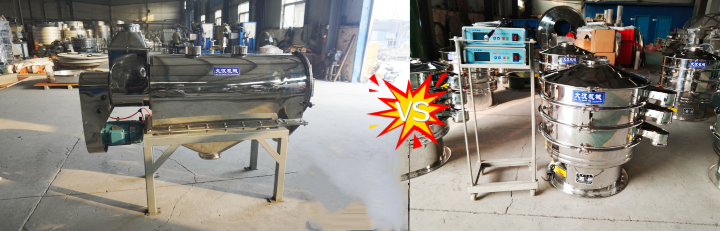
When selecting a suitable Tungsten Powder Sieving Machine, it's crucial to consider production needs, material characteristics, and application scenarios. For processing standard tungsten powder (200-400 mesh), aiming for small-to-medium batch multi-stage grading and high cost-effectiveness, a vibrating screen is the preferred choice. For ultrafine tungsten powder (above 400 mesh), addressing agglomeration is essential; airflow screens, leveraging airflow to disperse particles, offer high sieving accuracy without damaging them. For small-batch particle size analysis in laboratories, test sieves provide high precision and reliable data support. If tungsten powder is prone to oxidation, gas-protected sieves can be filled with inert gas to prevent oxidation. Production capacity and customization requirements must also be considered to ensure the equipment matches the production conditions.
To meet the sieving requirements of high-density, easily agglomerated tungsten powder, Tungsten Powder Sieving Machines offer several practical optional configurations. These include an ultrasonic system for enhanced anti-clogging efficiency, a flexible roller design, a customized hopper for uniform feeding, and a wear-resistant scraper for cleaning the protective mesh.
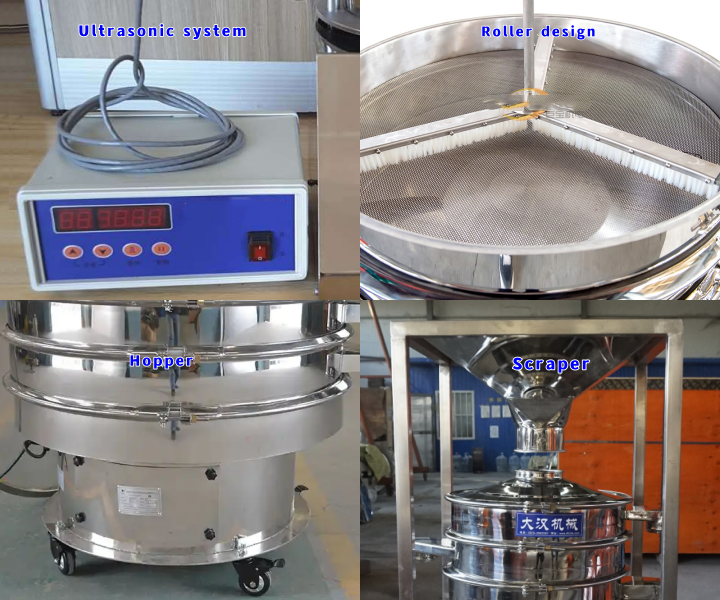
Ultrasonic System: This anti-clogging feature of the tungsten powder screening machine solves the problem of tungsten powder agglomeration and screen clogging. Through high-frequency ultrasonic vibration, it quickly breaks up tungsten powder particles adhering to the screen surface, preventing screen blockage, and is especially suitable for screening ultrafine tungsten powder of 200 mesh or finer.
Roller Design: This practical feature enhances the equipment's mobility, ideal for processing scenarios requiring frequent adjustments to production positions. Wear-resistant universal rollers are installed at the bottom of the screening machine, along with a braking and fixing device, allowing for easy short-distance movement of the equipment.
Hopper: Custom sizes and shapes can be made to meet customer capacity requirements. Made of stainless steel with a smooth, corner-free inner wall, it prevents tungsten powder residue and accumulation, achieving uniform and stable feeding.
Scraper: Primarily installed on the screen surface. During operation, the scraper cleans residual tungsten powder adhering to the screen surface in real time and can also crush small clumps of tungsten powder, preventing material agglomeration and affecting screening efficiency.
Dahan Machinery manufactures Tungsten Powder Sieving Machines, offering a full range of custom-made tungsten powder sieving machines, including vibrating sieves, cyclone sieves, and test sieves. Equipped with ultrasonic systems, gas protection, and other specialized features, these machines perfectly suit the high density, easy agglomeration, and easy oxidation characteristics of tungsten powder. The core components are made of wear-resistant and corrosion-resistant materials, with excellent workmanship and strict quality control. We provide a full range of services from selection and design to commissioning and after-sales maintenance. Products are shipped worldwide, guaranteeing delivery within a certain timeframe.
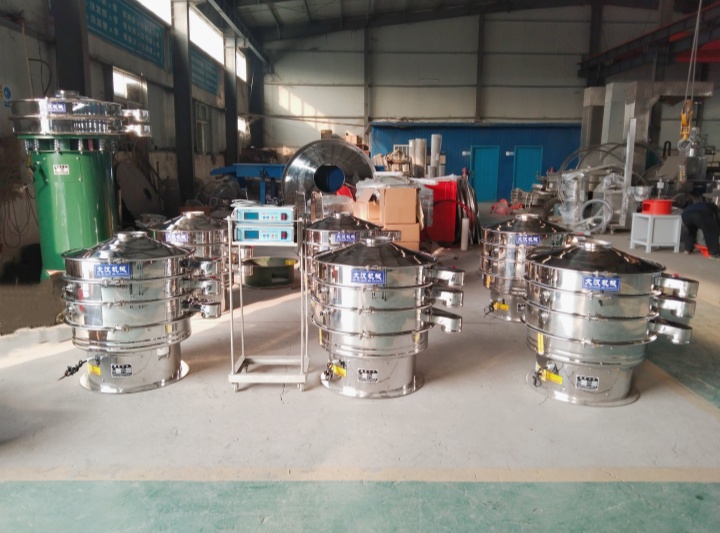
Tungsten Powder Sieving Machines are essential for particle size classification, impurity removal, and particle size distribution control of metallic tungsten powder. Their working principle primarily involves separating tungsten powder particles of different sizes through mechanical vibration or physical sieving using multiple layers of screens.


Address:China,Yanjin county forest park gate to the west 1000 meters north road.


 Online Chat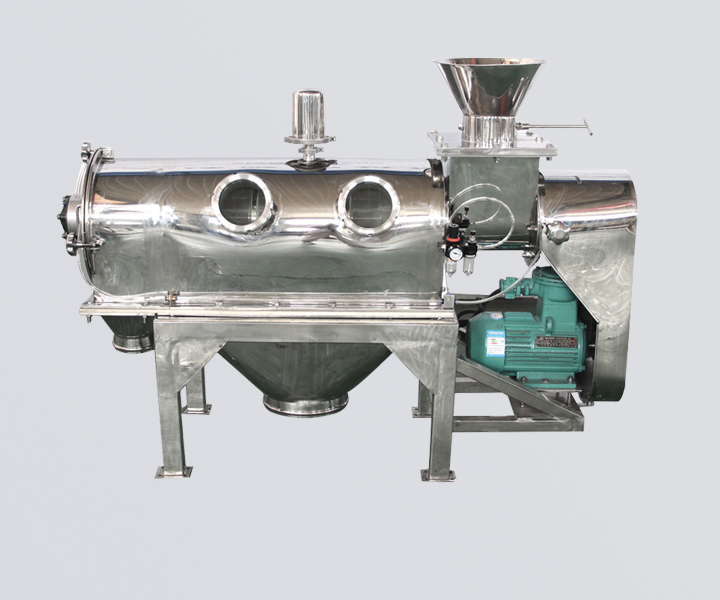
 Email
Email